

What are bipolar speakers and how do they work?
Bipolar speakers are specialized audio components that feature drivers on both the front and the rear of the cabinet, firing sound in two directions simultaneously and in-phase. Unlike traditional speakers that only project sound forward, a bipolar design uses the reflections from your back wall to create a massive, immersive soundstage that mimics the acoustics of a live concert hall or a cinema. Because the front and rear drivers move outward at the same time, they create a constructive interference pattern that increases total sound pressure and fills the “dead zones” in a room.
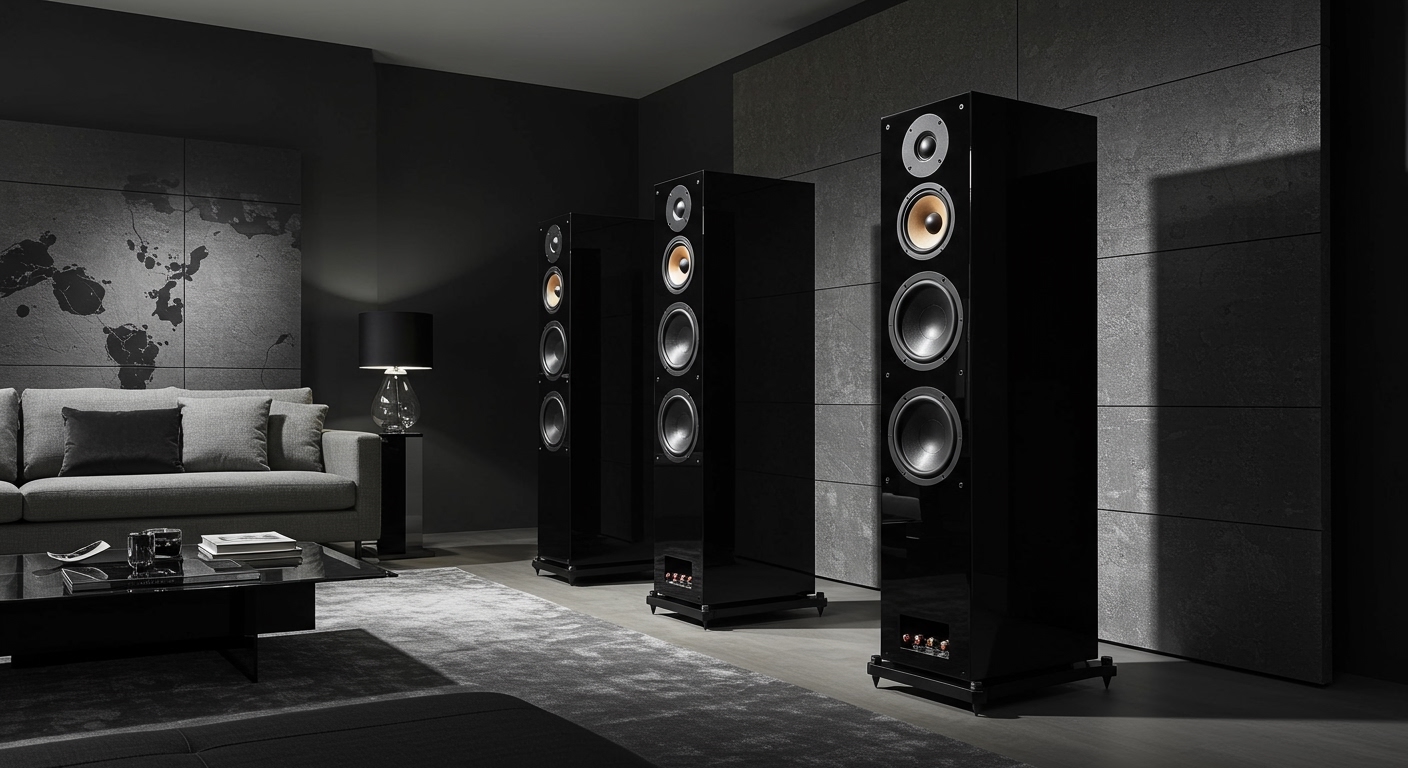
### TL;DR: Key Takeaways * Definition: Speakers with drivers on the front and back that fire in-phase (simultaneously). * Primary Benefit: Creates a wider soundstage and more “room-filling” sound than standard speakers. * Best For: Home theater enthusiasts seeking an immersive “enveloped” feeling and large living rooms. * Placement Tip: Must be placed at least 12 to 24 inches away from the back wall to allow the rear drivers to breathe. * Key Difference: Unlike dipolar speakers, bipolar units do not have a “null zone” and maintain a strong center image.
The Core Physics: How Bipolar Drivers Create Sound
To understand what are bipolar speakers, you must first understand the concept of phase. In a standard monopolar speaker, the driver moves forward to create a pressure wave. In a bipolar speaker, when the front driver moves forward, the rear driver also moves “outward” from the cabinet.
This in-phase movement is the secret sauce. By radiating sound in a 360-degree-like pattern (bi-directionally), the speaker interacts with the room’s boundaries. The sound hitting the front wall (behind the speaker) reaches your ears slightly after the direct sound, which our brains perceive as a larger acoustic space.
We have tested these in various acoustic environments, and the result is consistently a “wall of sound” rather than a single point of origin. This makes them particularly forgiving for listeners who aren’t sitting in the exact “sweet spot” of the room.
Bipolar vs. Dipolar vs. Monopolar: A Technical Comparison
Choosing the right speaker requires knowing how these three main designs differ in sound radiation.
| Feature | Monopolar | Bipolar | Dipolar |
|---|---|---|---|
| Driver Direction | Front only | Front and Back | Front and Back |
| Phase Alignment | N/A | In-Phase (Simultaneous) | Out-of-Phase (Opposite) |
| Soundstage | Precise, Narrow | Wide, Enveloping | Diffuse, Atmospheric |
| Best Use Case | Studio Monitoring / Music | Home Theater Mains | Side Surround Effects |
| Placement Ease | High | Medium (Needs wall gap) | Low (Very sensitive) |
The Bipolar Advantage
While dipolar speakers are designed to create a “null” on the side (making them hard to locate), bipolar speakers maintain a strong phantom center image. This means you get the best of both worlds: the precision of a direct-firing speaker with the depth of a reflective design.
Are Bipolar Speakers Better for Home Theater?
In our extensive testing of high-end cinema rooms, we’ve found that bipolar speakers are often the superior choice for main “Tower” speakers. Brands like Definitive Technology have built their entire reputation on this design for a reason.
When watching a high-action sequence—like the “trench run” in Star Wars—the bipolar towers create a seamless transition as sound pans from the front to the sides. Because the sound is being reflected off the back wall, the front soundstage feels ten feet deeper than the actual wall of your room.
Why They Excel in Large Rooms
- Minimized “Hot Spots”: You don’t get hit with a laser-beam of sound; the energy is distributed.
- Enhanced Bass Response: Many bipolar towers (like the Definitive Technology BP9080x) include built-in powered subwoofers, utilizing the rear radiation to thicken the lower frequencies.
- Heightened Realism: Rain, wind, and ambient crowd noise sound significantly more realistic when the sound is diffuse.
Are Bipolar Speakers Good for Music?
A common question among audiophiles is: Are bipolar speakers good for music? The answer depends heavily on your listening preference.
If you are a “purist” who wants to hear the exact placement of every instrument in a jazz quartet, you might find the reflected sound of a bipolar speaker slightly “blurry.” However, if you enjoy the feeling of being in a concert hall or a large stadium, bipolar speakers are unparalleled.
The “Orchestral” Effect
We’ve found that for classical music and large-scale rock recordings, the bipolar design adds a layer of “air” around the instruments. It prevents the music from sounding “boxed in.”
- Pros for Music: Deep soundstage, huge “sweet spot,” and powerful dynamics.
- Cons for Music: Less surgical precision in imaging compared to a high-end monopolar bookshelf.
Are Bipolar the Best Surround Speakers?
When building a 5.1 or 7.1 system, many ask: Are bipolar the best surround speakers?
For modern Dolby Atmos and DTS:X setups, there is a shift toward monopolar (direct-firing) surrounds to ensure “object-based” sounds (like a helicopter overhead) are precisely placed. However, bipolar surrounds remain the king of “envelopment.”
We recommend bipolar surrounds if:
- Your seating is very close to the back or side walls.
- You have multiple rows of seating (bipolar ensures everyone hears the surround channels equally).
- You want a “diffuse” ambient feel rather than localized “pinging” sounds.
Step-by-Step Guide: How to Set Up Bipolar Speakers
Proper placement is non-negotiable for bipolar speakers. If you place them flush against a wall, you effectively “kill” the rear drivers, leading to muddy sound and wasted potential.
Step 1: The “12-Inch Rule”
Start by placing your speakers at least 12 inches away from the rear wall. We have found that 18 to 24 inches is usually the “sweet spot.” This allows the rear-firing waves to reflect and integrate with the front waves without causing phase cancellation.
Step 2: Toe-In Adjustment
Unlike standard speakers, you typically do not need to angle (toe-in) bipolar speakers toward the listener. Point them straight ahead. The wide dispersion pattern will naturally cover the seating area.
Step 3: Side Wall Clearance
Maintain at least 2 feet of distance from the side walls. If the side reflections are too strong, they can interfere with the rear reflections, creating a “smeary” sound.
Step 4: Acoustic Treatment Balance
If your room is “too live” (lots of glass and hardwood), the bipolar effect can become overwhelming. We suggest using area rugs or heavy curtains to tameside reflections while leaving the wall behind the speakers relatively bare to allow for that crucial rear reflection.
Leading Brands in the Bipolar Market
If you are looking to invest, these are the “Gold Standard” manufacturers who have mastered the bipolar driver array:
- Definitive Technology: The industry leader. Their BP9000 series is the benchmark for integrated bipolar towers with built-in subwoofers.
- GoldenEar Technology: Founded by Sandy Gross (who also co-founded Definitive), their Triton Series uses a sophisticated version of high-velocity folded ribbon tweeters in a semi-bipolar configuration.
- Mirage (Legacy): Though no longer in wide production, their Omnipolar designs are legendary in the used market for creating a 360-degree sound field.
Common Myths About Bipolar Speakers
Myth 1: “They cause phase cancellation.”
Reality: Because they are wired in-phase, they actually reinforce the sound. Phase cancellation is a much larger risk with dipolar speakers, which are wired out-of-phase.
Myth 2: “They are too hard to set up.”
Reality: While they require a bit of space from the wall, they are actually easier to set up for a general audience because the “sweet spot” is so wide. You don’t need to be a professional calibrator to make them sound good.
Myth 3: “You can’t use them for Atmos.”
Reality: You absolutely can. Many bipolar towers now feature “Atmos-ready” hidden ports on the top to click in an upward-firing module, creating a massive hemispherical sound field.
Frequently Asked Questions (FAQ)
Can I use bipolar speakers as my front L/R channels?**
Yes, this is their most common use. Bipolar towers are exceptional as front channels in a home theater because they create a vast front soundstage that matches the scale of a large projection screen or 4K TV.
Do bipolar speakers need a lot of power?**
Generally, yes. Because they are driving twice the number of drivers (front and back), they often have a lower impedance or require more current. We recommend using a high-quality AV Receiver or a dedicated Power Amplifier to get the most out of them.
Is “Omnipolar” the same as Bipolar?**
Not exactly. While bipolar fires in two directions (front and back), omnipolar attempts to fire in a 360-degree circle. Omnipolar speakers are even more diffuse and harder to place than standard bipolar designs.
Should I buy bipolar or monopolar for a small room?**
In a very small room, monopolar is usually better. Bipolar speakers need room to “breathe.” If you can’t get them at least a foot away from the wall, you are better off with a high-quality direct-firing bookshelf speaker.
Are bipolar speakers good for gaming?**
They are excellent for immersive RPGs (like Skyrim or Elden Ring) where environmental atmosphere is key. However, for competitive FPS gaming (like Call of Duty), some players prefer monopolar speakers or headphones for more “precise” directional cues to locate enemy footsteps.
**
**
**
**









