

Understanding the Technology: What are Planar Speakers?
What are planar speakers? Planar speakers are high-end audio transducers that use a thin, flat, electrically conductive diaphragm suspended in a magnetic field to generate sound. Unlike traditional speakers that use a cone and voice coil, planar designs move the entire surface of the diaphragm simultaneously, resulting in extreme clarity, low distortion, and a transparent soundstage that mimics a live performance.
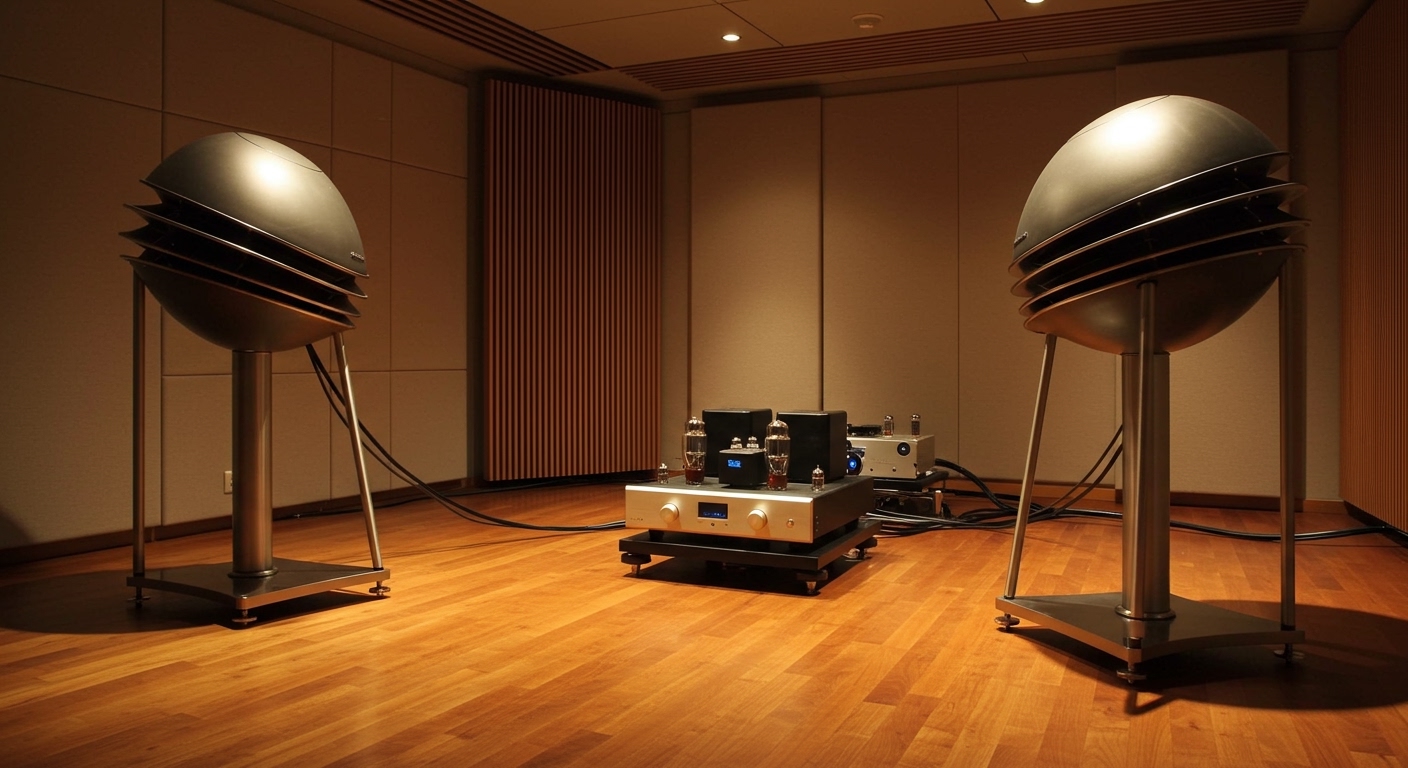
In our years of testing high-fidelity equipment, we have found that planar magnetic technology offers a level of “speed” or transient response that traditional dynamic drivers struggle to match. Because the diaphragm is often thinner than a human hair, it can start and stop moving almost instantly, capturing the most subtle nuances in your music.
TL;DR: Key Takeaways on Planar Speakers
- Superior Clarity: The ultra-light diaphragm eliminates the “muffled” sound of heavy paper or plastic cones.
- Dipole Radiation: Most planar speakers emit sound from both the front and the back, creating a massive, airy soundstage.
- Power Hungry: They generally require a high-current amplifier to perform at their best.
- Sweet Spot: They offer a laser-focused listening area, making them ideal for dedicated listening rooms.
- Thin Profile: Their physical design is usually tall and flat, looking more like a room divider than a traditional box speaker.
How Planar Magnetic Technology Works
To truly grasp what are planar speakers, you need to understand the physics of the Lorentz Force. In a standard speaker, a wire coil (voice coil) is glued to the back of a cone. When electricity flows through the coil, it reacts with a magnet to push the cone forward and backward.
In a planar magnetic design, the “voice coil” is actually a series of thin conductive traces (usually aluminum or gold) printed directly onto a large, flat film. This film is suspended between two arrays of powerful Neodymium magnets. When the audio signal passes through the traces, the entire film reacts to the magnetic field and vibrates to create sound waves.
Components of a Planar Driver
- The Diaphragm: A large, thin sheet of Mylar or Kapton.
- Conductive Traces: The “wires” printed on the film that carry the audio signal.
- Magnets: High-strength bars positioned on one or both sides of the diaphragm.
- The Frame: A rigid structure that keeps the diaphragm under the perfect amount of tension.
Step 1: Evaluating the Pros and Cons of Planar Speakers
Before investing in this technology, we recommend evaluating your specific environment. Planar speakers are not “plug-and-play” in the same way a Bluetooth speaker might be.
The Advantages (The “Why”)
- Zero “Boxiness”: Because they lack a traditional cabinet, you don’t hear the internal echoes or resonance of a wooden box.
- Linear Impedance: Most planar speakers present a very steady electrical load, which can make them sound remarkably consistent across the entire frequency range.
- Realism: Instruments like acoustic guitars and violins sound breathtakingly real due to the fast attack of the diaphragm.
The Challenges (The “Trade-offs”)
- Placement Sensitivity: Because they are dipole (firing sound backward), placing them too close to a wall can cause “phase cancellation,” making them sound thin.
- Lower Bass Impact: While they produce very “tight” bass, they lack the physical “thump” of a 12-inch subwoofer.
- Large Footprint: Models like the Magnepan 1.7i stand over five feet tall, which may not fit every décor.
Step 2: Comparing Planar vs. Dynamic vs. Electrostatic
To understand what are planar speakers in the broader market, we have to compare them to their two biggest rivals.
| Feature | Planar Magnetic | Dynamic (Traditional) | Electrostatic |
|---|---|---|---|
| Driver Type | Flat Film + Magnets | Cone + Voice Coil | Flat Film + Static Electricity |
| Durability | High (Robust) | Very High | Moderate (Sensitive to dust/humidity) |
| Detail Level | Exceptional | Good to Very Good | Ultimate |
| Ease of Drive | Requires High Current | Usually Easy | Requires High Voltage (Plug-in) |
| Cost | Mid to High | Low to High | Very High |
Step 3: Choosing the Right Amplification
If you are asking what are planar speakers, your next question should be: “What do I need to power them?” In our testing, we’ve found that planar speakers are notorious for their low sensitivity.
Most planar speakers have an impedance of around 4 Ohms. You need an integrated amplifier or a power amp that is “stable into 4 Ohms.” We recommend looking for units that provide at least 100 to 200 Watts per channel. Without enough current, the speakers will sound “polite” or “thin” and won’t deliver the dynamic peaks that make high-end audio exciting.
Recommended Amp Specs for Planar Systems:
- High Current Delivery: Look for a massive power transformer.
- Low Distortion (THD): Since the speakers are so transparent, they will reveal any noise in your amplifier.
- Damping Factor: A high damping factor helps the amp control the large surface area of the planar diaphragm.
Step 4: Mastering Room Placement
Because planar speakers are dipole, they are much more sensitive to your room’s acoustics than a standard boxed speaker. Here is our tested step-by-step guide for placement:
- The Rule of Thirds: Try to place the speakers about 3 feet (1 meter) away from the wall behind them. This allows the rear-firing sound to bounce back with enough delay to create a sense of depth.
- Toe-In: Angle the speakers slightly toward your listening chair. This focuses the high frequencies (which are very directional in planar designs) directly at your ears.
- Diffusion vs. Absorption: Use a diffuser (like a bookshelf or specialized acoustic panel) on the wall behind the speakers. This scatters the rear-wave energy and prevents it from smearing the main sound.
- The “Sweet Spot”: Have a friend move the speakers an inch at a time while you sit in the “hot seat.” You will know you’ve hit the spot when the singer’s voice “locks” into the center of the room.
Step 5: Understanding Specialized Variations
While most audiophiles focus on home floorstanders, the technology has migrated into other niches.
Are Poly Planar Speakers Good?
One common question we see is: are poly planar speakers good? It is important to distinguish these from high-end audiophile gear. Poly Planar is a brand that specializes in waterproof, marine-grade audio.
While they use “planar” in their name, their design is optimized for durability in harsh environments (like boats or spas) rather than critical studio listening. If you need speakers for a yacht or an outdoor pool area that can survive salt spray, Poly Planar is an industry standard and highly recommended for that specific use case. However, don’t expect them to provide the same “airy” high-fidelity experience as a pair of HiFiMAN or Audeze planar headphones.
Planar Magnetic Headphones
In recent years, companies like Audeze and HiFiMAN have revolutionized the headphone market. Planar headphones are often considered the “gold standard” for studio engineers and serious enthusiasts because they provide the same low-distortion benefits as the large speakers but in a portable format.
Step 6: Maintenance and Long-Term Care
Unlike traditional speakers with rubber surrounds that can rot over 20 years, planar speakers are quite durable if treated well.
- Avoid Moisture: High humidity can occasionally affect the tension of the film.
- Dusting: Use a soft, dry microfiber cloth. Never use liquid cleaners on the diaphragm surface.
- Power Down: Always turn your amplifier off before disconnecting planar speakers to avoid a “pop” that could over-extend the delicate film.
Frequently Asked Questions
Do planar speakers need a subwoofer?
Most users find that adding a sealed-box subwoofer helps fill in the lowest octaves (below 50Hz) where planar speakers tend to roll off. However, it is vital to choose a “fast” subwoofer to match the speed of the planar drivers.
Why are planar speakers so expensive?
The cost comes from the precision manufacturing of the thin-film diaphragms and the massive amount of Neodymium required for the magnet arrays. Neodymium is a rare-earth metal that is significantly more expensive than the ferrite magnets found in cheap speakers.
What are planar speakers best for?
They excel at vocal-heavy music, jazz, classical, and acoustic sets. If you primarily listen to heavy EDM or Hip-Hop that requires massive physical air movement for bass, you may find them lacking unless paired with a high-end subwoofer system.
Can I use planar speakers for home theater?
Yes, but with caveats. Because they have a narrow vertical dispersion, they are great for a single row of seating. If you have multiple rows of theater seating, those sitting on the sides may miss out on the high-frequency detail.
**
**
**
**









