

What Are Pillow Speakers and How Do They Work?
Pillow speakers are ultra-thin, low-profile audio devices designed to be placed under or inside a pillowcase to provide private, hands-free listening while in bed. They allow you to listen to white noise, podcasts, or music without the discomfort of wearing headphones or disturbing a sleeping partner.
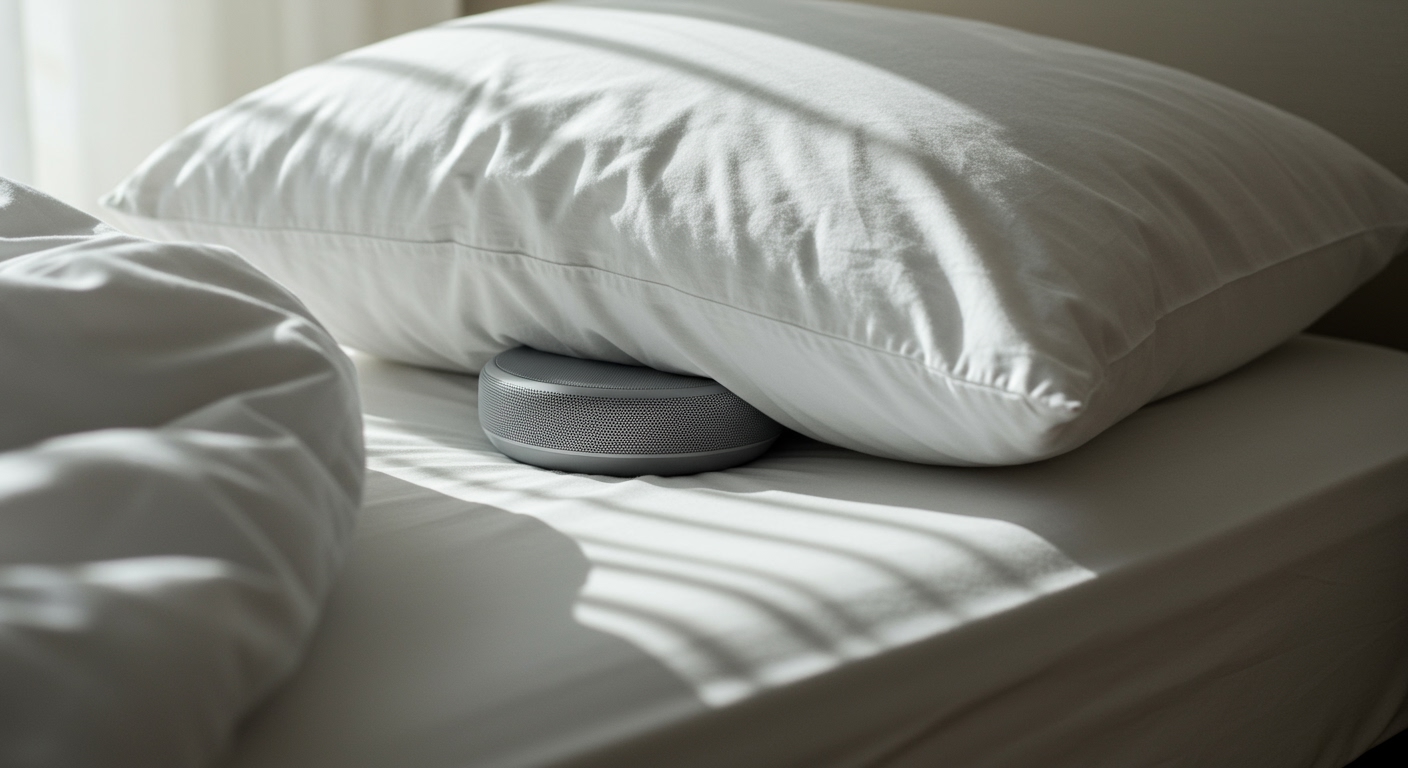
If you have ever struggled with insomnia, tinnitus, or simply a snoring partner, you know that sound can be your best friend or your worst enemy. Standard earbuds are often too bulky for side-sleepers, and large speakers can wake everyone in the house. Pillow speakers bridge this gap by offering a personal soundstage that only you can hear, utilizing either traditional acoustic drivers or bone conduction technology.
Key Takeaways: Why Use a Pillow Speaker?
- Ultimate Comfort: Designed for side-sleepers who find earbuds or over-ear headphones painful.
- Partner Friendly: Low-decibel output ensures your audio stays in your “sleep zone.”
- Tinnitus Relief: Provides consistent ambient sound to mask ringing in the ears.
- Corded vs. Wireless: Choose between 3.5mm jack reliability or Bluetooth freedom.
- Safety First: Eliminates the risk of ear canal infections or wax buildup caused by traditional earbuds.
The Evolution of Sleep Audio Technology
I have spent years testing various sleep aids, and the transition from bulky bedside radios to modern pillow speakers is a game-changer for sleep hygiene. Traditionally, listeners had to balance a radio on their nightstand, which often resulted in “sound bleed” that annoyed partners.
Today’s pillow speakers are thinner than a smartphone and engineered with high-impedance drivers optimized for close-range listening. Some models are even built into the pillow itself, while others are modular inserts.
The primary goal of these devices is to lower your cortisol levels by providing a soothing auditory environment. Whether it is ASMR, binaural beats, or a calm narrator’s voice, these speakers provide a consistent soundscape that helps the brain transition into REM sleep.
Different Types of Pillow Speakers
When you are looking for the best way to integrate audio into your sleep routine, you will encounter three main categories of technology. Each has its own pros and cons based on your sleeping style.
Under-Pillow Acoustic Speakers
These are the most common type. They are flat, circular or rectangular discs that slide under your pillow. Because the sound has to travel through the pillow material, these usually require a slightly higher volume setting.
In-Pillow Speakers
Some high-end orthopedic pillows come with speakers pre-installed into the foam. This ensures the drivers never shift during the night. In my experience, these offer the best sound fidelity because the speaker placement is optimized by the manufacturer.
Bone Conduction Sleep Speakers
These are the newest innovation in the market. Instead of using a traditional speaker cone to vibrate the air, they send vibrations through the pillow and directly into your temporal bone. This technology is incredible for tinnitus sufferers because it bypasses the eardrum and stimulates the inner ear directly.
Comparison Table: Speaker Types at a Glance
| Feature | Under-Pillow (Wired) | Bluetooth Pillow Speaker | Bone Conduction |
|---|---|---|---|
| Power Source | Device Powered (No Battery) | Rechargeable Battery | Rechargeable Battery |
| Sound Quality | Moderate | High | Unique (Vibrational) |
| Partner Disturbance | Very Low | Low | Nearly Zero |
| Best For | Budget Seekers | Mobile Users | Tinnitus / Tech Enthusiasts |
| Price Range | $15 – $30 | $30 – $60 | $50 – $100 |
Essential Features to Look For
Before purchasing, you need to evaluate the technical specifications to ensure the device meets your specific needs. Not all pillow speakers are created equal.
Sound Profile and Frequency
Most pillow speakers prioritize the “mid-range” frequencies. This is because high-pitched sounds can be piercing in a quiet room, and heavy bass can cause uncomfortable vibrations against your skull. Look for speakers with a frequency response of 20Hz to 20kHz, but expect a flatter bass response.
Thickness and Build Material
This is the most critical comfort factor. If a speaker is more than 0.5 inches thick, most side-sleepers will feel it through the pillow. I recommend looking for ultra-thin housing made of soft silicone or felt to prevent any “hard spots” in your bedding.
Connectivity Options
- 3.5mm Auxiliary: These are “plug and play.” They don’t have batteries, which means they won’t die in the middle of the night. However, you are tethered to your phone or radio.
- Bluetooth 5.0+: Wireless models offer freedom of movement. Ensure the model has an Auto-Power Off feature so the battery doesn’t drain if you fall asleep quickly.
Step-by-Step: How to Set Up Your Pillow Speaker
Setting up your audio environment is just as important as the hardware you choose. Follow these steps to ensure a seamless experience.
Step 1: Choosing the Right Pillow
The density of your pillow affects the sound. Memory foam pillows tend to dampen sound more than down or feather pillows. If you have a thick foam pillow, you may need to place the speaker inside the pillowcase on the top side rather than underneath the entire pillow.
Step 2: Placement for Your Sleeping Style
- Back Sleepers: Place the speaker directly in the center, about 3 inches from the top edge of the pillow.
- Side Sleepers: Place the speaker slightly to the left or right of the center, depending on which ear you usually rest on.
- Stomach Sleepers: This is the hardest position. I recommend using two speakers (stereo setup) placed at the outer edges of the pillow.
Step 3: Cable Management (For Wired Models)
Safety is paramount. Never wrap the cord around your neck or leave it loose across the bed. I suggest running the cable through the pillowcase and down the side of the mattress, securing it with a cable clip or tucking it under the bed frame.
Step 4: Leveling the Volume
Start with your device volume at the lowest setting. Gradually increase it until you can hear the audio clearly, then turn it back down by one notch. Your ears become more sensitive to sound as the room gets quieter and you enter deeper stages of sleep.
The Science of Sound and Sleep Hygiene
Why do pillow speakers actually help you sleep? It comes down to a concept called Sound Masking. In a perfectly quiet room, any sudden noise—a creaking floorboard or a car driving by—triggers a “startle response” in the brain.
By using a speaker to provide a constant “floor” of sound (like pink noise or brown noise), you raise the ambient noise level. This makes sudden peak noises less noticeable to your brain, preventing you from waking up.
We have found that ASMR (Autonomous Sensory Meridian Response) is particularly effective when delivered via pillow speakers. The “spatial” quality of ASMR triggers a relaxation response that can significantly shorten the time it takes to fall into Stage 1 sleep.
Maintenance and Long-Term Care
Since these devices live in your bed, they are subject to moisture, heat, and pressure. Proper care will extend their lifespan significantly.
- Keep it Dry: Sweat and oils can degrade the speaker components. Always use a pillow protector in addition to a pillowcase.
- Cleaning: For speakers with removable covers, wash the fabric every two weeks. For plastic or silicone models, wipe them down with a 70% isopropyl alcohol pad once a month.
- Battery Health: If you use a Bluetooth pillow speaker, try not to let it drain to 0% every night. Lithium-ion batteries last longer when kept between 20% and 80% charge.
Common Troubleshooting Tips
- Muffled Sound: Check if the speaker has shifted. Ensure the “driver side” (the side with the holes or fabric mesh) is facing up toward your ear.
- Bluetooth Disconnection: Ensure your phone’s “Battery Optimization” settings aren’t killing your music app in the background.
- Static or Hissing: This is common in cheap wired speakers. Switching to a shielded auxiliary cable or a high-quality Bluetooth model usually solves this.
Safety Considerations for Sleep Audio
While pillow speakers are generally safe, there are three things you must consider:
- Strangulation Risk: If using a wired version for children or the elderly, ensure the cord is properly secured and cannot tangle.
- Volume Limits: Long-term exposure to loud noise can cause noise-induced hearing loss. Keep the volume below 60 decibels.
- EMF Exposure: Some users worry about Electromagnetic Fields from Bluetooth devices. If this is a concern, stick to a wired speaker or a model that allows you to turn off the Bluetooth radio while the audio is playing from an SD card.
Frequently Asked Questions
Can my partner hear my pillow speaker?
Generally, no. When placed under a pillow, the sound is muffled to anyone more than a foot away. At standard sleep volumes, the sound is barely a whisper to a person lying next to you.
Are pillow speakers better than sleep headbands?
It depends on preference. Headbands stay in place if you toss and turn, but some people find the pressure around their forehead uncomfortable or too warm. Pillow speakers offer a more “free” feeling but can shift during the night.
Do pillow speakers work for tinnitus?
Yes, they are one of the most recommended tools for tinnitus management. By playing “natural white noise” or “fractal tones,” you can distract the brain from the internal ringing, making it much easier to drift off.
Can I use a pillow speaker with any phone?
Wired speakers require a 3.5mm headphone jack. If your modern smartphone doesn’t have one, you will need a USB-C or Lightning to 3.5mm adapter. Bluetooth models work with any smartphone, tablet, or laptop.
Will a pillow speaker work through a memory foam pillow?
Yes, but you will need to increase the volume. Memory foam is a high-density material that absorbs sound waves. For the best results with foam, place the speaker inside the pillowcase on top of the pillow.









