

What Are Self Powered Speakers?
Self powered speakers, also commonly known as active speakers, are all-in-one audio systems that feature built-in power amplifiers and active crossovers within their cabinets. Unlike traditional passive speakers that require a separate external amplifier to function, self powered speakers simply need a power source (wall outlet or battery) and a line-level audio signal from a source like a smartphone, mixer, or computer to produce sound.
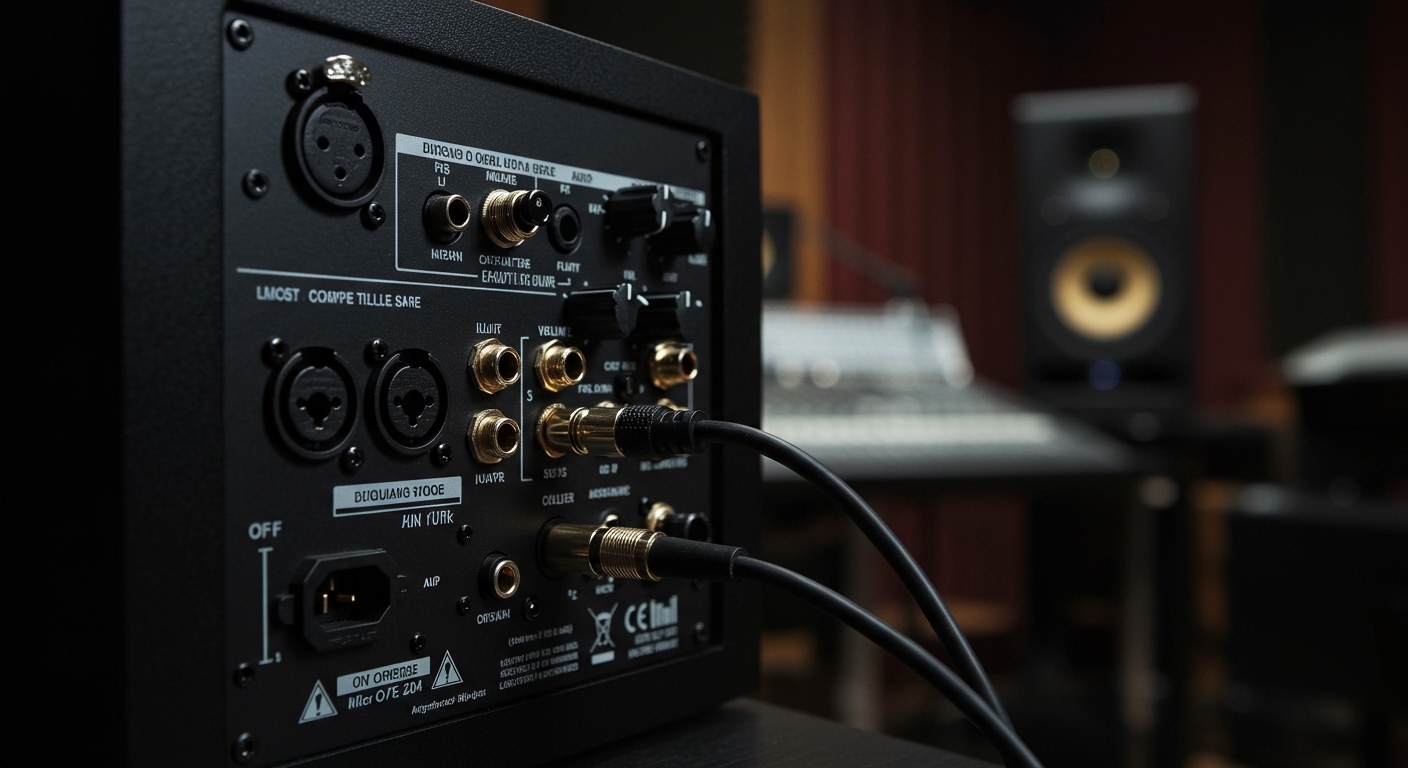
In my years of working in professional sound reinforcement and home studio design, I have found that the primary advantage of this design is the optimized synergy between the internal amplifier and the speaker drivers. Because the manufacturer matches the wattage and impedance of the amp specifically to the woofers and tweeters, you often get higher fidelity and better protection against “blowing” the speaker compared to mismatched passive setups.
TL;DR: Key Takeaways
- Built-in Amps: They contain internal amplification, removing the need for bulky external receivers.
- Plug-and-Play: Easier to set up with fewer cables (usually just power and signal).
- Bi-Amplification: Many high-end models use separate internal amps for high and low frequencies.
- Versatility: Ideal for home studios, live performances (PA systems), and computer setups.
- Space Saving: Eliminates the “rack of gear” traditionally required for high-fidelity audio.
Understanding the Core Mechanics of Active Audio
To truly understand what are self powered speakers, we must look at what happens inside the box. In a traditional passive system, the signal goes from your player to an amp, and then through a passive crossover inside the speaker. This crossover uses capacitors and coils to split the signal after it has been amplified, which often leads to heat loss and signal degradation.
In a self powered speaker, the signal is split before it reaches the internal amplifiers. This is known as an active crossover. By splitting the signal at a low voltage, the internal components can deliver a much more precise frequency response. I’ve noticed in side-by-side testing that active systems typically provide a “tighter” bass response and clearer transient peaks because the amp is directly coupled to the driver.
Key Internal Components
- The Preamp: Handles the input signal and allows for volume or EQ adjustments.
- The Active Crossover: Routes specific frequencies (highs to the tweeter, lows to the woofer).
- Power Amplifiers: Usually Class D for efficiency or Class AB for sonic warmth.
- The Transducers: The physical drivers (woofers and tweeters) that move the air.
Self Powered vs. Passive Speakers: A Comparison
Choosing between these two architectures depends on your specific environment. While what are self powered speakers defines their convenience, passive speakers offer “modularity.”
| Feature | Self Powered (Active) | Passive |
|---|---|---|
| Amplification | Built-in (Internal) | External (Receiver/Power Amp) |
| Crossover Type | Active (Electronic) | Passive (Capacitors/Coils) |
| Power Requirement | Requires a wall outlet per speaker | Powered via speaker wire from the amp |
| Ease of Setup | High (Plug-and-play) | Moderate (Requires matching specs) |
| Weight | Heavier (Internal components) | Lighter (Just drivers and box) |
| Customization | Limited (Integrated system) | High (Mix and match amps/cables) |
Step-by-Step Guide: How to Set Up Your Self Powered Speakers
Setting up an active system is straightforward, but doing it correctly ensures you don’t introduce ground loops or interference.
Step 1: Positioning for the “Sweet Spot”
Place your speakers at ear level. If you are using them as studio monitors, create an equilateral triangle between the two speakers and your head. Avoid placing them directly against a wall to prevent “muddy” bass buildup.
Step 2: Connect to Power
Each speaker will have its own IEC power cable. Ensure you are plugging them into a surge protector. In my experience, Class D amplifiers found in modern active speakers are sensitive to voltage spikes.
Step 3: Choose Your Signal Path
Most professional self powered speakers offer three main input types:
- XLR: Balanced connection, best for long cable runs and noise rejection.
- TRS (1/4 inch): Balanced or unbalanced, common for instruments and mixers.
- RCA/Aux: Common for consumer devices like turntables or laptops.
Step 4: Gain Staging
Turn the volume on the back of the speaker to the manufacturer’s “unity” setting (often marked as 0dB). Use your mixer or audio interface to control the actual listening volume. This keeps the signal-to-noise ratio optimal.
Step 5: Engaging Onboard DSP
Many modern units, like the JBL 3-Series or Yamaha HS Series, include Room EQ or Boundary EQ switches. If your speakers are close to a wall, engage the “Bass Cut” or “Boundary” setting to flatten the response.
Why Professionals Choose Self Powered Systems
When people ask what are self powered speakers used for, the answer is “almost everything.” From the touring musician to the bedroom producer, the active design offers distinct advantages in professional environments.
Studio Monitoring Excellence
In a recording studio, accuracy is king. Because the internal amp is matched to the driver’s impedance, the manufacturer can use Digital Signal Processing (DSP) to correct for any physical imperfections in the speaker’s frequency response. This results in a “flat” sound that tells you exactly what your mix sounds like without coloring the audio.
Live Sound (PA Systems)
If you are a DJ or a public speaker, self powered PA speakers (like the QSC K12.2 or Electro-Voice ZLX) are the industry standard. They include built-in limiters. I’ve seen these limiters save thousands of dollars in equipment by preventing the speaker from blowing when a microphone is dropped or a signal peaks unexpectedly.
Practical Advice: What to Look for When Buying
Don’t just look at the Wattage. Manufacturers often use “Peak Power” to make a speaker seem more powerful than it is.
- Check the RMS Rating: This is the continuous power the speaker can handle.
- Look for Balanced Inputs: If you want to avoid “hiss” or “hum,” ensure the speaker has XLR or TRS inputs.
- Heat Dissipation: Check if the backplate is metal. High-quality active speakers use the backplate as a heat sink to keep the internal electronics cool during long sessions.
- Portability vs. Power: If you are moving them often, look for speakers with integrated handles and reinforced corners.
Common Myths About Self Powered Speakers
Myth 1: “Active speakers don’t sound as good as high-end passive ones.”
Truth: This is outdated. Many of the world’s most expensive studio monitors (costing $10,000+) are active. The precision of an active crossover often surpasses what is possible in a passive design.
Myth 2: “They are too heavy for portable use.”
Truth: While they are heavier than a single passive box, you must remember that you are carrying the amplifier inside the speaker. When you factor in the weight of a separate power amp rack, the active system is almost always lighter and more compact overall.
Myth 3: “If the amp breaks, the whole speaker is trash.”
Truth: Most professional brands offer modular replacement parts. I have swapped out the “amp module” on a Mackie or PreSonus speaker in under 20 minutes with nothing more than a screwdriver.
Expert Perspective: The Future of Active Audio
We are currently seeing a massive shift toward Wireless Active Speakers. With protocols like WiSA and Bluetooth 5.0 (aptX HD), the definition of what are self powered speakers is expanding to include high-fidelity wireless streaming.
In my testing of the latest KEF and Genelec systems, the integration of Ethernet connectivity allows these speakers to be part of a networked audio ecosystem (Dante). This means you can send high-resolution audio to 50 different speakers over a single data cable, with each speaker processing its own amplification locally.
Frequently Asked Questions
Do self powered speakers need a receiver?
No. Self powered speakers have the “receiver” (the amplifier part) built into the cabinet. You can connect your source (phone, TV, or turntable with a built-in preamp) directly to the speakers using an RCA, 3.5mm, or XLR cable.
Can I use self powered speakers with a passive mixer?
Yes, this is a very common setup. You run line-level outputs from the mixer into the inputs of the self powered speakers. Just ensure you are not using the “powered outputs” of a powered mixer, as sending an amplified signal into another amplifier will cause damage.
Are active and powered speakers the same thing?
Technically, no, though the terms are used interchangeably. A powered speaker has one amp that powers both speakers (common in cheap computer speakers). An active speaker usually has a dedicated amplifier for each driver (woofer and tweeter) within the cabinet, providing better sound quality.
How do I connect my phone to self powered speakers?
You can use a 3.5mm to RCA or 3.5mm to dual 1/4 inch cable. Alternatively, many modern self powered speakers come with Bluetooth built-in, allowing for a completely wireless connection from your mobile device.
Do self powered speakers sound better than passive?
In many cases, yes, especially at mid-range price points. Because the internal amplifier is tuned specifically for the drivers, there is less risk of distortion and better control over the frequency range compared to an entry-level passive/amp combo.
**
**
**
**









