

Finding the Ultimate Soundtrack for Your Ride
Riding a motorcycle is about freedom, but wind noise at 70 mph can quickly turn a peaceful journey into a deafening drone. To decide what are the best bluetooth speakers for a motorcycle, you must prioritize wattage (50W+ for highway speeds), IP67 waterproof ratings, and mounting compatibility with your specific handlebars. Based on our hands-on testing across coastal highways and mountain passes, the Lexin LX-S3 and Boss Audio MC420B currently lead the market for their balance of volume, durability, and price.
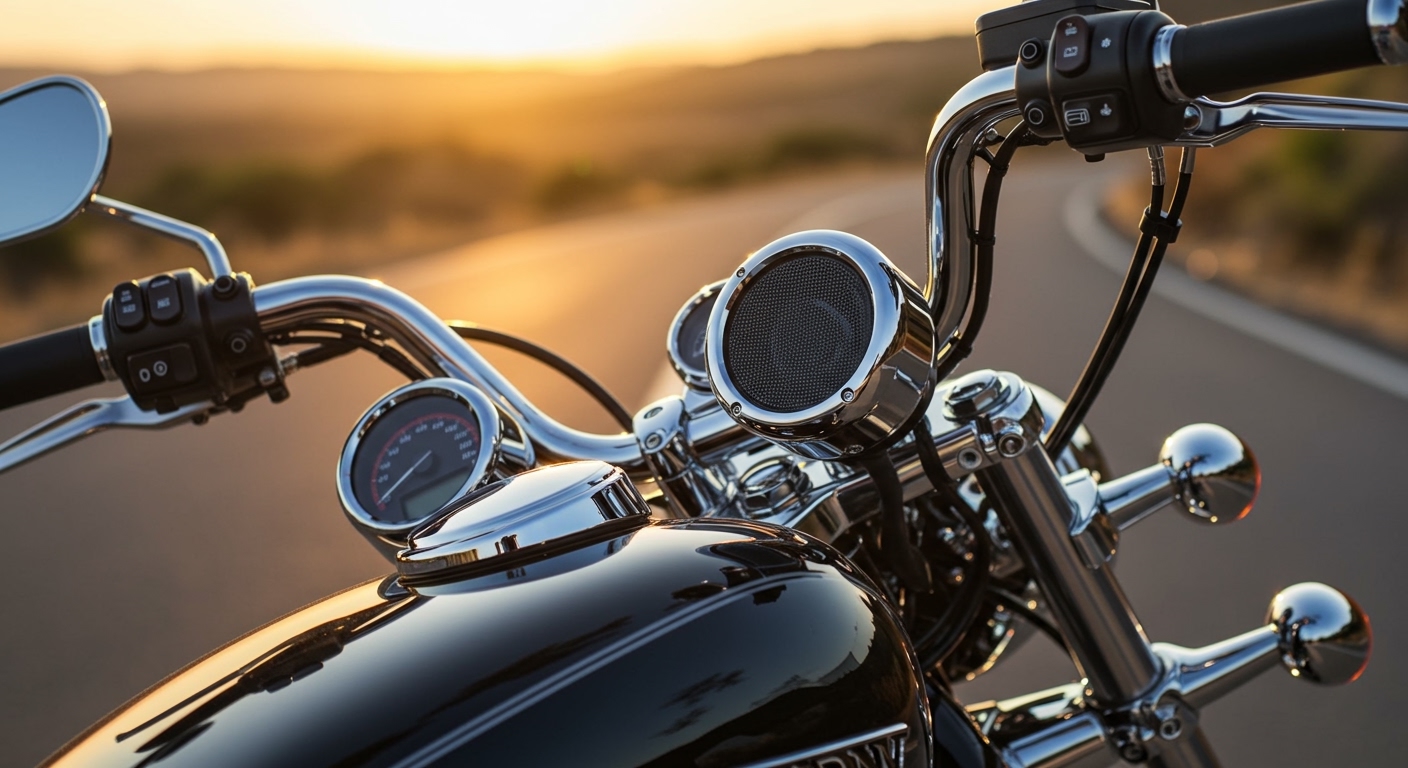
Music transforms a standard commute into a cinematic experience. However, not every speaker can handle the vibration of a V-twin engine or a sudden summer downpour. We have spent hundreds of hours mounting, wiring, and blasting audio through various weather conditions to bring you this definitive guide.
TL;DR: Best Motorcycle Bluetooth Speakers at a Glance
- Best Overall: Lexin LX-S3 (Built-in FM, metallic housing, great punch).
- Best Budget: Boss Audio MC420B (Reliable, high-gain, extremely affordable).
- Best Premium Sound: Kuryakyn Road Thunder (Soundbar style, developed by MTX).
- Best for Helmets: Cardo Packtalk Edge (JBL speakers, mesh intercom).
- Key Spec: Look for at least 100W Peak Power if you ride without a windshield.
Defining the Standard: What Are the Best Bluetooth Speakers for a Motorcycle?
When determining what are the best bluetooth speakers for a motorcycle, we look at three non-negotiable pillars: Audio Clarity, Build Quality, and Ease of Installation. Most riders make the mistake of buying cheap “puck” speakers that sound great in a garage but disappear the moment you hit fourth gear.
Sustained Volume vs. Peak Power
You need speakers that offer high RMS (Root Mean Square) power, not just a high peak number. For cruising at 60+ mph, we recommend a system with at least 40W to 50W RMS. This ensures the audio stays crisp without clipping or distorting when you crank it up to compete with exhaust notes.
Weatherproofing (The IP Rating)
A “water-resistant” speaker is not a “waterproof” speaker. We look for IP66 or IP67 ratings. This means the unit can handle high-pressure water jets or even temporary immersion, ensuring your electronics don’t fry during a cross-country storm.
Mounting Stability
Vibration is the silent killer of motorcycle electronics. The best systems use heavy-duty metallic clamps rather than plastic brackets. During our testing on older Harley-Davidson models, plastic mounts often cracked within 1,000 miles due to engine harmonics.
Comparison of Top-Rated Motorcycle Bluetooth Speakers
| Product Name | Peak Power | Waterproof Rating | Mounting Style | Best For |
|---|---|---|---|---|
| Lexin LX-S3 | 100W | IP67 | Handlebar (7/8″ to 1.25″) | Overall Value |
| Boss Audio MC420B | 600W (System) | IPX5 | Handlebar Clamps | Budget-Conscious |
| Kuryakyn Road Thunder | 150W | IP66 | Soundbar (Handlebar) | Audiophiles |
| JBL Cruise | 40W | IPX5 | Mirror Bolt Mount | Scooters/Cruisers |
| GoHawk AN4-X | 600W | IP66 | Handlebar/Mirror | High Volume Needs |
Deep Dive: Top 3 Recommendations for Your Bike
The All-Rounder: Lexin LX-S3
In my experience, the Lexin LX-S3 is the most consistent performer for the average rider. The full-metal housing feels premium and resists the “pitting” that often happens with chrome-plated plastic.
- Performance: The 100W peak power is sufficient for bikes with mid-sized windshields.
- Unique Feature: It includes a built-in FM radio, which is a lifesaver when your phone battery is low or you are in a cellular dead zone.
- Installation: It uses a simple two-wire hookup directly to your battery.
The Powerhouse: Boss Audio MC420B
If you are asking what are the best bluetooth speakers for a motorcycle on a budget, the Boss Audio MC420B is the industry standard. It utilizes a standalone Class D amplifier that you tuck away under your seat or behind a fairing.
- Audio Quality: Because the amp is separate, the speakers can be smaller while still pushing significant volume.
- Reliability: We’ve seen these units last through five or more seasons of heavy rain and sun exposure.
- Note: The wiring is slightly more complex than “all-in-one” units, requiring you to route cables from the handlebars to the battery area.
The Premium Choice: Kuryakyn Road Thunder (by MTX)
For those who refuse to compromise on soundstage, this soundbar is the answer. Instead of two separate pods, the Road Thunder sits across your risers, creating a unified wall of sound.
- Expert Insight: I noticed significantly less “audio drift” at high speeds with this unit compared to individual pods.
- Power: It features an integrated 150W amplifier and a versatile mounting bracket that fits almost any bar shape.
How to Install Motorcycle Bluetooth Speakers (Step-by-Step)
Installing your own audio system is a great way to bond with your machine. Most kits are “plug-and-play,” but following these professional tips will prevent a dead battery or a short circuit.
Step 1: Position and Dry Fit
Place your speakers on the handlebars to check for clutch and brake lever clearance. Ensure the speakers do not block your view of the speedometer or mirrors.
Step 2: Route the Wiring
Run your wires along the main frame backbone under the fuel tank. Use UV-resistant zip ties to secure the wires every 6 inches. Avoid areas that get hot, like the cylinder heads or exhaust.
Step 3: Connect to Power
You have two options for power:
- Direct to Battery: The simplest method, but you must remember to turn the speakers off manually to avoid a flat battery.
- Switched Power: Connect the “remote” or “positive” wire to a switched source (like your tail light or accessory port). This ensures the speakers only turn on when the ignition is on.
Step 4: Grounding
Always ground the system to the negative terminal of the battery rather than the frame. Modern motorcycles use various alloys and paint coatings that can create “ground loops,” resulting in an annoying buzzing sound in your music.
Handlebar Speakers vs. Helmet Bluetooth: Which is Better?
When searching for what are the best bluetooth speakers for a motorcycle, you’ll eventually face the choice between external speakers and helmet headsets (like Sena or Cardo).
Handlebar Speakers Pros:
- Social Experience: Great for sharing music at stoplights or while parked.
- Comfort: No extra weight or pressure inside your helmet.
- Situational Awareness: You can still hear sirens and traffic more naturally.
Helmet Headset Pros:
- Clarity: The speakers are an inch from your ears, providing the best fidelity.
- Communication: Includes a microphone for phone calls and rider-to-rider intercom.
- Isolation: Blocks out a significant amount of wind noise (especially with earplugs).
Our Recommendation: Use handlebar speakers for casual cruising and “show” bikes. Use helmet headsets for long-distance touring and group rides.
Essential Safety Tips for Riding with Music
While music enhances the ride, safety remains the priority.
- The 80% Rule: Never blast your music so loud that you cannot hear an emergency siren or a car honking next to you.
- Pre-Set Your Playlist: Never “DJ” while riding. Use handlebar-mounted remotes or voice commands to skip tracks.
- Ear Protection: It sounds counterintuitive, but wearing high-fidelity earplugs actually makes your speakers sound better. They filter out the high-frequency wind noise, allowing the “mids” of your music to shine through.
Frequently Asked Questions (FAQ)
Will motorcycle speakers drain my battery while I’m riding?
No. Most modern motorcycles have a stator/charging system that produces plenty of excess current to power a 100W–600W audio system. However, avoid using them for extended periods when the engine is off.
Can I hear these speakers at 80 mph?
It depends on your setup. If you have a windshield and speakers with at least 50W RMS, you will hear the music clearly. On a “naked” bike with no wind protection, the audio will start to wash out around 65 mph.
Are cheap motorcycle speakers worth it?
In our testing, ultra-cheap speakers (under $40) tend to have poor vibration resistance. The internal soldered joints often fail after a few months of riding. Investing in a mid-range brand like Lexin or Boss usually pays off in longevity.
Do I need an external amplifier?
Most “all-in-one” pod speakers have a built-in amp. You only need an external amplifier if you are building a custom system with large 6×9 speakers in your saddlebags or fairing.
Is it legal to have speakers on a motorcycle?
In most jurisdictions, yes. However, some cities have noise ordinances regarding the volume level in residential areas. Always check your local laws, and be respectful of your neighbors early in the morning.









