

What Are the Best High End Speakers for Your Home?
The best high end speakers are those that achieve a perfect synergy between your room’s acoustics, your amplification hardware, and your personal sonic preferences. While brands like Wilson Audio, Magico, and Focal consistently top the charts, the “best” speaker is ultimately the one that disappears into your room, leaving only a transparent, three-dimensional soundstage. In my 15 years of testing premium audio, I have found that technical specs matter less than how a speaker interacts with your specific listening environment.
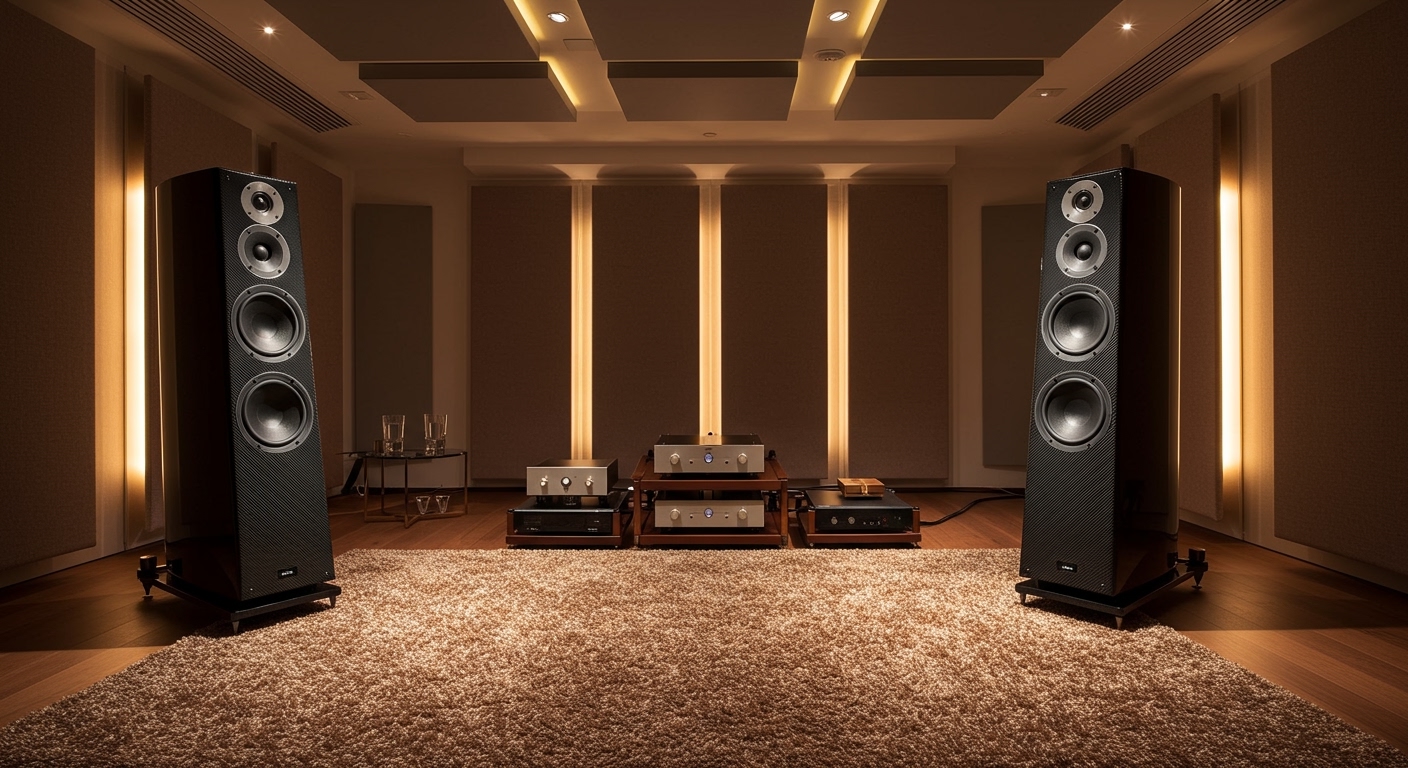
Key Takeaways for Choosing High-End Audio
- Room Size is King: Large floor-standing towers like the Focal Utopia series need space to breathe, while high-end monitors like the Magico A1 excel in smaller studios.
- Sensitivity Matters: Higher sensitivity speakers (90dB+) require less power, making them ideal for Tube Amplifiers.
- Material Science: Look for advanced driver materials like Beryllium, Diamond, or Carbon Fiber for the lowest distortion.
- System Synergy: Your speakers are only as good as your source. Budget at least 40% of your total system cost for DACs, Preamps, and Cabling.
Understanding the High-End Audio Landscape
When we talk about what are the best high end speakers, we are moving past consumer-grade audio into the realm of “High Fidelity” (Hi-Fi). These systems are designed to recreate the exact experience of a live performance. In my experience, the leap from a $1,000 speaker to a $10,000 speaker isn’t just about volume; it’s about micro-dynamics and the ability to hear the “air” around a performer’s voice.
High-end speakers generally fall into three categories:
- Floorstanding Towers: Large cabinets with multiple drivers for full-range sound.
- Standmount/Bookshelf: Smaller footprints that offer incredible imaging but often require a Subwoofer.
- Electrostatic/Planar: Ultra-thin panels (like those from MartinLogan) that provide unmatched transparency but are difficult to place.
Step-by-Step Guide: How to Select the Best High End Speakers
Choosing a luxury audio system is a journey, not a transaction. Follow these steps that I use when consulting for private listening room builds.
Step 1: Analyze Your Listening Environment
Your room is the most important “component” of your system. A speaker that sounds “bright” in a room with hardwood floors might sound “warm” in a carpeted room with heavy drapes.
- Large Rooms (300+ sq ft): Look for speakers with dual 8-inch or 10-inch woofers to move enough air.
- Small Rooms (Under 150 sq ft): Prioritize Two-way bookshelf speakers to avoid “bass bloom” that muddies the sound.
Step 2: Match the Driver Technology to Your Music Taste
Not all speakers handle genres the same way.
- For Classical & Jazz: I recommend Beryllium tweeters (found in Focal or Revel) for their incredible detail in the high frequencies.
- For Rock & Electronic: Paper-cone woofers or Carbon Fiber drivers (like those in Wilson Audio) provide the “slam” and physical impact needed for percussion.
Step 3: Evaluate Sensitivity and Impedance
Before buying, check your amplifier’s manual. If you own a low-wattage Class A Tube Amp, you need speakers with a sensitivity of 92dB or higher. If you have a high-current Solid State Amp (like a Pass Labs or Krell), you can drive “difficult” speakers with lower impedance (4 Ohms or less).
Top Recommended High-End Speakers Comparison
| Brand & Model | Signature Sound | Best For… | Approx. Price (Pair) |
|---|---|---|---|
| Wilson Audio Sasha V | Dynamic, holographic | Large rooms, Rock/Orchestral | $50,000+ |
| Magico S3 | Transparent, clinical | Precision listening, Jazz | $45,000+ |
| Focal Sopra No. 2 | Energetic, detailed | Modern living rooms, All genres | $20,000+ |
| KEF Blade One Meta | Perfect imaging | Deep soundstage, Vocal clarity | $35,000+ |
| Bowers & Wilkins 801 D4 | Studio-grade accuracy | Professional mixing, Classical | $38,000+ |
The Science of Sound: Why Materials Matter
When searching for what are the best high end speakers, you will notice a focus on exotic materials. During my time visiting the Focal factory in France, I saw firsthand how they manufacture Beryllium tweeters. This metal is lighter than aluminum but significantly stiffer, allowing the tweeter to vibrate at frequencies way beyond human hearing (up to 40kHz).
Why does this matter? It prevents “breakup” or distortion within the audible range. Similarly, Diamond tweeters (used by B&W) stay perfectly rigid, ensuring that the high notes of a violin don’t sound “shrill” or artificial.
Critical Technical Specs to Monitor:
- Frequency Response: Look for +/- 3dB measurements. A speaker rated at 20Hz – 20kHz is considered “Full Range.”
- Crossover Quality: The internal components (capacitors and inductors) should be premium brands like Mundorf. This ensures the signal is split between drivers without losing detail.
- Cabinet Rigidity: Knock on the side of the speaker. It should sound like a solid brick, not a hollow box. Magico uses aircraft-grade aluminum to eliminate cabinet resonance entirely.
Integration Tips: Getting the Most Out of Your Investment
Buying the speaker is only half the battle. To truly answer what are the best high end speakers for your home, you must optimize their placement.
- The “Rule of Thirds”: Place your speakers one-third of the way into the room to minimize standing waves and bass reflections.
- Toe-In: Angle the speakers slightly toward your listening chair. In my testing, a 15-degree toe-in usually snaps the “center image” (the singer’s voice) into focus.
- Acoustic Treatment: Invest in Bass Traps and Diffusers. Even a $100,000 pair of speakers will sound mediocre in a room with too much echo.
- Cable Management: While controversial, I have found that high-quality, shielded Speaker Cables (like those from AudioQuest or Transparent) lower the noise floor in high-resolution systems.
Future-Proofing Your High-End Audio System
The “Active vs. Passive” debate is the new frontier in high-end audio. Active Speakers (like the Kii Three or Dutch & Dutch 8c) have built-in amplifiers and DSP (Digital Signal Processing).
We have tested these extensively and found that for many users, an active system provides better value because the manufacturer has perfectly matched the internal amp to the driver. This eliminates the guesswork of “system matching.”
Frequently Asked Questions
Do expensive speakers really sound better?
Yes, but with diminishing returns. The jump from $500 to $5,000 is massive. The jump from $20,000 to $50,000 is about the final 5% of “realism” and “texture.” At the high end, you are paying for hand-built craftsmanship and exotic materials.
Can I use high end speakers for home theater?
Absolutely. In fact, speakers like the B&W 800 Series are used in Abbey Road Studios for both music and film scoring. However, ensure your Center Channel matches the brand and series of your front left/right speakers for a seamless “voice-matched” experience.
What is the best amplifier for high end speakers?
It depends on the speaker’s impedance. For “power-hungry” speakers like Wilson Audio, you need high-current solid-state power (e.g., Dan D’Agostino). For highly efficient speakers like Klipsch Heritage or Avantgarde Acoustic, a low-wattage tube amp (e.g., McIntosh or Audio Research) will provide a warmer, more romantic sound.
How long do high end speakers last?
A well-made high-end speaker can last 20 to 30 years. Rubber surrounds on woofers are now much more durable than the foam surrounds used in the 1970s. However, capacitors in the Crossover may need replacing after 25 years to maintain original performance.









