

What Do Public Speakers Do? The Core Responsibilities of Professional Orators
Public speakers educate, inspire, and persuade audiences by delivering structured verbal presentations designed to spark change or transfer knowledge. Beyond just talking on stage, public speakers conduct deep audience research, draft compelling narratives, and master the art of non-verbal communication to ensure their message resonates.
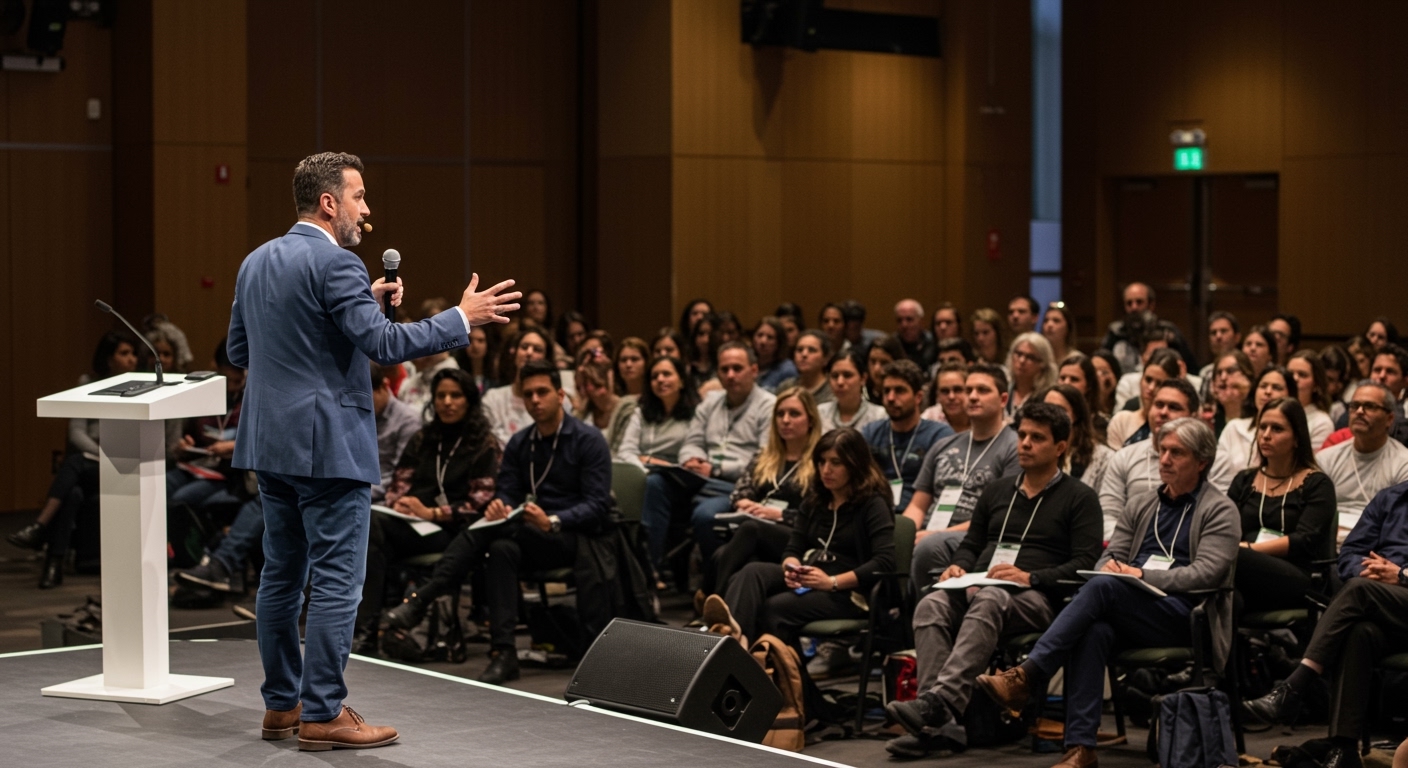
Standing in front of a crowd often ranks as a top human fear, yet it remains the most powerful way to lead. Whether you are presenting a TED Talk, leading a corporate seminar, or delivering a wedding toast, the goal is the same: to move an audience from point A to point B. In my fifteen years of professional speaking, I have learned that a great speech is 90% preparation and only 10% delivery.
Quick Takeaways for Aspiring Speakers
- Audience First: Always tailor your content to the specific needs and “pain points” of your listeners.
- The Power of Three: Structure your main points in groups of three to make them more memorable.
- Body Language: Use open gestures and consistent eye contact to build immediate trust.
- Rehearsal Ratio: Aim for at least one hour of practice for every five minutes of presentation time.
- Information Gain: Move beyond generic advice by sharing personal “war stories” and proprietary data.
Understanding the Role: What Do Public Speakers Do Every Day?
When people ask, “what do public speakers do,” they often only imagine the 45 minutes spent under the spotlights. In reality, the life of a professional orator involves a diverse set of technical and creative tasks.
Public speakers act as researchers and synthesizers of information. We spend weeks diving into a topic, interviewing subject matter experts, and looking for unique data points that the audience hasn’t heard before. This ensures we provide high Information Gain, which is what keeps an audience engaged.
Additionally, public speakers function as event partners. We work with event planners and AV technicians to ensure the lighting, sound, and stage layout support the message. A speaker’s job starts the moment the contract is signed, involving several “pre-event” calls to understand the organization’s culture.
Step 1: Audience Analysis and Strategic Planning
Before you write a single word, you must understand who is sitting in the seats. What do public speakers do to prepare? We perform a deep-dive “Audience Audit.”
I recommend creating an “Audience Persona.” Ask yourself: What keeps them up at night? What jargon do they use? What is the one thing they should do differently after hearing you speak?
Key Questions for Audience Discovery:
- What is the average expertise level of the attendees regarding your topic?
- What are the “unspoken” challenges this specific group is currently facing?
- What is the desired emotional state you want them to leave with?
Step 2: Crafting the “Narrative Arc”
A common mistake is treating a speech like a data dump. Professional public speakers use storytelling frameworks to keep the audience hooked. We often use the “Hero’s Journey” or “Problem-Agitation-Solution” models.
Start with a “Hook”—a startling statistic, a provocative question, or a brief personal anecdote. In my experience, starting with “Hello, my name is…” is the fastest way to lose an audience’s attention. Instead, dive straight into the heart of the conflict.
The Anatomy of a High-Impact Speech
- The Hook (0-2 Minutes): Grab attention and establish your E-E-A-T (Experience, Expertise, Authoritativeness, and Trustworthiness).
- The Meat (15-30 Minutes): Deliver three core pillars of information, supported by data and real-world examples.
- The Call to Action (5 Minutes): Give the audience one specific, actionable task to complete within 24 hours.
Step 3: Mastering Delivery and Non-Verbal Cues
What you say is important, but how you say it determines if you are believed. Public speakers use their bodies as instruments to emphasize key points.
Eye contact should be sustained. Don’t “scan” the room; instead, look at one person for a full sentence before moving to the next. This creates a sense of individual connection even in a room of thousands.
Common Speaker Roles and Objectives
| Speaker Type | Primary Objective | Key Skill Required | Typical Venue |
|---|---|---|---|
| Keynote Speaker | Inspire and set the event tone | Storytelling & Charisma | Large Conventions |
| Technical Presenter | Educate on complex systems | Data Visualization | Scientific Symposia |
| Motivational Speaker | Drive emotional/behavioral change | High Energy & Empathy | Sales Kickoffs |
| Workshop Facilitator | Teach practical skills | Active Listening | Corporate Training |
Step 4: Overcoming Stage Fright and Performance Anxiety
Even the pros get nervous. When considering what do public speakers do to handle “the jitters,” the answer is reframing. We don’t try to “calm down”; we reframe the adrenaline as “excitement.”
I personally use the “Box Breathing” technique: breathe in for four seconds, hold for four, exhale for four, and hold for four. This physiologically signals to your brain that you are not in physical danger, lowering your heart rate.
Pro-Tip: Arrive at the venue early. Walk the stage. Stand in the center and visualize the room full of people cheering for your success. Familiarity breeds confidence.
Step 5: Using Visual Aids and Technology Effectively
Your slides should not be your teleprompter. Public speakers use visual aids like PowerPoint, Keynote, or Prezi to enhance the message, not repeat it.
Follow the 10/20/30 Rule popularized by Guy Kawasaki: No more than 10 slides, lasting no more than 20 minutes, using a font size no smaller than 30 points. Use high-quality images and minimal text to ensure the audience stays focused on your voice.
Step 6: Handling Q&A and Audience Interaction
The Q&A session is often where a speaker’s true expertise is revealed. What do public speakers do when they don’t know an answer? They are honest.
I always say, “That’s a fascinating perspective that I haven’t looked at from that angle. Let me research that and get back to you.” This builds more trust than a faked answer. Always end the Q&A by reclaiming the “last word” with a powerful closing statement, rather than letting the energy fizzle out on a random question.
Step 7: The Business of Being a Speaker
If you want to do this professionally, you must treat yourself as a brand. This involves:
- Building a “Sizzle Reel”: A 2-3 minute video showing you in action.
- Social Proof: Collecting testimonials and data-backed “Success Stories” from previous clients.
- Niche Authority: Writing articles or books to prove you are a thought leader in your specific field.
Frequently Asked Questions
How much do professional public speakers get paid?
Fees vary wildly. Beginners may speak for free or for “travel and exposure.” Mid-level speakers often earn $2,500 to $7,500 per engagement, while top-tier keynote speakers can command $20,000 to $100,000+.
Do I need a certification to be a public speaker?
No, but organizations like Toastmasters International or the National Speakers Association (NSA) provide invaluable training and networking. Most clients hire based on your demonstrated expertise and “stage presence” rather than a certificate.
What is the best way to practice speaking?
Record yourself on video. It will be uncomfortable to watch, but you will notice distracting habits like saying “um,” pacing too much, or fiddling with your hands. Watching your own “game film” is the fastest way to improve.
How do I find speaking engagements?
Start local. Reach out to your local Chamber of Commerce, Rotary Clubs, or industry-specific meetups. Once you have a few recorded sessions, you can start applying to larger national conferences through “Call for Speakers” applications.
What do public speakers do to stay relevant?
We are constant learners. I spend at least an hour a day reading industry news, watching other great speakers on TED, and refining my stories. The moment you stop updating your content is the moment you become obsolete.









