

Understanding What a Subwoofer Does for Speakers
A subwoofer reproduces the low-frequency audio signals, commonly known as bass, that standard speakers are physically unable to handle. By taking over the heavy lifting of frequencies typically between 20Hz and 200Hz, a subwoofer allows your main speakers to focus on mid-range and high-frequency sounds, resulting in a cleaner, more immersive, and distortion-free listening experience.
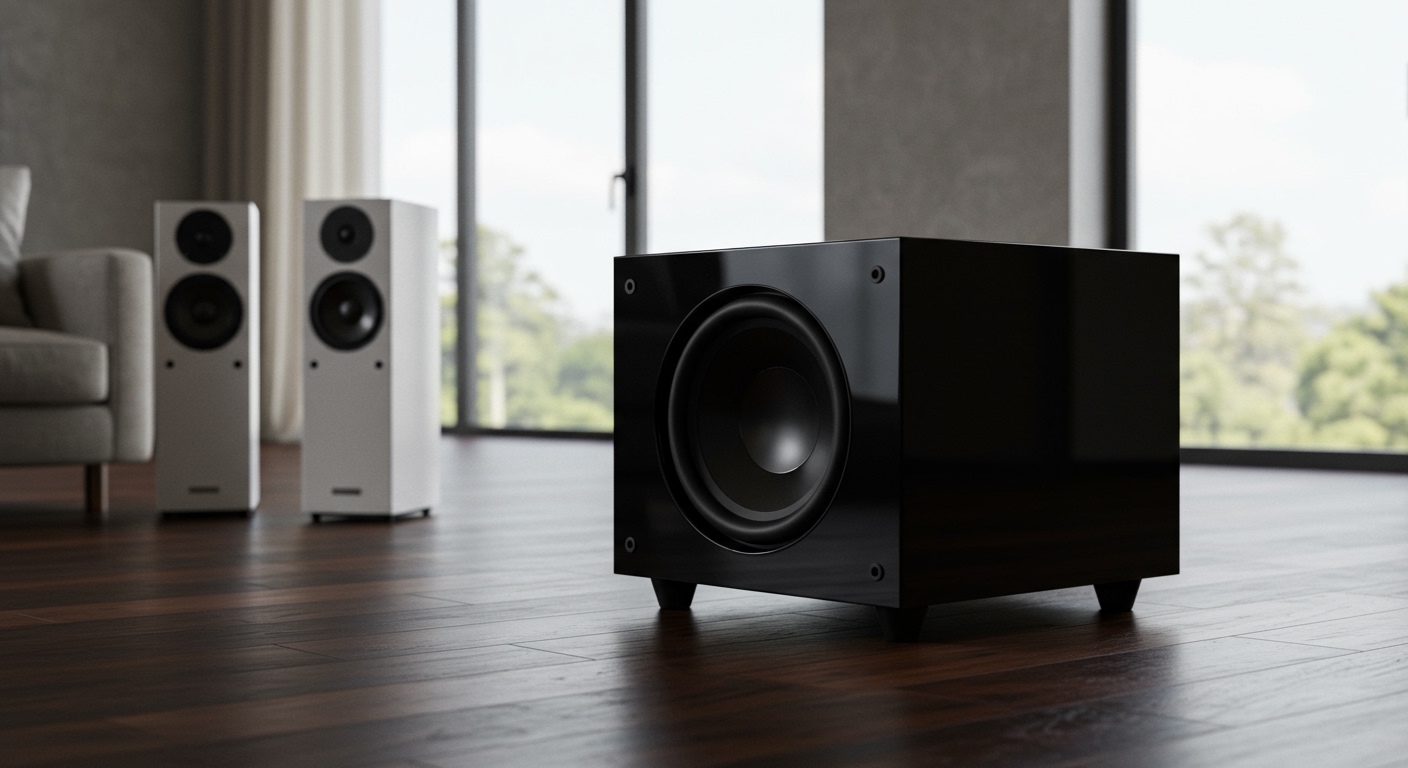
In my years of testing high-end home theaters and studio monitors, I have found that adding a subwoofer isn’t just about “more bass.” It is about acoustic balance. Without a dedicated low-frequency driver, your bookshelf or floor-standing speakers often struggle to move enough air to recreate deep notes, leading to a “thin” sound. When you integrate a subwoofer, you effectively increase the dynamic range and headroom of your entire system.
TL;DR: Key Takeaways
- Deep Bass Reproduction: Subwoofers handle the lowest octaves (20Hz–200Hz) that standard drivers miss.
- Reduced Distortion: By filtering bass away from smaller speakers, they play louder and clearer.
- Immersive Soundstage: Provides the “physical” feel in movies and the “thump” in music.
- System Efficiency: Offloads power-hungry low frequencies from your main amplifier.
- Customizable Crossover: Allows you to “blend” sounds perfectly between different speaker sizes.
The Core Mechanics: What Does a Subwoofer Do for Speakers?
To understand what a subwoofer does for speakers, we first have to look at the physics of sound. Sound is created by moving air. Higher pitches (treble) require small, fast movements, while lower pitches (bass) require large, powerful movements of a speaker cone.
Standard speakers, even large floor-standing models, have physical limits. When a standard speaker tries to play a deep 30Hz kick drum note while simultaneously playing a 1kHz vocal, the cone can struggle. This leads to Intermodulation Distortion, where the bass movements interfere with the clarity of the vocals.
Expanding the Frequency Response
Most high-quality bookshelf speakers only play down to about 50Hz or 60Hz. Anything lower simply disappears or sounds muffled. A subwoofer extends your system’s reach down to the limits of human hearing (20Hz) and sometimes even lower (infrasonic), ensuring you hear every note the artist or director intended.
Increasing “Headroom” and Volume
Bass frequencies require significantly more amplifier power than treble. When you use a powered subwoofer (one with its own built-in amp), you relieve your main receiver or amplifier from the most taxing part of the job. This gives your main speakers more “headroom,” allowing them to play at higher volumes without clipping or sounding strained.
How a Subwoofer Enhances Different Audio Types
I’ve spent hundreds of hours A/B testing systems with and without subwoofers. The difference isn’t just audible; it’s tactile. Here is how the function of a subwoofer changes based on what you are listening to:
Subwoofers in Home Theater
In a cinema setup, the subwoofer is responsible for the LFE (Low-Frequency Effects) channel. This is the “.1” in a 5.1 or 7.1 surround sound system.
- Impact: It creates the pressurized feeling of an explosion or the low rumble of a spaceship.
- Realism: Small speakers cannot recreate the “scale” of a cinema. A 12-inch or 15-inch subwoofer provides the physical impact that makes a movie feel “real.”
Subwoofers in Hi-Fi Music
Audiophiles often debate the use of subwoofers, but when integrated correctly, they are essential.
- Instrument Accuracy: Instruments like the pipe organ, upright bass, and synthesizers have fundamentals that sit well below what most speakers can reproduce accurately.
- Soundstage Width: Interestingly, adding a sub often makes the “stage” feel wider. This is because low-frequency cues help our brains perceive the size of the recording room.
Comparison: Sealed vs. Ported Subwoofers
Not all subwoofers function the same way. The cabinet design significantly changes what a subwoofer does for speakers in terms of tone and output.
| Feature | Sealed Subwoofer (Acoustic Suspension) | Ported Subwoofer (Bass Reflex) |
|---|---|---|
| Best For | Critical music listening, small rooms. | Movies, large rooms, hip-hop/EDM. |
| Sound Quality | Tight, accurate, and “fast” bass. | Boomy, powerful, and very loud. |
| Size | Usually compact and easy to hide. | Larger cabinets to accommodate ports. |
| Transient Response | Excellent (stops and starts instantly). | Moderate (can have “port noise” or overhang). |
| Deepest Extension | Rolls off gently at low frequencies. | Plays very loud until its “tuning frequency.” |
Step-by-Step Guide: Integrating a Subwoofer with Your Speakers
Adding a sub isn’t just “plug and play.” To maximize what a subwoofer does for speakers, you must calibrate it correctly. Follow these steps that I use during professional installs:
Step 1: Find the Optimal Placement (The “Subwoofer Crawl”)
Bass waves are long and interact heavily with your room’s walls.
- Place the subwoofer in your primary listening chair.
- Play a bass-heavy track.
- Crawl around the room on the floor and listen for where the bass sounds the clearest (not just the loudest).
- Swap places: put the subwoofer in the spot where it sounded best.
Step 2: Set the Crossover Frequency
The crossover is the “hand-off” point where the speakers stop playing and the subwoofer starts.
- The Golden Rule: Set your crossover to 80Hz. This is the industry standard (THX recommendation).
- If you have very small satellite speakers, you may need to go up to 100Hz or 120Hz.
- If you have large tower speakers, you might experiment with 60Hz.
Step 3: Adjust the Phase Switch
If your subwoofer is across the room from your speakers, the sound waves might cancel each other out (destructive interference).
- Sit in your listening spot while someone else toggles the Phase Switch (0° or 180°).
- Leave it on the setting that produces the most bass output.
Step 4: Level Matching
Use a Sound Pressure Level (SPL) meter app on your phone. Adjust the subwoofer volume (gain) so that it matches the volume of your speakers. A common mistake is turning the sub up too high—it should blend in, not overpower.
Expert Insights: Why Size Matters (But Quality Matters More)
When people ask me what does a subwoofer do for speakers, they often assume they need the biggest one available. In my experience, a high-quality 10-inch sub from a reputable brand like SVS, REL, or Klipsch will outperform a cheap, generic 15-inch sub every time.
Key Technical Factors to Consider:
- Driver Material: Look for stiff materials like Kevlar, treated paper, or aluminum that don’t flex under pressure.
- Amplifier Type: Class D amplifiers are preferred for subwoofers because they are highly efficient and stay cool while providing hundreds of watts of power.
- DSP (Digital Signal Processing): Modern subwoofers use DSP to flatten their frequency response and prevent the driver from “bottoming out” during intense movie scenes.
The “Invisible” Benefit: Room Correction
High-end subwoofers now come with Room EQ or app-based controls. These tools analyze your room’s acoustics and “fix” the peaks and dips caused by your walls.
When you use a subwoofer with Room Correction, it doesn’t just add bass; it cleans up the entire acoustic environment. It removes the “muddiness” from the room, which in turn makes your main speakers sound like they cost twice as much. This is perhaps the most underrated aspect of what a subwoofer does for speakers.
Frequently Asked Questions (FAQ)
Do I need a subwoofer if I have large tower speakers?
Yes. While tower speakers have more bass than bookshelf speakers, they rarely reach the sub-25Hz range with any significant power. A subwoofer handles the extreme low end, allowing your towers to play the mid-bass with much higher precision and lower distortion.
Can I use two subwoofers?
Absolutely. Using dual subwoofers (or more) helps “even out” the bass throughout the room. One sub often creates “dead zones” where bass disappears due to room nodes. Two subs fill these gaps, providing consistent sound for every seat in the room.
Where is the best place to put a subwoofer?
Usually, corners provide the most “boundary gain” (extra volume), but this can lead to “one-note” or boomy bass. For the best accuracy, the Subwoofer Crawl method mentioned above is the most reliable way to find the perfect spot for your specific room.
What is the difference between a “Passive” and “Active” subwoofer?
An Active (Powered) Subwoofer has its own built-in amplifier and only needs a signal cable. A Passive Subwoofer requires an external amplifier to power it. Most modern home systems use Active subwoofers for ease of use and better performance matching.
Does the subwoofer cable matter?
While you don’t need $500 cables, you should use a shielded RCA cable specifically labeled as a “Subwoofer Cable.” Because subwoofers operate at low frequencies, they are susceptible to 60Hz hum from nearby power outlets if the cable isn’t properly shielded.









