

Understanding What Nominal Impedance Is in Speakers
Nominal impedance is the “average” electrical resistance a speaker provides to an amplifier, typically measured in Ohms (Ω). It represents a standardized rating—most commonly 4, 8, or 16 ohms—that tells you how much power your speaker will draw from your amplifier to ensure safe and efficient operation.
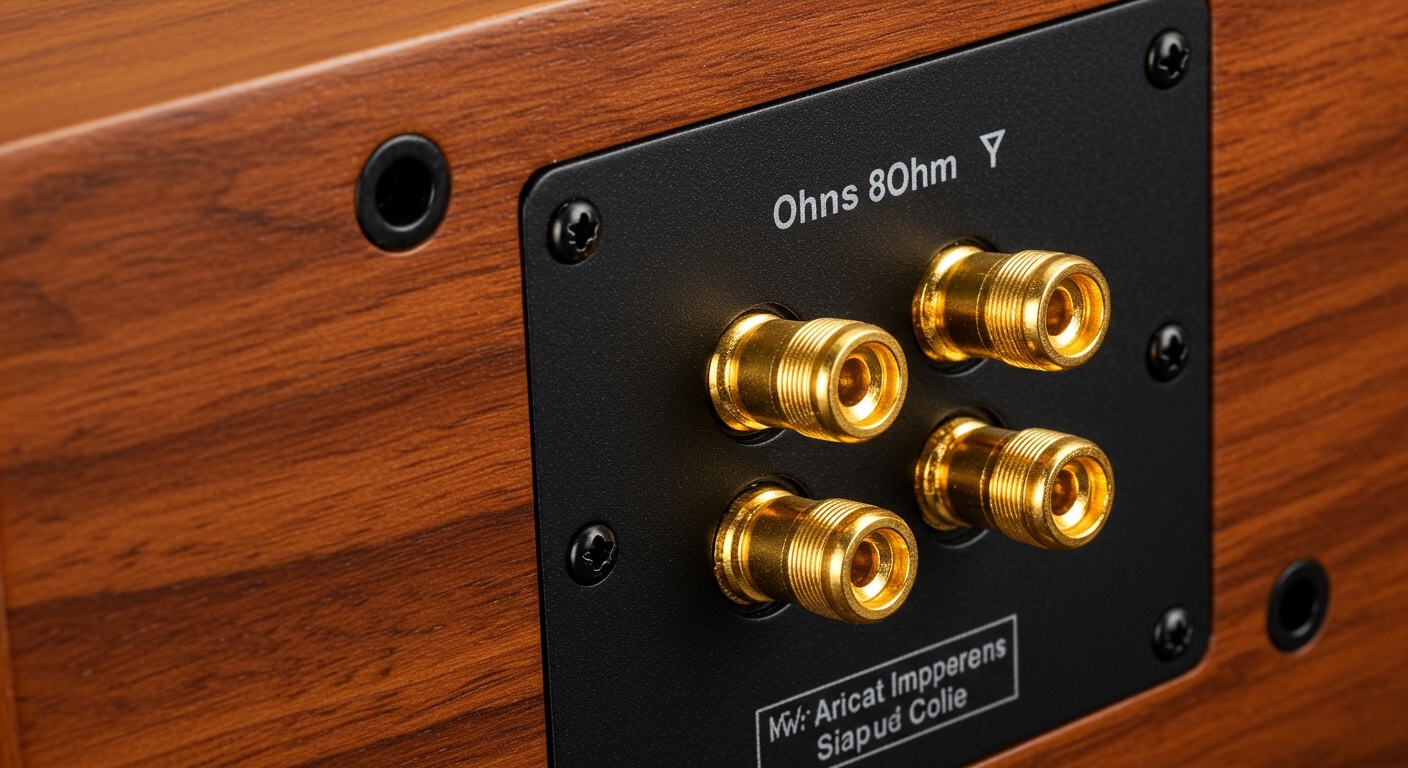
In my years of calibrating high-end home theaters and professional studio monitors, I’ve found that many enthusiasts mistake impedance for a static number. In reality, impedance is frequency-dependent; it changes constantly as the music plays. The “nominal” rating is simply a simplified “nameplate” value used to help you match your equipment without needing a degree in electrical engineering.
Quick Key Takeaways
- Safety First: Matching your speaker’s nominal impedance to your amplifier’s rated output prevents overheating and permanent hardware failure.
- Standard Ratings: Most consumer speakers are 8-ohm, while high-performance or car audio speakers are often 4-ohm or 2-ohm.
- The Power Rule: Lower impedance (e.g., 4 ohms) allows more current to flow, demanding more “heavy lifting” from your amplifier.
- Wiring Matters: Connecting multiple speakers in Series increases impedance, while Parallel wiring decreases it.
The Technical Breakdown: Resistance vs. Impedance
To understand what nominal impedance is in speakers, we must first distinguish between DC Resistance (DCR) and AC Impedance.
- Resistance (DC): This is the simple friction against electricity measured with a battery.
- Impedance (AC): Since music is an alternating current (AC), the “resistance” changes based on the frequency (pitch) of the sound.
When I test a speaker labeled as 8 ohms with a multimeter, I usually see a reading of around 6.2 to 7 ohms. This is normal. The Nominal Impedance is the manufacturer’s way of saying, “On average, across the entire audible spectrum, this speaker behaves like an 8-ohm resistor.”
Comparison of Common Nominal Impedance Ratings
| Impedance Rating | Current Demand | Common Use Case | Amplifier Requirement |
|---|---|---|---|
| 2 Ohms | Extremely High | Competition Car Audio | High-current, specialized amps |
| 4 Ohms | High | High-end Hi-Fi / Car Audio | Robust power supply required |
| 8 Ohms | Moderate | Standard Home Theater | Compatible with most receivers |
| 16 Ohms | Low | Vintage Guitar Cabs / Multi-speaker arrays | Low current, high voltage |
Step 1: How to Identify Your Speaker’s Nominal Impedance
Before you plug anything in, you must verify your equipment’s specs. Overlooking this can lead to “clipping” or your amplifier entering Protect Mode.
- Check the Terminal Plate: Look at the back of your speaker cabinet. Most reputable brands like Klipsch, SVS, or KEF print the nominal impedance right next to the binding posts.
- Consult the Spec Sheet: Look for the Minimum Impedance rating. If a speaker is “8 ohms nominal” but drops to 3.2 ohms at certain bass frequencies, your amp needs to be stable at low loads.
- Manual Measurement: Use a digital multimeter on the Ohms (Ω) setting. Touch the probes to the positive and negative terminals. If the meter reads 5.5 ohms, it is likely an 8-ohm nominal speaker.
Step 2: Matching Your Speakers to Your Amplifier
This is where my “rule of thumb” comes in: Never use a speaker with a lower impedance than what your amplifier is rated for.
If you have an AV Receiver labeled “8-16 Ohms” and you connect a 4-ohm speaker, the speaker will attempt to pull more current than the receiver can handle. We call this “stressing the rails.” In my experience, this usually results in the amp shutting down during a loud movie scene or, in worse cases, blowing a capacitor.
The Power Relationship (Ohm’s Law)
In the world of audio, we use a variation of Ohm’s Law:
- Lower Ohms = More Current = More Heat.
- Higher Ohms = Less Current = Cooler Operation.
If your amplifier produces 100 Watts at 8 Ohms, it might theoretically produce 200 Watts at 4 Ohms. However, only “high-current” amplifiers have the beefy transformers and heat sinks necessary to sustain that output without melting.
Step 3: Calculating Total Impedance for Multiple Speakers
If you are building a multi-room system or a guitar rig, you might need to wire two or more speakers to a single channel. You have two primary methods: Series and Parallel.
Option A: Series Wiring (Safe for Amps)
Wiring in series adds the impedance together. This is the safest way to ensure you don’t overload your amp.
- Formula: $R1 + R2 = Total$
- Example: Two 8-ohm speakers wired in series = 16 ohms.
- Result: The amp runs cooler but produces less total volume.
Option B: Parallel Wiring (Dangerous if Unchecked)
Most “daisy-chained” speakers end up in parallel. This drops the impedance.
- Formula: $(R1 times R2) / (R1 + R2) = Total$
- Example: Two 8-ohm speakers in parallel = 4 ohms.
- Result: The amp works harder and produces more volume, but risks overheating if it isn’t 4-ohm stable.
Why Nominal Impedance Curves Matter (Expert Insight)
When I analyze a speaker in a lab setting, I look at the Impedance Curve. A speaker isn’t a flat line; it’s a mountain range.
- The Resonant Peak: Usually in the low frequencies, impedance spikes very high (e.g., 50 ohms).
- The Dips: In the mid-bass region, a speaker might dip to 3 ohms.
If your speaker has “difficult” impedance dips, you need an amplifier with a high Damping Factor. This ensures the amp can “grip” the speaker cone and stop it from vibrating unnecessarily, leading to tighter, more accurate bass.
Practical Tips for Audio Success
- Ventilation is Vital: If you are running 4-ohm speakers on an 8-ohm rated amp, ensure there is at least 6 inches of clearance above the amp for heat dissipation.
- Use Thick Wire: For low-impedance setups (4 ohms or less), use 12-gauge or 14-gauge oxygen-free copper (OFC) wire. High resistance in thin wires can further complicate impedance issues.
- Check the “Switch”: Some older receivers have an “Impedance Selector” switch on the back. I generally recommend leaving this on the 8-ohm setting unless you are experiencing thermal shutdowns, as these switches often just “choke” the power to prevent heat.
Frequently Asked Questions
Can I use 4-ohm speakers with an 8-ohm amp?
You can, but proceed with caution. At low volumes, it will likely work fine. However, at high volumes, the speaker will draw too much current, which can cause the amplifier to overheat or clip, potentially damaging your tweeters.
Does higher impedance mean better sound quality?
Not necessarily. Nominal impedance is about electrical efficiency and compatibility, not “fidelity.” However, high-impedance speakers (like 250-ohm or 600-ohm headphones) often have more windings in their voice coils, which some audiophiles believe leads to more precise control and detail.
Why do most home speakers use 8 ohms?
The 8-ohm standard became popular because it offers a “sweet spot” between efficiency and safety. It allows for decent volume levels without requiring excessively thick wiring or massive power supplies in consumer electronics.
What happens if I mix speakers with different impedances?
If you wire a 4-ohm and an 8-ohm speaker in parallel, the 4-ohm speaker will receive more power and sound much louder than the 8-ohm speaker. It also creates a complex load of 2.66 ohms, which is dangerous for most standard amplifiers.









