

The Definitive Guide: What Size Speakers are in a Street Glide?
Standard Harley-Davidson Street Glide models from 2014 to 2023 use 6.5-inch speakers in the front fairing, while older models produced between 1998 and 2013 come factory-equipped with 5.25-inch speakers. For the 2024+ redesigned models, the fairing remains optimized for 6.5-inch high-output drivers, though the mounting architecture has evolved for better integration with the Skyline OS.
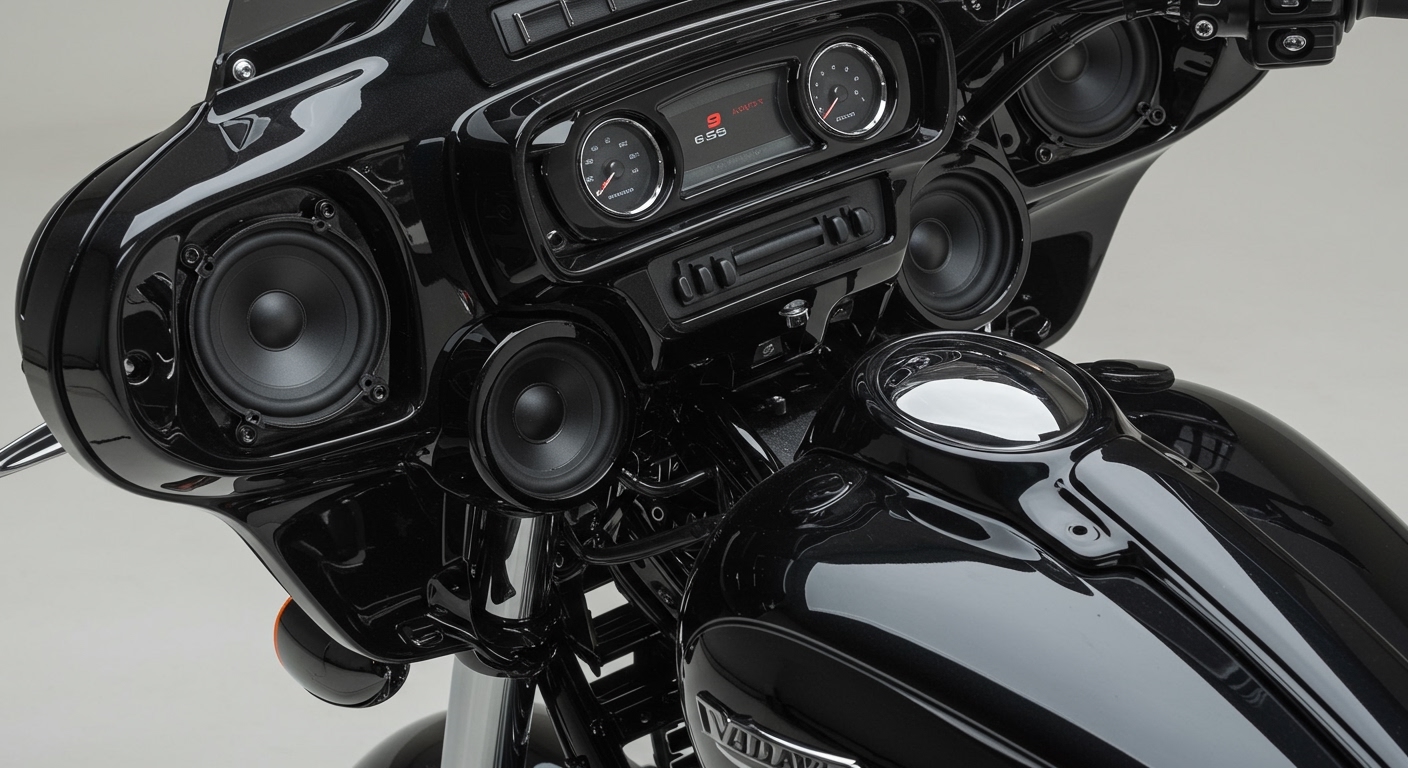
Understanding what size speakers are in a street glide is the first step toward overcoming the “wind-noise wash” that ruins your favorite tracks at 70 mph. In my years of wrenching on Batwing fairings, I’ve found that while the diameter is the headline, the mounting depth and impedance (ohms) are what actually determine if a speaker will survive a cross-country tour.
TL;DR: Key Takeaways for Street Glide Audio
- 2014–Present: Factory size is 6.5 inches. Most aftermarket “bolt-on” kits fit perfectly.
- 1998–2013: Factory size is 5.25 inches. I highly recommend using adapter rings to upgrade these to 6.5 inches for better mid-bass.
- Impedance Warning: Factory Boom! Audio systems often run at 2-ohms. Installing 4-ohm aftermarket speakers without an amp will result in a 50% volume loss.
- Weatherproofing: Always choose IP65-rated marine-grade speakers to handle rain and UV exposure.
Street Glide Speaker Size Comparison Chart
When planning your audio overhaul, use this data to ensure you don’t buy components that collide with your fairing brackets or magnets that are too heavy for the stock pods.
| Model Year Range | Location | Factory Size | Recommended Upgrade | Max Mounting Depth |
|---|---|---|---|---|
| 1998 – 2005 | Front Fairing | 5.25″ | 6.5″ (with adapter) | 2.25″ |
| 2006 – 2013 | Front Fairing | 5.25″ | 6.5″ (with adapter) | 2.50″ |
| 2014 – 2023 | Front Fairing | 6.5″ | 6.5″ (High Output) | 2.90″ |
| 2024 – New | Front Fairing | 6.5″ | 6.5″ (Pro Audio) | 3.00″ |
| Optional | Saddlebag Lids | N/A | 6×9″ or 5×7″ | Varies by Lid |
Understanding the “Rushmore” Shift (2014–2023)
If you own a Project Rushmore bike, knowing what size speakers are in a street glide is relatively straightforward. These bikes were designed with a larger fairing cavity to accommodate 6.5-inch drivers natively.
From my testing, the 2014+ pods are significantly better sealed than previous generations. This creates a natural “acoustic box” that improves bass response. When I install units like the Rockford Fosgate TMS65 or Hertz SX 165 Neo, they drop right into the factory holes without any cutting or drilling.
However, you must be careful with the wiring harness. 2014+ models use a specific Molex connector. If you don’t want to cut your factory wires, I always suggest buying a plug-and-play wiring adapter.
Critical Specs for 2014+ Models:
- Bolt Pattern: Standard 4-hole 6.5″.
- Impedance: 2-ohm (Standard) or 4-ohm (Special/CVO).
- Space Constraint: The headlight bucket can sometimes interfere with massive magnets on “pro-audio” style speakers.
Retrofitting the 1998–2013 Street Glide
The older Batwing fairing is iconic, but the factory 5.25-inch speakers are objectively poor for highway speeds. If you are asking what size speakers are in a street glide because you want to replace your 2010 model’s units, don’t stay with the stock size.
I have found that 5.25-inch speakers simply lack the cone surface area to move enough air. To fix this, we use 6.5-inch adapter rings. These plastic or CNC-machined rings screw into the 5.25″ holes and provide a new mounting surface for the larger 6.5″ speakers.
Expert Insight: When using adapters on a pre-2014 bike, you must check the clearance between the speaker’s tweeter bridge and the inner fairing. Some “high-profile” tweeters will press against the speaker grill, causing vibration or damage.
The Importance of Impedance: 2-Ohm vs. 4-Ohm
One of the most common mistakes I see riders make is ignoring electrical resistance (Ohms). Most car speakers are 4-ohm, but many Harley-Davidson factory head units (especially the Harmon Kardon or Boom! Box units) are designed for 2-ohm loads.
- Scenario A: You put 4-ohm speakers on a 2-ohm factory radio. The radio “sees” more resistance and puts out less power. Your expensive new speakers will sound quieter than the cheap factory ones.
- Scenario B: You put 2-ohm speakers on a 4-ohm amplifier. The amplifier may overheat or go into “protect mode” because it’s being forced to work too hard.
Always match your speakers to your amplifier’s rated output. If you are keeping the stock radio and no amp, look specifically for high-sensitivity 2-ohm speakers like those from Infinity Kappa or JBL.
Top 3 Speaker Recommendations for Street Glides
Based on thousands of miles of road testing and different weather conditions, here are the top picks for the 6.5-inch format.
Rockford Fosgate TMS65 (Best Overall Value)
These are purpose-built for the Harley environment. They are Element Ready, meaning they won’t fade from sun exposure or crack from vibration. I’ve installed these on dozens of Street Glides, and they consistently deliver clear vocals above 80 mph.
Hertz SX 165 Neo (The Audiophile Choice)
If you want “concert level” sound, these use Neodymium magnets. They are incredibly light, which is great for your fairing brackets, and they are incredibly loud. These are 4-ohm speakers, so you must use an external amplifier to get your money’s worth.
Cicada Audio CX65 (The Competition Grade)
Cicada was founded by engineers who specialize specifically in Harley audio. Their CX65 coaxial drivers are designed to fit the 2014+ pods perfectly while offering a “warmer” sound that doesn’t get harsh at high volumes.
How to Replace Your Street Glide Speakers: Step-by-Step
Ready to swap your gear? Follow this process I’ve refined over hundreds of installs.
Tools Needed:
- T25 and T27 Torx drivers
- Phillips head screwdriver
- Soft towel (To cover your front fender)
- Blue Loctite (Essential for Harley vibrations)
Step 1: Fairing Removal
Start by removing the three T27 bolts holding the windshield. Once the shield is off, remove the four inner fairing bolts (two near the forks, two near the speakers). Pro Tip: Keep a hand on the outer fairing while removing the last bolt so it doesn’t fall.
Step 2: Disconnect the Headlight
Pull the outer fairing forward slightly and reach in to unplug the headlight wire harness. You can now set the outer fairing aside on a soft surface.
Step 3: Removing the Old Speakers
Unscrew the four screws holding the speaker to the pod. Carefully pull the spade connectors off the speaker terminals. If they are tight, use needle-nose pliers—don’t just yank the wire.
Step 4: Installing the New 6.5″ Drivers
If you have a 2014+ bike, the new speaker should drop right in. If it’s an older bike, install your adapter ring first. Connect the wires (Positive is usually the wider spade), and screw the speaker back into the pod.
Step 5: Test Before Reassembly
Turn the bike to “Accessory” and play a track. Check for phase issues (if one speaker is pushing while the other pulls, you’ll lose all bass). If it sounds good, use Blue Loctite on your fairing bolts and put the “Batwing” back together.
Why “Marine Grade” is Non-Negotiable
A motorcycle is a hostile environment for electronics. Between the engine vibration, UV radiation, and sudden downpours, standard car speakers won’t last a season.
When searching for what size speakers are in a street glide, ensure the results are marine-rated. Look for:
- UV-Stable Plastics: To prevent the cones from becoming brittle.
- Treated Spiders and Surrounds: To stop moisture from seeping into the voice coil.
- Sealed Magnets: To prevent corrosion and “magnet shift” from road bumps.
Enhancing Your Setup: Beyond the Fairing
Once you’ve mastered the fairing speakers, you might find you want more “fill.” Since the Street Glide doesn’t have rear pods like an Ultra Classic, you have two main options for expansion.
Saddlebag Lid Speakers
Many riders upgrade to 6×9-inch speakers in the lids. This requires either buying new lids or using a “cut-in” kit. Having speakers behind you creates a “bubble of sound” that makes long highway stints much more enjoyable.
Lower Fairing Speakers
If you have lower fairing vents (chaps), you can install 6.5-inch speakers there. This is my favorite upgrade because the speakers are closer to your legs, providing much-needed mid-bass punch that fairing speakers often lack.
Frequently Asked Questions
Can I put 6×9 speakers in my Street Glide fairing?
No, the standard Street Glide Batwing fairing does not have enough horizontal space for 6x9s without extreme custom fiberglass work. Stick to 6.5-inch high-output drivers for the best fit and performance.
Do I need to flash my radio after changing speakers?
If you have a 2014+ model with the Boom! Box GTS or GT infotainment system, Harley applies a heavy EQ curve from the factory. If you add an amplifier and aftermarket speakers, I highly recommend a “TechnoResearch” or “Diag4Bike” flash to flatten the EQ, or you risk blowing your new speakers.
What is the best ohm rating for Street Glide speakers?
If you are using the factory radio with no amp, use 2-ohm speakers to maintain volume. If you are adding an aftermarket amplifier, 4-ohm speakers are the industry standard and offer a wider variety of high-quality options.
Will 7-inch speakers fit in a Street Glide?
Some companies, like Precision Power (PPI), make “HD” specific speakers that are slightly oversized (6.75″ or 7″). These will usually fit in 2014+ pods with minor trimming or specialized adapter brackets, but 6.5-inch remains the standard.
Why do my Street Glide speakers sound distorted at high volume?
Distortion is usually caused by clipping. This happens when the factory radio’s small internal amplifier is pushed past its limit to compete with wind noise. The solution isn’t just bigger speakers; it’s adding a compact digital amplifier to provide clean power.









