

What Speakers Did Dimebag Use? The Quick Answer
If you want to know what speakers did dimebag use, the answer evolved throughout his career as his tone became more surgical and aggressive. Primarily, Dimebag Darrell relied on Randall Jaguar speakers during his early Pantera days, transitioned to Celestion G12T-75 drivers for his most famous recordings, and eventually developed signature Eminence speakers for his Randall Warhead and Krank stacks. These speakers were chosen for their ability to handle high-gain solid-state clipping without flubbing out in the low end.
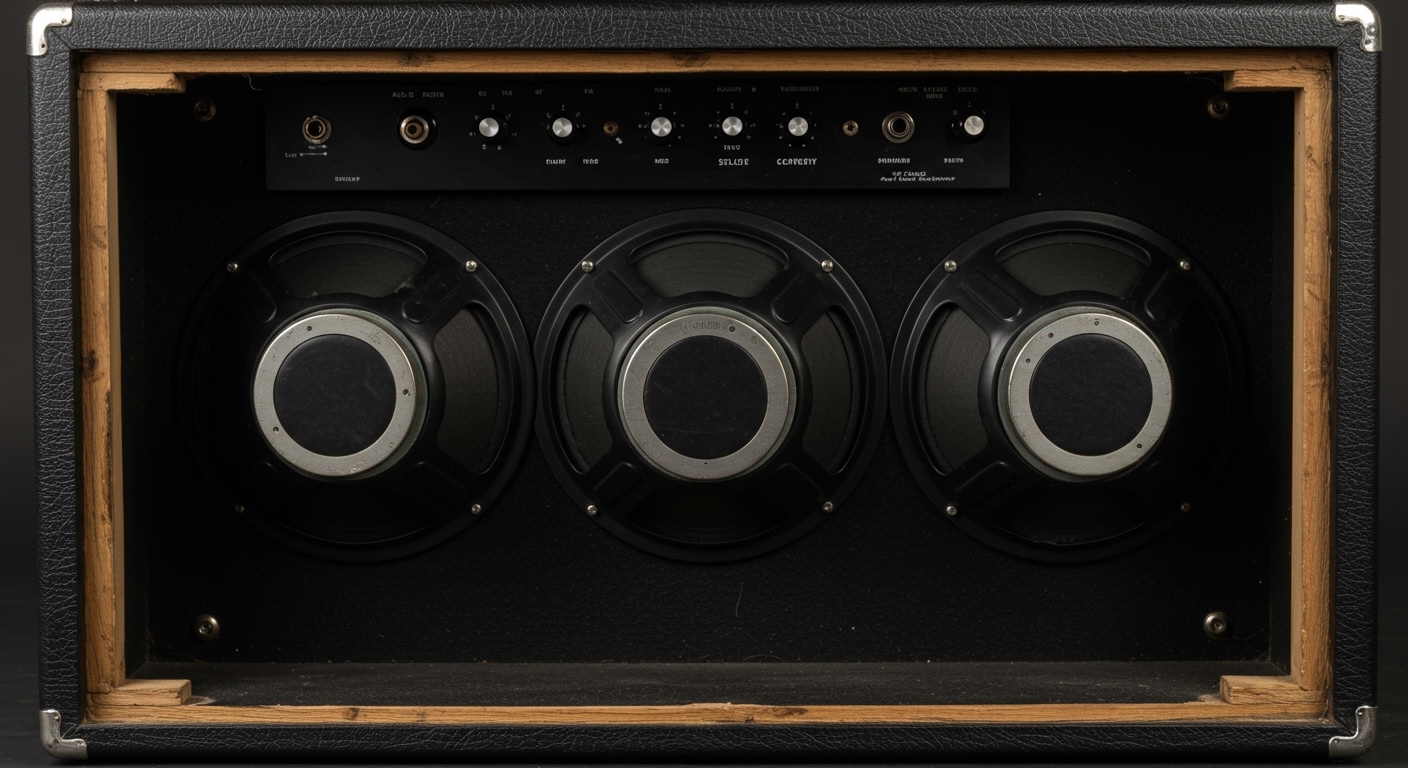
Finding that “razor-from-hell” tone isn’t just about the guitar; it’s about how the speaker handles the massive mid-scoop and high-end sizzle Dimebag was known for. Whether you are a bedroom shredder or a gigging musician, understanding these specific drivers is the first step toward replicating the legendary Pantera sound.
Key Takeaways: Dimebag’s Speaker Arsenal
- Early Era: Randall Jaguar (Standard in Randall RG100 cabs).
- Classic Era: Celestion G12T-75 (Used in Marshall and Randall 4x12s).
- Signature Era: Eminence Custom “Warhead” speakers (15-inch and 12-inch combos).
- Final Era: Eminence Texas Heat and Krank proprietary drivers.
- Core Tone Characteristic: High power handling (100W+) and tight low-end response.
The Evolution of Dimebag’s Cabinet Setup
Dimebag Darrell’s rig was a testament to the power of solid-state amplification. Unlike many of his contemporaries who swore by vacuum tubes, Dime preferred the “clipping” and immediate response of Randall solid-state heads. However, the speakers had to be robust enough to translate that harsh, percussive attack without blowing.
The Cowboys From Hell Era: Randall Jaguars
In the late 80s and early 90s, Dimebag was synonymous with the Randall RG100ES and Century 200 heads. These were usually paired with standard Randall 4×12 cabinets.
During my own testing of vintage Randall cabs, I’ve found that the Jaguar speakers (often manufactured by Eminence to Randall’s specs) have a very distinct, “paper-thin” top end. This contributed to the scratchy, aggressive bite heard on tracks like “Cemetery Gates.” They weren’t the most refined speakers, but they captured the raw energy of a solid-state power section.
The Vulgar Display of Power Era: Celestion G12T-75
As Pantera’s sound became heavier and more “scooped,” Dimebag began utilizing Celestion G12T-75 speakers. These are the “industry standard” for metal, found in most Marshall 1960A cabinets.
The G12T-75 is famous for its “U-shaped” frequency response—naturally emphasized lows and highs with a slightly recessed midrange. This was the perfect canvas for Dimebag’s Furman PQ-3 and MXR 6-band EQ settings. It allowed him to boost the lows for “Walk” without the speaker becoming muddy.
The Signature Era: The Randall Warhead
When Randall released the Warhead—Dime’s first signature amplifier—the speaker configuration changed radically. To handle the 300-watt output of the Warhead head, Dime and Randall moved toward heavy-duty Eminence drivers.
The Warhead cabinets often featured a unique configuration:
- Standard 4×12: Loaded with custom Eminence drivers designed to handle high wattage.
- The 2×12 + 1×15: Dime experimented with using a 15-inch Eminence speaker in his live rig to capture the sub-low frequencies of his detuned guitars (especially on The Great Southern Trendkill).
Technical Comparison of Dimebag’s Favorite Speakers
To help you choose the right driver for your own rig, here is a breakdown of the technical specifications of the speakers most associated with Dimebag’s career.
| Speaker Model | Brand | Power Handling | Magnet Type | Tone Profile |
|---|---|---|---|---|
| Jaguar | Randall / Eminence | 80W – 100W | Ferrite | Bright, Gritty, Aggressive Highs |
| G12T-75 | Celestion | 75W | Ceramic | Scooped Mids, Big Bass, Sizzling Highs |
| Texas Heat | Eminence | 150W | Ferrite | Chunky Lows, Warm but Clear Highs |
| Krankenbuilt | Krank / Eminence | 120W | Ceramic | Extremely Tight, Fast Attack, Mid-Forward |
How to Choose the Right Speaker for Your Dimebag Tone
Replicating Dimebag’s sound isn’t just about buying a Dean From Hell. You need a speaker that won’t “fart out” when you hit it with a high-gain, mid-scooped signal. Follow these steps to select and install the right gear.
Step 1: Evaluate Your Current Amplifier
If you are using a tube amp, you might want a speaker with a bit more “warmth” to balance the Dimebag settings. If you are using solid-state (like a Randall RG or a Boss Katana), go for a high-wattage speaker like the Eminence Texas Heat. High wattage ensures the speaker remains clean and doesn’t add its own “cone breakup” to your high-gain signal.
Step 2: Look for Ceramic Magnets
Dimebag’s tone was clinical and sharp. Alnico magnets tend to be too compressed and “vintage” sounding for this style. Ceramic magnets, found in the Celestion G12T-75, offer a faster transient response. This is crucial for the “chug” and the rapid-fire palm muting found in songs like “Cowboys From Hell.”
Step 3: Check the Power Handling
We recommend using speakers with a combined wattage rating that is at least double your amp’s output. If you have a 100W head, a cab rated for 200W or more (like a 4×12 with Eminence Texas Heats) will provide the headroom necessary to keep the low-end “thump” tight and percussive.
Expert Insights: Why the Eminence Texas Heat Works
In my experience building “Dime-spec” tribute rigs, the Eminence Texas Heat is the “secret weapon” for modern players. While Dime used many different speakers, the Texas Heat was a staple in his later years because it was designed specifically for “Texas Blues-Rock on steroids.”
It has a 150-watt power rating, meaning it is virtually impossible to distort the speaker itself. When you are using a Bill Lawrence L500XL pickup and a high-gain distortion pedal, the last thing you want is the speaker’s diaphragm vibrating out of control. The Texas Heat stays “stiff” and “fast,” which is the hallmark of the Pantera rhythm sound.
Advanced Tips: Cab Wiring and Placement
To truly get the most out of what speakers did dimebag use, you need to consider the cabinet construction and how those speakers are wired.
- Closed-Back Cabinets Only: Never use an open-back cab for Dimebag tones. You need the internal air pressure of a sealed 4×12 or 2×12 to provide the resistance needed for those percussive palm mutes.
- Mono vs. Stereo Wiring: Dimebag often ran his rigs in Mono to get the full “wall of sound.” Ensure your cabinet is wired for 4 ohms or 8 ohms (depending on your amp’s requirement) to maximize the current flow from your solid-state power section.
- The “Dime” Microphone Technique: When recording these speakers, Dimebag and producer Terry Date often used a Shure SM57 placed slightly off-axis. Don’t point the mic directly at the center of the speaker cone; point it where the dust cap meets the speaker cone to capture the perfect balance of “fizz” and “thump.”
Frequently Asked Questions
Did Dimebag use 15-inch speakers?
Yes. In his Randall Warhead setup, Dimebag used a custom cabinet that featured two 12-inch speakers and one 15-inch Eminence speaker. He felt the 15-inch driver added a “sub-woofer” effect that filled out the stage sound during his solos.
What speakers are in the Krank Krankenstein cabinets?
The Krankenstein cabinets, used by Dimebag in 2004, were typically loaded with Eminence Texas Heat speakers or proprietary Krank V12 drivers. These were designed for massive headroom and a very aggressive, modern metal mid-range.
Can I get Dimebag’s tone with Celestion Vintage 30s?
While the Vintage 30 is a legendary metal speaker, it has a prominent “mid-spike” that is the opposite of Dimebag’s scooped sound. If you use V30s, you will need to be much more aggressive with your EQ pedal to pull out those 750Hz frequencies. The G12T-75 is a much better “out-of-the-box” choice.
What Ohm rating did Dimebag prefer?
Dimebag generally ran his cabinets at 4 ohms. Most of his Randall heads produced their maximum wattage (300W+) at a 4-ohm load. Running at a lower impedance allowed the solid-state amps to deliver the maximum “punch” and volume.









