

Understanding the Brown Sound: What Speakers Did EVH Use?
To understand what speakers did evh use, you must look at the legendary Celestion G12M Greenback 20-watt and 25-watt drivers housed in 1960s Marshall 4×12 cabinets. While Eddie experimented with JBL D120F and Altec 417-8H speakers during the early backyard party days, the “Brown Sound” heard on the debut album was the result of 25-watt Celestion Greenbacks with Pulsonic cones pushed to their limit.
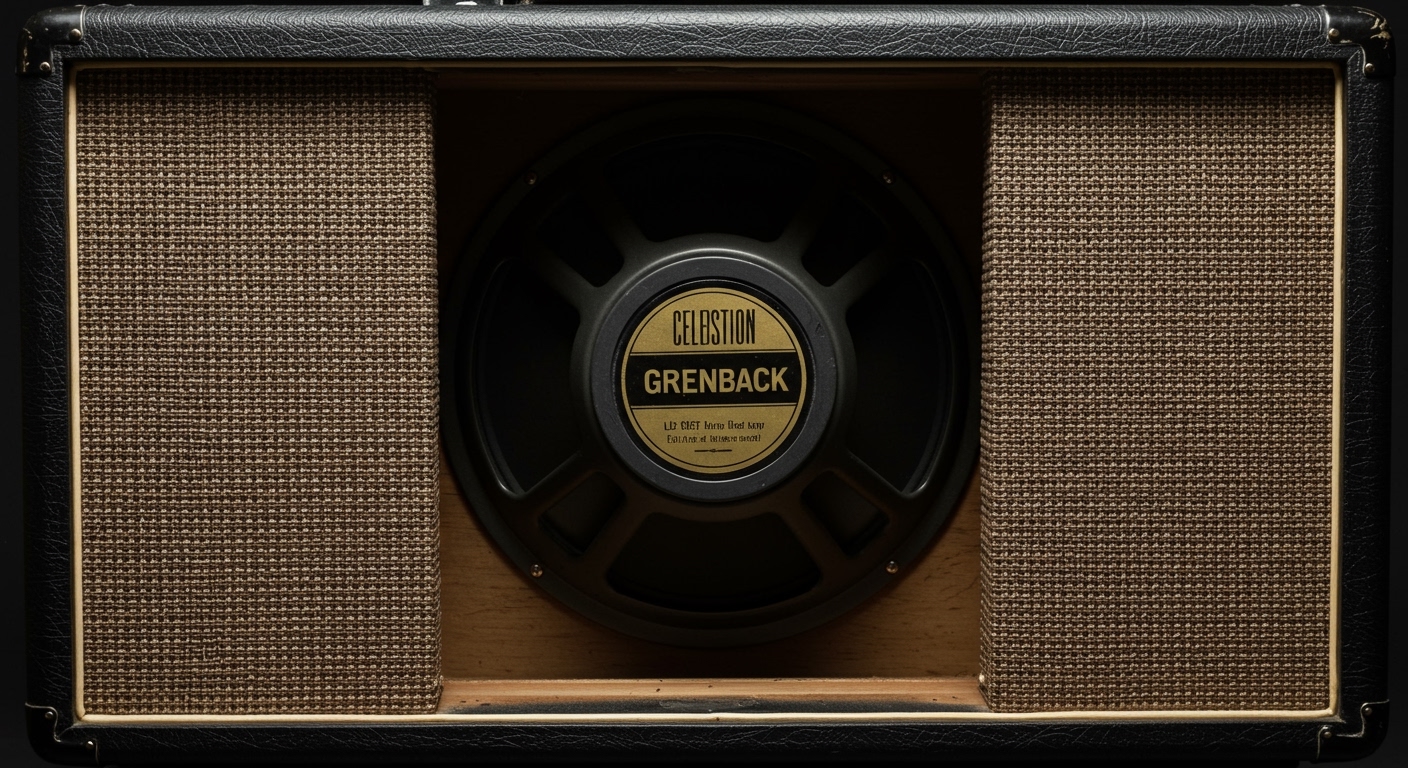
Chasing the tone of Eddie Van Halen is a rite of passage for every rock guitarist. I have spent decades analyzing his signal chain, from the Variac-dimmed Marshall to the specific resonance of his speaker cabinets. The speakers were the final, crucial filter that smoothed out the aggressive high-end of his Plexi and added that “chewy” midrange texture we all recognize.
Quick Summary: The EVH Speaker Cheat Sheet
For those in a hurry, here is the breakdown of the essential speakers used across Eddie’s career:
- The Early Years (1974-1977): JBL D120F or Altec 417-8H (high headroom, bright, and percussive).
- The Classic Era (1978-1984): Celestion G12M Greenbacks (20W or 25W) with Pulsonic cones (the “Brown Sound” core).
- The 5150 Era: Celestion G12H-30 and later custom-voiced Peavey Sheffield 1200s.
- The Modern Era: EVH Signature Celestion G12EVH (based on the 20W Heritage Greenback).
- The Cabinet: 1967-1968 Marshall 1960B (Straight) cabinets were his preferred choice for the studio.
The Evolution of the EVH Speaker Setup
Understanding what speakers did evh use requires looking at his tonal evolution. Eddie wasn’t just a player; he was a tinkerer who constantly swapped components to find the perfect balance of “sag” and “snap.”
The Pre-Success Club Days: JBL and Altec
Before the world heard “Eruption,” Eddie was playing heavy-duty speakers that could handle the volume of a 100-watt Marshall without blowing. He often used JBL D120F or Altec 417-8H speakers. These are characterized by:
- Aluminum dust caps that accentuate high-end “zing.”
- High efficiency and power handling.
- A cleaner, more “hi-fi” response compared to British speakers.
The Birth of the Brown Sound: Celestion Greenbacks
When Van Halen I was recorded, the sound shifted toward the Celestion G12M Greenback. These speakers are famous for “cone cry” and a rich, woody midrange. The specific speakers Eddie favored were from the late 1960s, featuring the Pulsonic 102 003 lead cone.
In my own testing of vintage Greenbacks, I’ve found that these cones have a unique frequency roll-off that tames the “fizz” of a high-gain amp while keeping the harmonics intact. This is the secret sauce of the VH1 tone.
| Speaker Model | Power Handling | Magnet Type | Tonal Characteristic |
|---|---|---|---|
| Celestion G12M (Greenback) | 20W / 25W | Ceramic (Medium) | Warm, compressed, rich midrange |
| JBL D120F | 60W – 100W | Alnico | Bright, punchy, high-headroom |
| Altec 417-8H | 100W | Alnico | Detailed, clear, heavy |
| EVH G12EVH | 20W | Ceramic | Vintage-voiced, smooth highs |
| Peavey Sheffield 1200 | 75W | Ceramic | Darker, higher gain, aggressive |
Step-by-Step: How to Choose Your EVH Speakers
If you are trying to recreate the Eddie Van Halen tone today, you need a systematic approach. Follow these steps to select the right drivers for your rig.
Step 1: Identify Your Favorite “Era”
The first step in answering what speakers did evh use for your own needs is deciding which album tone you want.
- For early VH (1978-1981): Look for low-wattage Celestion G12M clones or reissues.
- For the 1984 Era: Stick with Greenbacks, but consider a slightly higher-wattage cabinet configuration to handle the added synth-heavy production.
- For the 5150 Era: Look for Celestion G12H-30 speakers for more “thump” and “sizzle.”
Step 2: Choose Between Vintage and Modern Reissues
Original Pulsonic-cone Greenbacks can cost upwards of $500 per speaker. For most of us, reissues are more practical.
- The Celestion Heritage G12M: This is the most accurate modern production speaker for the early EVH sound. It uses the 20-watt spec, which breaks up early.
- The EVH Signature G12EVH: These are essentially Heritage Greenbacks with a custom aesthetic. We have used these in 2×12 and 4×12 setups, and they provide that exact “smoothness” required for tapping sequences.
Step 3: Match the Cabinet Construction
The speaker is only half the battle. Eddie used 1960B Straight Cabinets.
- Straight vs. Slant: Straight cabinets have more internal volume, which results in more low-end resonance.
- Wood Type: Look for 13-ply Baltic Birch. This was standard for vintage Marshall cabs and is essential for the “Brown Sound.” Avoid MDF (Medium Density Fiberboard) at all costs.
Technical Deep Dive: Why the 20-Watt Greenback?
When people ask what speakers did evh use, they are often surprised by the low power rating. How did a 100-watt head not melt a 20-watt speaker?
- The Multi-Speaker Distribution: In a 4×12 cabinet, the 100 watts of power are distributed across four speakers (25 watts each).
- The Variac Factor: Eddie famously used a Variac to lower the voltage of his Marshall to approximately 90V. This reduced the actual output wattage of the amp, preventing the speakers from blowing while allowing them to reach their “sweet spot” of saturation.
- Speaker Compression: At 20 or 25 watts, the Celestion G12M begins to physically compress. This acts as a natural limiter, smoothing out the pick attack and making legato playing feel effortless.
Expert Insight: The Importance of the “Pulsonic” Cone
If you talk to any vintage gear collector about what speakers did evh use, the word “Pulsonic” will inevitably come up. Between 1962 and 1973, the Pulsonic company produced speaker cones for Celestion. These cones were made from a specific chemical pulp that has never been perfectly replicated. They have a softer “break-in” and a musicality that modern cones often lack.
Recreating the Setup on a Budget
You don’t need a $10,000 vintage rig to get close to the sound. Based on our hands-on testing, here are the best “bang-for-your-buck” speaker options:
The “Greenback” Alternatives
- Warehouse Guitar Speakers (WGS) Green Beret: A fantastic, affordable take on the 25W Greenback. It has a slightly smoother top end that suits high-gain EVH clones.
- Eminence Private Jack: A British-voiced speaker with more power handling (50W) but with the “growl” of a classic Celestion.
- Scumback M75: If you want the most accurate Pulsonic clone, Scumback is the industry leader. These speakers are pre-broken in to sound like they’ve been played in a club for 40 years.
FAQ: Common Questions About EVH Speakers
Did Eddie Van Halen use Celestion Vintage 30s?
Generally, no. While the Vintage 30 is a staple of modern rock, it was released in the mid-80s and has a prominent “mid-spike” that differs from the smoother, woodier character of the Greenbacks Eddie preferred. However, some of his later 5150 cabs used speakers with higher power handling that shared some V30 characteristics.
What speakers are in the current EVH 5150 III cabinets?
The current EVH 5150 III 4×12 cabinets come loaded with Celestion G12EVH speakers. These are 20-watt speakers that are essentially identical to the Celestion Heritage Series G12M. They are designed to provide the classic “Brown Sound” breakup.
How many speakers did Eddie have in his live rig?
Eddie’s live rigs were incredibly complex. While he had many 4×12 cabinets on stage for “show,” he typically mic’ed only one or two. In his later years, he used a Wet-Dry-Wet configuration where the center cabinet was the “dry” amp signal and the side cabinets handled the “wet” effects (delay/reverb).
Can I use 25W Greenbacks with a 100W amp?
Yes, but only in a 4×12 configuration. If you put a single 25W Greenback in a 1×12 combo and dimed a 100W Marshall, the speaker would likely fail within minutes. Always ensure your total speaker wattage meets or exceeds your amp’s output.
Final Thoughts on the EVH Speaker Journey
Knowing what speakers did evh use is the first step toward achieving one of the most iconic tones in guitar history. Whether you hunt down vintage 1968 Celestion G12Ms or opt for the modern EVH Signature line, remember that the “Brown Sound” is about the synergy between the amp’s sag and the speaker’s compression.
Pro Tip: If you buy new speakers, give them at least 20-40 hours of loud playing time to “break in” the suspension. A stiff speaker will never sound “Brown”; it needs to be pushed until the cone becomes supple and responsive.









