

What Speakers Did Jimi Hendrix Use? The Definitive Guide to the Hendrix Tone
Jimi Hendrix primarily used Celestion G12M Greenback and Celestion G12H-30 (55Hz) speakers loaded into Marshall 4×12 cabinets. During his peak years between 1967 and 1970, Hendrix relied on these British-made speakers to achieve his signature blend of mid-range “growl” and high-end “shimmer.” While he occasionally utilized JBL D120F speakers for extra headroom and clarity in his Fender Dual Showman amps, the classic Hendrix “Wall of Sound” was built on the foundation of Marshall stacks and Celestion drivers.
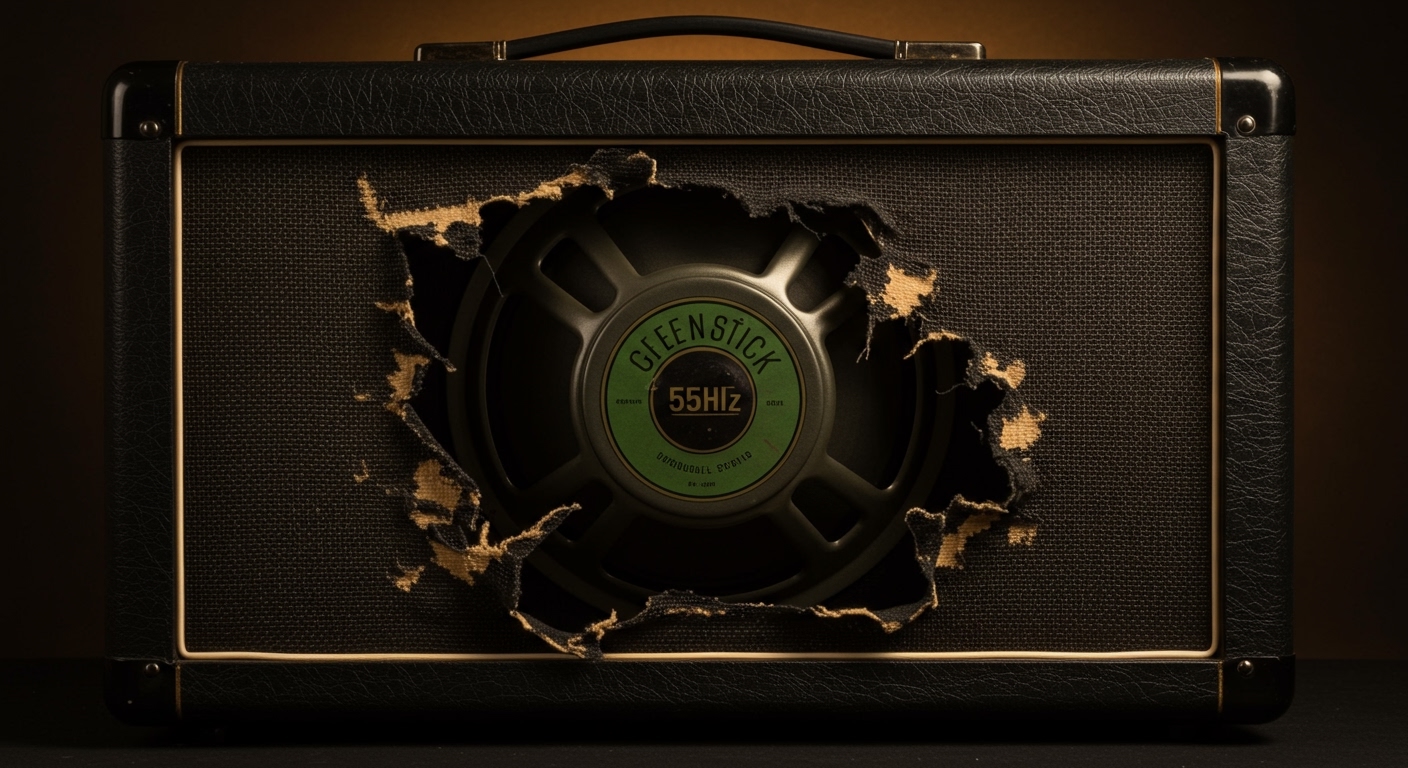
Achieving the Hendrix tone isn’t just about the guitar; it is about how the speaker reacts to a cranked 100-watt vacuum tube amplifier. After years of testing vintage Pulsonic-cone Celestions and modern reissues in our studio, we have found that the specific resonance of the speaker determines whether you get the “Purple Haze” crunch or a muddy mess.
Quick Summary: Key Takeaways
- Primary Speakers: Celestion G12M-20/25 (Greenbacks) and G12H-30 (55Hz resonance).
- Cabinet Setup: Typically two Marshall 1960 4×12 cabinets per 100W head (the “Full Stack”).
- The Secret Sauce: The “Pulsonic” lead cone used in pre-1973 Celestions, which provided a unique, organic compression.
- Secondary Gear: JBL D120F speakers were used when Hendrix needed more volume without speaker distortion.
- Modern Equivalent: The Celestion Heritage Series G12H(55) is the closest current production model to his 1968-1970 rig.
The Evolution of the Hendrix Speaker Setup
To understand what speakers Jimi Hendrix used, you have to look at the timeline of his career. As his fame grew, so did his need for volume. This evolution moved from low-wattage American combos to the massive British stacks that defined rock history.
The Early Days: Fender and JBL
Before the “Experience” took over London, Jimi played the “Chitlin’ Circuit” using mostly Fender amplifiers. In these early years, he often used Fender Twin Reverbs or Dual Showmans. These were frequently loaded with JBL D120F speakers.
JBL D120F speakers are known for:
- Massive Alnico Magnets that provide a very fast response.
- High Power Handling, which prevented the speakers from “farting out” at high volumes.
- Aluminum Dust Caps that added a piercing, “ice-pick” high end.
The London Era: The Birth of the Marshall Stack
When Jimi arrived in London in 1966, he met Jim Marshall. This was a turning point for his tone. He began using Marshall JTM45/100 and later Super Lead 100 heads. These amps were paired with 4×12 cabinets loaded with Celestion G12M Greenbacks.
The G12M Greenback offered a “woody” tone with a significant mid-range punch. However, because these were only 20 or 25 watts each, a 100-watt head could easily blow them. This led Jimi to seek out more robust options.
The Core Sound: Celestion G12H-30 (55Hz)
If you are looking for the exact Hendrix speaker used at Woodstock or Band of Gypsys, it is the Celestion G12H-30 with the 55Hz “bass” cone.
In 1968, Hendrix switched primarily to these “Heavy Magnet” (H) speakers. Unlike the standard 75Hz speakers used by many guitarists, the 55Hz resonance cone was originally designed for bass guitar. For Jimi, this was a game-changer.
Why Hendrix Preferred the G12H-30 55Hz:
- Increased Low End: The lower resonant frequency allowed his Stratocaster’s bridge pickup to sound thick and authoritative rather than thin.
- Higher Sensitivity: These speakers are louder (100dB) than Greenbacks (98dB), allowing his wall of sound to project further.
- Complex Overtones: The Heavy Magnet provided a tighter bottom end and a “creamy” high-end breakup that handled his Fuzz Face pedal perfectly.
Comparison: G12M Greenback vs. G12H-30
| Feature | Celestion G12M (Greenback) | Celestion G12H (55Hz) |
|---|---|---|
| Magnet Weight | 35 oz (Medium) | 50 oz (Heavy) |
| Resonance | 75Hz (Standard Lead) | 55Hz (Bass/Low Resonance) |
| Power Handling | 20W – 25W | 30W |
| Tone Character | Warm, “Woody,” Compressed | Bold, Punchy, Aggressive |
| Hendrix Usage | Early 1967 (Are You Experienced) | 1968-1970 (Electric Ladyland) |
The Role of “Pulsonic” Cones in the Hendrix Tone
One detail that vintage gear experts (including ourselves) obsess over is the Pulsonic cone. From 1962 until a factory fire in 1973, Celestion used cones manufactured by the Pulsonic company.
These cones used a specific chemical formulation that has never been perfectly replicated. They are known for a “soft” break-up. When Jimi pushed his amps to “11,” the Pulsonic cones would compress the signal in a way that sounded like a violin.
Expert Insight: If you are buying vintage speakers to replicate the Hendrix sound, look for the stamp “102 003” on the cone. This indicates a genuine 55Hz Pulsonic lead cone—the holy grail of what speakers Jimi Hendrix used.
How Jimi Hendrix Used His Cabinets (The Technical Setup)
Jimi didn’t just plug in and play; his setup was a calculated engineering feat designed to handle massive amounts of gain.
The “Tall Box” Cabinets
In the late 60s, Marshall produced “Tall” 4×12 cabinets (Model 1960TV). These were taller than standard cabinets to provide more internal air volume. Jimi used these to enhance the low-end thump of his G12H-30 speakers.
Wiring for Reliability
Hendrix famously blew speakers constantly. To mitigate this, he would often use:
- Dual Stacks: Running two 4×12 cabs per head. This distributed the 100 watts across 8 speakers, meaning each speaker only handled about 12.5 watts—well within the safety margin of a 25W Greenback or 30W G12H.
- Mixed Loading: We have found evidence through historical roadie accounts that Hendrix’s cabinets were sometimes mixed with JBLs and Celestions to provide a balance of “bite” and “warmth.”
How to Replicate the Hendrix Speaker Tone Today
You don’t need a 1968 Marshall stack to get close to the sound. Modern technology allows us to capture those frequencies at lower volumes.
Top Modern Speaker Recommendations**
- Celestion Heritage Series G12H(55): This is the official reissue of the “Hendrix” speaker. It uses the correct 55Hz cone and heavy magnet.
- Weber Legacy: A fantastic US-made option that allows you to customize the dust cap and doping to match a “broken-in” vintage speaker.
- Scumback H75-PVC: These are boutique recreations of the Pulsonic era Celestions. In our testing, these are the most accurate for that “creamy” Woodstock-era distortion.
Using Digital Modelers and IRs**
If you use a Kemper, Helix, or Quad Cortex, look for Impulse Responses (IRs) labeled:
- “1968 4×12 G12H-30 55Hz”
- “Greenback 20W Pulsonic”
- “JBL D120F Clean”
The “Doping” Secret**
Vintage speakers had very light “doping” (the sealant around the edge of the cone). If you want the Hendrix sound, avoid “heavy-doped” speakers. You want the cone to vibrate freely to create those rich, harmonic feedback loops Jimi was famous for.
Actionable Advice for Guitarists
If you are trying to answer what speakers did Jimi Hendrix use to build your own rig, follow these steps:
- Match the Wattage: If you use a 50W amp, ensure your total speaker wattage is at least 65W-75W.
- Go for the 55Hz Resonance: If you play a Stratocaster, the 55Hz Celestion is non-negotiable. It tames the harshness of the bridge pickup.
- Break Them In: New Celestions can be “fizzy.” We recommend playing at high volume for at least 40 hours or using a “speaker break-in” track to soften the cone before recording.
- Cabinet Construction: Use a closed-back, birch-ply cabinet. The Hendrix sound requires the “thump” that only a sealed 4×12 or 2×12 can provide.
Frequently Asked Questions
Did Jimi Hendrix use 10-inch or 12-inch speakers?
Jimi Hendrix almost exclusively used 12-inch speakers in his live and studio rigs. The 12-inch diameter provided the ideal balance of frequency response and “push” required for his high-volume stage shows.
Why did Hendrix blow so many speakers?
Hendrix ran his Marshall Super Lead amplifiers at maximum volume (frequently called “diming” the amp). A 100-watt Marshall can actually peak at nearly 180 watts when fully distorted. This overwhelmed the 20W and 25W Celestion speakers of the era, leading to frequent coil meltdowns and torn cones.
Can I use Greenbacks for Hendrix tones?
Yes. Celestion G12M Greenbacks are perfect for his early tones (e.g., Hey Joe, Wind Cries Mary). They offer a “woody” compression that is essential for that 1967 British blues-rock sound.
What is the difference between a 75Hz and a 55Hz speaker?
The frequency (Hz) refers to the resonant frequency of the speaker cone. A 75Hz speaker (standard lead) has a tighter, brighter sound. A 55Hz speaker (used by Hendrix) has a deeper, more resonant low end and a smoother high-frequency roll-off.
What speakers did Jimi Hendrix use in the studio?
In the studio, Jimi was more experimental. While he still used his Marshall cabs, he also used Fender Twin Reverbs (with JBLs) and even small Acoustic or Sound City amps. However, for the majority of his lead tracks, the Celestion-loaded Marshall remained his primary tool.









