

What Speakers Do Marshall Amps Use? The Definitive Guide
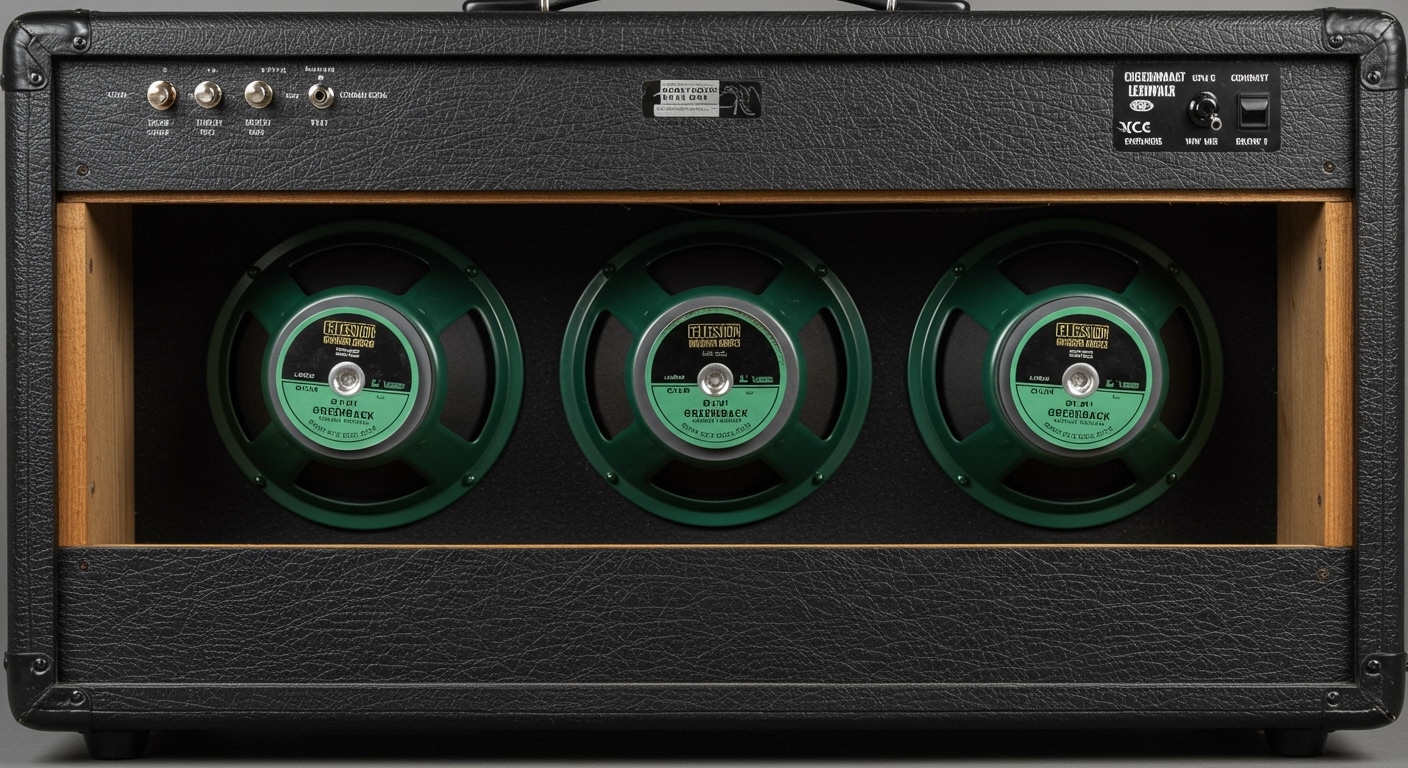
Marshall amps primarily use Celestion speakers, a partnership that has defined the sound of rock and roll since the 1960s. Specifically, the most iconic models utilize the Celestion G12M Greenback, G12H-30, and the Vintage 30 (V30) to produce that signature mid-range punch and “Marshall Growl.” While modern entry-level units may feature Marshall-labeled custom drivers or budget-friendly Seventy 80s, the heart of the Marshall sound remains firmly rooted in high-quality UK-designed Celestion drivers.
Key Takeaways: Marshall Speaker Essentials
- Primary Partner: Celestion is the exclusive provider for almost all high-end and mid-range Marshall cabinets.
- The “Big Three” Models: Most classic tones come from the G12M Greenback, G12H Heritage, and Vintage 30.
- Modern Variations: Lower-priced series like the DSL or CODE often use Celestion Seventy 80 or custom V-Type speakers to balance cost and performance.
- Tonal Signature: Marshall speakers are chosen for their pronounced upper-midrange and “breakup” characteristics when pushed.
- Cabinet Construction: The 1960A (Slant) and 1960B (Straight) 4×12 cabinets are the industry standards for housing these speakers.
The Evolution of Marshall’s Speaker Selection
When I first started gigging with a JCM800, I didn’t realize how much of my tone was coming from the wood and wire inside the cabinet rather than just the tubes. Understanding what speakers do Marshall amps use requires looking back at the 1960s. Originally, Jim Marshall sought out speakers that could handle the increasing wattage of his “Plexi” amplifiers.
The relationship with Celestion began because they were a local British manufacturer capable of producing durable 12-inch drivers. Over the decades, this partnership resulted in several “standard” configurations that define specific eras of music.
The Early Era: Alnico to Ceramic
In the very beginning, Marshall used Celestion Alnico G12 speakers (similar to those in Vox amps). However, as guitarists demanded more volume, the move to Ceramic magnets became necessary. The Ceramic G12M “Greenback” became the backbone of the 1960s “stack” sound because it offered a creamy distortion that complimented the Marshall head’s natural clipping.
Comparing the Most Common Marshall Speakers
If you open the back of a Marshall cabinet today, you are likely to find one of these four configurations. I have personally tested these across various venues, and the difference in “projection” is staggering.
| Speaker Model | Common Marshall Amp/Cab | Tonal Characteristic | Magnet Type |
|---|---|---|---|
| Celestion G12M-25 Greenback | 1960AX/BX, Studio Series | Woody, warm, early breakup | Ceramic (Medium) |
| Celestion Vintage 30 (V30) | 1960AV/BV, JVM Series | Aggressive mids, tight lows | Ceramic (Heavy) |
| Celestion G12H-30 | Handwired Series, 1973 | Richer bass, “creamy” highs | Ceramic (Heavy) |
| Celestion Seventy 80 | DSL40CR, Origin 50 | Balanced, neutral, modern | Ceramic |
| Celestion V-Type | DSL20, Studio Vintage | Mix of Vintage & Modern | Ceramic |
The G12M Greenback: The Rock Legend
The G12M Greenback is arguably the most famous speaker in the Marshall lineup. It is rated at 25 watts, meaning a 4×12 cabinet can handle 100 watts. These speakers are known for compression; when you crank the volume, the speaker itself begins to distort in a musical way. This is the “brown sound” popularized by legendary 70s rock icons.
The Vintage 30: The Modern Workhorse
Despite the name, the Vintage 30 was designed in the 80s to handle higher gain and more power. Most modern Marshall JVM and Silver Jubilee owners prefer these because they cut through a loud mix. In my experience, the V30 has a “spike” in the upper-midrange that helps your guitar solos stand out, though some find it a bit “piercing” in smaller rooms.
How to Choose the Right Speaker for Your Marshall Style
Choosing a speaker isn’t just about what Marshall uses—it’s about matching the speaker to your specific playing style. Below is a step-by-step framework I use when advising players on upgrading their rigs.
Step 1: Identify Your Amp’s Wattage
You must ensure your speakers can handle the output of your amp.
- Rule of Thumb: Your total speaker wattage should be at least double the amp’s rated wattage for safety.
- For a 100W Marshall Plexi, a single 25W Greenback will blow. You need a 4×12 cabinet (100W total) or high-wattage alternatives like the Celestion G12T-75.
Step 2: Determine Your Gain Level
- Blues/Classic Rock: Go with G12M Greenbacks or G12H-30s. They provide “speaker breakup” which adds texture to your clean and crunch tones.
- Hard Rock/Metal: Go with Vintage 30s or G12T-75s. These stay “tighter” under high gain, preventing your low end from sounding “muddy” or “flabby.”
Step 3: Choose Your Cabinet Type
Marshall 1960A (Slanted) cabinets direct some sound upward toward your ears, which is great for monitoring on stage. 1960B (Straight) cabinets have more internal volume, resulting in a thumper bass response. If you want a “huge” sound, I always recommend the straight “B” cabinet for the bottom of your stack.
Inside Modern Marshall Series: What’s Under the Hood?
Marshall has diversified its lineup to hit different price points. Not every amp gets the premium UK-made Celestions. Here is the breakdown of the current “stock” configurations.
The DSL Series (Dual Super Lead)
The DSL40CR—one of the best-selling tube amps in the world—usually comes with a Celestion V-Type or a Seventy 80. While the Seventy 80 is often criticized by “tone purists,” it is a very neutral speaker that allows the amp’s EQ to do the heavy lifting. I’ve found that swapping a Seventy 80 for a Creamback significantly warms up the DSL’s high-gain channel.
The Origin Series
Designed for vintage-style “pedal platform” use, the Origin 50 uses Celestion Midnight 60 or V-Type speakers. These are designed to be more transparent, allowing you to hear the nuances of your overdrive pedals.
The Studio Series (SC20, SV20)
These 20-watt “mini” versions of the JCM800 and Plexi use 10-inch Celestion V-Type speakers in the combos, or 12-inch G12-V Type drivers in the matching cabinets. They provide a surprising amount of “thump” for such small enclosures.
Expert Tips for Breaking in Marshall Speakers
New Marshall amps often sound “stiff” or “harsh” right out of the box. This is because the paper cone and the “surround” of the speaker are physically rigid. To get the best sound, you need to break them in.
- The “Loud” Method: Run your amp at about 40% volume for 10-15 hours. Use a looper pedal to play a heavy rhythmic riff while you leave the room.
- The Frequency Sweep: Use a signal generator (there are many free apps) to run a low-frequency sine wave (around 40Hz) through the speaker at low volume overnight.
- Physical Softening: As the speaker moves, the fibers in the cone soften, leading to a smoother high end and a more relaxed bass response. In my studio, I’ve noticed that Vintage 30s take the longest to “sweeten up,” often requiring 20+ hours of hard playing.
Why Marshall Doesn’t Use Jensen or Eminence?
While brands like Fender frequently use Jensen or Eminence, Marshall sticks with Celestion to maintain their “British” identity. Jensen speakers are known for “sparkle” and “chime,” which can make a Marshall amp sound too thin or bright. Eminence makes fantastic speakers, but they have a “mid-scooped” American voicing that fights against the “mid-forward” Marshall circuit.
If you want the authentic Marshall sound, you must stay within the Celestion family or use “clones” specifically designed to mimic them (like Scumback or Warehouse Guitar Speakers).
Summary of the “Marshall Sound” Components
To achieve the ultimate tone, it isn’t just about the brand; it’s about the technical specs.
- Magnet Weight: Heavier magnets (G12H) provide more bass and sustain.
- Voice Coil: The diameter affects how the speaker handles heat and power.
- Doping: The chemical treatment on the edge of the cone. Marshall speakers usually have “medium” doping to prevent ghost notes while allowing the cone to vibrate freely.
Frequently Asked Questions
Can I put a 25-watt Greenback in a 50-watt Marshall combo?
No, you should not. A 50-watt amp can easily peak above 50 watts, which will overheat the voice coil of a 25-watt speaker and eventually cause it to fail. For a 50-watt Marshall, look for a Celestion G12-65 or a Creamback G12M-65.
What is the difference between a “Heritage” and “Standard” Celestion?
Heritage series speakers are built to the exact vintage specifications of the 1960s, often including the correct “pulsonic” cone formulations. Standard series (like the modern G12M) are mass-produced and slightly more “modern” and bright sounding.
Why are some Marshall speakers labeled “Custom Designed”?
In entry-level series like the MG or CODE, Marshall works with manufacturers (sometimes Celestion, sometimes others) to create a budget-friendly speaker tuned specifically to that amp’s digital modeling. These are generally not sold separately and are designed for versatility rather than specific “vintage” character.
What is the best speaker for a Marshall JCM800?
The consensus among most pro players is either the Celestion G12T-75 (which was the stock speaker in the 80s) or a pair of Vintage 30s. The G12T-75 has a “scooped” mid-range that balances the mid-heavy JCM800 perfectly.









