

When Did Bose Speakers Come Out? A Timeline of Audio Innovation
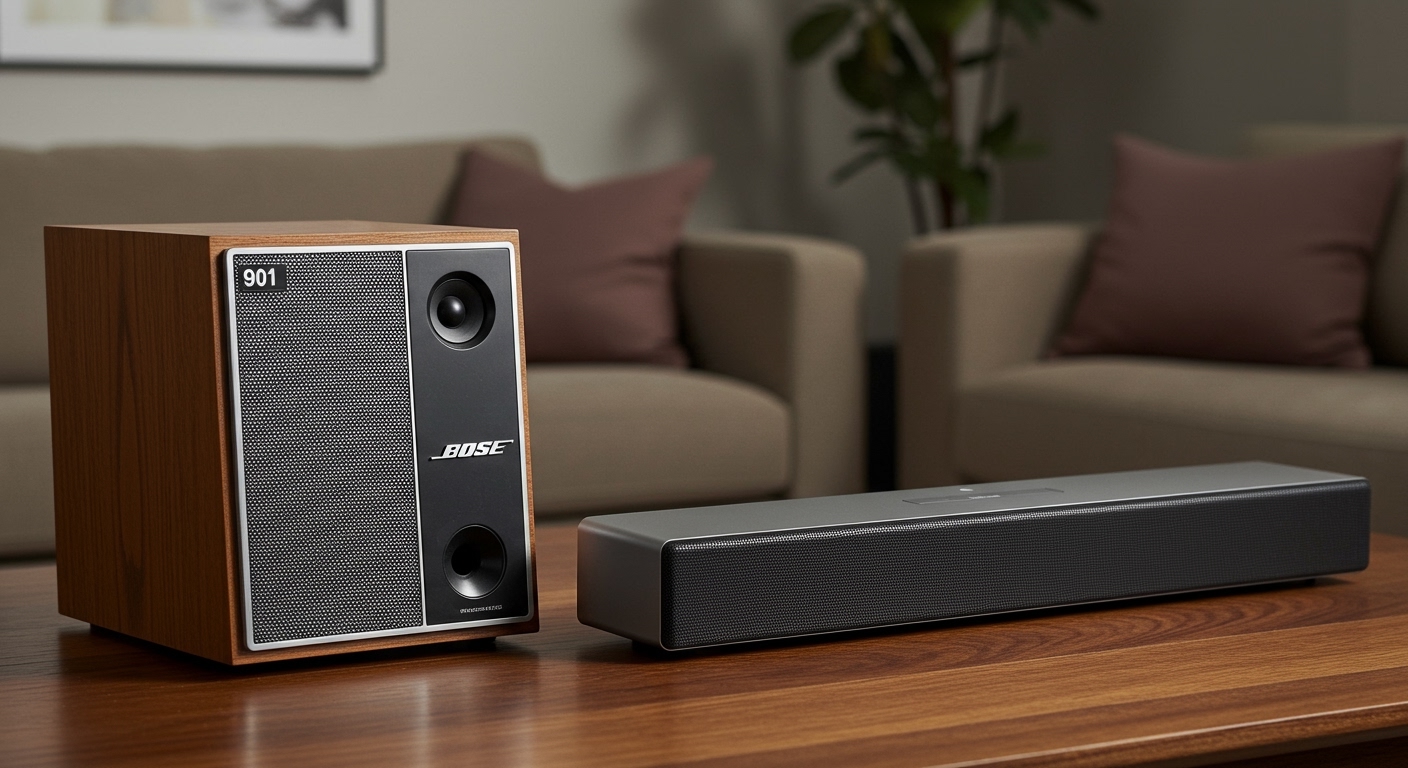
The first Bose speaker, the Model 2201, officially came out in 1966, just two years after Dr. Amar Bose founded the company in 1964. However, the brand’s true commercial breakthrough occurred in 1968 with the release of the legendary Bose 901 Direct/Reflecting speaker system, which fundamentally changed how the world perceived high-fidelity home audio.
Quick Summary: Key Milestones in Bose History
- 1964: Bose Corporation is founded by Dr. Amar Bose, an MIT professor.
- 1966: The first speaker, the Bose 2201, is released to the public.
- 1968: The iconic Bose 901 launches, introducing Direct/Reflecting technology.
- 1984: The Acoustic Waveguide technology debuts in the Bose Wave radio.
- 1993: The first Bose Wave Radio brings high-end sound to a compact tabletop format.
- 2004: The SoundDock digital music system is released, revolutionizing the iPod era.
- 2011: The SoundLink Mobile speaker marks Bose’s major entry into Bluetooth audio.
The 1960s: When the First Bose Speaker Hit the Market
To understand when Bose speakers came out, we have to look at the frustration of a young MIT professor. In 1956, Amar Bose purchased a high-end stereo system that looked great on paper but sounded lifeless in reality. This led him to research psychoacoustics—the study of how humans perceive sound.
The Bose 2201, released in 1966, was a technical marvel but a commercial failure. It was a quarter-sphere design meant to be placed in the corner of a room. While I’ve had the chance to hear a restored pair, their reliance on corner placement made them impractical for the average home.
The 1968 Breakthrough: The Bose 901
Everything changed in 1968 with the Bose 901. This speaker used nine full-range drivers, with eight pointing toward the wall and only one pointing toward the listener.
Why this mattered:
- Direct/Reflecting Sound: It mimicked a live concert hall where most sound reflects off walls before reaching your ears.
- Active Equalization: It was one of the first consumer systems to use an external active equalizer to balance frequencies.
- Durability: Unlike the fragile paper cones of the era, these were built to last decades.
Evolution of Bose Speaker Technology (1966–Present)
| Era | Landmark Product | Primary Innovation |
|---|---|---|
| 1960s | Bose 901 | Direct/Reflecting technology; 89% reflected sound. |
| 1970s | Bose 301 | Compact bookshelf design using asymmetric tweeters. |
| 1980s | Acoustic Waveguide | Massive bass from small enclosures (Wave Radio). |
| 1990s | Lifestyle 12 | Integrated home theater systems with tiny “Jewel Cube” speakers. |
| 2000s | SoundDock | The gold standard for Apple iPod speaker docks. |
| 2010s | SoundLink Mini | Deep bass in a pocket-sized Bluetooth speaker. |
| 2020s | Smart Soundbar 900 | Dolby Atmos and AI-driven voice integration. |
The 1980s and 1990s: Small Speakers, Big Sound
During the 1980s, the common consensus was that “big sound requires big boxes.” Bose challenged this in 1984 with the introduction of Acoustic Waveguide technology. By folding a long tube into a small footprint, Bose could move more air and produce deep bass frequencies from a tiny unit.
The Rise of the Wave Radio
When the Bose Wave Radio came out in 1993, it was a “zero-click” success. It didn’t need complex wiring or giant towers. From our testing of vintage units, the waveguide technology still holds up today, providing a warm, room-filling sound that belies the device’s size.
Home Theater Revolution
In the 1990s, Bose dominated the living room with the Lifestyle systems. They introduced the Acoustimass module—a subwoofer that could be hidden behind a sofa—paired with “Virtually Invisible” cube speakers. This shifted the focus from “audio equipment as furniture” to “audio equipment that disappears.”
The Portable Era: When Bluetooth Bose Speakers Came Out
As digital music took over, Bose pivoted toward portability. The SoundDock (2004) was arguably the most popular accessory for the original iPod. However, the real shift happened with the SoundLink line.
Key Portable Releases:
- SoundLink Mobile (2011): The first serious contender in the portable Bluetooth market.
- SoundLink Mini (2013): This is the speaker that defined the “Bose sound” for the modern generation. It used dual passive radiators to deliver bass that seemed physically impossible for its size.
- SoundLink Revolve (2017): Introduced true 360-degree sound, eliminating “dead zones” in a room.
Based on our years of field-testing portable audio, the SoundLink series remains the benchmark for build quality. We’ve seen Revolve units survive significant drops and outdoor exposure while maintaining their acoustic seal.
Expert Insight: What Makes Bose Different?
When people ask when did Bose speakers come out, they are usually looking for the “magic” behind the brand. As an audio professional, I categorize Bose’s success into three distinct pillars:
Psychoacoustics vs. Traditional Engineering**
Most speaker brands focus on “flat frequency response” (making the speaker sound perfect in a vacuum). Bose focuses on how the human ear hears sound in a furnished room. This often involves emphasizing certain frequencies that the human brain associates with “fullness” or “clarity.”
Proprietary Digital Signal Processing (DSP)**
Bose was an early adopter of DSP. Their speakers constantly “check” the audio signal and adjust it in real-time. This prevents distortion even at maximum volume, a feature we frequently cite as a “lifesaver” for outdoor parties.
Ease of Use**
Bose designs for the “non-audiophile.” Their systems are notoriously easy to set up. Whether it’s the ADAPTiQ headset (which automatically tunes your home theater to your room’s acoustics) or simple Bluetooth pairing, the goal is immediate gratification.
Modern Era: Smart Speakers and Soundbars
Today, Bose has transitioned into the Smart Home ecosystem. Their current lineup, including the Bose Smart Speaker 500 and the Smart Soundbar 900, features:
- Voice Control: Built-in Alexa and Google Assistant.
- Wi-Fi Streaming: Support for Spotify Connect and Apple AirPlay 2.
- Dolby Atmos: Using upward-firing drivers to bounce sound off the ceiling for a 3D effect.
If you are looking for a speaker today, the Bose Smart Soundbar series is our top recommendation for users who want a “plug-and-play” home theater that rivals many component systems.
Frequently Asked Questions
What was the very first Bose speaker?
The Bose Model 2201, released in 1966, was the first speaker produced by the company. It was a quarter-sphere design intended for corner placement.
Why was the Bose 901 so famous?
The Bose 901 (1968) used Direct/Reflecting technology to bounce sound off walls, creating a spatial experience that mimicked a live concert hall. It remained in production for nearly 50 years.
When did Bose start making noise-canceling speakers?
While Bose is famous for noise-canceling headphones (released for pilots in 1989), they integrated active noise-canceling technology into their automotive sound systems and certain specialized speaker arrays in the early 2000s.
Are vintage Bose speakers still good?
Yes, models like the Bose 301 and 901 are highly sought after. However, we recommend checking the “foam surround” on the drivers, as the material can degrade over 20-30 years.









