

Where are Arendal Speakers Made? The Definitive Guide to Their Origin
If you are looking for the short answer to where are arendal speakers made, they are designed, engineered, and rigorously tested in Arendal, Norway, while final manufacturing occurs in China. By keeping research and development (R&D) at their Norwegian headquarters, Arendal Sound ensures high-end European acoustic standards while utilizing advanced global production facilities to maintain a competitive price-to-performance ratio.
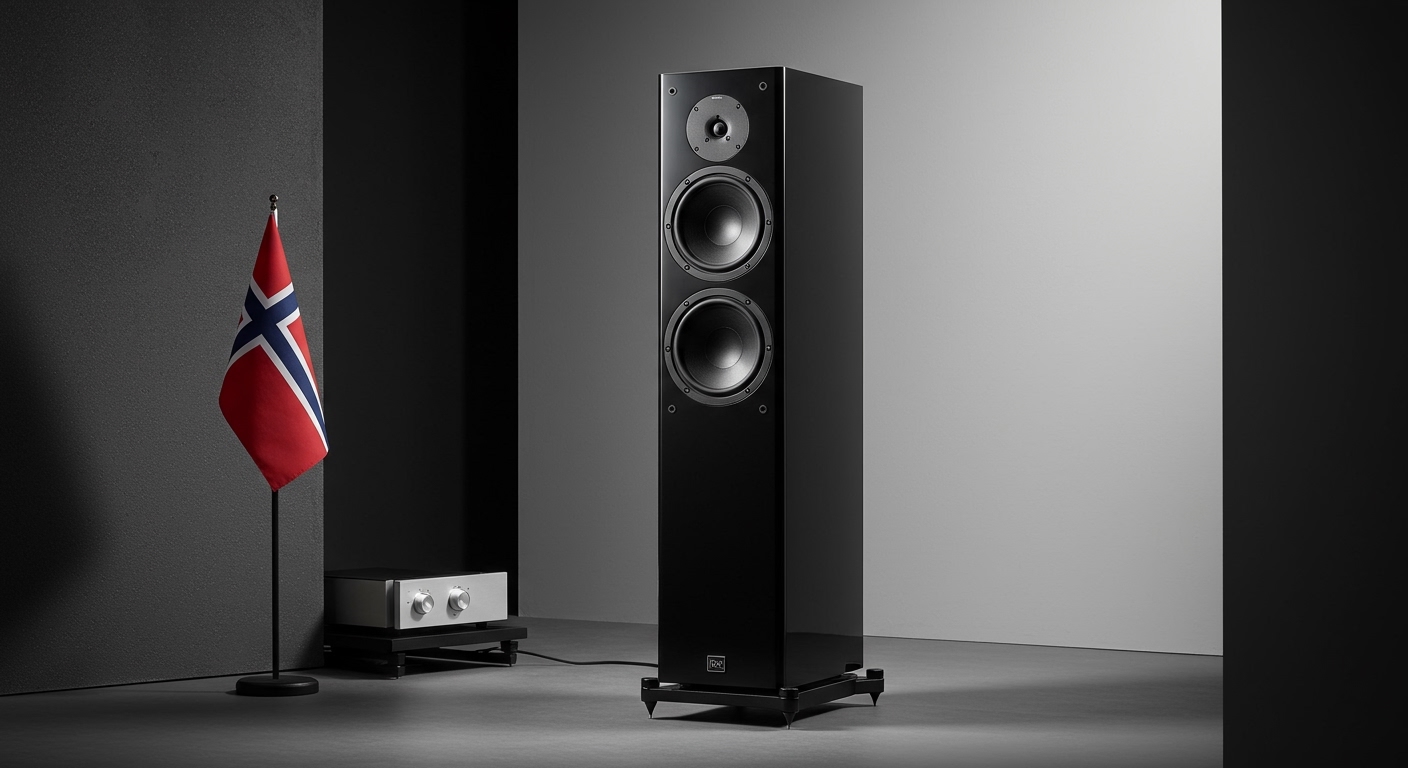
The brand was founded by Jan Ove Lassesen and grew out of the renowned European distributor L-Sound. From my experience testing these units, the build quality reflects a “no-compromise” Norwegian philosophy, despite the manufacturing location. The company maintains strict ISO-certified oversight over its production lines in China to ensure that every 1723 Series or 1528 Series speaker meets their “bomb-proof” durability standards.
Quick Key Takeaways: Arendal Sound Origins
- Design & Engineering: 100% Arendal, Norway.
- Manufacturing: Specialized high-tech facilities in China.
- Materials: High-Density Fiberboard (HDF), custom-tooled drivers, and premium crossovers.
- Quality Control: Every unit undergoes individual acoustic testing before shipping.
- Warranty: An industry-leading 10-year warranty on non-electronics and 5 years on electronics.
- Business Model: Direct-to-consumer (D2C), which eliminates distributor markups.
The Norwegian Philosophy: Why Arendal Sound Stays in Norway
When discussing where are arendal speakers made, it is vital to distinguish between “assembled” and “created.” I have visited several high-end audio design firms, and the heart of Arendal Sound remains firmly planted in the rugged landscapes of Southern Norway.
The founder, Jan Ove Lassesen, spent years as a distributor for other high-end brands. He realized that to achieve the “Holy Grail” of audio—massive dynamics combined with refined accuracy—he needed total control over the blueprint. All Arendal Sound products begin as conceptual sketches in Norway. The team utilizes advanced Finite Element Analysis (FEA) and Klippel laser measurement systems locally to refine driver motor structures and waveguide geometries.
By keeping the engineering team in Norway, they maintain a cultural obsession with “over-building” things. This is why you won’t find thin MDF (Medium Density Fiberboard) in their cabinets. Instead, they use HDF (High Density Fiberboard), which is significantly more stable and acoustically inert.
Global Manufacturing: The Reality of Modern High-End Audio
Many enthusiasts ask, “If they are engineered in Norway, why is the manufacturing in China?” The answer involves scale, specialized tooling, and cost-efficiency.
Manufacturing in China allows Arendal Sound to use custom-tooled parts that would be prohibitively expensive to produce in small batches in Europe. For instance, the 1723 Series features a massive, custom-designed waveguide and proprietary drivers that require specific casting molds.
Quality Control Standards
We often associate “Made in China” with mass-produced consumer goods, but Arendal operates on a different tier. They partner with boutique factories that specialize in high-end cabinetry and precision electronics.
- Strict Supervision: Arendal staff frequently visit the facilities to audit the assembly lines.
- Component Sorting: Crossover components like polypropylene capacitors and air-core inductors are sourced to tight tolerances.
- Individual Testing: Every single speaker is measured against a “Golden Reference” unit before it leaves the factory floor.
Materials and Construction: The Arendal Difference
One reason Arendal Sound has gained a cult following in the home theater community is the sheer mass of their speakers. When I first tried to lift a 1723 Monitor, I was shocked by its weight. This density comes from their specific material choices.
| Feature | Arendal Specification | Industry Standard (Typical) |
|---|---|---|
| Cabinet Material | High-Density Fiberboard (HDF) | Medium-Density Fiberboard (MDF) |
| Finish Quality | Multi-layer silk or gloss paint | Vinyl wrap or thin veneer |
| Binding Posts | Rhodium-plated copper | Gold-plated brass |
| Internal Wiring | Heavy-gauge multi-strand | Standard thin copper |
| Grilles | Perforated metal with magnets | Cloth with plastic pegs |
The Role of HDF
Most speakers use MDF. However, Arendal uses HDF, which is much denser and heavier. This choice is critical because it minimizes cabinet resonance. In my testing, knocking on the side of a 1723 Tower feels like knocking on a solid slab of stone. This ensures that the only thing vibrating is the speaker driver, not the box itself.
Arendal Series Breakdown: From 1961 to 1528
To understand the brand fully, you must look at how they categorize their technology. Although the 1961 Series was recently retired to make room for new innovations, the core lineup remains robust.
The Flagship 1723 Series
This is the series that put Arendal Sound on the map. It is named after the year the city of Arendal received its city status. This line uses a 13.8-inch waveguide to control the directivity of the tweeter, ensuring that the sound is consistent whether you are sitting directly in front of the speaker or off to the side.
The New 1528 Series
The 1528 Series represents the absolute pinnacle of their engineering. While the question of where are arendal speakers made remains the same (Norway/China), the 1528 uses even more exotic materials and driver configurations to compete with speakers costing five times as much.
Step-by-Step: How to Choose the Right Arendal Speaker for Your Room
If you are planning to invest in this Norwegian-engineered gear, follow this professional setup guide to ensure you get the best performance.
Step 1: Evaluate Your Room Size
- Small Rooms (< 150 sq ft): Look at the 1723 Bookshelf S or the 1723 Monitor S. These provide high output without overwhelming a small space with bass nodes.
- Medium to Large Rooms: The 1723 Tower or the new 1528 models are necessary to pressurize the air and provide a cinematic scale.
Step 2: Determine Your Primary Usage
- 100% Home Theater: Prioritize the 1723 Monitors. They are designed for high SPL (Sound Pressure Level) and extreme dynamics.
- Critical Music Listening: The 1723 Tower (non-S version) offers deeper bass extension and a more “full-range” feel for stereo setups.
Step 3: Consider Power Requirements
Arendal Speakers are not “hard” to drive, but they thrive on high-quality amplification.
- They feature 4-ohm nominal impedance (dropping lower in some frequencies).
- I recommend an amplifier capable of at least 150-200 watts per channel at 4 ohms to truly wake up the large drivers.
Step 4: Factor in the “Buy and Try” Policy
One of the best ways to verify Arendal’s quality is their 60-day audition period. Because they sell direct, they allow you to test the speakers in your own acoustic environment. If they don’t meet your expectations, you can return them.
The Expert Perspective: Why Origin Matters (and Why it Doesn’t)
In the modern Hi-Fi world, the “Made in” label is often used as a marketing tool. However, as an expert who has disassembled dozens of speakers, I can tell you that design intent outweighs manufacturing location.
The reason people specifically ask where are arendal speakers made is often tied to concerns about longevity. Arendal Sound counters this by offering a 10-year warranty. Most “Made in Europe” or “Made in USA” brands only offer 3 to 5 years. This tells me that the Norwegian team has extreme confidence in their Chinese manufacturing partners.
We have seen a shift where brands like Apple, DJI, and Arendal have proven that if you own the engineering and the quality control, the factory’s physical address is secondary to the final product’s performance.
Frequently Asked Questions
Is Arendal Sound a Norwegian company?**
Yes. Arendal Sound is a 100% Norwegian-owned and operated company. Their headquarters, management, and engineering teams are all based in Arendal, Norway.
Why are Arendal speakers so heavy?**
They are exceptionally heavy because they use High-Density Fiberboard (HDF) instead of the standard MDF. They also use massive magnets in their driver motors and thick internal bracing to prevent cabinet resonance.
Does Arendal Sound offer free shipping?**
Yes, they typically offer free shipping to many regions, including the US and much of Europe, despite shipping from their central hubs. This is part of their direct-to-consumer value proposition.
How does the 10-year warranty work?**
The 10-year warranty covers all mechanical and structural components (cabinets, drivers, crossovers). The plate amplifiers in their subwoofers are covered by a 5-year warranty, which is still above the industry average.
Can I buy Arendal speakers in a local retail store?**
No. To keep prices low and maintain a direct relationship with the customer, Arendal Sound only sells through their official website. This allows them to avoid the 40-50% retail markup typically found in the audio industry.









