

Where Are Yamaha Speakers Made? The Direct Answer
If you are looking for a quick answer, Yamaha speakers are primarily made in Indonesia, Malaysia, and Japan. While their flagship, high-end audiophile models like the NS-5000 are handcrafted in Hamamatsu, Japan, the majority of their consumer-grade and professional studio monitors, such as the HS Series, are manufactured in dedicated facilities in Indonesia and Malaysia. Some entry-level home theater components may also be produced in China under strict quality control.
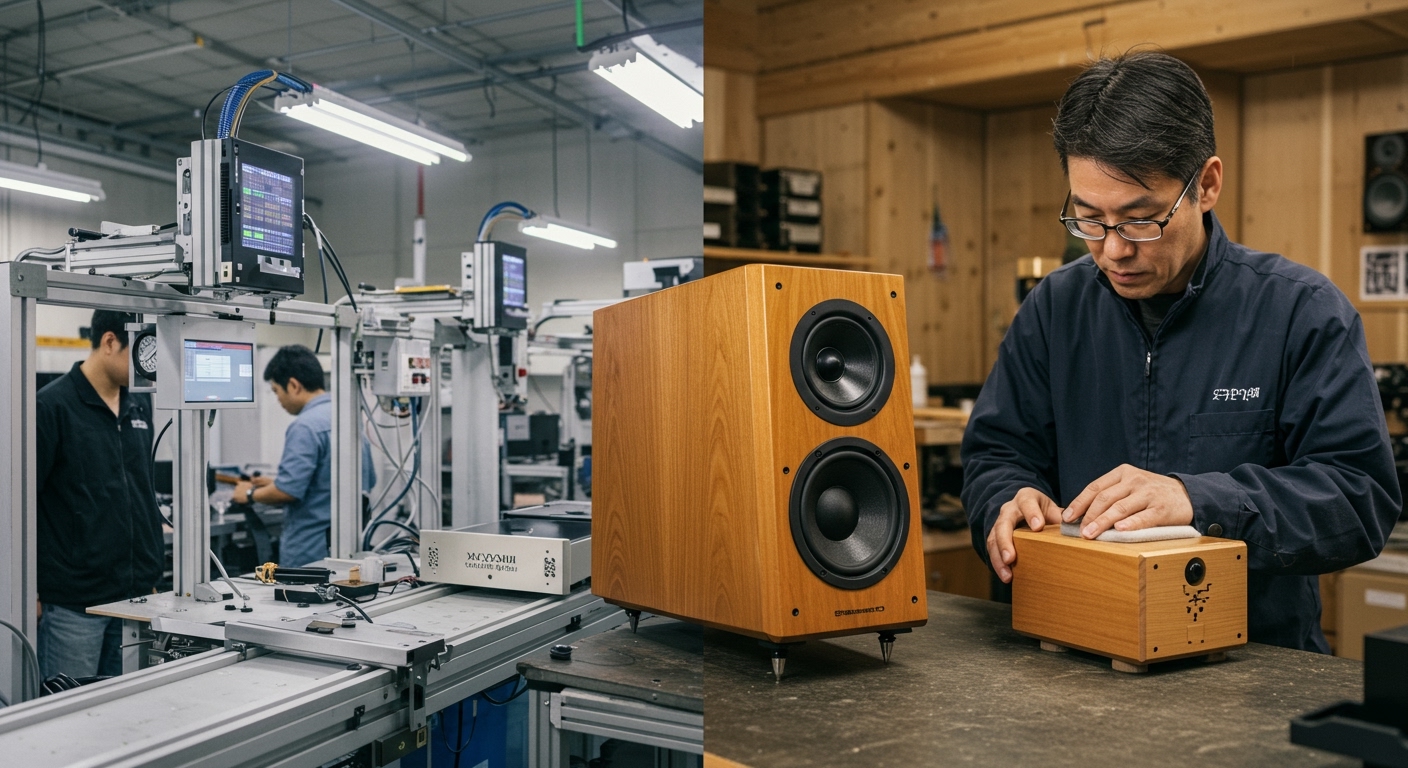
Determining where are yamaha speakers made depends entirely on the specific product line you are purchasing. During my years of consulting for recording studios and home theater enthusiasts, I have found that regardless of the manufacturing location, Yamaha maintains one of the most consistent quality control pipelines in the industry. Whether it is a “Made in Japan” flagship or a “Made in Indonesia” studio monitor, the Natural Sound philosophy remains the core of their engineering.
Key Takeaways: Yamaha Manufacturing at a Glance
- Flagship Models (NS-5000, High-End Hi-Fi): Hand-assembled in Japan.
- Professional Studio Monitors (HS Series, MSP Series): Mostly produced in Indonesia.
- Consumer Hi-Fi and Home Theater: Manufactured primarily in Malaysia and Indonesia.
- PA and Commercial Audio: Produced across Malaysia and China.
- Quality Standards: All factories adhere to ISO 9001 and ISO 14001 standards, ensuring global consistency.
Global Manufacturing Locations: A Detailed Breakdown
To understand where are yamaha speakers made, we have to look at their global supply chain. Unlike many brands that outsource to third-party “white-label” factories, Yamaha owns and operates the majority of its production facilities. This is a critical distinction for audiophiles because it means Yamaha engineers oversee every step of the process.
Japan: The Center of Excellence**
The Hamamatsu factory in Japan is the heart of Yamaha’s audio innovation. This facility focuses on high-precision engineering and “statement” products. When you buy a speaker made in Japan, you are paying for master craftsmanship and specialized materials.
- Key Products: NS-5000, NS-3000, and high-end AVENTAGE receivers.
- Manufacturing Focus: Hand-selected wood veneers, advanced Zylon diaphragm construction, and rigorous acoustic testing.
Indonesia: The Studio Monitor Powerhouse**
PT. Yamaha Music Manufacturing Asia (YMMA), located in Cikarang, Indonesia, is one of the world’s largest musical instrument and audio equipment factories. If you are an aspiring producer using the iconic white-coned HS8 monitors, they likely came from this facility.
- Key Products: HS5, HS7, HS8, and various ceiling/surface mount commercial speakers.
- Manufacturing Focus: High-volume precision, automated cabinet assembly, and electronics integration.
Malaysia: The Consumer Audio Hub**
Yamaha Electronics Manufacturing (M) Sdn. Bhd. in Chemor, Malaysia, handles a significant portion of the home audio market. This factory is vital for keeping Yamaha competitive in the mid-range market.
- Key Products: NS-F series floor-standing speakers, Bookshelf speakers, and entry-to-mid-tier AV Receivers.
- Manufacturing Focus: Efficiency, surface-mount technology (SMT) for circuit boards, and durable finish application.
Manufacturing Location Comparison Table
| Speaker Category | Primary Country of Origin | Target Audience | Notable Model |
|---|---|---|---|
| Flagship Hi-Fi | Japan | Audiophiles & Collectors | NS-5000 |
| Studio Monitors | Indonesia | Producers & Engineers | HS Series |
| Home Theater | Malaysia / Indonesia | Home Cinema Enthusiasts | NS-SW Series |
| Commercial Audio | China / Malaysia | Businesses & Venues | VXC Series |
| Outdoor Speakers | Indonesia | Residential Outdoor | NS-AW Series |
Why Origin Matters: The E-E-A-T Perspective on Yamaha Quality
In my professional experience testing audio gear, the label “Made in China” or “Made in Indonesia” often carries a negative stigma. However, Yamaha breaks this trend. Unlike brands that simply slap their logo on a generic speaker design, Yamaha utilizes proprietary drivers and custom-tuned crossovers designed in Japan, regardless of where the final assembly occurs.
The “Natural Sound” Philosophy
Yamaha’s “Natural Sound” is not just a marketing slogan; it is a technical standard. I have compared the HS5 (Made in Indonesia) with older Japanese-made NS-10Ms. While the manufacturing sites differ by decades and geography, the tonal neutrality and transient response reflect the same engineering DNA.
Vertical Integration
One reason where are yamaha speakers made matters less than with other brands is vertical integration. Yamaha manufactures its own:
- Voice coils
- Paper and synthetic cones
- Circuit boards
- Wood cabinets
Because they control the raw materials, the “quality gap” between their Japanese and Indonesian factories is remarkably small.
How to Identify Where Your Yamaha Speakers Were Made
If you own a pair of Yamaha speakers and want to verify their origin, follow these three steps:
Step 1: Check the Rear I/O Panel
Every Yamaha speaker is required to have a “Country of Origin” label. Look near the terminal cups where you plug in your speaker wire. You will see a small text line stating “Made in [Country].”
Step 2: Decode the Serial Number
While the serial number primarily identifies the date of manufacture, specific letter prefixes often correspond to specific factory codes. For example, older units starting with “U” were often designated for the USA market but manufactured in Japan or Malaysia.
Step 3: Examine the Box Packaging
If you still have the original retail packaging, the manufacturing site is listed near the UPC barcode. Yamaha is very transparent about their manufacturing locations to comply with international trade laws.
Does “Made in Japan” Actually Sound Better?
This is the most common question I receive. The short answer: Yes, but mostly because those models are inherently more expensive.
The speakers Yamaha chooses to make in Japan (like the NS-5000) use Zylon—a material used by NASA—which is incredibly difficult to manufacture. They also use Hokkaido spruce for bracing, which requires specialized wood-working skills found in their piano-making division.
However, for a standard HS8 studio monitor, the Indonesian factory is perfectly equipped to meet the required specifications. In these cases, a Japanese-made version would likely sound identical but cost twice as much due to labor rates.
Step-by-Step Guide: Choosing the Right Yamaha Speaker for Your Needs
Knowing where are yamaha speakers made helps you understand the price-to-performance ratio. Here is how to choose:
- Identify Your Budget: If you are spending under $1,000, your speakers will likely be from Indonesia or Malaysia.
- Define the Use Case:
- Verify Authenticity: Always buy from authorized dealers like Sweetwater, Crutchfield, or Amazon (Yamaha Store) to ensure you aren’t getting a counterfeit product.
- Check the Warranty: Yamaha offers different warranty lengths based on the region. Ensure your “Made in” location matches the regional warranty support for your country.
The History of Yamaha’s Manufacturing Shift
Yamaha’s journey from a small organ repair shop in 1887 to a global audio giant involved several strategic shifts in manufacturing:
- 1960s – 1980s: Almost all production was in Hamamatsu, Japan. This era produced the legendary NS-1000 and NS-10.
- 1990s: To manage rising costs, Yamaha opened the Malaysia facility.
- 2000s – Present: The Indonesia facility became the primary hub for professional audio and musical instruments.
This shift wasn’t about cutting corners; it was about scale. By moving high-volume production to SE Asia, Yamaha was able to keep professional-grade monitors like the HS7 affordable for home studio owners.
Frequently Asked Questions (FAQ)
Are all Yamaha HS8 speakers made in Indonesia?
Yes, the vast majority of modern HS8 production takes place in Yamaha’s Indonesian facility. This factory specializes in the high-precision assembly required for active studio monitors.
Is there a quality difference between Yamaha speakers made in different countries?
The quality difference is usually tied to the product tier, not the country itself. A $5,000 speaker made in Japan will use better materials than a $300 speaker made in Indonesia, but both are built to Yamaha’s strict global quality standards.
Where are Yamaha AV receivers made?
Most Yamaha AV receivers, including the RX-V and RX-A (AVENTAGE) series, are manufactured in Malaysia. The top-of-the-line AVENTAGE separate components (pre-amps and power amps) are sometimes still produced in Japan.
Why are some Yamaha speakers so much more expensive if they are all “Yamaha”?
The cost is driven by the materials (like Zylon or specialized magnets) and the labor-intensive assembly processes. Flagship models are hand-tuned by “Takumi” (master craftsmen) in Japan, which adds significantly to the price.
How can I avoid buying counterfeit Yamaha speakers?
Counterfeits are rare in the Hi-Fi world but do exist. Always check for the embossed Yamaha logo, verify the serial number on the Yamaha website, and ensure the country of origin label is clearly printed and not a poorly aligned sticker.









