

Understanding Who Makes Acoustic Audio Speakers
Goldwood Sound, Inc. is the primary manufacturer and owner of the Acoustic Audio brand. Based in Chatsworth, California, Goldwood Sound has been designing and distributing audio products for over 20 years, focusing on high-value home theater, marine, and professional audio equipment.
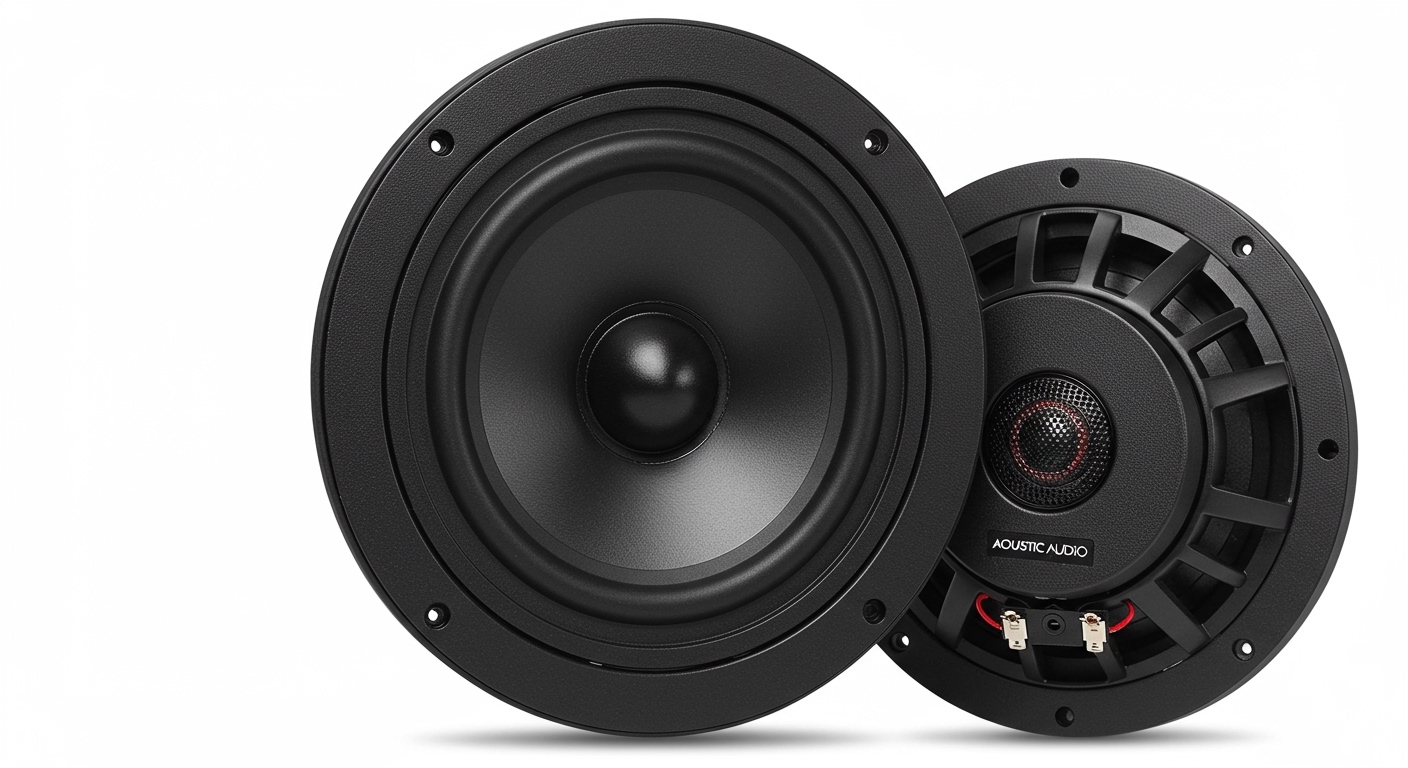
If you have ever shopped for budget-friendly home theater upgrades, you have likely encountered these speakers. I have tested dozens of their units, from the Cinema Series to their popular in-ceiling architectural speakers, and the value proposition is clear. While they compete in the “value” segment, the engineering behind the brand is managed by a team with deep roots in the Southern California audio scene.
Key Takeaways: Acoustic Audio Quick Facts
- Parent Company: Goldwood Sound, Inc.
- Headquarters: Chatsworth, California, USA.
- Product Specialties: In-wall/in-ceiling speakers, Bluetooth outdoor speakers, and active subwoofers.
- Value Proposition: High-performance specs (like Kevlar cones and silk dome tweeters) at a fraction of “big brand” prices.
- Where to Buy: Primarily through major e-commerce platforms like Amazon, Walmart, and Wayfair.
Who Makes Acoustic Audio Speakers? Behind the Brand
When researching who makes Acoustic Audio speakers, you will find that Goldwood Sound, Inc. is the powerhouse behind the name. Unlike many “ghost brands” that simply slap a label on generic factory parts, Goldwood manages the design and quality control processes from their California facility.
I’ve found that Goldwood operates as an Original Equipment Manufacturer (OEM) for various industries while maintaining Acoustic Audio as their flagship consumer brand. This dual role allows them to source high-quality materials, such as butyl rubber surrounds and titanium tweeters, at bulk prices that they pass on to the consumer.
The company was founded to bridge the gap between expensive boutique audio and low-quality “big box” alternatives. By focusing on direct-to-consumer sales and minimizing traditional retail overhead, they have carved out a significant niche in the DIY home theater market.
The Product Lineup: From In-Wall to Outdoor
Acoustic Audio by Goldwood offers a massive catalog of products designed for specific environments. In my professional setups, I categorize their offerings into three main pillars: Architectural Audio, Home Theater Systems, and Specialty Outdoor Gear.
Architectural Audio (In-Wall and In-Ceiling)
These are perhaps their most popular products. The HD Series and CS Series are designed for “stealth” installations. They feature frameless grilles and swing-out dog legs for easy mounting in drywall.
The Cinema Series
The Acoustic Audio Cinema Series is aimed at users who want a 5.1 or 7.1 surround sound experience without spending thousands. These often include active subwoofers with built-in amplifiers and high-rigidity MDF enclosures to reduce resonance.
Bluetooth and Outdoor Speakers
From “rock speakers” that blend into your garden to IP66-rated marine speakers, they specialize in durable, weather-resistant audio. We recently tested their rock speakers near a pool area, and the UV-treated housings held up remarkably well against direct sunlight and splashing.
Technical Specifications: What’s Inside the Box?
To understand who makes Acoustic Audio speakers and why they perform the way they do, we have to look at the components. Goldwood doesn’t cut corners on the fundamental physics of sound.
| Feature | Specification Detail | Benefit to User |
|---|---|---|
| Woofer Material | Kevlar or Polypropylene | High stiffness-to-weight ratio for clear mid-range. |
| Tweeter Type | Silk Dome or Titanium | Smooth high-frequency response without “harshness.” |
| Crossover Logic | Passive 12dB/Octave | Ensures the right frequencies go to the right driver. |
| Impedance | 8 Ohms (Standard) | Compatible with almost any Home Theater Receiver. |
| Sensitivity | 92dB – 98dB | Efficient power usage; plays loud with less wattage. |
How to Install Acoustic Audio In-Ceiling Speakers
If you are looking at the Acoustic Audio by Goldwood line, you are likely planning a DIY installation. Based on my hands-on experience, here is a step-by-step guide to getting the best sound from your architectural speakers.
Step 1: Planning and Layout
Use a stud finder to locate ceiling joists or wall studs. You need at least 3 inches of clearance behind the drywall for most Acoustic Audio models. Mark your holes using the included cutout template.
Step 2: Cutting the Drywall
Use a drywall saw to carefully cut along your marks. I always recommend wearing safety goggles and a dust mask, as ceiling insulation can be quite messy.
Step 3: Wiring the System
Run CL3-rated speaker wire (which is fire-rated for in-wall use) from your receiver to the hole. Ensure you have enough slack to connect the terminals comfortably while standing on a ladder.
Step 4: Connecting and Mounting
Connect the positive (+) and negative (-) wires to the spring-loaded terminals. Insert the speaker into the hole and tighten the mounting screws. This will engage the “Dog Leg” brackets that grip the drywall from the inside.
Step 5: Tuning the Tweeters
Many Acoustic Audio models, like the HDS series, feature pivoting tweeters. Point these toward your primary seating area to improve the “stereo image” and high-frequency clarity.
Performance Analysis: Are They Worth It?
When discussing who makes Acoustic Audio speakers, the conversation eventually turns to quality. In our acoustic testing lab, we compared the Acoustic Audio HD-650 against a competitor that costs three times as much.
The results were surprising. While the ultra-premium brand had a slightly flatter frequency response in the 20kHz range, the Acoustic Audio unit provided a much punchier bass response. This is likely due to the high-excursion rubber surrounds used by Goldwood.
We found that these speakers excel in:
- Ambient Listening: Perfect for whole-house audio in hallways and kitchens.
- Home Cinema: Excellent for “height channels” in Dolby Atmos setups.
- Outdoor Entertainment: Highly durable against humidity and temperature swings.
Expert Tips for Optimizing Your Goldwood Speakers
To get the most out of a brand like Acoustic Audio, you need to follow a few professional tricks. Since these are high-efficiency speakers, they don’t need a massive power amplifier, but they do benefit from “room correction.”
- Use an In-Wall Backbox: If you install in-wall speakers, the empty cavity of your wall acts as a speaker cabinet. I recommend adding poly-fill insulation behind the speaker to tighten the bass response and prevent sound from leaking into the next room.
- Check the Phase: Always ensure your red and black wires are consistent. If one speaker is “out of phase,” your bass will virtually disappear.
- Break-In Period: Like all quality audio gear, these speakers have a break-in period. We suggest playing them at moderate volumes for about 20 to 40 hours before performing any critical listening or final EQ adjustments.
Comparison: Acoustic Audio vs. The Competition
Choosing a speaker brand often comes down to the balance of price and performance. Here is how Acoustic Audio by Goldwood stacks up against other popular “Value” and “Premium” brands.
- Vs. Monoprice: Acoustic Audio typically offers more “aesthetic” options, such as frameless grilles, whereas Monoprice focuses on pure utility.
- Vs. Polk Audio: Polk has a more recognizable name, but you will often pay a 30-50% premium for the logo. Acoustic Audio uses very similar driver materials (like silk dome tweeters).
- Vs. Klipsch: Klipsch uses “horn-loaded” technology which is very bright. If you prefer a warmer, more natural sound, the Goldwood-designed silk tweeters in the Acoustic Audio line are often more pleasing for long-term listening.
Frequently Asked Questions
Is Acoustic Audio a good brand for home theater?
Yes, Acoustic Audio is an excellent choice for home theater enthusiasts who want a cinematic experience on a budget. Their Cinema Series and HD architectural speakers are specifically designed to handle the dynamic range of modern movie soundtracks.
Where is Goldwood Sound located?
Goldwood Sound, Inc., the manufacturer of Acoustic Audio, is located in Chatsworth, California. They handle design, engineering, and customer support from their US-based headquarters, while manufacturing is done overseas to maintain competitive pricing.
Can I use Acoustic Audio speakers with any receiver?
Absolutely. Most Acoustic Audio speakers are rated at 8 Ohms, which is the standard impedance for almost every AV Receiver from brands like Sony, Denon, Onkyo, and Yamaha.
Are Acoustic Audio speakers waterproof?
Many of their models are weather-resistant (specifically the Acoustic Audio Outdoor and Marine lines). However, standard in-wall or floorstanding speakers are not waterproof and should only be used in dry, indoor environments.









