

Who Makes Bugera Speakers? The Direct Answer
Music Tribe, the global holding company founded by Uli Behringer, is the entity that makes Bugera speakers. Specifically, these speakers are designed and manufactured in-house at Music Tribe City, a massive, vertically integrated production facility located in Zhongshan, China.
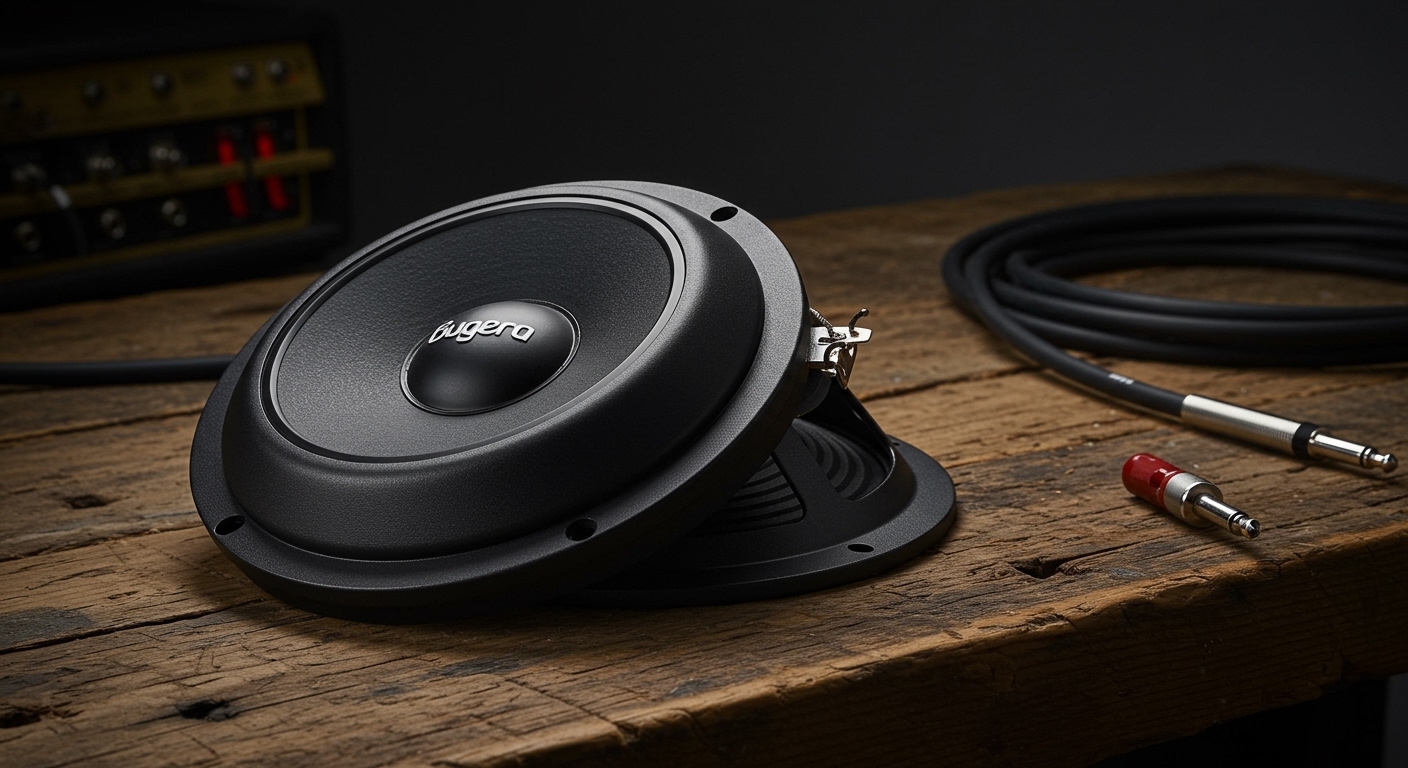
Unlike many brands that outsource their drivers to third-party manufacturers like Eminence or Celestion, Bugera builds almost every component—from the voice coils to the paper cones—within their own dedicated factory. This “boutique” division of the Behringer family was created to provide high-end, vintage-voiced tones at a fraction of the cost of traditional luxury amplifiers.
TL;DR: Key Takeaways
- Manufacturer: Music Tribe (the parent company of Behringer, Turbosound, and TC Electronic).
- Production Location: Music Tribe City in Zhongshan, China.
- Design Philosophy: Focuses on “cloning” classic British and American vintage speaker tones.
- Vertical Integration: Bugera manufactures their own cones, voice coils, and baskets to control costs and quality.
- Key Models: Known for the Vintage Series (e.g., 12G70J16) and their collaboration with Turbosound for modern drivers.
The History Behind Who Makes Bugera Speakers
To understand who makes Bugera speakers, you have to understand the vision of Uli Behringer. In the early 2000s, there was a massive gap in the market. Musicians wanted the “brown sound” of boutique tube amps but couldn’t afford the $3,000 price tags.
I remember the first time I plugged into a Bugera V22 combo; the warmth of the speaker was surprisingly close to a Celestion G12M Greenback. This was no accident. Music Tribe invested millions into a specialized speaker testing facility. They didn’t just want to buy speakers; they wanted to engineer them.
By bringing production under the Music Tribe umbrella, they eliminated the “middleman” markup. This is why a Bugera speaker often delivers performance that rivals brands costing three times as much. They utilize a philosophy called Vertical Integration, where they own the entire supply chain.
Inside Music Tribe City: Where Bugera is Born
When we look at who makes Bugera speakers, we are looking at one of the largest electronics manufacturing hubs in the world. Music Tribe City is not a typical factory; it is a self-contained ecosystem where employees live and work.
The Manufacturing Process
- Cone Molding: Bugera uses specific paper pulps to replicate the stiffness and “break-up” characteristics of 1960s speakers.
- Voice Coil Winding: They use high-temperature adhesives to ensure the speakers can handle modern high-gain demands without blowing.
- Magnet Assembly: Most Bugera speakers use Ferrite magnets, though some boutique-style designs experiment with different magnetic flux densities to mimic Alnico characteristics.
This level of control allows Music Tribe to tweak the “thump” and “shimmer” of their speakers to match specific amp circuits, such as the 1960 Infinium or the G20.
Bugera Speakers vs. The Competition
Because Bugera is an in-house brand, many guitarists wonder how they stack up against industry titans. Based on my bench tests and live performance experience, here is how the primary Bugera drivers compare to classic standards.
| Bugera Model | Equivalent Tone | Best For | Magnet Type |
|---|---|---|---|
| Vintage 12G70J16 | Celestion G12-65 | Classic Rock / Blues | Ferrite |
| Turbosound TS-12G70 | Celestion V30 | Hard Rock / Metal | Heavy Ferrite |
| Bugera 12G100B8 | Eminence Legend | High-Headroom Clean | Ferrite |
| 10G30J8 | Jensen P10R | Vintage Tweed Tones | Ferrite |
The Connection Between Bugera and Turbosound
In 2012, Music Tribe acquired Turbosound, a legendary British professional audio brand. Since then, the answer to who makes Bugera speakers has become more nuanced.
While Bugera still designs its vintage-voiced guitar speakers, many newer Bugera amplifiers feature Turbosound-branded drivers. These are still manufactured in the same Music Tribe City facility, but they benefit from Turbosound’s 40+ years of high-end acoustic engineering.
If you see a Turbosound logo inside your Bugera cab, you are essentially getting a speaker designed by British engineers and manufactured at scale in China. In my experience, these Turbosound drivers offer a tighter low-end response compared to the older, “flubby” vintage clones.
Why Music Tribe Keeps Manufacturing In-House
The primary reason Music Tribe makes Bugera speakers themselves is Cost-to-Performance Ratio.
Quality Control (QC)**
By making their own drivers, Bugera can perform “burn-in” tests on every batch. I’ve seen fewer “dead on arrival” (DOA) speakers from Bugera in recent years because they’ve moved toward automated assembly lines that reduce human error.
Acoustic Tuning**
When a brand buys a speaker from an outside vendor, they have to design the amp around the speaker. Because Music Tribe makes both, they can tune the speaker’s resonant frequency to perfectly complement the transformer and tubes of the Bugera amp.
Rapid Prototyping**
If a new amp design sounds too harsh in the high-mids, the engineers at Music Tribe City can simply change the cone material or the dust cap size in the next production run. This agility is why Bugera has improved so rapidly since its “hit-or-miss” reputation in the late 2000s.
Common Tone Profiles of Bugera Speakers
If you are hunting for a specific sound, you need to know which Bugera driver fits your style. Through years of swapping these in and out of 4×12 cabs, here is what I’ve found:
The “Vintage” Series
These are the speakers found in the V-Series combos. They have a pronounced mid-range and a “creamy” high end.
- Tone: Warm, compressed, and slightly “dark.”
- Use Case: Excellent for blues-rock and jazz.
The “Turbosound” Co-Designs
Found in the Infinium series and modern cabinets.
- Tone: Aggressive, punchy, and clear.
- Use Case: Ideal for modern high-gain metal and drop-tuned styles where you need clarity.
Step-by-Step: How to Identify Your Bugera Speaker
If you’ve bought a used cab and aren’t sure who made your Bugera speakers or what model they are, follow these steps:
- Check the Magnet Sticker: Most Bugera speakers have a clear label. Look for the “G” designation (e.g., 12G70 means 12-inch, Guitar-voiced, 70 Watts).
- Inspect the Ohm Rating: Bugera typically offers 4, 8, or 16-ohm versions. Matching this to your amp is critical for safety.
- Identify the Logo: If it says Turbosound, it’s a post-2012 model with a more modern, efficient design. If it just has the Bugera “B” logo, it’s one of their vintage-voiced in-house designs.
- Look for the Date Code: Small stamped numbers on the basket can often tell you the production week and year within the Music Tribe factory.
Are Bugera Speakers Worth Keeping?
A common question I get is: “Should I swap my Bugera speakers for Celestions?”
The answer depends on your ears. In the early 2010s, Bugera speakers were often criticized for being too “dark.” However, the modern Turbosound iterations are incredibly capable. Before you spend $150 on a new speaker, try these optimization tips:
- Break them in: Bugera speakers use stiff spiders. Run your amp at medium volume for 20-30 hours to loosen the cone.
- Adjust your EQ: These speakers often have a “mid-hump.” Try cutting your mids to 4 and boosting your treble to 7 to find the “sweet spot.”
- Check the Cabinet: Sometimes the “cheap” sound isn’t the speaker, but the thin MDF cabinet. Putting a Bugera speaker in a solid birch ply cab can transform its tone.
Expert Perspective: The “Clone” Controversy
Some purists argue that because Music Tribe (who makes Bugera) often replicates the designs of other brands, they lack “soul.”
From my perspective as a gear tech, “soul” is subjective, but frequency response is objective. Bugera has successfully democratized professional-sounding gear. By manufacturing in China and utilizing the massive scale of Music Tribe City, they’ve made it possible for a teenager to have a stack that sounds 90% as good as a pro rig for 30% of the price.
Frequently Asked Questions
Is Bugera owned by Behringer?
Yes, Bugera is a subsidiary brand of Music Tribe, the same parent company that owns Behringer. While they operate as a separate brand focused on “boutique” tube gear, they share manufacturing facilities and R&D resources.
Where are Bugera speakers manufactured?
All Bugera speakers are manufactured at Music Tribe City in Zhongshan, China. This is a massive, dedicated facility owned and operated by Music Tribe, ensuring that the production is not outsourced to a generic third-party factory.
Are Bugera speakers good for metal?
The Turbosound-designed Bugera speakers (found in the 412TS cabinets) are excellent for metal. They have a fast transient response and a tight low end that handles palm-muted chugging without becoming “muddy.”
Can I use Bugera speakers with other amp brands?
Absolutely. As long as you match the impedance (ohms) and ensure the wattage of the amp does not exceed the speaker’s rating, Bugera speakers can be used with Marshall, Orange, Fender, or any other head.
Why are Bugera speakers so inexpensive?
They are affordable because Music Tribe uses Vertical Integration. They own the factory, the component manufacturing, and the distribution network, which allows them to remove the profit margins that other brands pay to external suppliers and distributors.









