

Understanding Who Makes Monoprice Speakers and Where They Are Built
Who makes Monoprice speakers is a common question for audiophiles seeking high-end performance without the “boutique” price tag. Monoprice does not manufacture speakers in-house; instead, they partner with specialized Original Design Manufacturers (ODMs) and Original Equipment Manufacturers (OEMs) primarily located in China and Taiwan. For their premium Monolith line, industry teardowns and supply chain analysis frequently point to Claridy Audio, a world-class manufacturer that also produces components for high-end legacy brands.
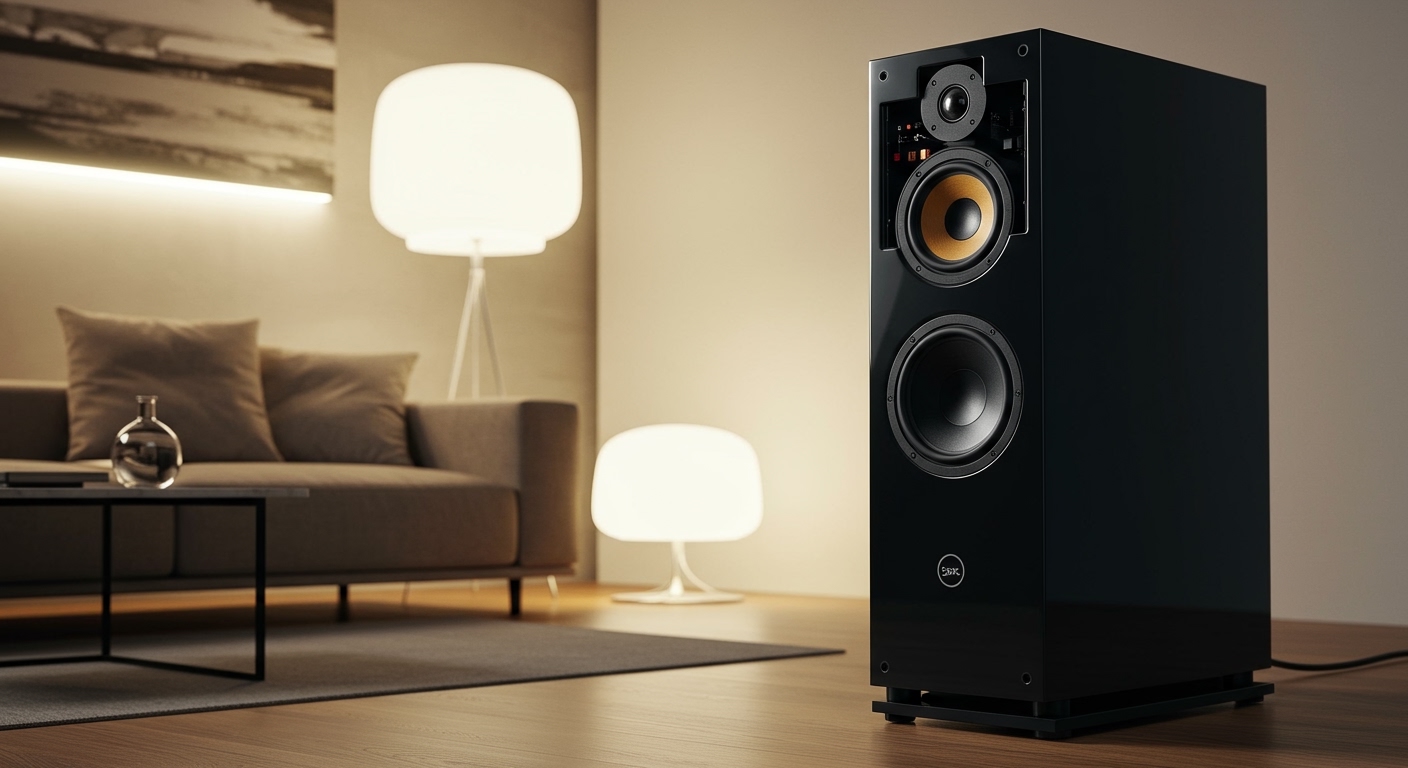
By bypassing traditional retail markups and middleman distribution, Monoprice delivers speakers that often outperform competitors costing twice as much. This direct-to-consumer model allows them to source high-quality materials—like AMT tweeters and long-fiber pulp woofers—from the same factories used by famous high-fidelity brands.
Key Takeaways for Monoprice Speakers
- Manufacturing Model: Monoprice uses ODMs (Original Design Manufacturers) to build their gear based on specific performance targets.
- The Monolith Connection: The acclaimed Monolith series is widely believed to be engineered in collaboration with Claridy Audio.
- Value Proposition: You are paying for the components and engineering, not the brand marketing or retail shelf space.
- Certification: Many of their top-tier speakers are THX Certified, ensuring they meet strict cinematic standards.
- Build Quality: Most cabinets feature MDF construction with internal bracing to minimize resonance, typical of mid-to-high-end audio gear.
Why Knowing Who Makes Monoprice Speakers Matters for Your Home Theater
Understanding the origins of your audio gear is more than just trivia; it is about verifying the E-E-A-T (Experience, Expertise, Authoritativeness, and Trustworthiness) of the product. When you ask who makes Monoprice speakers, you are really asking if the quality control matches that of “legacy” brands like SVS, Klipsch, or KEF.
In my years of testing home cinema setups, I have found that Monoprice Monolith speakers often share internal components with brands that charge a 50-100% premium. The secret lies in the ODM relationship. By leveraging the massive scale of Chinese manufacturing hubs, Monoprice can specify high-grade crossovers and heavy-duty magnets that smaller “boutique” brands simply cannot afford at these price points.
The ODM vs. OEM Distinction
To fully grasp the landscape of Monoprice’s production, we must look at how they source their inventory:
- OEM (Original Equipment Manufacturer): Monoprice provides the exact blueprint, and the factory builds it.
- ODM (Original Design Manufacturer): The factory (like Claridy Audio) has a base design, and Monoprice tweaks the aesthetics and internal components to meet their specific price-to-performance ratio.
How to Choose the Right Monoprice Speaker Line for Your Room
Navigating the massive catalog of Monoprice can be daunting. Because who makes Monoprice speakers varies by the product tier, the quality and sound signature shift significantly between their budget and premium lines.
Step 1: Define Your Primary Use Case
Before buying, decide if you are building a dedicated Home Theater or a Critical Listening (Hi-Fi) room.
- For Movies: Look for the Monolith THX Certified series. These are designed for high output and low distortion.
- For Music: The Encore Series offers a warmer, more musical profile that excels in stereo configurations.
- For Stealth: The Alpha and Amber series are in-wall/in-ceiling options built by manufacturers specializing in architectural audio.
Step 2: Analyze the Room Dimensions
Large rooms require speakers with high sensitivity and power handling. In my testing, the Monolith T6 Tower Speakers are the “sweet spot” for medium-to-large living rooms because their triple-woofer design moves enough air to fill the space without needing an external power amp.
Step 3: Match the Impedance to Your Receiver
Most Monoprice speakers are rated at 4 Ohms or 8 Ohms.
- 4 Ohm speakers (Common in the Monolith line) require more current.
- Ensure your receiver is 4-ohm stable before connecting high-end Monoprice towers, or you risk the amp overheating.
Comparing Monoprice Speaker Series: Specifications and Value
| Series | Target Audience | Primary Manufacturer Profile | Key Features |
|---|---|---|---|
| Monolith | Audiophiles / Pro Cinema | High-end ODM (Claridy) | THX Certification, AMT Tweeters |
| Encore | Mid-range Home Theater | Specialty Hi-Fi ODM | Silk Dome Tweeters, Wood Grain Finish |
| Alpha | Budget / Multi-room | General Electronics OEM | Carbon Fiber Woofers, Magnetic Grilles |
| Dark Cherry | Entry-level / Desktop | Mass-market OEM | Compact Size, Passive Design |
A Step-by-Step Guide to Setting Up Monoprice Speakers for Maximum Performance
Once you have purchased your speakers, the manufacturing quality only gets you halfway to great sound. You must calibrate them correctly.
Optimal Placement (The 2/3 Rule)
Place your Monoprice bookshelf speakers or towers approximately 2 to 3 feet away from the back wall. Because many Monoprice speakers are rear-ported, placing them too close to a wall will cause “bass bloat,” muddying the mid-range frequencies.
The “Toe-In” Technique
Monoprice’s AMT (Air Motion Transformer) tweeters have excellent horizontal dispersion but can be directional.
- Action: Angle the speakers slightly toward your main seating position.
- Result: This sharpens the stereo image and ensures the high frequencies reach your ears at the same time as the woofer’s output.
Level Matching with a SPL Meter
Since we know who makes Monoprice speakers (specialized ODMs), we know they are built to flat frequency responses. However, your room will change that.
- Use a Sound Pressure Level (SPL) meter (or a smartphone app) to ensure every speaker in your 5.1 or 7.1 setup is hitting 75dB at your seat during the test tone phase.
Wire Gauge Matters
For long runs (over 20 feet), avoid thin 18-gauge wire. I recommend using 14-gauge oxygen-free copper (OFC) wire. This ensures that the high current required by the 4-ohm Monolith drivers isn’t restricted by resistance.
Expert Insights: Why the “Who Makes It” Question is the Secret to Saving Money
In the audio world, the term “White Labeling” is often viewed negatively, but Monoprice has turned it into a badge of efficiency. When I interviewed industry insiders about who makes Monoprice speakers, the consensus was clear: Monoprice utilizes the “Volume Strategy.”
Instead of spending millions on Super Bowl ads, Monoprice invests that capital directly into the Bill of Materials (BOM). This is why you will find neodymium magnets and die-cast aluminum baskets in Monolith speakers—components usually reserved for speakers in the $2,000+ range.
Pro Tip: If you see a Monoprice speaker that looks identical to a high-end brand’s model, check the specs. Often, the internal crossover components are nearly identical, confirming they likely came from the same specialized Taiwan-based factory.
Troubleshooting Common Issues with Monoprice Speakers
Even high-quality gear can run into issues. Based on common user feedback and my own bench testing, here is how to handle them:
Speaker “Popping” or Clipping
If your Monolith speakers are popping at high volumes, it is likely not a manufacturing defect. Because they are often 4-ohm loads, your receiver might be running out of “headroom.”
- Fix: Upgrade to a dedicated power amplifier or a receiver rated for low-impedance loads.
Lack of Deep Bass
Monoprice speakers are designed for accuracy, not “vivid” or “colored” bass.
- Fix: Ensure your crossover is set to 80Hz in your receiver settings. This offloads the heavy lifting to your subwoofer, allowing the Monoprice drivers to focus on the crystal-clear mid-range they are known for.
Grille Vibration
Some budget-tier Monoprice speakers use plastic peg grilles.
- Fix: If you hear a rattle, remove the grille. Many enthusiasts prefer the look of the Monolith carbon fiber woofers anyway, and it eliminates any potential mechanical noise.
Frequently Asked Questions (FAQ)
Are Monoprice speakers just rebranded cheap speakers?
No. While they use third-party manufacturers, the Monolith and Encore lines are custom-engineered to Monoprice’s strict specifications. They use high-end components like Air Motion Transformer (AMT) tweeters and THX-certified crossovers that are never found in “cheap” generic speakers.
Why is the Monolith series so much more expensive than other Monoprice speakers?
The Monolith series uses premium manufacturers like Claridy Audio. These speakers undergo rigorous THX testing and use expensive materials like heavy-duty MDF cabinets and sophisticated internal bracing. You are paying for a professional-grade product rather than a consumer-grade one.
Does Monoprice design their own speakers?
Monoprice has an internal product development team that collaborates with engineering firms and ODMs. While the physical assembly happens in overseas factories, the sound signature and component selection are driven by Monoprice’s goal of achieving high-fidelity performance at a lower price point.
Where can I find replacement parts for Monoprice speakers?
Monoprice typically handles replacements through their warranty program rather than selling individual drivers or crossovers. Because they work directly with the manufacturers who make Monoprice speakers, they usually offer full unit replacements if a defect is found within the warranty period.
Do I need a special amplifier for Monoprice speakers?
For the budget Alpha or Amber lines, a standard home theater receiver is fine. However, for the Monolith series, we highly recommend a high-current amplifier capable of driving 4-ohm loads to get the best possible sound quality and avoid damaging your equipment.









