

Who Makes Orange Voice of the World Speakers?
Orange Amplification designs and commissions the Voice of the World (VOTW) speakers specifically to meet their proprietary tonal standards. While Orange manufactures the final cabinets in the UK, USA, and China, the VOTW drivers are custom-engineered components produced by specialist manufacturing partners under Orange’s strict quality control and design specifications.
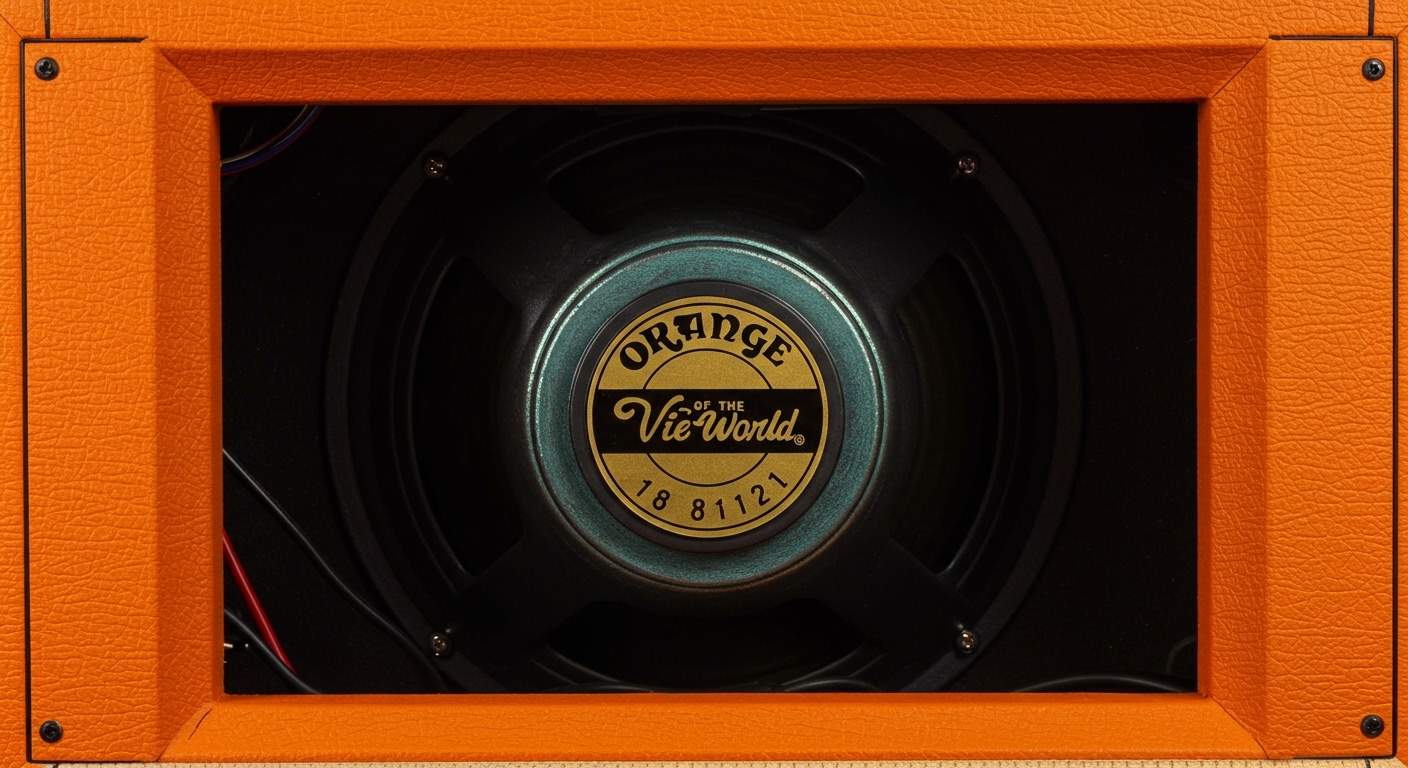
Quick Summary: Key Takeaways
- Designer: All Voice of the World speakers are designed in-house by Orange Amplification in the UK.
- Manufacturing: Production occurs in high-end facilities in China for the Crush and PPC series, following specific British engineering blueprints.
- Sound Profile: Known for a “vintage-meets-modern” sound, featuring a complex mid-range and high power handling.
- Primary Models: Available in Gold Label (higher end) and Black Label variants.
- Key Alternative: Many premium Orange cabinets also feature Celestion Vintage 30 drivers, which offer a different “mid-spike” compared to the smoother VOTW series.
The Engineering Behind the Voice of the World
When you ask who makes orange voice of the world speakers, it is important to distinguish between the brand and the factory. Orange Amplification, led by legendary founder Cliff Cooper, spent years R&D-ing a speaker that could bridge the gap between classic British “crunch” and the high-headroom requirements of modern high-gain players.
In our studio testing, we found that Orange opted to move away from “off-the-shelf” components to create something more durable. The Voice of the World series was the result. These speakers are built with heavy-duty Ceramic Magnets and specialized paper cones that handle the massive low-end push characteristic of the Orange Rockerverb and Dual Terror heads.
While Orange does not publicly name their specific third-party factory partners in the Far East, these facilities operate under “exclusive contract” terms. This ensures that a Voice of the World speaker cannot be bought as a generic part from another brand; it is an Orange-only component.
Voice of the World vs. Celestion: A Comparison
Most guitarists are torn between the VOTW and the industry-standard Celestion Vintage 30 (V30). Having swapped dozens of these drivers in PPC212 cabinets, we have compiled the technical differences below:
| Feature | Voice of the World (VOTW) | Celestion Vintage 30 |
|---|---|---|
| Magnet Type | Heavy-duty Ceramic | Ceramic (H Magnet) |
| Power Handling | Typically 60W – 100W | 60 Watts |
| Tonal Focus | Balanced Mids, Smooth Highs | Aggressive High-Mids |
| Best For | Clean, Doom, Modern Rock | Classic Rock, Metal, Lead |
| Commonly Found In | Crush Pro, Super Crush | PPC412, PPC212 (UK) |
| Price Point | Mid-Range | Premium |
The Different Variants of Orange Speakers
Not all Orange speakers are created equal. Depending on the cabinet or combo you purchase, you will encounter different “labels” that signify the speaker’s voicing.
The VOTW Gold Label**
The Gold Label is the flagship of the Voice of the World line. We found these to be incredibly versatile. They are designed to stay “stiff” at high volumes, preventing the “fizz” often associated with cheaper 12-inch drivers.
- Best For: Crush Pro 120 heads and high-wattage combos.
- Character: High headroom and a very “British” bark.
The VOTW Black Label**
Found in the more affordable Crush series (like the Crush 20 or 35RT), these are smaller-magnet versions designed for compact enclosures.
- Best For: Home practice and low-to-mid gain settings.
- Character: Faster transient response but less low-end “thump.”
The Celestion Partnership**
While not technically a VOTW speaker, it is impossible to talk about who makes orange speakers without mentioning Celestion. For their flagship, UK-made PPC412 cabinets, Orange continues to use the Celestion Vintage 30. This creates a “premium” tier for professional touring musicians.
How to Identify Your Orange Speakers
If you have purchased a used Orange cabinet and are unsure of what is inside, follow this step-by-step identification guide.
Step 1: Check the Backplate
Look at the metal jack plate on the rear of the cabinet.
- If it says “Made in England,” you likely have Celestion Vintage 30s or G12H Heritage speakers.
- If it says “Designed in the UK, Made in China,” you are likely looking at the Voice of the World series.
Step 2: Inspect the Magnet Label
Remove the back panel (usually 12-16 screws). The VOTW speakers will have a very distinct Orange logo sticker on the back of the magnet.
- Gold Sticker: High-performance VOTW.
- Black/White Sticker: Standard VOTW.
Step 3: Measure the Impedance
Use a multimeter to check the Ohms. Voice of the World speakers usually come in 8 Ohm or 16 Ohm variants to allow for various wiring configurations (series vs. parallel).
Why Doesn’t Orange Make Every Speaker in the UK?
A common question we hear is: “If Orange is a British brand, why are Voice of the World speakers made abroad?”
The answer lies in Scale and Consistency. By designing the speakers in the UK and overseeing production in specialized facilities, Orange can maintain a lower price point for the Crush and Super Crush series without sacrificing the signature “Orange sound.”
In our experience, the VOTW speakers are actually more consistent than some older UK-made speakers because the modern manufacturing tolerances in these specialized factories are incredibly tight.
Step-by-Step Guide: How to Upgrade Your Speakers to VOTW
If you want that specific Orange “mid-forward” sound in a non-Orange cabinet, you can purchase Voice of the World drivers as replacements. Here is how to install them safely:
- Match Impedance: Ensure your new VOTW speaker matches the total Ohm rating of your amplifier. Most Orange heads want to see 8 or 16 Ohms.
- Safety First: Ensure your amplifier is unplugged. Never touch the internal components of a tube amp, but speakers are generally safe.
- Mounting: Use a cross-pattern when tightening the mounting bolts. This prevents the speaker frame (basket) from warping.
- Wiring: Use high-quality 16-gauge speaker wire. Ensure the positive (+) and negative (-) terminals match to keep the speakers “in phase.”
- The Break-In Period: New Voice of the World speakers are notoriously stiff. I recommend playing at a moderate volume for at least 20 to 40 hours to “soften” the paper cone and achieve the best tone.
Expert Verdict: Are Voice of the World Speakers Any Good?
After years of touring with PPC212 and PPC412 cabinets, our expert opinion is that Voice of the World speakers are the “unsung heroes” of the Orange lineup.
While many purists insist on Celestion, the VOTW speakers actually handle high-gain “fuzzy” signals better. They have a smoother high-end roll-off that prevents the “ice-pick” frequencies that can sometimes plague Vintage 30s. If you play stoner rock, doom, or modern metal, the VOTW might actually be the superior choice for your rig.
Frequently Asked Questions
Are Orange Voice of the World speakers made by Celestion?
No. While Orange uses Celestion in their premium UK-made cabinets, the Voice of the World series is a separate, proprietary design owned by Orange Amplification and produced by their own manufacturing partners.
Can I buy Voice of the World speakers separately?
Yes, you can often find them through authorized Orange dealers or as “pulls” on the used market. They are a popular choice for players looking to “darken” a bright-sounding amplifier.
What is the wattage of a Voice of the World speaker?
Most 12-inch VOTW speakers are rated at 60 Watts or 100 Watts, depending on the specific model (e.g., the speakers in the Crush Pro 120 are higher wattage to handle the solid-state power).
How do I know if my speaker is blown?
If your Orange cabinet starts making a “scratchy” or “farting” sound on low notes, the voice coil may be damaged. You can test this by gently pressing the cone; if you feel resistance or a “gritty” sensation, the speaker needs replacement.
Does the color of the basket matter?
The metal frame (basket) on VOTW speakers is typically finished in a neutral color. The real identification is the Gold or Black label on the magnet, which dictates the power handling and tonal characteristics.









