

Determining Who Makes Pro Studio Speakers for Your Mixing Success
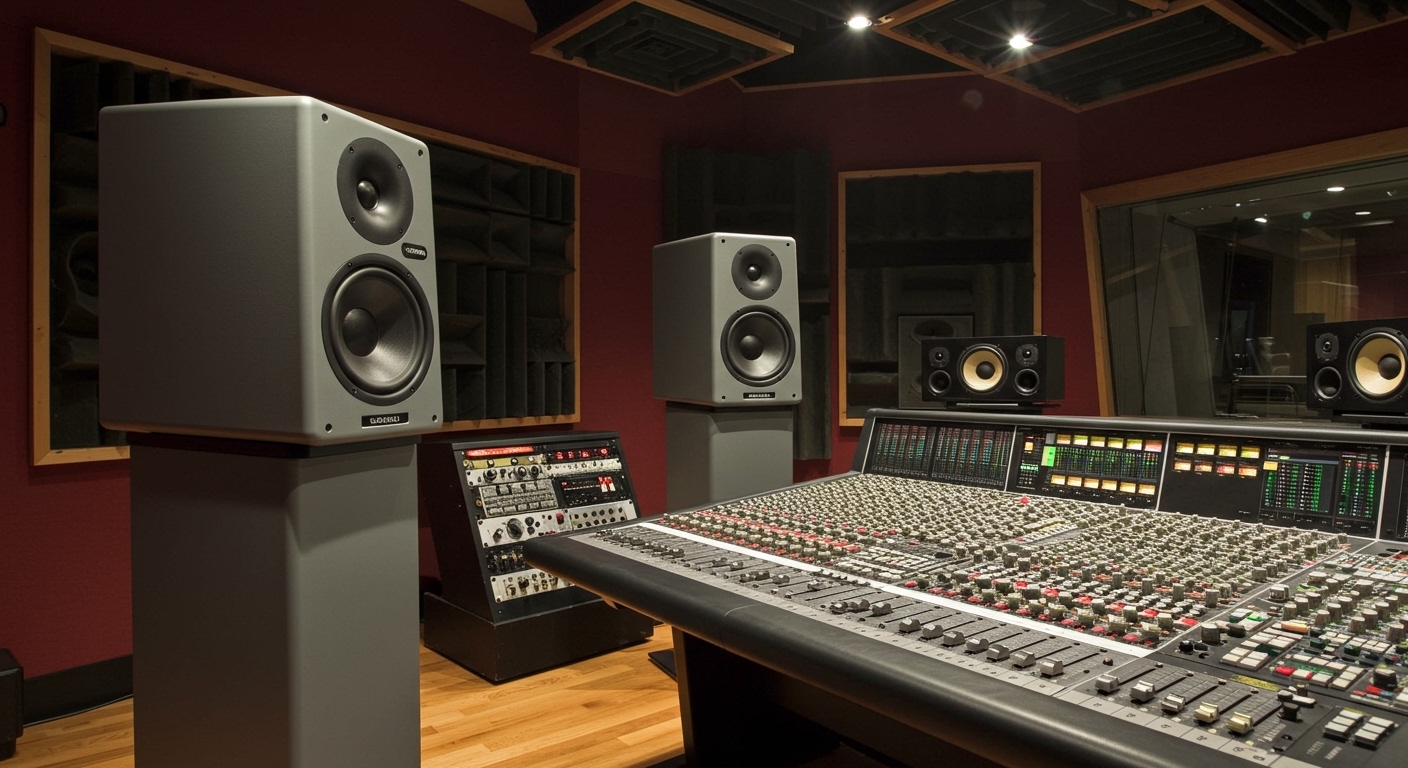
Choosing the right monitoring system is the most critical decision for any audio engineer or producer. If you are wondering who makes pro studio speakers, the industry leaders are Genelec, Focal, Neumann, ATC (Acoustic Transducer Company), PMC (Professional Monitor Company), and Barefoot Sound. These manufacturers dominate professional recording environments because they provide the clinical accuracy, flat frequency response, and high-SPL reliability required for professional translation across all listening devices.
TL;DR: Key Takeaways for Pro Monitors
- Industry Standards: Genelec and Neumann are the gold standards for transparency and DSP integration.
- High-End Precision: Brands like ATC and PMC are found in world-class mastering suites due to their hand-wound drivers.
- Innovation: Barefoot Sound and Focal offer unique driver technologies (like Beryllium tweeters) for extreme detail.
- Crucial Tip: The “best” speaker is useless in an untreated room; prioritize Acoustic Treatment alongside your purchase.
The Leading Manufacturers: Who Makes Pro Studio Speakers?
When we look at the credits of Grammy-winning albums, a few specific names appear in the studio photos repeatedly. Identifying who makes pro studio speakers requires looking at the tiers of professional audio.
Genelec (Finland)
Genelec is arguably the most recognizable brand in the world of professional monitoring. Their 8000 series and the newer “The Ones” coaxial monitors are famous for their Minimum Diffraction Enclosure (MDE).
In my experience using the Genelec 8351B, the most impressive feature is the GLM (Genelec Loudspeaker Manager) software. This system uses a calibration microphone to automatically correct for room anomalies. If your room isn’t perfectly treated, Genelec makes the most adaptable pro speakers on the market.
Focal (France)
Focal is known for bringing high-fidelity “audiophile” components into the studio. They utilize Inverted Dome Beryllium Tweeters, which are incredibly light and rigid. This allows for an extended high-frequency response that never feels “harsh.”
The Focal Shape and SM9 series are favorites for electronic music producers. We’ve found that the TMD (Tuned Mass Damper) surround in their drivers reduces distortion significantly, providing a midrange clarity that is hard to beat for vocal mixing.
Neumann (Germany)
Owned by Sennheiser, Neumann transitioned from making the world’s best microphones to some of the world’s most accurate speakers. Their KH Series (Klein + Hummel heritage) is designed with mathematical precision.
The Neumann KH 120 II is a staple in smaller professional “B-Rooms.” They offer a purely “clinical” sound. If there is a mistake in your mix, a Neumann speaker will expose it without any flattering coloration.
ATC – Acoustic Transducer Company (UK)
When you ask a mastering engineer who makes pro studio speakers, they will almost certainly mention ATC. These are massive, often passive (though active versions exist), and utilize hand-built drivers.
Their Soft Dome Midrange driver is legendary. In professional circles, ATC SCM25A or SCM45A monitors are considered the “end-game” for many. They provide a level of “transient detail” (how fast a speaker starts and stops) that makes adjusting compression settings incredibly easy.
Comparing the Top Professional Monitor Brands
To help you decide which manufacturer fits your workflow, I have summarized the key differences between the top players below.
| Manufacturer | Core Technology | Best For | Typical Price Range |
|---|---|---|---|
| Genelec | Coaxial Drivers & DSP | Small/Medium Rooms | $700 – $6,000+ |
| Focal | Beryllium Tweeters | Midrange Detail | $600 – $5,000+ |
| Neumann | Mathematical Waveguides | Pure Accuracy | $700 – $4,000+ |
| ATC | Hand-wound Soft Domes | Mastering/Main Mix | $3,500 – $20,000+ |
| Barefoot | MEME Voice Modeling | Versatility | $2,500 – $12,000+ |
| PMC | Advanced Transmission Line | Low-End Extension | $2,000 – $15,000+ |
Why “Who Makes Pro Studio Speakers” Matters: The Tech Explained
It isn’t just about the brand name; it is about the engineering philosophy. Professional manufacturers focus on three main technical pillars that separate them from “consumer” or “entry-level” brands like KRK or Mackie.
Active vs. Passive Designs
Most pro speakers today are Active. This means the amplifiers are built into the cabinet and specifically matched to the drivers. Genelec and Neumann use dedicated Class D or Class AB amplifiers for each individual driver (bi-amped or tri-amped), ensuring maximum efficiency and zero phase interference between the woofer and tweeter.
The Role of DSP (Digital Signal Processing)
Modern pros often choose who makes pro studio speakers based on their software integration. DSP allows a speaker to “listen” to the room and flatten its response. While some purists prefer an analog signal path, the reality of modern home-turned-pro studios makes DSP correction essential for reliable translation.
Driver Material and Cabinet Rigidity
Pro manufacturers use exotic materials to prevent “cabinet resonance.”
- Genelec uses Recycled Aluminum to create thin but incredibly strong walls.
- Focal uses Beryllium and Flax Sandwich cones.
- Barefoot uses Dual-Opposing Subwoofers to cancel out internal vibrations, meaning the speaker doesn’t move on your desk even at high volumes.
Step-by-Step Guide: How to Choose and Set Up Pro Studio Speakers
Selecting the brand is only half the battle. You must follow a disciplined process to ensure your investment actually improves your mixes.
Step 1: Define Your Listening Distance
- Nearfield (1–1.5 meters): If you are in a standard bedroom or small control room, choose brands like Neumann or Genelec (8030C or KH 120).
- Midfield (2–3 meters): For larger rooms, look at Focal Trio11 Be or ATC SCM45A.
- Main Monitors: These are soffit-mounted into the walls of world-class studios.
Step 2: Analyze Your Room’s Bass Capacity
A common mistake I see is putting 8-inch monitors in a tiny, untreated room. This creates “standing waves” that make your bass sound muddy. If your room is small, opt for high-quality 5-inch or 6.5-inch monitors from Focal or Genelec and supplement with a calibrated subwoofer later if needed.
Step 3: Use the “Triangle Rule” for Placement
- Place your monitors so they form an Equilateral Triangle with your head.
- The distance between the two speakers should be exactly the same as the distance from each speaker to your ears.
- Ensure the Tweeters are at ear level. This is crucial because high frequencies are very directional.
Step 4: Decouple the Speakers
Even the best pro studio speakers will sound poor if they vibrate your desk. We recommend using IsoAcoustics stands or Sorbothane pads. This physically separates the speaker from the furniture, tightening the low-end response and clarifying the stereo image.
Step 5: Perform Room Calibration
Once your speakers are placed, use a system like Sonarworks SoundID Reference or the manufacturer’s built-in DSP (like Genelec GLM) to measure the room’s response. This final “tweak” ensures that what you hear is actually what is happening in the audio file.
Expert Insight: Does a Higher Price Always Mean Better Mixes?
In my decade of studio work, I’ve found a “point of diminishing returns.” Moving from $200 speakers to $1,500 monitors (like the Neumann KH 120) provides a massive leap in mix quality. However, moving from $5,000 speakers to $15,000 speakers offers smaller, incremental improvements in “depth” and “headroom.”
If you are just starting your professional journey, focus on brands that offer calibration tools. Being able to trust your low-end is the most valuable asset an engineer can have. Genelec and Focal provide the most “trustworthy” entry-points into the professional world.
Frequently Asked Questions
Who makes the best pro studio speakers for a home studio?
Genelec and Neumann are widely considered the best for home studios. Their smaller models (like the 8030C or KH 120 II) are specifically designed to perform accurately in less-than-perfect acoustic environments and take up very little space.
Why are pro studio speakers so much more expensive than Hi-Fi speakers?
Pro speakers are built for Linearity (flat response) and Durability. While Hi-Fi speakers are designed to make music sound “pleasant” (often boosting bass and treble), pro monitors are designed to reveal flaws. They use higher-grade components to handle 10-12 hours of continuous use at high volumes without “power compression.”
Can I use pro studio speakers for casual listening?
Yes, but be prepared—poorly recorded music will sound bad. Pro monitors are like a high-resolution magnifying glass. While high-quality recordings will sound breathtakingly detailed, you will hear every hiss, pop, and poor mixing choice in your favorite older tracks.
Do I need a subwoofer with pro monitors?
It depends on the genre. For Electronic Music (EDM) or Hip-Hop, a subwoofer is almost essential to hear what is happening below 40Hz. However, for Folk, Jazz, or Rock, a high-quality pair of 7-inch or 8-inch monitors from a brand like Focal or PMC usually provides enough low-end extension.









