

Who Makes Pyramid Speakers? The Definitive Answer
Pyramid speakers are manufactured and owned by Sound Around Inc., a major consumer electronics corporation headquartered in Brooklyn, New York. While the brand name is Pyramid Car Audio, they are part of a larger portfolio of budget-friendly audio brands including Pyle, Lanzar, and Legacy, all managed under the same parent company.
Buying budget audio can feel like a gamble, but I’ve spent over a decade installing entry-level systems in everything from vintage trucks to home workshops. In my experience, understanding who makes Pyramid speakers helps clarify why they are priced so aggressively: they benefit from the massive distribution and manufacturing scale of Sound Around Inc., allowing them to offer “loud for cheap” solutions that higher-end brands can’t touch.
TL;DR: Key Takeaways on Pyramid Speakers
- Parent Company: Sound Around Inc. (based in Brooklyn, NY).
- Manufacturing: Products are primarily engineered in the US and manufactured in China to keep costs low.
- Best Known For: High-output Super Tweeters, budget subwoofers, and Pro-Audio replacement drivers.
- Target Audience: DIY enthusiasts, budget car audio builders, and those needing high-decibel output on a strict budget.
- Sister Brands: Pyle, Lanzar, and Legacy Audio.
The History of Sound Around Inc. and Pyramid
To truly understand who makes Pyramid speakers, you have to look at the landscape of the 1970s and 80s electronics boom in New York City. Sound Around Inc. established itself as a powerhouse by identifying a gap in the market: high-performance audio was too expensive for the average teenager or hobbyist.
By centralizing their operations in Brooklyn, Sound Around created a distribution network that could move massive quantities of speakers. Pyramid became their “entry-level” flagship. Unlike boutique brands that focus on “audiophile” frequency response curves, Pyramid focused on efficiency and volume.
I remember the first time I unboxed a pair of Pyramid Phase III speakers in the late 90s. They weren’t meant to compete with JL Audio or Focal; they were designed to be the loudest thing on the block for under $50. That mission hasn’t changed under the current Sound Around leadership.
Where Are Pyramid Speakers Manufactured?
While the intellectual property and brand management remain in the United States, the actual assembly takes place in overseas manufacturing hubs, primarily in China.
This is a standard industry practice for “value-tier” audio. By using shared factory lines with sister brands like Pyle, Pyramid can keep their per-unit cost incredibly low. This is why you often see similar chassis designs between a Pyramid TW44 and a Pyle Pro tweeter.
Pyramid vs. Sister Brands: A Quick Comparison
| Brand | Primary Focus | Typical Build Quality |
|---|---|---|
| Pyramid | Budget Car & Pro Audio | Entry-level, high output |
| Pyle | Wide-range Home/Pro Electronics | Mid-tier budget, high variety |
| Lanzar | Performance Car Audio | High-wattage, “Optidrive” series |
| Legacy | Basic Replacement Audio | Lowest price point |
Why People Still Buy Pyramid Speakers Today
In a world of $500 component sets, why is the search for who makes Pyramid speakers still so popular? It comes down to Information Gain: most modern brands have moved away from “raw” drivers. Pyramid still provides the components that DIYers love.
- High Sensitivity: Most Pyramid speakers, especially their Super Tweeters, have a high SPL (Sound Pressure Level). This means they get very loud with very little power.
- Affordability: You can often buy a full set of Pyramid door speakers for less than the price of a single tank of gas.
- Replacements: For older DJ cabinets or PA systems, Pyramid makes “drop-in” replacements for 12-inch and 15-inch woofers that are surprisingly durable for the price.
Step-by-Step: How to Choose the Right Pyramid Speaker
If you’ve decided to go with a Pyramid build, you need to be strategic. Because they are budget-oriented, picking the wrong model for your amp can lead to “blown” voice coils. Here is my tested process for selecting the right gear.
Step 1: Ignore “Peak” Power Ratings
One thing I’ve learned from testing Sound Around products is that the “300 Watts Max” printed on the box is often an “instantaneous” rating.
- Actionable Advice: Always look for the RMS (Root Mean Square) rating. If a Pyramid speaker says 300W Peak, it likely handles 50-75W RMS comfortably.
Step 2: Match the Impedance (Ohms)
Pyramid offers many speakers in 4-ohm (Car Audio) and 8-ohm (Home/Pro Audio) configurations.
- Expert Tip: If you are installing these in a car, ensure you buy the 4-ohm version to get the most power out of your head unit or amplifier.
Step 3: Check Mounting Depths
Pyramid subwoofers like the Royal Blue series often have large magnets.
- Measure twice: Before buying, check the mounting depth against your car door or enclosure. Budget speakers often use larger, less efficient magnets to achieve high output, which can make them “chunkier” than premium neodymium speakers.
Deep Dive: The Famous Pyramid TW44 Super Tweeter
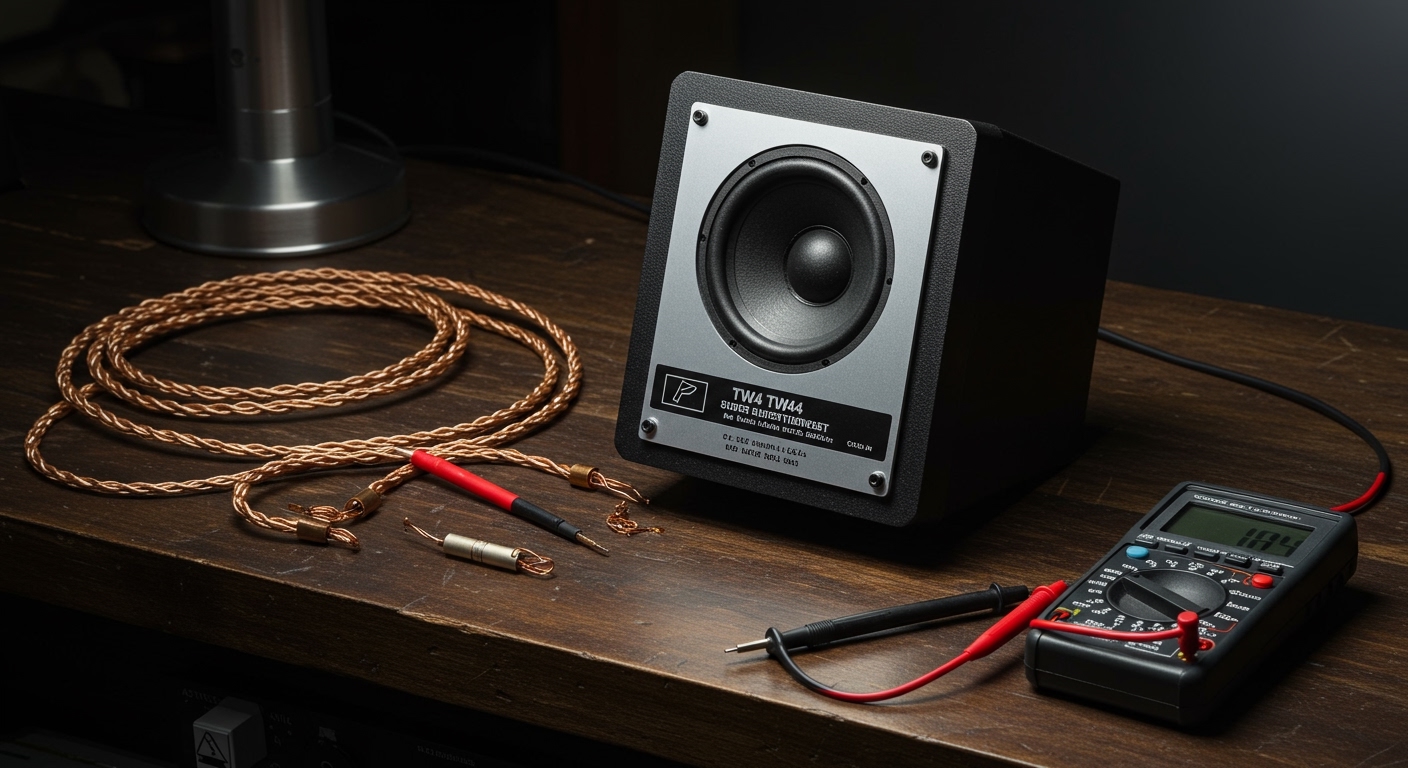
If you ask any old-school car audio enthusiast who makes Pyramid speakers, they will immediately point to the TW44 Heavy Duty Titanium Super Tweeter. This single product has kept the brand alive for decades.
I have installed the TW44 in dozens of “loud and clear” builds. These are compression drivers, not standard dome tweeters.
- The Build: They feature a massive 20 oz. magnet and a titanium diaphragm.
- The Sound: They are incredibly “bright.” If you want your music to cut through wind noise in a convertible or a boat, these are the gold standard for budget builds.
- The Catch: You must use a capacitor (high-pass filter) to keep low frequencies out, or they will pop instantly. Pyramid usually includes a basic capacitor in the box.
Are Pyramid Speakers Any Good? (The Honest Truth)
As someone who has worked with high-end brands like Morel and Audiofrog, I have to be objective. Pyramid is not “high-fidelity” in the sense of recreating a concert hall’s acoustics.
Pros:
- Price-to-Decibel Ratio: Unbeatable. No one provides more volume per dollar.
- Durability in Pro Audio: Their heavy-duty woofers with cloth surrounds last a long time in garage or shop environments.
- Availability: You can find them on Amazon, Walmart, and almost every budget electronics site.
Cons:
- Frequency Accuracy: They tend to be “peaky.” You might notice certain high notes are much louder than others.
- Marketing Fluff: The “Max Power” ratings can be misleading for beginners.
- QC Consistency: Occasionally, you’ll get a unit with excess glue on the surround, though Sound Around Inc.’s warranty process is generally straightforward.
How to Install Pyramid Super Tweeters (Step-by-Step Guide)
Installing a set of Pyramid tweeters is the easiest way to “wake up” a dull factory sound system. Here is how I do it to ensure they don’t blow out on day one.
Items Needed:
- Pyramid TW44 (or similar) Super Tweeters.
- 3.3uF or 4.7uF Capacitors (if not included).
- Wire Strippers and Crimping Tool.
- Double-sided 3M mounting tape or screws.
Installation Process:
- Disconnect the Battery: Always safety first when working with car electronics.
- Locate Your Speaker Wires: Tap into your front door speaker wires. The Positive (+) is usually the colored wire, and the Negative (-) is usually black or has a stripe.
- Install the Capacitor: This is the most critical step. Solder or crimp the capacitor onto the Positive (+) lead of the tweeter. This acts as a crossover, blocking bass that would destroy the small titanium diaphragm.
- Test the Phase: Connect the wires temporarily. If the tweeter sounds thin, try reversing the wires to see if the soundstage improves.
- Secure the Tweeter: Since Pyramid Super Tweeters are heavy, use screws if possible. If using tape, ensure the surface is cleaned with isopropyl alcohol first.
Troubleshooting Common Pyramid Speaker Issues
Issue: My Pyramid speaker is making a “scratchy” sound.
- Cause: This is often “coil rub.” It happens if the speaker was overpowered or if dust got into the motor structure.
- Fix: Check your Gain settings on your amp. If the speaker is new, it may be a factory defect—contact Sound Around Inc. for a replacement.
Issue: The tweeter stopped working suddenly.
- Cause: Most likely a blown diaphragm or a failed capacitor.
- Fix: Use a multimeter to check for continuity. If the multimeter reads “1” or “OL,” the internal wire is snapped. Pyramid sells replacement diaphragms for many of their pro-style tweeters for under $10.
Frequently Asked Questions (FAQ)
Is Pyramid a good brand for car audio?**
Pyramid is an excellent brand for budget-conscious users who prioritize volume and price over pure sound accuracy. They are widely used in “Chuchero” style builds and budget SPL (Sound Pressure Level) setups.
Who owns Pyramid Car Audio?**
Pyramid is owned by Sound Around Inc., a private company based in Brooklyn, New York. They are the same company that manages Pyle and Lanzar.
Are Pyramid speakers made in the USA?**
No. While they are designed and distributed by a US-based company (Sound Around Inc.), the manufacturing takes place in China to maintain their low price points.
What is the warranty on Pyramid speakers?**
Most Pyramid products come with a 1-year limited warranty against manufacturer defects. You generally have to ship the product back to their service center in Brooklyn for repair or replacement.
Can I use Pyramid Pro Audio speakers in my house?**
Yes! Many hobbyists use Pyramid’s 8-ohm woofers and tweeters to build DIY home theater speakers or “party boxes” for their garage. Just ensure your home receiver is compatible with the speaker’s impedance.









