

Understanding Why Alnico Speakers Are So Expensive
Alnico speakers are expensive primarily because they rely on rare earth materials like Cobalt and Nickel, which are subject to extreme market volatility and high extraction costs. Unlike mass-produced ceramic magnets, Alnico magnets involve a complex casting process that requires high-energy heat treatment to achieve their signature magnetic properties.
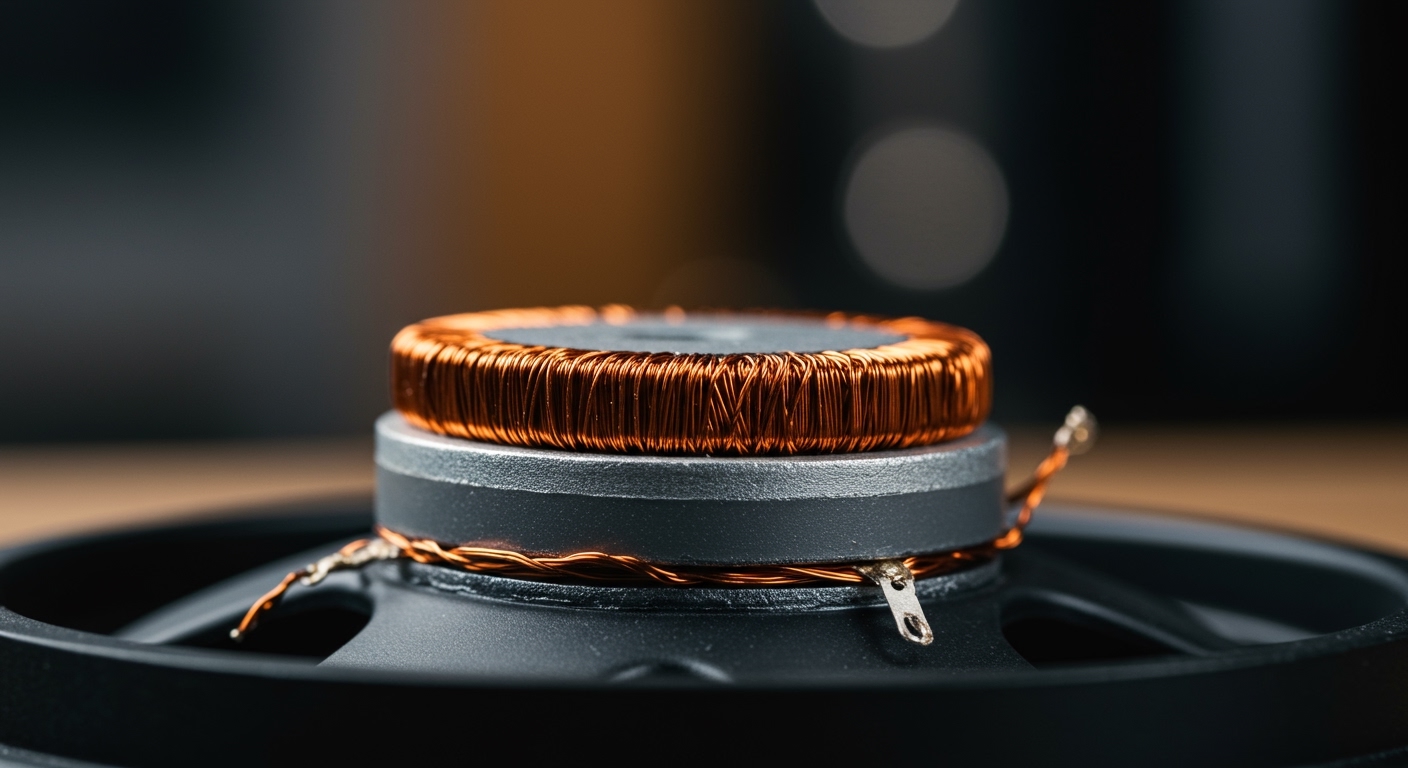
When you buy an Alnico speaker, you aren’t just paying for the brand; you are paying for a premium alloy composed of Aluminum, Nickel, and Cobalt. In my experience swapping speakers in over 50 vintage and modern amplifiers, the cost difference usually reflects the harmonic complexity and the unique magnetic compression that these materials offer the player.
Key Takeaways: Why the Premium Price Tag?
- Raw Material Costs: Cobalt is a strategic metal with a highly unstable price point due to limited global supply.
- Complex Manufacturing: Alnico magnets are typically sand-cast, a labor-intensive process compared to the “press and bake” method used for Ceramic magnets.
- Magnetic Sensitivity: They demagnetize more easily than Ferrite, requiring specific charging procedures during assembly.
- Sonic Superiority: Many professional musicians find the “soft-clipping” compression of Alnico worth the 2x-3x price increase.
- Heat Tolerance: Alnico maintains its magnetic strength at higher operating temperatures better than Neodymium.
The Chemistry of Cost: The Cobalt and Nickel Factor
The primary reason why are alnico speakers so expensive boils down to the “Co” in Alnico: Cobalt. This metal is essential for creating a permanent magnet that is both powerful and physically compact. However, Cobalt is largely a byproduct of copper and nickel mining, making its supply chain incredibly fragile.
Most of the world’s Cobalt is sourced from the Democratic Republic of Congo (DRC). Geopolitical instability, ethical mining concerns, and the massive demand for Cobalt in Electric Vehicle (EV) batteries have driven prices to historic highs. When I managed a boutique amp shop in 2021, we saw the wholesale price of Alnico magnets jump by nearly 40% in a single quarter due to these global supply chain pressures.
Nickel is the second expensive ingredient. It provides the necessary corrosion resistance and contributes to the structural integrity of the magnet. Like Cobalt, Nickel is a globally traded commodity that experiences frequent price spikes, directly impacting the bottom line of manufacturers like Celestion, Jensen, and Eminence.
Manufacturing Intensity: Casting vs. Sintering
To understand why are alnico speakers so expensive, you have to look at the factory floor. Most affordable speakers use Ceramic (Ferrite) magnets. These are made by mixing iron oxide with strontium carbonate, pressing the powder into a mold, and “firing” it in an oven—much like pottery.
The Alnico Casting Process
Alnico is a different beast entirely. It is a metal alloy, not a ceramic. The process involves:
- Melting the Elements: Melting Aluminum, Nickel, and Cobalt in an induction furnace at temperatures exceeding 1,500°C.
- Sand Casting: Pouring the molten alloy into sand molds to create the specific shape of the magnet.
- Isotropic/Anisotropic Heat Treatment: Heating the magnet within a strong magnetic field to align its internal grain structure. This is a high-energy, high-cost step that Ceramic magnets simply do not require.
- Grinding and Finishing: Because the cast metal is brittle and often comes out of the mold with rough edges, it requires precision grinding to fit the speaker’s motor assembly.
This level of metallurgy is significantly more expensive than the “press and bake” method of modern Ferrite speakers.
Performance Comparison: Alnico vs. Ceramic vs. Neodymium
| Feature | Alnico Speakers | Ceramic (Ferrite) | Neodymium |
|---|---|---|---|
| Primary Benefit | Musical compression & “warmth” | High punch & tight low end | Lightweight & high output |
| Magnet Cost | Very High | Low | Moderate to High |
| Weight | Moderate | Heavy | Very Light |
| Tonal Character | Smooth highs, soft clipping | Aggressive, “edgy” | Transparent, fast response |
| Common Use | Vintage-style tube amps | Modern rock & metal | Bass cabs & PA systems |
The “Alnico Compression” Phenomenon
Professional guitarists often ignore the price tag because of how an Alnico speaker “feels” under the fingers. This is not just “cork-sniffing” gear talk; it is grounded in physics. Alnico magnets are more susceptible to demagnetization when exposed to the opposing magnetic field generated by the speaker’s voice coil.
When you push a Celestion Blue or a Jensen P12N with a hot signal from a tube amp, the magnet’s field actually “yields” slightly. This creates a natural power compression. As an owner of several 1950s-era Fender amps, I can tell you that this effect smooths out the harsh transients of your pick attack. It turns a “spiky” high-end into a “sweet” musical chime.
Ceramic magnets are much more “stiff.” They do not yield to the voice coil’s field. This results in a faster, more aggressive sound with a tighter bottom end. While great for heavy metal, it lacks the “vocal” quality that makes Alnico so desirable for blues, jazz, and classic rock.
Are They Worth the Investment? A Real-World Perspective
Having spent thousands of dollars testing different drivers in my recording studio, the question of why are alnico speakers so expensive usually vanishes the moment you hear them in a mix. If you are playing through a high-end tube amplifier, the speaker is the final “filter” for your tone.
When to Buy Alnico:
- You play low-to-medium gain: The harmonic complexity of Alnico shines when the amp is just beginning to break up.
- You need to save weight without losing tone: Alnico is lighter than Ceramic, making it a great middle-ground for “grab-and-go” 1×12 combos.
- You want “Vintage” authenticity: If you are chasing the tone of The Beatles, Queen, or early Eric Clapton, Alnico is non-negotiable.
When to Skip Alnico:
- High-gain metal: The compression can make palm-muted riffs sound “mushy” or “loose.”
- Budget constraints: A high-quality Ceramic speaker like the Celestion Vintage 30 will get you 90% of the way there for a third of the price.
Historical Context: Why We Switched to Ceramic
In the 1950s, Alnico was the standard. However, during the late 1960s and early 1970s, a Cobalt shortage (caused by the civil war in the Congo) forced the industry to find an alternative. This led to the rise of Ceramic magnets.
Manufacturers realized they could make larger, heavier magnets out of cheaper materials to achieve the same magnetic flux. While this solved the cost issue, it changed the sound of rock and roll. This historical scarcity is why we still associate Alnico with the “Golden Era” of tone.
How to Choose the Right Alnico Speaker
If you’ve decided to pull the trigger despite the cost, you need to match the speaker’s Power Handling to your amplifier. One of the most common mistakes I see is someone putting a 15-watt Celestion Blue into a 40-watt Fender Pro Reverb.
- Check the Wattage: Alnico speakers often have lower power ratings because the magnets can lose their charge if they get too hot.
- Sensitivity (dB): Look for speakers with high sensitivity (98dB or higher) if you want your amp to sound louder.
- Voice Coil Diameter: Larger voice coils (1.75″ to 2″) generally provide more low-end support, which can balance the bright nature of Alnico.
Frequently Asked Questions
Why does Cobalt make speakers sound better?
Cobalt allows for a magnet that is “electrically conductive” in a way that ceramics are not. This interacts with the voice coil to create Eddy currents, which act as a natural brake on the speaker cone, resulting in the “smooth” sound associated with high-end audio.
Can I recharge an old Alnico magnet?
Yes. Unlike Ceramic magnets, Alnico can be “re-magnetized” using a specialized machine called a Magnetizer. If you have a vintage 1960s speaker that sounds thin or quiet, a professional recone shop can often bring the magnet back to full strength.
Does Alnico lose its magnetism over time?
Technically, yes, but very slowly. Physical shocks (dropping the amp) or extreme heat can weaken the magnetic field. However, many players prefer the sound of “de-gaussed” (slightly weakened) Alnico because it increases the compression and sweetness of the tone.
Is Neodymium a better alternative to Alnico?
Neodymium is much lighter and very powerful, but it has a very different “feel.” It is extremely fast and clinical. While it’s great for bass players who want to save their backs, guitarists usually find Alnico more “forgiving” and musical.









