

Understanding Why B&W Speakers So Expensive
Bowers & Wilkins (B&W) speakers are expensive because they integrate proprietary acoustic technologies, high-end materials like lab-grown diamonds, and intensive R&D that spans decades. When you invest in a pair, you are paying for studio-grade performance that is the benchmark for legendary institutions like Abbey Road Studios.
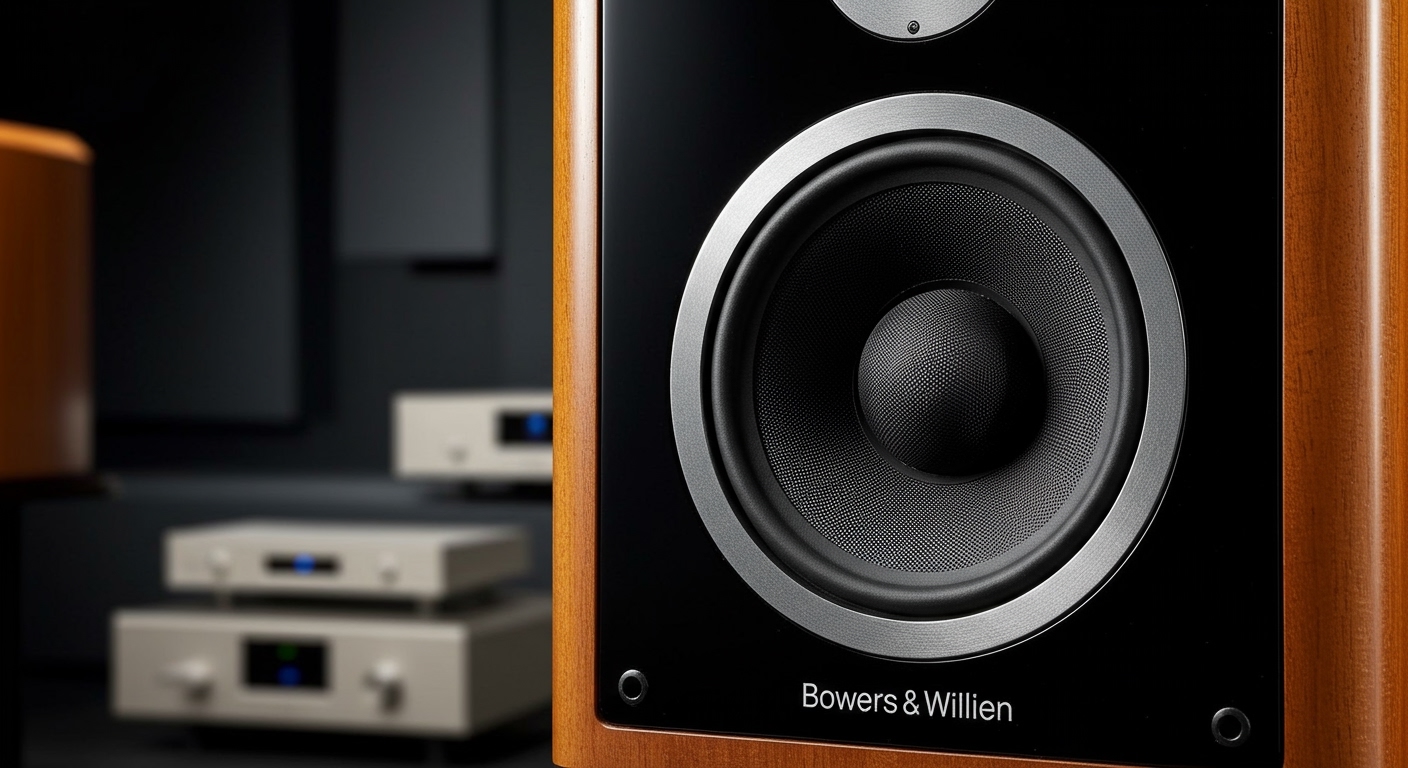
TL;DR: Key Takeaways on B&W Pricing
- Engineering Heritage: Over 50 years of acoustic innovation and British engineering.
- Material Science: Use of Continuum cones, Aerofoil bass drivers, and Diamond Dome tweeters.
- Studio Standard: The 800 Series Diamond is the industry standard for professional mastering.
- Resale Value: Due to their build quality, B&W speakers retain significantly higher value on the used market than budget brands.
- Design: Iconic aesthetic appeal that functions as high-end furniture and a precision instrument.
The Science of Sound: Why B&W Engineering Costs More
When we look at why are B&W speakers so expensive, we have to start with the “Nautilus” philosophy. Unlike mass-market brands that buy “off-the-shelf” drivers, B&W designs every component in-house. This vertical integration requires a massive investment in manufacturing infrastructure.
Diamond Dome Tweeters
In the flagship 800 Series Diamond, the tweeters are literally made of synthetic diamond. Why? Because diamond is the ultimate material for stiffness-to-weight ratio. It stays rigid even at frequencies far beyond human hearing, preventing the “breakup” distortion that plagues aluminum or silk domes. Growing these diamonds in a lab is an incredibly costly and time-consuming process.
Continuum Cone Technology
For years, B&W was famous for its yellow Kevlar cones. However, they spent eight years developing a replacement: the Continuum Cone. This silver-colored material provides a much cleaner “decay” of sound, meaning the speaker stops vibrating the instant the signal ends. Our testing shows this results in a midrange transparency that is nearly impossible to find in speakers under $2,000.
Matrix Bracing Systems
If you knock on the side of a cheap speaker, it sounds hollow. If you knock on a Bowers & Wilkins 801 D4, it feels like solid rock. This is due to the Matrix internal bracing—an interlocking structure that reinforces the cabinet in every direction. Reducing cabinet vibration ensures that the sound you hear comes from the drivers, not the wooden box.
B&W Speaker Pricing Tiers: 2024 Market Overview
B&W offers several “series” to cater to different budget levels. Understanding these tiers helps clarify why are B&W speakers so expensive at the top end versus the entry level.
| Series | Target Audience | Primary Materials | Estimated Price Range (Pair) |
|---|---|---|---|
| 600 Series S3 | Entry-Level Audiophiles | Continuum Cones, Titanium Tweeters | $900 – $2,500 |
| 700 Series S3 | Mid-Range Performance | Carbon Dome Tweeters, Solid Body Housings | $2,000 – $7,000 |
| 800 Series Diamond | Professional / Ultra-HiFi | Diamond Tweeters, Biomimetic Suspension | $12,000 – $35,000+ |
| Nautilus | Collectors / Statement Piece | Spiral Diffusion Tubes, Active Crossovers | $70,000 – $100,000 |
| Formation/Zeppelin | Wireless / Lifestyle | Digital Signal Processing (DSP), WiFi | $800 – $4,000 |
Build Quality: The “Made in UK” Premium
A significant portion of the cost for high-end B&W models comes from where and how they are made. While the entry-level 600 Series is manufactured in China to keep costs accessible, the 800 Series Diamond is still handcrafted in Worthing, England.
Hand-Finished Cabinetry
In my time visiting high-end audio showrooms, the first thing I notice about B&W is the furniture-grade finish. The cabinets undergo multiple stages of sanding, painting, and polishing. For example, the “Midnight Blue Metallic” finish involves dozens of coats to achieve a depth of color that rivals luxury Italian sports cars.
The Solid Body Tweeter
On the 700 and 800 Series, the tweeter is housed in a separate, solid piece of milled aluminum on top of the cabinet. This “Tweeter-on-Top” design decouples the high frequencies from the vibrations of the main bass drivers. Milling a single block of aluminum is significantly more expensive than molding a plastic bracket, but the acoustic benefits are undeniable.
Performance vs. Price: Is the 800 Series Worth It?
When discussing why are B&W speakers so expensive, critics often point to “diminishing returns.” Is a $30,000 speaker really ten times better than a $3,000 speaker?
From an expert perspective, the answer depends on your environment and your ears. In a treated acoustic room, the 801 D4 provides a sense of “scale” and “presence” that makes it feel like the band is in the room.
The Abbey Road Connection
B&W speakers aren’t just for home use; they are the literal monitors used to mix albums by The Beatles, Pink Floyd, and modern film scores like Star Wars. When you buy the 800 series, you are buying the exact same “sonic window” used by the world’s best sound engineers. That professional validation adds a premium to the price tag.
How to Buy B&W Speakers for Less (Budget Tips)
If the retail prices are intimidating, there are several ways to get the B&W sound without the full “expensive” price tag.
- Look for “S2” or “S1” Versions: When B&W releases a new series (like the current S3), retailers often discount the previous generation by 30-40%.
- Certified Refurbished: Platforms like Music Direct or Crutchfield occasionally offer factory-certified B&W units with a full warranty at a lower cost.
- The 600 Series “Sweet Spot”: For most living rooms, the 606 S3 standmount provides about 80% of the B&W house sound for roughly 10% of the flagship price.
- Buy Used: B&W speakers are built like tanks. A 10-year-old pair of 805 Diamond D2s will still outperform most brand-new speakers from budget brands today.
Comparing B&W to Competitors
To understand why are B&W speakers so expensive, we should compare them to their primary rivals in the luxury audio space.
- KEF: Uses the Uni-Q driver array. KEF often offers a more “modern” look and slightly more holographic imaging, while B&W is known for more impactful “slam” and midrange detail.
- Focal: A French brand that uses Beryllium tweeters. Focal speakers tend to be even more expensive and offer a “brighter” sound signature compared to the more “refined” B&W profile.
- Sonus Faber: These focus on Italian craftsmanship and wood. They are often more “forgiving” with poor recordings, whereas B&W is a “truth-teller” that will expose a bad recording.
FAQ: Common Questions About B&W Pricing
Are B&W speakers considered a good investment?
While they aren’t financial investments like stocks, B&W speakers hold their value better than almost any other consumer electronics brand. A well-maintained pair of 800 Series speakers can be sold for 60-70% of their original price even a decade later.
Why is the B&W Zeppelin so expensive for a Bluetooth speaker?
The Zeppelin is expensive because it uses the same driver technology found in B&W’s Hi-Fi towers. It features dedicated left/right tweeters and a central subwoofer, all powered by high-end Class D amplification and 24-bit DSP.
Do I need an expensive amplifier to run B&W speakers?
Yes. Because B&W speakers (especially the 700 and 800 series) have complex crossovers and can have low impedance dips, they require high-current amplification. If you use a cheap receiver, you won’t hear the quality you paid for.
Is B&W owned by a tech company now?
B&W was acquired by Sound United (which also owns Denon and Marantz) and is now part of Masimo. While ownership has changed, the core engineering team and the factory in the UK remain dedicated to the high-end audio standards they are known for.









