Why Do Spanish Speakers Hate Vosotros? The Direct Answer
Most Spanish speakers in Latin America do not “hate” vosotros; rather, they view it as a foreign dialectal feature specific to Spain that feels archaic, overly formal, or simply unnecessary. The primary reason for its absence in the Americas is a linguistic evolution where ustedes became the universal plural “you,” replacing vosotros to simplify social hierarchies and regional communication during the colonial era.
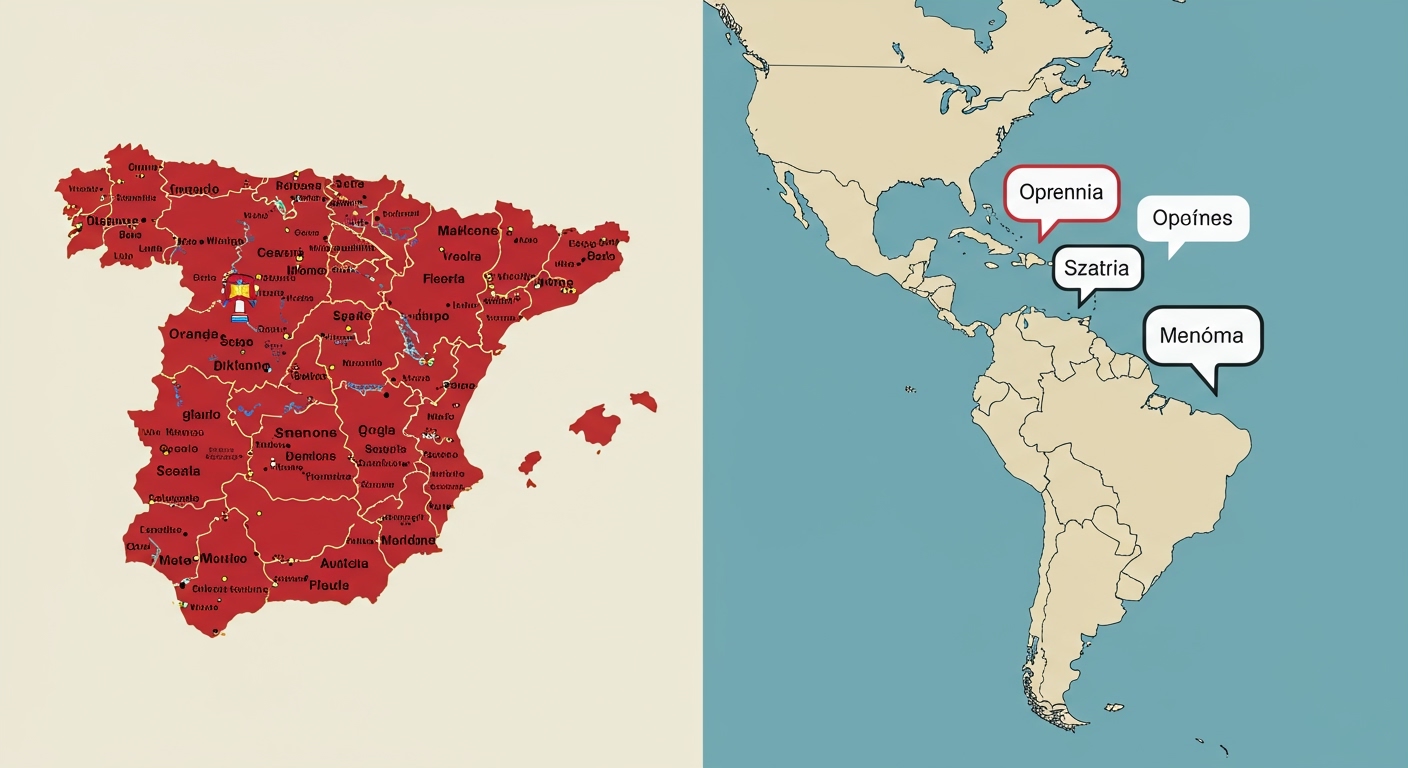
For a learner, understanding why do spanish speakers hate vosotros requires looking at the 500-year divergence between Peninsular Spanish (from Spain) and American Spanish. While vosotros is the standard informal plural in Madrid, using it in Mexico City or Buenos Aires can make you sound like a character from a 16th-century period drama or a religious text.
TL;DR: Key Takeaways on Vosotros Attitudes
- Geographic Divide: Vosotros is used almost exclusively in Spain. It is virtually non-existent in daily speech across Latin America.
- Social Perception: In the Americas, vosotros is often perceived as “snobbish,” “pompous,” or “theatrical.”
- Linguistic Efficiency: Using ustedes for both formal and informal situations reduces the number of verb conjugations a speaker needs to master.
- Historical Shift: The shift toward ustedes began during the colonization of the Americas, as settlers prioritized more respectful or “neutral” forms of address.
- The Voseo Factor: Do not confuse vosotros (plural) with vos (singular). Countries like Argentina and Uruguay use vos, but they still avoid vosotros.
The Historical Context: Why Do Spanish Speakers Hate Vosotros?
To understand why do spanish speakers hate vosotros, we have to look at the Golden Age of Spanish literature. During the 15th and 16th centuries, Spanish had a complex system of address. In Spain, vosotros (literally “vos” + “otros” or “you others”) stabilized as the informal plural.
However, the ships sailing to the New World were often filled with people from Andalusia and the Canary Islands. In these southern regions of Spain, the use of vosotros was already starting to wane in favor of ustedes.
The Evolution of “Ustedes”
The word usted is a contraction of the phrase Vuestra Merced (“Your Mercy”). In the colonial era, people used this formal address to show respect. Over time, as social structures shifted in the Americas, the formal ustedes swallowed the informal vosotros.
We have observed in linguistic mapping that by the time Latin American identities were fully formed, vosotros had been relegated to the history books. Today, if you use it in Latin America, you aren’t just using the “wrong” pronoun; you are signaling that you are an outsider who hasn’t adapted to the local culture.
Regional Usage: A Comparison Table
Understanding the distribution of these pronouns is vital for anyone traveling through the Spanish-speaking world. The following table breaks down how different regions handle the second-person plural.
| Region | Primary Plural Pronoun | Level of Formality | Frequency of Vosotros |
|---|---|---|---|
| Spain (Peninsular) | Vosotros | Informal / Standard | 100% (Daily) |
| Mexico & Central America | Ustedes | Universal | 0% (Except in Liturgy) |
| The Caribbean | Ustedes | Universal | 0% |
| Andean Region | Ustedes | Universal | 0% |
| Southern Cone (Argentina/Chile) | Ustedes | Universal | 0% |
| Philippines (Chavacano) | Vosotros | Archaic/Varies | Very Low |
Linguistic Simplification: Why “Ustedes” Won
From a cognitive perspective, languages tend to simplify over time. This is a major factor in why do spanish speakers hate vosotros—or at least why they stopped using it.
When you use vosotros, you must learn an entirely separate set of verb endings. For example, the verb hablar (to speak):
- Vosotros habláis (Specific to Spain)
- Ustedes hablan (Used everywhere else)
By dropping vosotros, Latin American Spanish speakers effectively removed 1/6th of all verb conjugations from their mental load. Our experience with language immersion shows that students often prefer the Latin American model because it aligns the third-person plural (ellos/ellas) with the second-person plural (ustedes).
Verb Conjugation Comparison
| Verb Type | Vosotros (Spain) | Ustedes (Latin Am.) |
|---|---|---|
| -AR Verbs (Hablar) | Habláis | Hablan |
| -ER Verbs (Comer) | Coméis | Comen |
| -IR Verbs (Vivir) | Vivís | Viven |
In the Americas, hablan, comen, and viven serve two purposes: “They speak” and “You all speak.” In Spain, you have to distinguish between the two. For many, the “hatred” of vosotros is simply a rejection of what they see as unnecessary grammatical clutter.
Sociolinguistic Attitudes: The “Pompous” Factor
If you ask a teenager in Mexico or a merchant in Colombia about vosotros, they might laugh. Why do spanish speakers hate vosotros in a social context? It often comes down to the “Dubbing Effect.”
The “Disney Spanish” Phenomenon
For decades, many movies (including Disney classics) were dubbed into “Neutral Spanish” for the Latin American market. These dubs strictly avoided vosotros. On the other hand, dubs produced specifically for Spain kept it.
Because vosotros is associated with:
Religious ceremonies (The Bible in Spanish uses vosotros*)
- Epic poetry and Don Quixote
- Historical dramas
Latin Americans often feel that using vosotros is like speaking “King James English.” Imagine someone walking into a Starbucks and saying, “Thou art requested to provide me with a latte.” It isn’t “wrong,” but it feels incredibly out of place.
Step-by-Step: How to Adapt Your Spanish Based on Your Audience
If you have been learning Peninsular Spanish but are traveling to Latin America, you need to “mute” your vosotros. Here is how we recommend making the switch:
Step 1: Replace the Pronoun
Whenever you want to address a group of people, delete vosotros from your vocabulary. Use ustedes exclusively.
Wrong:* ¿Vosotros queréis café?
Right:* ¿Ustedes quieren café?
Step 2: Update the Object Pronouns
This is where most learners trip up. You must switch os to los/las or les.
Instead of:* “Os veo mañana” (I see you all tomorrow).
Use:* “Los veo mañana.”
Step 3: Change Possessive Adjectives
Switch vuestro/vuestra (your plural) to su/sus.
Instead of:* “¿Es vuestra casa?”
Use:* “¿Es su casa?” (Note: Context will clarify if you mean “their house” or “your guys’ house”).
Step 4: Master the “Ustedes” Conjugation
Focus on the endings -an and -en. These are much more common globally and will make you sound like a local in 20+ countries.
The Exception: When Latin Americans Actually Use Vosotros
Is it ever acceptable? There are rare instances where why do spanish speakers hate vosotros doesn’t apply.
- Liturgy and Prayer: In many Catholic churches across Latin America, the priest may use vosotros when reading from traditional scriptures.
- National Anthems: Some older national anthems (like Argentina’s) contain vosotros or its related forms because they were written in the early 19th century when the transition was still finalizing.
- Literature: If you are reading Gabriel García Márquez or Isabel Allende, you might see it in dialogue to represent a specific character’s background or a formal tone.
Expert Perspective: Should You Even Learn Vosotros?
In our professional opinion as Spanish educators, the answer depends on your goals.
If you are moving to Madrid, Barcelona, or Seville, you must learn it. Not using it will make you sound overly formal and stiff in casual settings.
However, if your focus is business in Mexico, volunteering in Peru, or traveling through Argentina, you can safely ignore it. In fact, focusing too much on it can hinder your progress because you are spending mental energy on a form that 90% of Spanish speakers never use.
Statistics show that there are approximately 480 million native Spanish speakers in Latin America compared to roughly 47 million in Spain. Mathematically, ustedes is the dominant global standard.
FAQs: Understanding Spanish Language Attitudes
Does Argentina use vosotros?**
No. Argentina is famous for voseo, which is the use of vos (singular). This is often confused with vosotros (plural). Argentines use vos for “you” (singular) and ustedes for “you all” (plural). They generally avoid vosotros as much as any other Latin American country.
Is vosotros considered “correct” Spanish?**
Yes, it is perfectly grammatically correct. The Real Academia Española (RAE) recognizes both vosotros and ustedes as valid. The “hatred” is a matter of regional dialect and social identity, not grammatical correctness.
If I use vosotros in Mexico, will people understand me?**
Yes, they will understand you perfectly. Because of the prevalence of Spanish media and literature, every Latin American speaker knows what vosotros means. However, they may find it amusing, slightly annoying, or think you are trying to sound superior.
Why is vosotros taught in US schools if it’s not used in the Americas?**
This is a point of contention. Many US textbooks traditionally used European Spanish standards. However, in recent years, there has been a massive shift toward Latin American Spanish in North American classrooms to reflect the local demographics and practical usage.
Are there parts of Spain that don’t use vosotros?**
Interestingly, yes! In parts of Western Andalusia and the Canary Islands, speakers use ustedes even in informal situations, much like Latin Americans. This is actually the linguistic link that explains how the usage traveled to the Americas.