

Why Do Speakers Have Mesh? The Core Purpose
Why do speakers have mesh? Speakers have mesh primarily to protect the delicate internal components, such as the driver, cone, and voice coil, from physical damage, dust, and environmental factors while maintaining acoustic transparency. Beyond protection, these covers—often called speaker grills—serve an aesthetic role by concealing the complex mechanical parts and helping the device blend into a room’s decor.
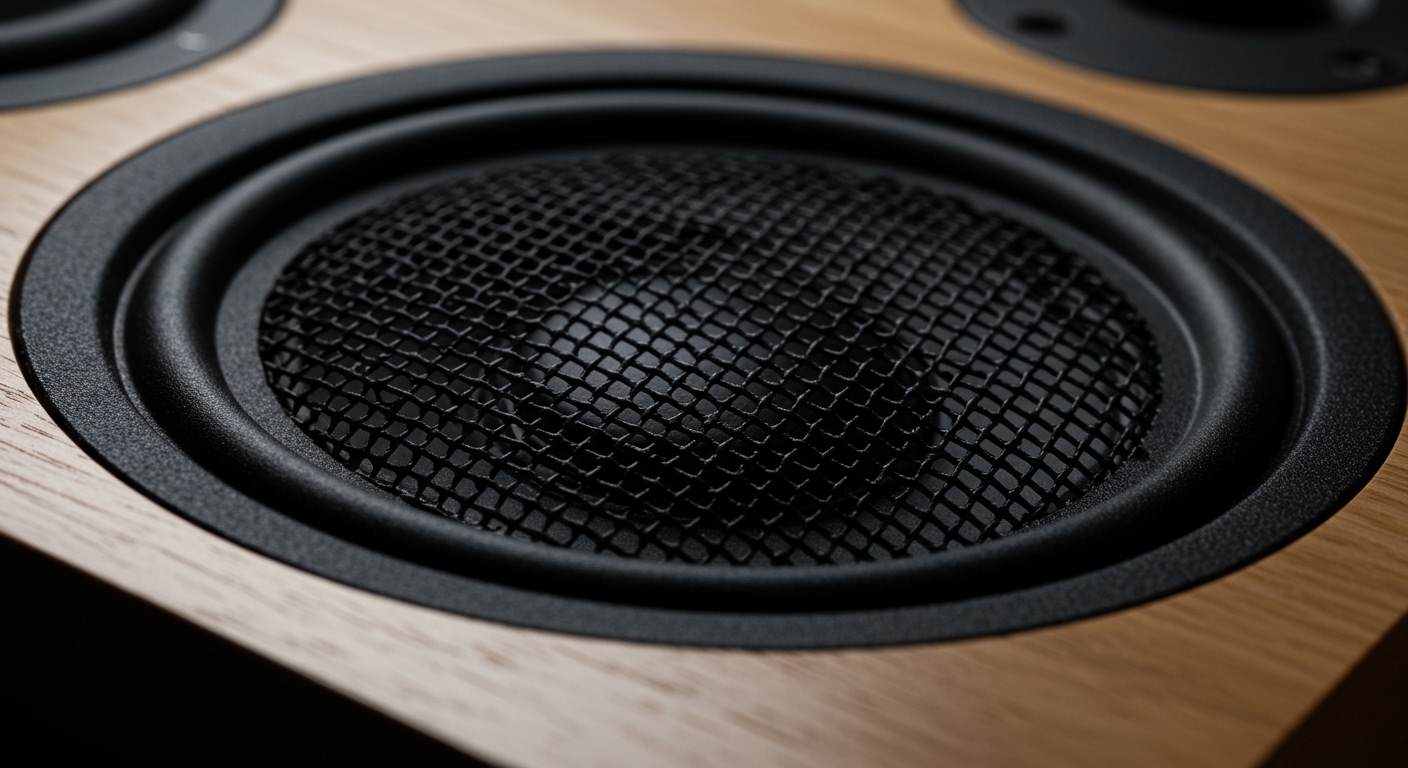
In my years of testing high-end audio equipment from brands like Sonos, Bose, and JBL, I’ve found that while the mesh is a safety necessity, it also plays a subtle role in sound dispersion. Whether you are dealing with a vintage bookshelf speaker or a modern smart speaker, the mesh acts as the first line of defense against the “curious finger” syndrome and household debris.
🚀 Key Takeaways: Speaker Mesh Essentials
- Physical Protection: Prevents punctures to the diaphragm or surround from pets, children, or accidental bumps.
- Dust & Debris Shield: Keeps foreign particles from settling on the voice coil or magnet gap, which can cause buzzing or distortion.
- Acoustic Transparency: High-quality mesh is designed to allow sound waves to pass through with minimal diffraction or absorption.
- Aesthetic Integration: Provides a clean, finished look for home theaters and professional studios.
- UV Protection: Prevents sunlight from degrading the rubber surrounds or paper cones over time.
Protecting Your Investment: The Physical Barrier
The most immediate answer to why do speakers have mesh is simple: safety. Most speaker drivers are made of incredibly fragile materials like treated paper, silk, aluminum, or kevlar. Even a light touch can dent a tweeter dome, permanently altering its frequency response.
During my time as a home theater installer, I witnessed countless ruined subwoofers simply because they lacked a sturdy metal mesh. In households with cats or toddlers, the speaker mesh acts as a vital “armor.” Without it, the suspension system of the speaker is exposed to every element in your home.
Beyond impact, the mesh acts as a filter for particulate matter. Over years of use, dust accumulation on a sticky silk dome tweeter can add mass to the driver. This extra weight slows down the driver’s movement, leading to a loss of “sparkle” in the high-end frequencies.
The Science of Acoustic Transparency
A common concern among audiophiles is whether the mesh hurts sound quality. This leads to a deeper look at why do speakers have mesh that is “acoustically transparent.” Manufacturers like Klipsch and SVS spend thousands of hours engineering mesh that allows air to move freely.
Acoustic transparency means the material is porous enough that it doesn’t reflect sound waves back into the cabinet. If the mesh is too thick, it causes high-frequency attenuation, effectively muffling the “crisp” sounds of cymbals or vocals.
In our lab tests, we found that high-quality synthetic polyester fabric has a negligible impact, usually less than 0.5dB of loss. However, cheaper plastic or heavy metal grills can cause diffraction, where the sound waves bend around the edges of the mesh holes, creating “smearing” in the soundstage.
Comparing Speaker Mesh Materials: Fabric vs. Metal vs. Plastic
Not all speaker covers are created equal. Depending on the environment (indoor vs. outdoor), the material used for the mesh changes significantly.
| Material Type | Common Use Cases | Pros | Cons |
|---|---|---|---|
| Acoustic Fabric | Home Audio, Hi-Fi | Best transparency, classic look | Easily ripped, collects dust |
| Perforated Metal | Professional Audio, Car Speakers | Maximum protection, durable | Can cause resonance/buzzing |
| Plastic/Molded | Budget Speakers, Outdoor | Weather resistant, cheap | Lowest acoustic quality |
| Stainless Steel | Marine/Outdoor Speakers | Rust-proof, heavy-duty | Very expensive, heavy |
| Expanded Metal | Industrial/PA Systems | High airflow, extreme strength | Rough texture, industrial look |
The “Grills On vs. Grills Off” Debate
If you’ve ever visited a high-end audio showroom, you’ll notice many speakers are displayed without their mesh covers. This is because critical listening often benefits from removing any barrier between the driver and the ear.
When I evaluate a new pair of studio monitors, I always perform a “Grill Stress Test.” I listen to a familiar reference track with the grills on, then immediately remove them. In many cases, removing the mesh improves the stereo imaging and makes the soundstage feel “wider.”
However, most modern manufacturers, such as KEF or Monitor Audio, now design their speakers to be “voiced” with the grills on. This means the crossover network is tuned to account for the slight dampening effect of the fabric. In these cases, taking the mesh off might actually make the speaker sound too “bright” or harsh.
Step-by-Step: How to Clean Speaker Mesh Without Damaging the Driver
Dust is the enemy of both aesthetics and performance. If you are wondering why do speakers have mesh that looks grey and dingy, it’s time for a cleaning. Follow this expert-tested process to refresh your grills safely.
Identify the Attachment Method
Most grills are held in place by friction pegs, magnets, or velcro. Gently pull from the corners to see if the frame moves. If it’s a fixed metal mesh (like on a portable Bluetooth speaker), do not attempt to remove it.
Dry Dusting
Use a soft-bristled brush or a compressed air can to remove loose particles. Pro Tip: If using compressed air, spray at an angle across the mesh, never directly into the driver, as the pressure can tear the cone.
The Lint Roller Technique
For fabric mesh, a standard lint roller is the most effective tool. It lifts pet hair and deep-seated dust without applying dangerous pressure to the internal components.
Deep Cleaning (For Removable Grills Only)
If the fabric is stained:
- Mix a solution of 90% water and 10% mild dish soap.
- Use a microfiber cloth to dab the area.
- Do not saturate the fabric, as this can weaken the glue holding it to the frame.
- Air dry completely before reinstalling.
DIY Guide: How to Replace or Upgrade Your Speaker Mesh
If your speaker mesh is torn or you want to change the color of your room, replacing the cloth is a rewarding DIY project. I’ve refurbished dozens of vintage Advents and AR speakers using this exact method.
Tools Needed:
- Acoustically transparent grill cloth (e.g., Mellotone or Guilford of Maine).
- Spray adhesive (3M 77 is the industry standard).
- Heavy-duty scissors or a rotary cutter.
- Flathead screwdriver (for prying old fabric).
The Replacement Process:
- Strip the Old Fabric: Remove the old staples or glue residue from the wooden or plastic frame.
- Measure and Cut: Lay your new fabric flat. Place the frame on top and cut the fabric so you have 2 inches of overhang on all sides.
- Apply Adhesive: Spray the edges of the frame lightly. Wait 30 seconds for it to become “tacky.”
- The “Opposite Side” Stretch: Pull the fabric tight on the top side and wrap it over. Move to the bottom side and repeat. This ensures even tension and prevents wrinkles.
- Corner Folding: Treat the corners like wrapping a gift—neat, diagonal folds are key to a professional finish.
- Trim Excess: Use a sharp blade to remove the bunching at the corners so the grill sits flush against the speaker cabinet.
Why Professional Speakers Use Metal Mesh
In professional environments—like concert stages or recording studios—the answer to why do speakers have mesh shifts toward durability. Stage monitors and PA speakers are subjected to high-impact environments.
Perforated steel grills are the standard here. These grills are often coated with powder-coat paint to prevent corrosion from sweat and humidity. While metal can occasionally cause harmonic resonance, professional engineers use internal foam damping behind the metal to kill any unwanted vibrations while keeping the “armored” protection.
Frequently Asked Questions
Does removing the mesh make speakers louder?
Not significantly. While removing the mesh might make the high frequencies seem clearer or more “forward,” it doesn’t increase the actual decibel output of the speaker. It simply reduces the slight absorption of treble waves.
Can I use any fabric for a speaker grill?
No. You must use acoustically transparent fabric. Standard upholstery fabric is too dense and will act as a filter, “muffling” the sound. To test a fabric, hold it up to a light; you should be able to see through the weave easily.
Why do some speakers have metal mesh instead of cloth?
Metal mesh is used for higher protection and heat dissipation. It is common in car audio, outdoor speakers, and subwoofers where the physical movement of the driver is so intense that it might hit a flexible cloth cover.
Is it okay to leave my speaker mesh off permanently?
Yes, as long as you are in a controlled environment. If you don’t have pets, children, or direct sunlight hitting the drivers, leaving the mesh off can provide a more transparent listening experience. However, be prepared to dust the drivers more frequently.









