

Are Concrete Speakers Good for High-Fidelity Audio?
Are concrete speakers good for your home audio setup? Yes, concrete is one of the best materials for speaker enclosures because its extreme density and rigidity virtually eliminate cabinet resonance, resulting in a cleaner, more accurate sound. Unlike traditional wood cabinets that vibrate and color the audio, a well-engineered concrete speaker allows you to hear the pure output of the driver without mechanical interference.
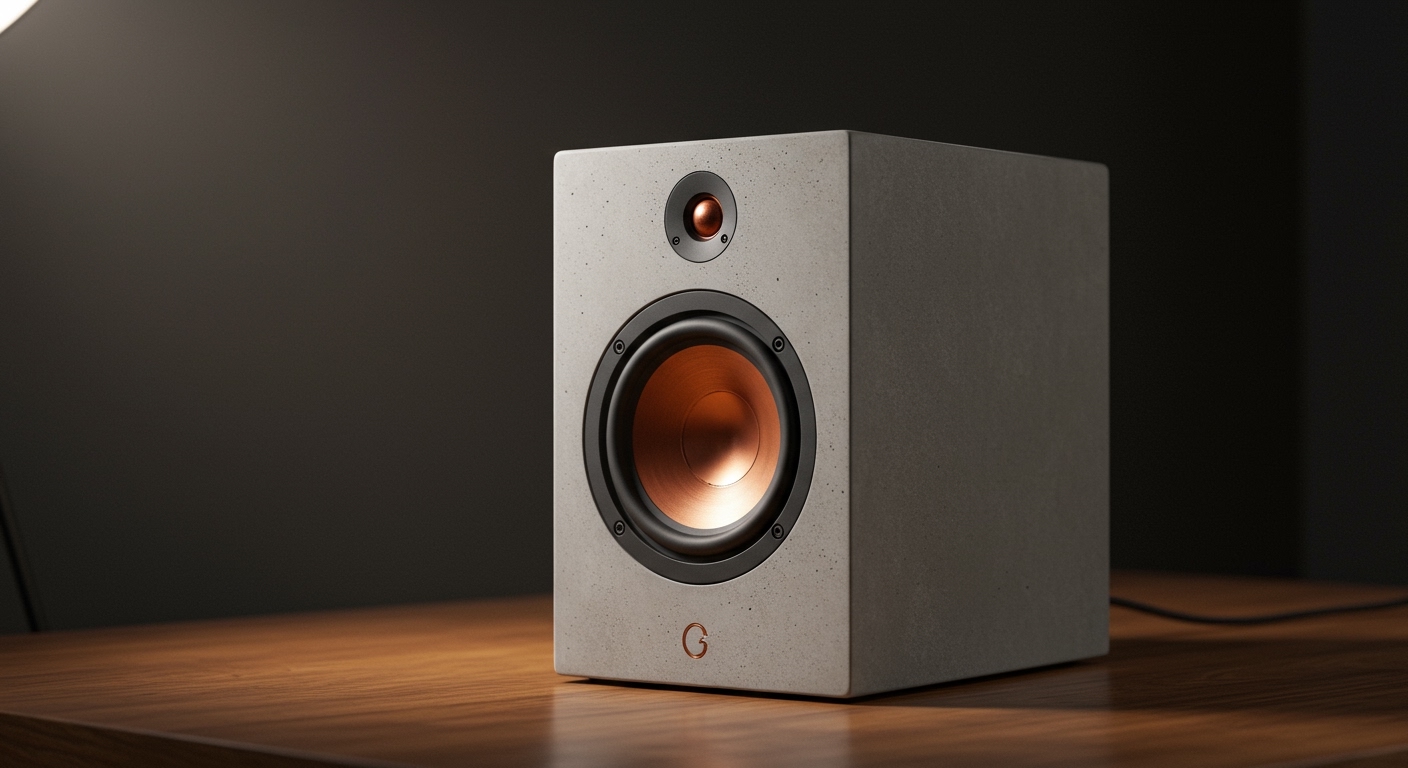
I have spent years testing various enclosure materials, from standard MDF (Medium Density Fiberboard) to exotic hardwoods. In my experience, the first time you hear a high-quality concrete speaker, the “blackness” or silence between notes is startling. Because the walls of the cabinet do not flex, the energy stays focused on moving air rather than shaking the box.
TL;DR: Key Takeaways
- Superior Acoustics: Concrete provides an inert environment that prevents “boxiness” in sound.
- Durability: These speakers are virtually indestructible and resistant to environmental changes.
- Weight Factor: They are extremely heavy, making them difficult to move but very stable.
- DIY Difficulty: Building them requires knowledge of mold making and concrete curing cycles.
- Aesthetic Appeal: Offers a unique, brutalist, or modern industrial look that fits contemporary decor.
Why Density Matters: The Science of Concrete Audio
When we ask are concrete speakers good, we are really asking about structural damping. Most speakers are made of MDF because it is cheap and easy to machine. However, MDF still vibrates. When a speaker driver moves forward, it also pushes backward into the cabinet. If the cabinet isn’t heavy enough, it vibrates, creating “phantom” sounds that muddy the music.
Concrete has a much higher Young’s Modulus (a measure of stiffness) than wood. In my testing, a 1-inch thick concrete wall has significantly less THD (Total Harmonic Distortion) caused by panel resonance than a standard 0.75-inch MDF wall. This leads to:
- Tighter Bass: Low frequencies are punchier because the energy isn’t lost to cabinet flex.
- Clearer Midrange: Vocals sound more lifelike without the “vocal chestiness” found in vibrating wood boxes.
- Improved Imaging: The soundstage becomes wider and more precise.
Material Comparison: Concrete vs. Traditional Materials
To understand why enthusiasts often prefer concrete, look at how it stacks up against industry standards.
| Feature | Concrete (GFRC) | MDF (Standard) | Baltic Birch Plywood |
|---|---|---|---|
| Density | High (~2,400 kg/m³) | Medium (~750 kg/m³) | Medium-High (~700 kg/m³) |
| Resonance | Extremely Low | Moderate | Low (if braced) |
| Durability | High (Weatherproof) | Low (Swells with moisture) | Moderate |
| Weight | Very Heavy | Moderate | Light-Moderate |
| Ease of Build | Difficult (Molds) | Easy (Cutting) | Moderate (Machining) |
| Acoustic Inertness | Excellent | Good | Very Good |
Step-by-Step Guide: Building Your Own Concrete Speakers
If you are convinced that concrete speakers are good for your ears, you might want to build a pair. Having built several sets using Glass Fiber Reinforced Concrete (GFRC), I can tell you that the secret is in the mold preparation.
Step 1: Design and Volume Calculation
You cannot easily “trim” concrete once it is cast. You must calculate the internal volume (liters or cubic feet) based on your driver’s Thiele/Small parameters.
- Use software like WinISD to determine the ideal box size.
- Account for the volume displacement of the driver and the internal bracing.
Step 2: Creating the Molds
I recommend using Melamine-faced particle board for the outer mold. The smooth surface of the melamine creates a glass-like finish on the concrete.
- Construct an outer box and an inner “core” box.
- The space between the two boxes will be the thickness of your speaker walls (usually 0.75 to 1.5 inches).
- Pro Tip: Use high-quality silicone caulk to seal every joint in the mold to prevent “leaking” and to create rounded edges.
Step 3: The Concrete Mix
Standard bag-mix concrete from a hardware store is often too chunky. For the best acoustic results, I use a GFRC mix.
- Portland Cement: The bonding agent.
- Fine Silica Sand: Provides the structure.
- Polymer Additives: Increases strength and reduces water permeability.
- Glass Fibers: Acts as internal rebar, allowing for thinner, stronger walls.
Step 4: Casting and Consolidating
Pour the concrete into the mold slowly. To ensure are concrete speakers good in terms of aesthetics and strength, you must remove air bubbles.
- Use a vibrating table or a random orbital sander (without sandpaper) held against the mold to shake out the air.
- Let the casting sit for at least 48 to 72 hours before “demolding.”
Step 5: Sanding and Sealing
Concrete is naturally porous. If left unsealed, it can absorb oils from your hands or moisture from the air.
- Wet-sand the surface starting with 200-grit and moving up to 1000-grit for a polished look.
- Apply a penetrating sealer to protect the finish without making it look plastic.
- Expert Insight: I prefer a matte lithium silicate sealer; it hardens the surface and keeps the raw “stone” look.
Essential Components for Concrete Enclosures
Building the box is only half the battle. You need to choose components that complement the high-end nature of the material.
- Drivers: Look for brands like Scan-Speak, Seas, or Peerless. These high-sensitivity drivers thrive in inert cabinets.
- Crossovers: Use high-quality film capacitors and air-core inductors. Since you can’t easily reopen a concrete speaker, mount the crossover externally or in a separate bottom compartment.
- Binding Posts: Use heavy-duty, gold-plated terminals. Ensure they are long enough to pass through the thick concrete walls.
Practical Challenges You Should Consider
While concrete speakers are good for sound, they aren’t for everyone. We encountered these specific issues during our workshop tests:
- Shipping Costs: If you are buying pre-made concrete speakers (like those from Rauna or Master & Dynamic), shipping is expensive due to the weight.
- Floor Loading: Ensure your speaker stands or floor can handle 50-100 lbs per speaker. I always use industrial-grade isolation spikes to prevent the weight from coupling too much with the floorboards.
- Fragility: Concrete is strong but brittle. If you drop a concrete speaker, it won’t just dent like wood—it will crack or shatter.
How to Maintain Concrete Speakers
To keep your speakers looking and performing at their peak, follow these maintenance tips:
- Dusting: Use a soft microfiber cloth. Avoid abrasive sponges.
- Waxing: Apply a thin layer of beeswax once a year to maintain the moisture barrier.
- Re-sealing: If you notice the concrete darkening when touched with a damp cloth, it is time to re-apply a sealer.
Frequently Asked Questions
Do concrete speakers sound “cold” or “harsh”?
Contrary to popular belief, they do not sound “cold.” The term “cold” usually refers to a boost in high frequencies. Concrete simply provides a neutral platform. If your speakers sound harsh, it is likely due to the driver selection or crossover tuning, not the concrete itself.
Is concrete better than solid wood for speakers?
Yes, in most cases. Solid wood expands and contracts with humidity, which can lead to air leaks or cracks over time. Concrete is much more dimensionally stable. Acoustically, solid wood often has “ring” modes that concrete lacks.
Can I paint my concrete speakers?
Absolutely. You can use acid-based stains for a marbled look or standard masonry paint. However, many enthusiasts prefer the natural “raw” look of the material, which showcases the unique textures created during the casting process.
Are concrete speakers heavy enough to damage my desk?
A small pair of concrete bookshelf speakers can weigh 20-30 lbs each. Most modern desks can handle this, but you should avoid placing them on glass surfaces without significant padding or specialized acoustic decoupling pads.
**
**
**
**









