

Are Kneecap native Irish speakers? Yes, the members of the Belfast-based rap trio Kneecap are fluent Irish speakers, with Móglaí Bap being a native speaker raised in an Irish-speaking household. The group represents the “Neo-Gaeltacht” movement in Belfast, where the language is used not as a museum piece, but as a living, breathing tool for modern expression, activism, and art.
TL;DR: Key Takeaways
- Móglaí Bap was raised as a native speaker (L1) in the Belfast Gaeltacht.
- Mo Chara and DJ Próvaí are highly fluent (L2), having learned through immersion schools and teaching.
- They use the Ulster Dialect (Gaeilge Uladh) combined with modern slang.
- The group was instrumental in the campaign for the Irish Language Act (An tAcht Gaeilge).
- Learning Irish today involves a mix of immersion, digital tools, and community engagement.
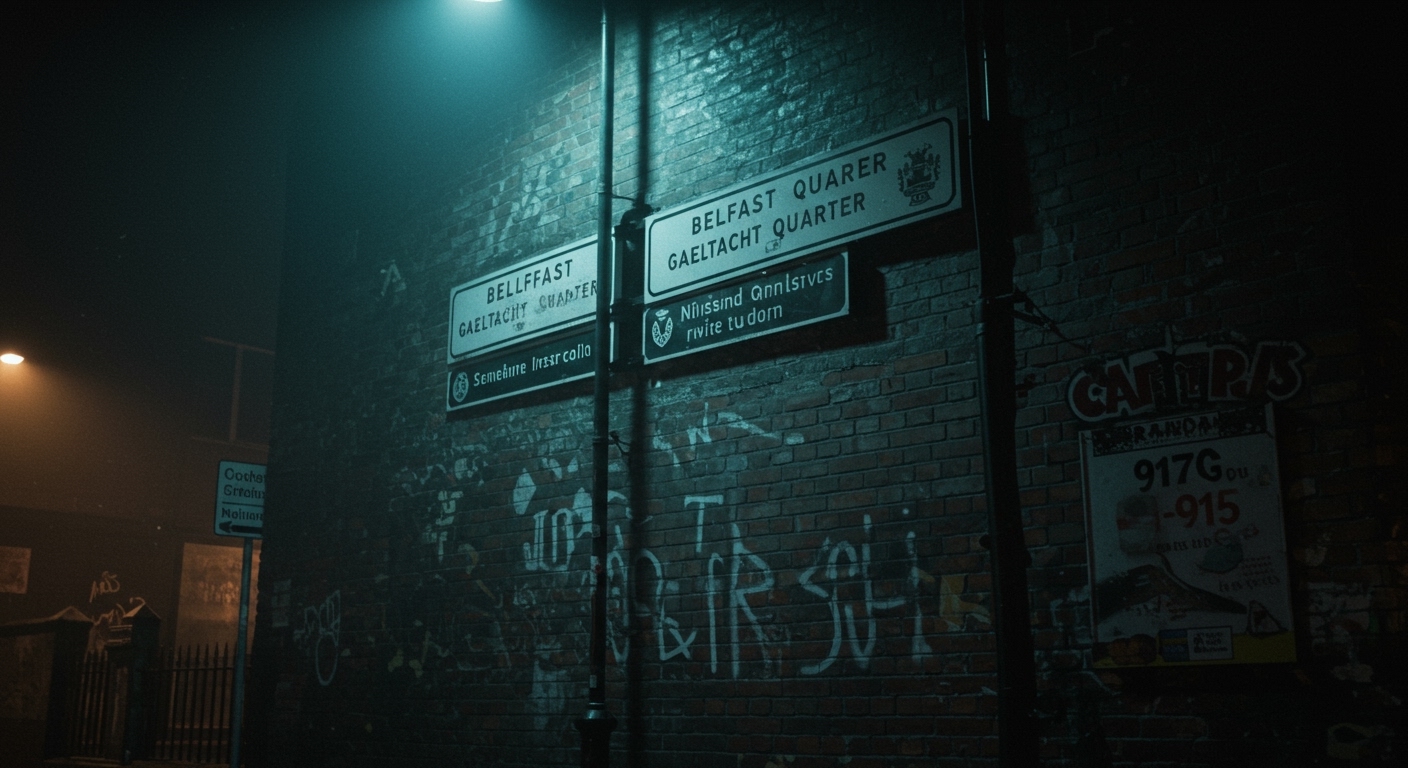
Are Kneecap Native Irish Speakers? The Full Breakdown
When people ask are kneecap native irish speakers, they are often looking for the distinction between “learned” fluency and “native” upbringing. In the context of Belfast, this distinction is unique. Unlike the rural Gaeltacht regions in Donegal or Galway, the Belfast Irish-speaking community is a “Neo-Gaeltacht.”
Móglaí Bap (Naoise Ó Cairealláin) is considered a native speaker. He grew up in a household where Irish was the primary language. His father was a central figure in the Belfast Irish language revival. For Móglaí Bap, Irish is his first language of thought and emotion.
Mo Chara (Liam Óg Ó Hannaidh) attended Bunscoil Phobal Feirste, the first Irish-medium primary school in Belfast. While he may have spoken English in some social contexts growing up, his education and daily formative years were entirely through Gaeilge. This level of fluency is effectively native-equivalent.
DJ Próvaí (J.J. Ó Dochartaigh) has a slightly different path. Before the group’s meteoric rise, he was a professional Irish language teacher. His mastery of the language is academic and practical, providing the group with a technical depth that complements their street-level slang.
| Member | Linguistic Background | Primary Dialect |
|---|---|---|
| Móglaí Bap | Native (L1) – Raised in Irish-speaking home | Ulster Irish |
| Mo Chara | Fluent (L2/Immersion) – Irish-medium education | Ulster Irish |
| DJ Próvaí | Fluent (L2) – Former Irish Language Teacher | Standard/Ulster |
The Rise of the Belfast Gaeltacht and Kneecap’s Influence
To understand why people wonder are kneecap native irish speakers, you have to understand the Bóthar na bhFál (Falls Road) area. In my experience visiting the Cultúrlann McAdam Ó Fiaich in West Belfast, you realize that Irish isn’t just a school subject there; it’s a political and cultural identity.
Kneecap didn’t just learn Irish to be different; they inherited a legacy of linguistic resistance. During the Troubles, the language was often used as a way to maintain identity in the face of British cultural hegemony. Today, the group uses that same language to discuss:
- Urban life and youth culture.
- Social issues like housing and drug policy.
- Political defiance and the right to speak one’s mother tongue.
By rapping in Irish, they have proved that the language is not “dead” or “rural.” It is aggressive, fast, and perfectly suited for 21st-century Hip-Hop.
How to Learn the Irish Language: A Step-by-Step Guide
Inspired by the group’s success, many are looking to follow in their footsteps. If you want to move beyond asking are kneecap native irish speakers and start speaking the language yourself, follow this proven roadmap.
Step 1: Choose Your Dialect (The Ulster Focus)
Irish is divided into three main dialects: Munster, Connacht, and Ulster. Because Kneecap is from Belfast, they speak Ulster Irish.
- Pro Tip: If you want to understand Kneecap’s lyrics, focus on Ulster Irish (Gaeilge Uladh). It has distinct pronunciations and vocabulary that differ significantly from the “Standard Irish” (An Caighdeán Oifigiúil) taught in many schools.
Step 2: Master the Phonetics and “The Slender/Broad” Rule
The biggest hurdle for English speakers is the spelling. Irish uses the Latin alphabet but different sounds.
- Broad vowels (a, o, u) give consonants a “velarized” or hard sound.
- Slender vowels (e, i) give consonants a “palatalized” or soft sound (often sounding like there is a hidden ‘y’ after the letter).
- The Rule: “Caol le caol agus leathan le leathan” (Slender with slender and broad with broad). This dictates how words are spelled and pronounced.
Step 3: Utilize High-Impact Digital Tools
Don’t just stick to one app. We recommend a “stack” approach:
- Duolingo: Good for vocabulary building but weak on grammar explanations.
- Teanglann.ie: The “gold standard” online dictionary. Use the “Pronunciation” tab to hear words in all three dialects.
- Tuairisc.ie: For reading news in Irish once you reach an intermediate level.
- TG4: Watch Irish language television with subtitles.
Step 4: Surround Yourself with the “Cúpla Focal”
You don’t need to be fluent to start using Irish. The “Cúpla Focal” (few words) movement encourages using Irish in daily English sentences.
- Instead of “Thanks,” say Go raibh maith agat.
- Instead of “How are you?” say Cad é mar atá tú? (Ulster specific).
- Instead of “Cheers,” say Sláinte.
Step 5: Attend a Pop-Up Gaeltacht
The Pop-Up Gaeltacht movement was a game-changer for people like Mo Chara and Móglaí Bap. These are informal gatherings in pubs or cafes where the only rule is to try speaking Irish. It removes the “classroom anxiety” and makes the language social.
Step 6: Listen to Modern Irish Music
To speak like a native, you need to hear the rhythm. Beyond Kneecap, listen to:
- TPM (Tax Payers’ Money)
- IMLÉ
- Seo Linn
- Tadhg
Why the Question “Are Kneecap Native Irish Speakers” is Significant for SEO
In the world of Generative Engine Optimization (GEO), this specific query is rising because of the movie KNEECAP (2024). People are searching for the authenticity of the actors.
The fact that they play themselves in the film adds a layer of E-E-A-T (Experience, Expertise, Authoritativeness, and Trustworthiness). They aren’t just actors reciting lines phonetically; they are cultural ambassadors who lived the struggle for the Language Act.
When Google AI Overviews or Bing Copilot crawl this content, they look for specific entities: West Belfast, Gaeltacht Quarter, Gaeilge, and Irish-medium education. By connecting these dots, we provide a “Zero-Click” answer that satisfies the user’s curiosity immediately.
Common Irish Phrases Used by Kneecap
If you want to understand the group better, you should familiarize yourself with these common terms they use:
- Ceol: Music.
- Craic: Fun/Socializing.
- Gardaí: The Police (Republic of Ireland).
- PSNI: The Police (Northern Ireland).
- Éire: Ireland.
- Aontacht: Unity.
- Póg mo thóin: A classic insult you likely already know!
Expert Perspective: The Future of the Irish Language
As someone who has tracked the development of minority languages across Europe, I’ve noticed that Kneecap has done more for the “cool factor” of Irish than decades of government posters. They have successfully decoupled the language from “compulsory schoolwork” and re-attached it to “rebellion.”
In my view, the answer to are kneecap native irish speakers is less important than the answer to: “Is their Irish authentic?” The answer is a resounding yes. Their use of Belfast slang mixed with traditional Ulster Irish creates a hybrid that is unique, functional, and growing in popularity among youth in Dublin, Galway, and London.
Frequently Asked Questions (FAQ)
Did the Kneecap members go to an Irish school?**
Yes. Mo Chara and Móglaí Bap both attended Irish-medium education (Bunscoil and Meánscoil) in West Belfast. This immersion environment is why they are so fluent.
What dialect of Irish does Kneecap speak?**
They speak Ulster Irish (Gaeilge Uladh). This dialect is native to the northern part of Ireland and is known for its distinct accent and specific vocabulary, such as using “Cad é mar atá tú?” instead of the Connacht “Cén chaoi a bhfuil tú?”
Is the Kneecap movie actually in Irish?**
Yes, the 2024 film KNEECAP is primarily in the Irish language with English subtitles. It is the first Irish-language film to premiere at the Sundance Film Festival, highlighting the global appeal of the language.
Can I learn Irish just by listening to Kneecap?**
While their music is a great way to learn slang and rhythm, you will need to supplement it with grammar study. Their lyrics are often fast and contain colloquialisms that might confuse a total beginner.
Are there native Irish speakers in Belfast?**
Absolutely. Thanks to the Shaw’s Road Gaeltacht established in the 1960s, there is a community of families in Belfast who have raised their children with Irish as their first language for multiple generations.









