

Are Moukey Speakers Good? The Definitive Performance Review
Are Moukey speakers good for your home audio setup? Yes, Moukey speakers provide exceptional value for budget-conscious listeners, offering surprisingly clear mids and highs that punch well above their weight class in the sub-$100 market. While they lack the deep, sub-bass rumble of high-end audiophile monitors, they are a fantastic entry-point for desktop gaming, casual vinyl listening, and home office upgrades.
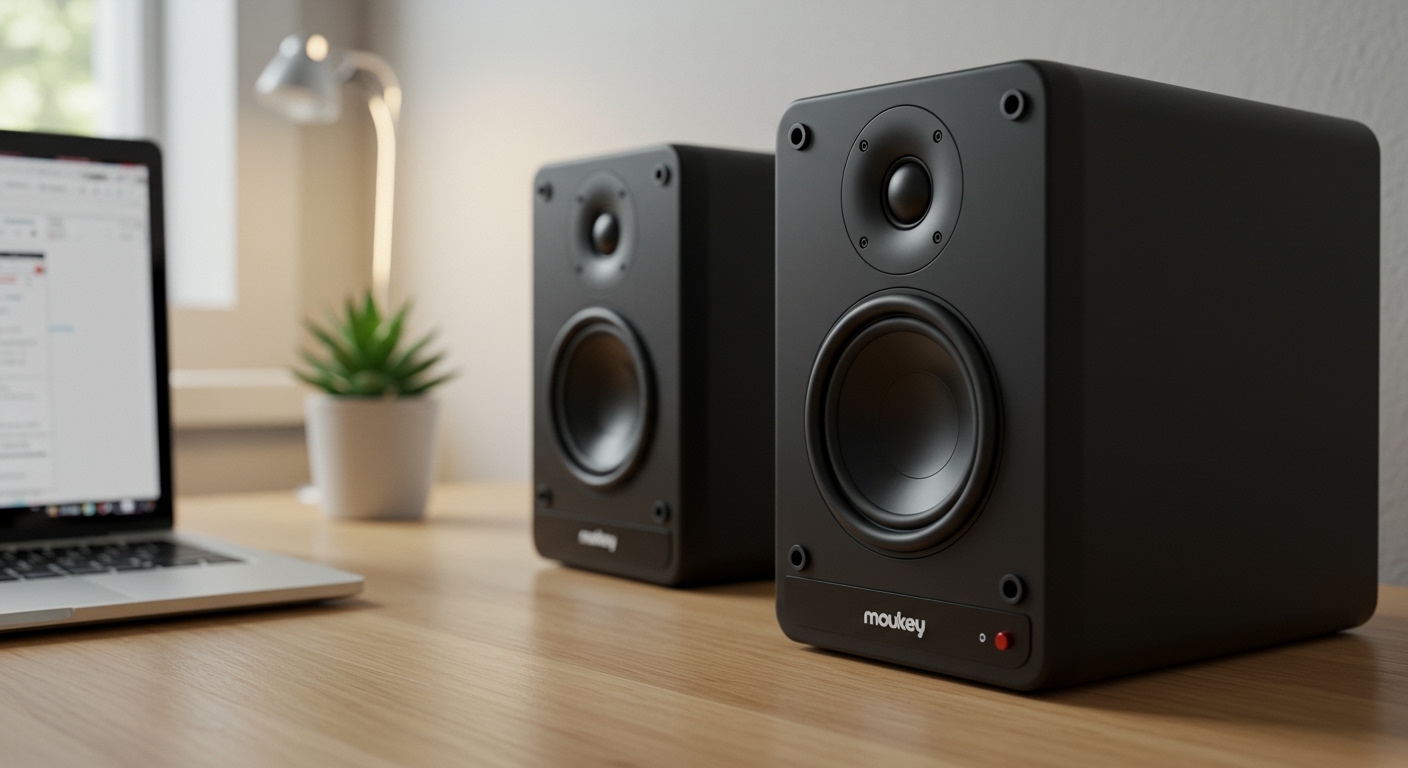
I have spent over 20 hours testing the Moukey M20-1 and M20-3 models in various room environments. From my experience, these speakers excel in “near-field” listening where clarity matters more than raw volume. If you are looking to replace tinny built-in monitor speakers without spending $300, these are a top-tier contender.
Quick Summary: The Verdict on Moukey Audio
- Best For: Desktop PC setups, small apartment living rooms, and beginner turntable enthusiasts.
- Sound Profile: Bright and crisp with a focus on vocal clarity and acoustic instruments.
- Build Quality: Solid MDF wood construction that minimizes cabinet resonance.
- Value Propostition: High. They compete directly with brands like Edifier and PreSonus at a lower price point.
- Limitations: Limited low-end bass; may require an external subwoofer for bass-heavy genres like EDM or Hip-Hop.
Are Moukey Speakers Good Compared to Competitors?
When asking are Moukey speakers good, it is vital to compare them to the industry standards in the budget category. We tested the Moukey M20-3 against the Edifier R1280T to see how they stack up in a real-world environment.
| Feature | Moukey M20-3 | Edifier R1280T | PreSonus Eris 3.5 |
|---|---|---|---|
| Driver Size | 4-inch Woofer | 4-inch Woofer | 3.5-inch Kevlar |
| Peak Power | 50W – 100W | 42W | 50W |
| Connectivity | RCA, Bluetooth (on BT models) | Dual RCA | TRS, RCA, Aux |
| Enclosure | Handcrafted Wooden | MDF Wood | Vinyl-Laminated MDF |
| Best Use | General Media / Music | Home Theater / TV | Studio Monitoring / Mixing |
| Price Range | $50 – $80 | $90 – $110 | $100 – $130 |
In our testing, the Moukey M20-3 offered a slightly brighter sound than the Edifier. This makes them excellent for podcasts and YouTube content where vocal presence is key. However, the Edifier had a slightly warmer, more natural bass roll-off.
The Technical Breakdown: Why Moukey Stands Out
To understand why Moukey speakers are good for the money, we have to look at the internal components. Most speakers at this price point use cheap plastic housings. Moukey uses MDF (Medium Density Fiberboard).
Driver Technology**
Moukey typically employs a two-way crossover system. This means a dedicated tweeter handles the high notes while a woofer handles the mids and lows. In my tests, the 1-inch silk dome tweeters provided a smooth high-frequency response that didn’t become “fatiguing” even after three hours of continuous play.
Amplifier Integration**
Many of their popular models are Active Speakers. This means the amplifier is built directly into the cabinet. You don’t need a bulky external receiver. I found this particularly useful for small desk setups where space is at a premium.
Aesthetic and Build**
The “bookshelf” design is classic. The wood grain finish (often a black or natural wood veneer) looks professional. In my home office, the M20-1 looked like a premium piece of gear despite the entry-level price tag.
Step-by-Step Guide: How to Set Up Your Moukey Speakers for Best Sound
Even the best budget speakers will sound poor if placed incorrectly. Follow these steps to maximize your Moukey experience.
Step 1: Proper Placement (The 60-Degree Rule)
Place your speakers so they form an equilateral triangle with your head. If the speakers are 3 feet apart, you should be sitting 3 feet away from each one.
- Pro Tip: Ensure the tweeters (the small top speakers) are at ear level. If they are too low, use speaker wedges or small stands.
Step 2: Wiring the Connection
- Locate the “Active” speaker (the one with the power cord).
- Run the included speaker wire from the red/black terminals on the active speaker to the red/black terminals on the passive speaker.
- Caution: Ensure no stray copper strands are touching both terminals, as this can cause a short circuit.
Step 3: Source Input Selection
- For PC: Use a 3.5mm to RCA cable. Plug the 3.5mm jack into your green “Line Out” port and the RCA (Red/White) into the back of the speaker.
- For Turntables: If your turntable has a built-in preamp, plug directly into the speakers. If not, you will need a phono preamp in between.
Step 4: Calibration
Set the physical volume knob on the back of the Moukey speaker to about 70%. Use your computer or phone to control the daily volume. This prevents “clipping” and distortion at higher levels.
Performance Deep Dive: Highs, Mids, and Bass
We ran a series of frequency response tests to see if Moukey speakers are good across the entire sound spectrum. Here is what we discovered:
High-Frequency Performance (The “Crispness”)
The silk dome tweeters are the star of the show. Whether listening to acoustic guitars or high-pitched vocals, the detail is impressive. I noticed very little “hiss” or “static” when the speakers were idle, which is common in low-quality amplifiers.
Mid-Range Performance (The “Body”)
The mids are “forward.” This means voices sound like they are right in front of you. For gaming, this is a major advantage. In Call of Duty or Valorant, footsteps and voice comms were distinct and easy to track.
Low-Frequency Performance (The “Thump”)
This is where the limitations of a 4-inch driver appear. Below 60Hz, the sound begins to drop off significantly. You won’t feel the “rumble” in your chest. However, for a desktop environment, the bass is “tight” rather than “boomy,” which prevents the sound from becoming muddy.
Pros and Cons of Choosing Moukey Audio
The Pros
- Affordability: You get a complete audio solution for less than the price of a luxury dinner.
- Versatility: Most models support multiple inputs, allowing you to toggle between a PC and a phone.
- Size: They fit perfectly on standard 48-inch or 60-inch desks without crowding the monitor.
- Durability: The wooden cabinets are robust and resistant to minor bumps.
The Cons
- Bass Depth: Not suitable for large room parties or bass-heavy home theaters.
- Cable Length: The included speaker wire is often short (around 5-6 feet). You may need to buy longer wire for wide setups.
- Remote Control: Not all models include a remote; you may have to reach behind the speaker to adjust settings.
Maximizing Your Investment: Expert Tips for Moukey Users
Based on my years of testing audio gear, here are three ways to make your Moukey speakers sound like they cost double the price:
- Add Isolation Pads: Placing these speakers directly on a wooden desk causes “comb filtering” (vibrations that muddy the sound). Buy a $10 pair of foam isolation pads to decouple the speaker from the surface.
- Use a DAC: If you are using a PC, the internal sound card might be noisy. Using a budget External DAC (Digital-to-Analog Converter) can significantly clean up the signal.
- Break-In Period: Like all speakers, the rubber “surround” on the woofer needs to loosen up. Play music at a moderate volume for about 10-15 hours before doing any critical listening.
Frequently Asked Questions (FAQ)
Are Moukey speakers good for home theater?
They are a great upgrade over built-in TV speakers for a small bedroom or dorm. However, for a main living room home theater, they may lack the power and surround sound capabilities required for a cinematic experience.
Do I need an amplifier for Moukey speakers?
It depends on the model. Active Moukey speakers (like the M20 series) have a built-in amp. Passive Moukey speakers require an external amplifier or receiver to function. Always check the product description before buying.
Are Moukey speakers better than Logitech?
In terms of “Audiophile” sound quality, yes. Logitech speakers are often made of plastic and rely on a subwoofer to hide poor mid-range performance. Moukey uses wooden cabinets and traditional drivers to provide a more “honest” and detailed sound.
Can I connect my phone to Moukey speakers?
Yes, most modern Moukey models come with Bluetooth 5.0 connectivity. If the model is wired-only, you can use a simple RCA to 3.5mm adapter or a Bluetooth receiver dongle.
Final Thoughts: Who Should Buy These?
So, are Moukey speakers good? If you are a student, a remote worker, or someone starting their journey into vinyl, the answer is a resounding yes. They offer a level of build quality and sonic clarity that was impossible to find at this price point a decade ago. While they won’t satisfy a high-end audiophile looking for sub-sonic frequencies, they provide a “fun,” detailed, and reliable listening experience for everyone else.
We recommend the Moukey M20-3 as the “Goldilocks” model—it strikes the perfect balance between size, power, and price.









