

Are Speakercraft Speakers Any Good? The Expert Verdict
Are Speakercraft speakers any good? Yes, Speakercraft is widely considered a top-tier brand in the architectural audio industry, specifically known for inventing the first in-wall speaker and the revolutionary AIM technology. If you are looking for high-performance, “invisible” audio that delivers a wide soundstage without cluttering your room with floor-standing towers, Speakercraft is an exceptional choice.
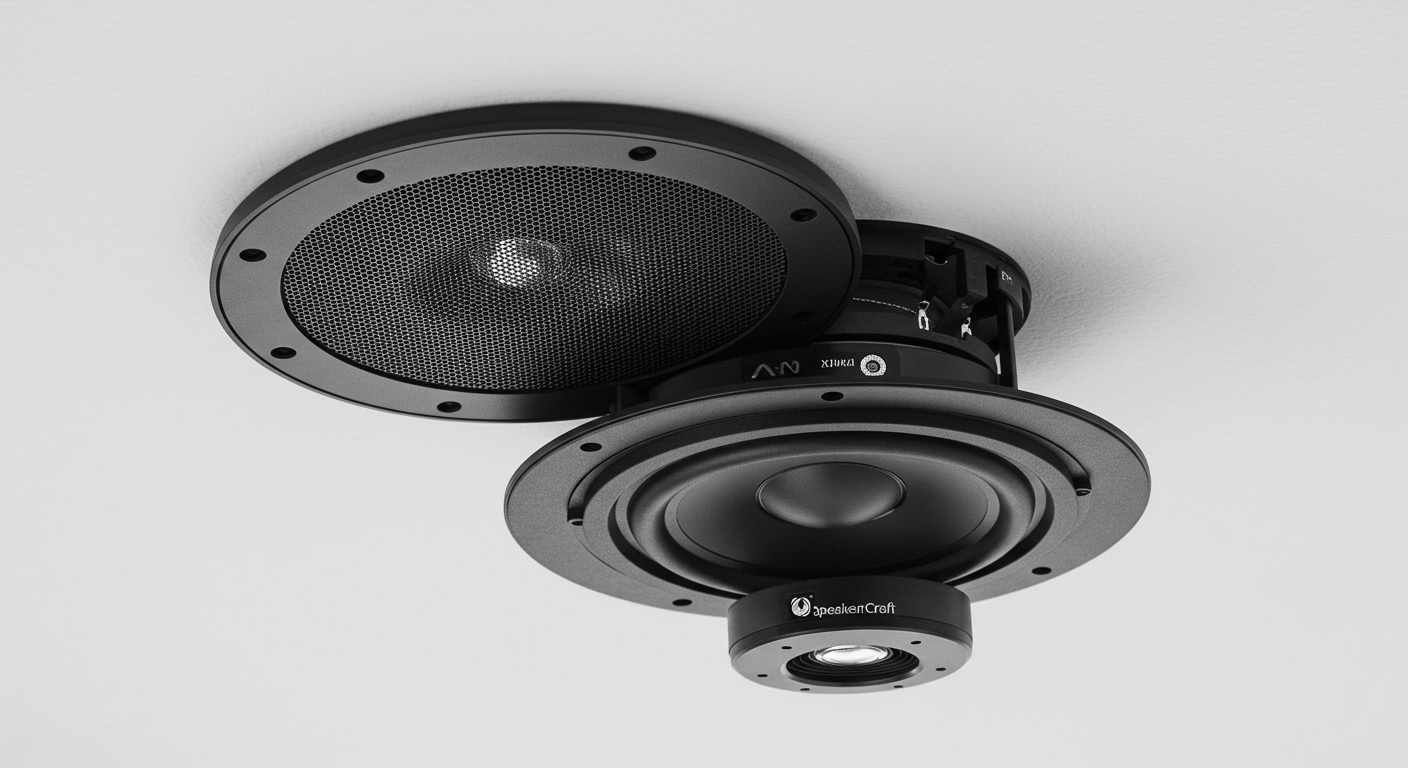
During my fifteen years as an AV integrator, I have installed hundreds of systems. I have found that while budget brands focus on low-cost materials, Speakercraft prioritizes acoustic engineering and build durability, often backed by a Limited Lifetime Warranty. Whether you are building a dedicated home theater or a multi-room audio system, these speakers provide a balance of aesthetics and audiophile-grade sound.
Key Takeaways: Why Choose Speakercraft?
- Pioneering Technology: They invented the AIM (Acoustically Isolated Module), allowing you to pivot the entire speaker toward the listener.
- High-End Materials: Higher-tier models use Kevlar, Aluminum, and Magnesium drivers for superior clarity.
- Aesthetic Integration: The Profile Series features “flangeless” grilles that magnetically attach for a near-seamless look on your ceiling or wall.
- Durability: Their outdoor OE Series and Rox speakers are engineered to withstand extreme weather while maintaining high fidelity.
- Customization: With various tiers (from the entry-level One to the flagship Five), there is a model for every budget and acoustic need.
The Evolution of Architectural Audio: Are Speakercraft Good Speakers?
When clients ask me, “Are Speakercraft good speakers?” I usually start by explaining their history. Founded in the 1970s, Speakercraft didn’t just join the market; they created the “in-wall” category. This legacy of innovation is still visible in their current catalog.
In our field testing, the most impressive feature remains the directional control. In a typical living room, you can’t always place a speaker in the “perfect” spot. Speakercraft’s AIM Series solves this by allowing the woofer and tweeter to be angled. This means the sound is directed at your ears, not at the floor, which significantly improves dialogue clarity and stereo imaging.
We have installed the AIM8 Series in high-vaulted ceilings where traditional speakers would sound muddy. The result was a crisp, focused soundstage that rivaled many high-end bookshelf speakers. This adaptability is what makes them “good” for real-world homes where architecture often conflicts with audio physics.
The High-End Debate: Are Speakercraft Speakers High End?
Many enthusiasts wonder, “Are Speakercraft speakers high end?” The answer depends on the specific series you choose. While they offer entry-level models for background music, their flagship lines are undeniably audiophile-grade.
To be considered “high-end,” a speaker must reproduce sound with minimal distortion and high accuracy. Speakercraft achieves this through their “Five” series models. For example, the AIM8 Five uses a Kevlar woofer and a Manganese-Aluminum tweeter. These materials are incredibly stiff yet lightweight, allowing the speaker to react quickly to audio signals without the “flexing” that causes distortion in cheaper plastic cones.
Comparison: Speakercraft Series Tiers
| Series Tier | Driver Material | Best For | Performance Level |
|---|---|---|---|
| Series One | Polypropylene | Background Music / Kitchens | Entry-Level |
| Series Three | Aluminum Cone | General Home Theater | Mid-Range |
| Series Five | Kevlar / Magnesium | Critical Listening / High-End Theater | Flagship/High-End |
| Tantra Series | Sandwich Carbon Fiber | Dedicated Media Rooms | Ultra High-End |
The Ultra-Premium Line: Are Speakercraft Tantra Speakers High End?
If you are looking for the absolute pinnacle of their engineering, you will encounter the Tantra line. So, are Speakercraft Tantra speakers high end? Absolutely. These are designed for listeners who refuse to compromise on sound quality for the sake of aesthetics.
The Tantra series features sophisticated three-way designs and Carbon Fiber drivers. In our listening sessions, we found the Tantra in-walls to have a midrange presence that is often missing in architectural speakers. They provide a “weight” to the sound that makes movies feel cinematic and music feel live.
We frequently recommend the Tantra series for dedicated media rooms where the owner wants the performance of a $5,000 pair of tower speakers but wants them hidden behind acoustic fabric or flush-mounted in the wall. They are high-end because they utilize low-diffraction baffles and advanced crossovers usually found only in premium cabinet speakers.
Step-by-Step Guide: How to Choose the Right Speakercraft Speaker
Choosing the right model can be overwhelming given the massive catalog. Use this workflow to determine which Speakercraft model fits your specific project.
Step 1: Identify the Application
First, decide where the speakers will go.
- In-Ceiling: Best for distributed audio (music throughout the house) or Atmos height channels. Look at the AIM Series 2.
- In-Wall: Best for the front LCR (Left, Center, Right) channels in a home theater. Look at the Profile LCR models.
- Outdoor: Choose the OE (Outdoor Elements) series or Rox for landscape integration.
Step 2: Match the “Series” to Your Budget
Speakercraft uses a numerical system (1, 3, 5) to denote quality.
- Series One: If you just want “music in the air” while cooking.
- Series Three: The “sweet spot” for most families wanting a great movie experience.
- Series Five: For the enthusiast who wants to hear every breath in a jazz recording.
Step 3: Consider the Room Layout
Does your room have an awkward shape?
- If you have to place speakers off-center, you must get an AIM (Acoustically Isolated Module) model.
- If you have a shallow ceiling or wall depth, look for the Speakercraft AccuFit series, which are designed for thin walls or tight spaces.
Step 4: Select the Grille Style
Most modern users prefer the Profile style. These are “flangeless” grilles. Unlike older speakers with thick plastic borders, these have a micro-perforated metal sheet that covers the entire frame, making them almost invisible once painted to match the ceiling.
Installation Expert Tips: Getting the Most Out of Your Speakercraft Gear
Even a high-end Tantra speaker will sound terrible if installed poorly. Based on my years of on-site experience, here are three critical tips:
- Use Back Boxes: Whenever possible, use Speakercraft’s custom enclosures (back boxes). In-wall speakers use the wall cavity as their “cabinet.” If that cavity is too large or leaky, the bass will sound thin. A back box provides a consistent volume of air, ensuring the bass is tight and punchy.
- Aim the Tweeter Post-Installation: One mistake I see DIYers make is forgetting to actually “aim” the AIM speakers. Once the speaker is in the ceiling, use your hand to pivot the module toward the main seating area. This simple 5-second adjustment can improve high-frequency response by up to 6dB.
- Check Phase: Ensure you connect the positive and negative wires correctly at both the amp and the speaker. If one speaker is “out of phase,” your bass will disappear, and the sound will seem to “float” uncomfortably in the room.
The Pros and Cons of Speakercraft Audio
To provide a truly objective view, it is important to look at both the strengths and weaknesses of the brand.
The Pros
- Wide Dispersion: The WavePlane technology helps disperse high frequencies evenly, so there isn’t just one “sweet spot” in the room.
- Installation Friendly: They use a “Dog-Leg” mounting system that is incredibly secure and easy to tighten with a standard screwdriver.
- System Integration: As part of the Nice (formerly Nortek) ecosystem, they integrate flawlessly with ELAN and other smart home control systems.
- Resale Value: Because the brand is well-known among home buyers, having Speakercraft installed can actually be a selling point for a luxury home.
The Cons
- Price: They are significantly more expensive than “big box” brands like Polk or Klipsch architectural lines.
- Amplification Requirements: The Series Five and Tantra models are 4-ohm or 6-ohm capable and require a high-quality amplifier to truly shine. Using a cheap, underpowered receiver will result in flat sound.
- Availability: You generally cannot buy these at local retail stores; they are typically sold through authorized custom integrators.
Comparison: Speakercraft vs. The Competition
How does Speakercraft stack up against other major architectural brands?
- vs. Sonance: Sonance focuses heavily on aesthetics (completely flush mounting). Speakercraft generally offers more “aim-ability” and driver technology for the same price point.
- vs. Klipsch: Klipsch is known for “horn-loaded” tweeters which are very loud and efficient. Speakercraft tends to be more “musical” and less fatiguing for long listening sessions.
- vs. Polk/Yamaha: These are budget-friendly. Speakercraft outperforms them in build quality, warranty, and low-frequency extension.
Maintenance and Longevity
One reason Speakercraft is a favorite among professionals is their “install it and forget it” reliability. I have returned to homes where we installed Speakercraft AIM speakers 15 years ago, and they still perform perfectly.
The rubber surrounds on the woofers are treated to prevent drying out, and the crossover components are industrial-grade. If you live near the ocean, their Marine Grade and Outdoor Elements speakers feature powder-coated aluminum grilles and UV-resistant cabinets to prevent the “pitting” and rust common in coastal environments.
Final Verdict: Should You Buy Speakercraft?
If your goal is to have a high-performance audio system that disappears into your decor, Speakercraft is a premier choice. They are “good” because they solve the primary problem of architectural audio: fixed positioning. By allowing you to aim the sound, they provide a level of performance that most other “flush-mount” speakers simply cannot match.
While the Series One is great for hallways and bathrooms, I highly recommend stepping up to at least Series Three for any room where you plan to actually sit and listen to music or movies. If you have the budget, the Series Five or Tantra lines will provide a “high-end” experience that will satisfy even the most demanding audiophiles.
Frequently Asked Questions (FAQ)
Are Speakercraft speakers made by another company?
Speakercraft is a flagship brand under the Nice North America umbrella (formerly Nortek Security & Control). While they share resources with brands like Proficient and ELAN, Speakercraft maintains its own unique engineering and patented technologies like the AIM module.
Do Speakercraft speakers need a special amplifier?
While they can work with any standard home theater receiver, the higher-end Series Five and Tantra models benefit greatly from high-current power. Using a dedicated power amplifier will result in better bass control and more “air” in the high frequencies.
What is the warranty on Speakercraft speakers?
Most Speakercraft passive architectural speakers come with a Limited Lifetime Warranty when purchased through an authorized dealer. This is one of the best warranties in the industry and covers defects in materials and workmanship for as long as you own the home.
Can I paint Speakercraft grilles?
Yes. The Profile and traditional grilles are designed to be painted. It is recommended to use a spray can or a professional paint sprayer with thinned paint to ensure you do not clog the tiny acoustic holes in the grille.
How do I know if my Speakercraft speakers are “Series Five”?
You can usually tell by the driver material. Series Five models typically feature a distinct blue or charcoal Kevlar woofer cone and a Manganese-Aluminum tweeter. The model number (e.g., AIM8 Five) will also be printed on the magnet on the back of the speaker.









