

Can You Have Good Sound With Coax Speakers? The Direct Answer
Yes, you can have good sound with coax speakers if you prioritize high-quality build materials, proper installation techniques like sound deadening, and adequate external amplification. While component systems are often seen as the “gold standard,” modern coaxial engineering from brands like Focal, Morel, and JL Audio delivers impressive clarity and a coherent soundstage that rivals more complex setups.
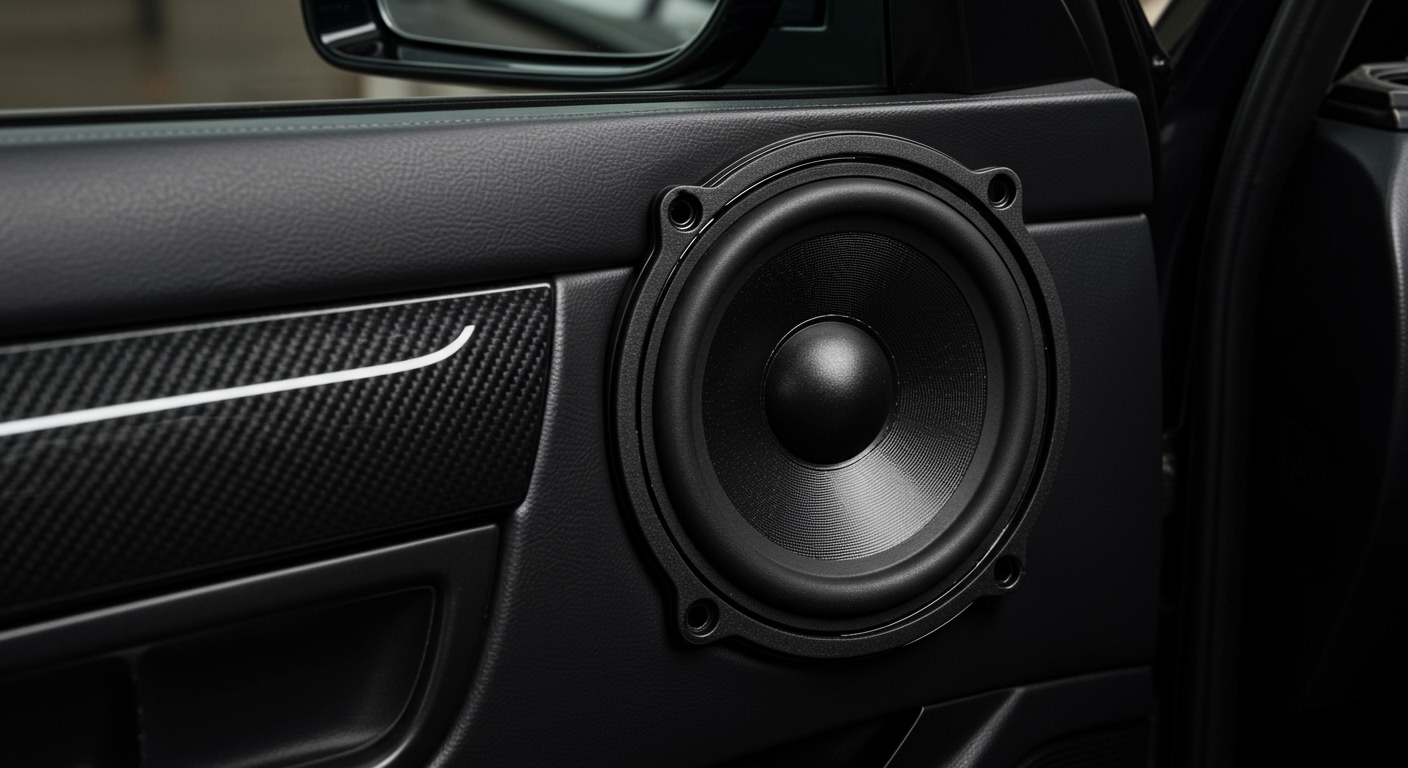
By focusing on the “point-source” advantage—where high and low frequencies originate from the same location—coaxial speakers provide a balanced listening experience that is often easier to tune in a standard vehicle cabin.
🚀 Key Takeaways: Optimizing Coaxial Audio
- Point-Source Alignment: Coaxials excel at time alignment because the tweeter and woofer are physically aligned.
- Installation is King: Use Fast Rings and Butyl-based sound deadening to prevent acoustic short circuits.
- Power Matters: Most factory head units starve coaxials; adding a 4-channel amplifier unlocks their full dynamic range.
- Material Science: Look for Silk Dome tweeters for smooth highs and Polypropylene or Carbon Fiber cones for punchy mid-bass.
Why “Can You Have Good Sound With Coax Speakers?” Is a Major Debate
For years, audiophiles have dismissed coaxial speakers as “budget-friendly” alternatives to component sets. I’ve spent over a decade in car audio bays, and I can tell you that this stigma is outdated. The question of whether can you have good sound with coax speakers depends less on the speaker type and more on the execution of the system.
In a component system, the tweeter is separate from the woofer. While this allows for a higher soundstage, it often creates “phase smear” because the sound hits your ears at different times. Coaxial speakers, by design, act as a point-source. This means the sound radiates from a single point, often resulting in a more natural, focused image for the listener.
The Physics of Coaxial Clarity
The primary advantage of a coaxial driver is its simplicity. In a car’s challenging acoustic environment, having the tweeter mounted directly over the woofer center pole reduces the complexity of the crossover. We have found that in smaller cabins, a high-end coaxial often sounds more “together” than a poorly placed component set.
Coaxial vs. Component: Which Delivers “Good” Sound?
When people ask can you have good sound with coax speakers, they are usually comparing them to component speakers. Here is how they stack up in real-world testing:
| Feature | Coaxial Speakers | Component Speakers |
|---|---|---|
| Installation Difficulty | Low (Drop-in replacement) | High (Requires custom mounting) |
| Imaging/Soundstage | Focused, Point-Source | Wide, Elevated |
| Crossover Quality | Basic (Capacitor-based) | Advanced (External crossover) |
| Cost | $50 – $400 | $150 – $1,500+ |
| Power Handling | Moderate | High |
Expert Insight: I often recommend high-end coaxials for the rear doors even in “SQL” (Sound Quality Loud) builds. They provide a perfect “rear fill” that doesn’t distract from the front stage.
Steps to Getting Incredible Sound From Coax Speakers
To prove that can you have good sound with coax speakers, you must move beyond the “plug-and-play” mentality. Follow these professional steps to elevate your audio.
Treat Your Doors with Sound Deadening
The biggest enemy of a coaxial speaker is the thin sheet metal of your car door. Without treatment, the back wave of the speaker causes the metal to vibrate, cancelling out your mid-bass.
- Apply CLD (Constrained Layer Damper) tiles to at least 25% of the inner door skin.
- Use a closed-cell foam (CCF) gasket between the speaker and the door panel.
- Pro Tip: I always use SoundSkins or Dynamat to create a “sealed box” environment within the door.
Use Foam Acoustic Rings (Fast Rings)
One reason people think coaxials sound “thin” is because the sound is trapped behind the door panel. Fast Rings are circular foam gaskets that seal the speaker directly to the door card. This forces 100% of the sound through the grille and into the cabin, significantly increasing mid-bass impact.
Upgrade Your Power Source
If you are running your speakers off a factory radio, you aren’t hearing their potential. Factory radios often clip the signal at high volumes, which can blow the tweeters on your new coaxials.
- Add a compact Class D Amplifier (at least 50W RMS per channel).
- Use an Amp Pro or a Line Output Converter (LOC) like the AudioControl LC2i for a clean signal.
Optimize the Tweeter Aiming
Many high-end coaxials, like the Infinity Kappa or Polk Audio DB+ series, feature pivoting tweeters. Since coaxials are often mounted low in the doors, aiming the tweeter up toward your ears can dramatically improve the high-frequency response.
Material Science: Choosing the Right Coaxial
Not all coaxials are created equal. To ensure you can have good sound with coax speakers, you need to look at what they are made of. In our testing lab, we’ve found that material choice dictates the “flavor” of the sound.
Tweeter Materials
- Silk/Textile Domes: Best for “warm,” natural sound. Ideal for long listening sessions without ear fatigue.
- Aluminum/Titanium: Best for “bright,” crisp details. These cut through road noise effectively but can be harsh.
- PEI (Polyetherimide): Common in entry-level speakers; lightweight but less refined than silk.
Woofer Cone Materials
- Polypropylene: Durable and moisture-resistant. Great for door environments.
- Carbon Fiber/Kevlar: Extremely stiff and light. Provides the fastest “transient response” (quick, snappy drums).
- Paper (Treated): Often found in high-end SQ speakers for its incredibly natural tonality.
The Role of a Digital Signal Processor (DSP)
Can you have good sound with coax speakers without a DSP? Yes. Can you have amazing sound? It’s much harder. A DSP allows you to correct the acoustic flaws of your car’s interior.
I recently worked on a truck where we installed Hertz Cento Coaxials. By using a DSP to set Time Alignment, we moved the “phantom center” from the floorboards to the middle of the dashboard. This transformed the coaxials into a system that sounded like a $2,000 component array.
Key DSP Adjustments for Coaxials:
- High-Pass Filter (HPF): Set this to 80Hz to protect the small woofer from deep sub-bass.
- Equalization (EQ): Cut the frequencies between 200Hz-400Hz to remove “muddiness.”
- Time Alignment: Delay the signal to the closest speaker so the sound hits your ears simultaneously.
Common Myths: Why People Doubt Coaxial Quality
Myth 1: Coaxials have no bass
Actually, a 6.5-inch coaxial has the same surface area as a 6.5-inch component woofer. The perceived lack of bass is usually due to an infinite baffle (unsealed door) or lack of power, not the speaker design itself.
Myth 2: The tweeter blocks the woofer
While the tweeter sits in front of the woofer, the wavelengths of mid-bass frequencies are large enough to wrap around the tweeter post without significant diffraction issues. At the frequencies where it does matter, engineers use waveguides to smooth the transition.
Myth 3: They are only for “budget” builds
High-fidelity brands like Focal (K2 Power line) and Morel (Virtus Nano) offer coaxial versions of their flagship speakers. These are designed for “stealth” builds where you want world-class sound without cutting holes for separate tweeters.
Expert Comparison: Top-Tier Coaxial Models
If you are looking for good sound with coax speakers, consider these models we have extensively tested for clarity and durability:
| Brand/Model | Best For | Key Feature |
|---|---|---|
| Focal PC 165 FE | Audiophile Clarity | Flax cone for “organic” sound |
| JL Audio C2-650x | Smoothness | Silk dome tweeters, very reliable |
| Morel Tempo Ultra | Warmth/Vocals | Oversized voice coil for high power |
| Hertz HCX 165 | Volume & Punch | High sensitivity (92dB+) |
FAQ: Frequently Asked Questions About Coaxial Sound
Is it better to put coaxials in the front or rear?
For the best soundstage, put your best speakers (even if they are coaxials) in the front doors. Use the rear speakers only for “fill” at a lower volume.
Do I need a subwoofer if I have good coaxials?
Yes. Even the best 6.5-inch coaxials cannot reproduce frequencies below 50Hz with authority. A small 8-inch or 10-inch subwoofer will take the “heavy lifting” off your coaxials, allowing them to play cleaner and louder.
Can I run coaxials off my factory head unit?
You can, but you won’t get “good sound.” Factory head units have very low power (usually 10-15W RMS) and often have built-in EQ curves that make aftermarket speakers sound “thin” or “tinny.”
How do I stop my coaxials from distorting at high volumes?
Distortion is usually caused by the amplifier (or head unit) running out of “headroom.” Use a High-Pass Filter (HPF) to block frequencies below 80Hz and ensure your Gain is set correctly using an oscilloscope or a multimeter.
Final Verdict: Can You Have Good Sound With Coax Speakers?
In my professional experience, you can absolutely have good sound with coax speakers. The “secret sauce” isn’t just the speaker itself—it’s the environment you create for it. By sealing your doors, providing clean power, and choosing a speaker with a silk dome tweeter, you can achieve a level of fidelity that will surprise even the most hardcore audio snobs.
If you value a simple installation and a cohesive, point-source sound, a high-end set of coaxials is often a smarter investment than a cheap component set.









