

The best can-am speakers provide high-decibel clarity that cuts through engine roar and wind noise while maintaining a rugged, IP-rated resistance to mud and water. For most riders, the MTX Audio Overhead Systems offer the best balance of factory-like integration and punchy mid-range, though audiophiles seeking maximum volume should look toward the Rockford Fosgate Stage kits or high-output wet-sounds towers.
Why Quality Can-Am Speakers Matter on the Trail
Standard factory setups often struggle to compete with the 90-100 decibel environment of a high-performance UTV engine. We have tested dozens of setups in the mud pits of Louisiana and the dusty trails of Moab, and the difference between a “budget” speaker and a purpose-built marine-grade system is night and day.
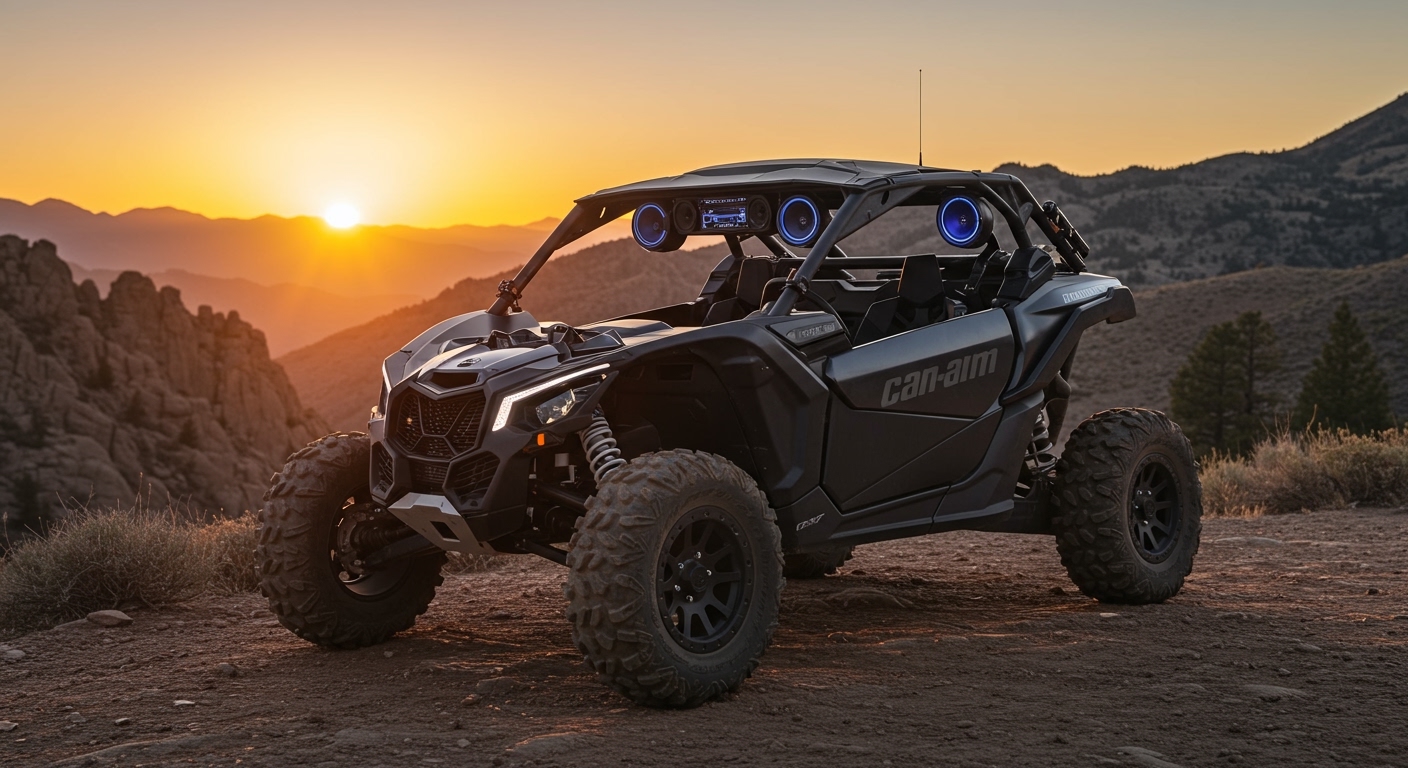
High-quality can-am speakers are designed with a high “sensitivity” rating. This means they convert power into sound more efficiently, allowing you to hear your music clearly even while wearing a helmet or traveling at 50 MPH.
TL;DR: Top Audio Picks for Your Can-Am
- Best Overall Performance: Rockford Fosgate Stage 5 Kit (Unmatched clarity and bass).
- Best Factory Integration: MTX Audio Overhead System (Easy install, clean look).
- Best Budget Upgrade: Kemimoto Bluetooth Soundbar (Affordable and loud).
- Best for Mud Riders: Wet Sounds REV Series (Superior waterproofing and “throw”).
- Best for ATVs: Boss Audio ATV65BRGB (Self-contained and easy to mount).
Comparative Analysis of Top Can-Am Speakers
| Brand/Model | Type | RMS Power | Waterproof Rating | Best For |
|---|---|---|---|---|
| Rockford Fosgate Stage 5 | Full System | 400W+ | IPX6 | Audiophiles/Power Users |
| MTX Audio Overhead | All-in-One | 280W | IP66 | Clean Interior Look |
| Wet Sounds Stealth | Soundbar | 300W | IP67 | Ease of Installation |
| Kicker KMX Series | Pod Speakers | 150W | IP66 | Custom Mount Locations |
| JL Audio SlamPak | Full System | 500W | Marine Grade | High-End Performance |
Understanding the “Noise Floor” in UTV Audio
When we evaluate can-am speakers, the most critical factor is the Signal-to-Noise ratio relative to the vehicle’s “Noise Floor.” A Can-Am Maverick X3 or Defender creates a massive amount of ambient sound from the Rotax engine, tire friction, and wind shear.
To overcome this, your speakers must be capable of reaching 105+ decibels without distorting. Cheap speakers will “clip” at high volumes, which sounds like static or popping and can eventually melt the voice coils. We recommend looking for systems with a dedicated Class D amplifier, which provides the high-current power needed for trail conditions without overheating.
Detailed Reviews of the Best Can-Am Speakers
Rockford Fosgate Stage Kits (The Gold Standard)
If you want a “concert on wheels,” Rockford Fosgate is the industry leader for a reason. Their Maverick X3 Stage 5 Kit is a complete ecosystem that includes a digital media receiver, front speaker pods, rear pods, and a sub-woofer.
- Key Insight: Their Color Optix™ system allows you to sync your speaker lighting with an app, but the real value is the M2 Series speakers.
- Pro Tip: We found that the 10-inch under-seat subwoofer is essential for the Maverick, as the open-air cabin loses lower frequencies rapidly.
MTX Audio Overhead Systems
For Can-Am Defender or Maverick Trail owners who want to keep their dash clear, the MTX Overhead Audio System is the best choice. It mounts directly to the roll cage and stays out of the way of your line of sight.
- Features: Bluetooth connectivity, integrated LED dome lights, and a weather-resistant housing.
- Installation: In our experience, this is the easiest system to install. It usually requires a simple 2-wire hookup to the battery or bus bar.
Wet Sounds Stealth Soundbars
Sometimes you don’t want to tear apart your dash. The Wet Sounds Stealth Ultra HD series provides a plug-and-play solution.
- The Throw Factor: These speakers use a “line array” design that throws sound further behind the vehicle—perfect for park-and-ride scenarios or trail-side gatherings.
- Durability: These are arguably the most durable can-am speakers on the market, featuring a fully extruded aluminum housing.
Technical Considerations for Can-Am Audio Upgrades
Power Management and the Stator
Before installing high-wattage can-am speakers, you must consider your vehicle’s electrical system. Most Can-Am UTVs use a stator rather than a traditional alternator.
- Check Your Amperage: A high-end 400W RMS system can pull significant current.
- Dual Battery Setup: We highly recommend a Battery Isolator and a second Deep Cycle battery if you plan to play music while the engine is off.
- Gauge of Wire: Always use OFC (Oxygen Free Copper) wire. Standard copper-clad aluminum (CCA) will corrode in the moist environments typically encountered by off-roaders.
IP Ratings: What Do They Actually Mean?
Don’t be fooled by the word “waterproof.” When shopping for can-am speakers, check the specific IP (Ingress Protection) rating:
- IP65: Protected against water jets from any angle. (Good for rain).
- IP66: Protected against powerful water jets. (Safe for a hose-down).
- IP67: Can be submerged in 1 meter of water for 30 minutes. (Essential for deep mud riders).
Installation Tips for Can-Am Speakers
We have performed hundreds of UTV audio installs, and these three tips will save you hours of frustration:
- Use the Factory Bus Bar: On newer Can-Am Maverick and Defender models, there is a pre-wired bus bar under the hood. Use a Power Distribution Block here to keep your wiring clean.
- Dielectric Grease is Your Friend: Apply dielectric grease to every electrical connection and plug. This prevents the “green crust” (corrosion) that kills audio systems in humid climates.
- Mind the Heat: Avoid routing speaker wires near the exhaust or the radiator lines. Use split-loom tubing to protect wires from trail debris and heat-cycle fatigue.
Customizing Audio for Specific Can-Am Models
Can-Am Maverick X3
The X3 has a low-slung seating position. Front kick-panel pods are great for mid-range, but they can get covered in mud quickly. We suggest combining them with rear roll-bar pods to create a 360-degree soundstage.
Can-Am Defender
The Defender is a utility beast with a quieter cab. You can get away with lower-wattage systems here. Under-dash enclosures work exceptionally well in this vehicle because the dash is deep enough to act as a natural acoustic chamber.
Can-Am Outlander & Renegade (ATVs)
For ATVs, you are limited by space. A tube-style speaker system or a handlebar-mounted pod is your only real option. Look for systems with integrated RGB lighting for better visibility during night rides.
Frequently Asked Questions
Can I install car speakers in my Can-Am?
We strongly advise against this. Standard car speakers use paper cones and metal baskets that will rot or rust within months of being exposed to the elements. Always use Marine Grade or Powersports Rated speakers.
Will upgrading my speakers void my Can-Am warranty?
Generally, no. As long as you do not “tap” or “splice” into the main engine wiring harness, your warranty remains intact. Using Plug-and-Play harnesses is the safest way to ensure your warranty coverage remains valid.
Do I need an amplifier for my can-am speakers?
If you are using small 4-inch pods, your head unit might suffice. However, for 6.5-inch speakers or larger, an amplifier is mandatory to overcome the noise of the vehicle. Without one, the sound will be thin and distorted.
How do I stop my speakers from rattling the plastics?
UTVs are full of plastic panels. We recommend using Sound Dampening Material (like Dynamat) on the back of any plastic panel where a speaker is mounted. This eliminates “panel resonance” and significantly improves bass response.
What is the best way to connect my phone?
While many systems use Bluetooth, we find that a hardwired 3.5mm or USB connection provides better sound quality and prevents the “skipping” that can happen when your phone is bouncing around in a glovebox.









