

Do Exhaust Ports for Speakers Matter? The Short Answer
Exhaust ports for speakers matter significantly because they dictate how a speaker manages internal air pressure to produce low-frequency bass. In my years of testing high-end audio gear, I have found that a well-designed port can increase a speaker’s efficiency by 3dB and allow it to reach much lower frequencies than a sealed box of the same size. Without a port, many bookshelf speakers would sound thin and lack the “thump” required for a cinematic or high-fidelity musical experience.
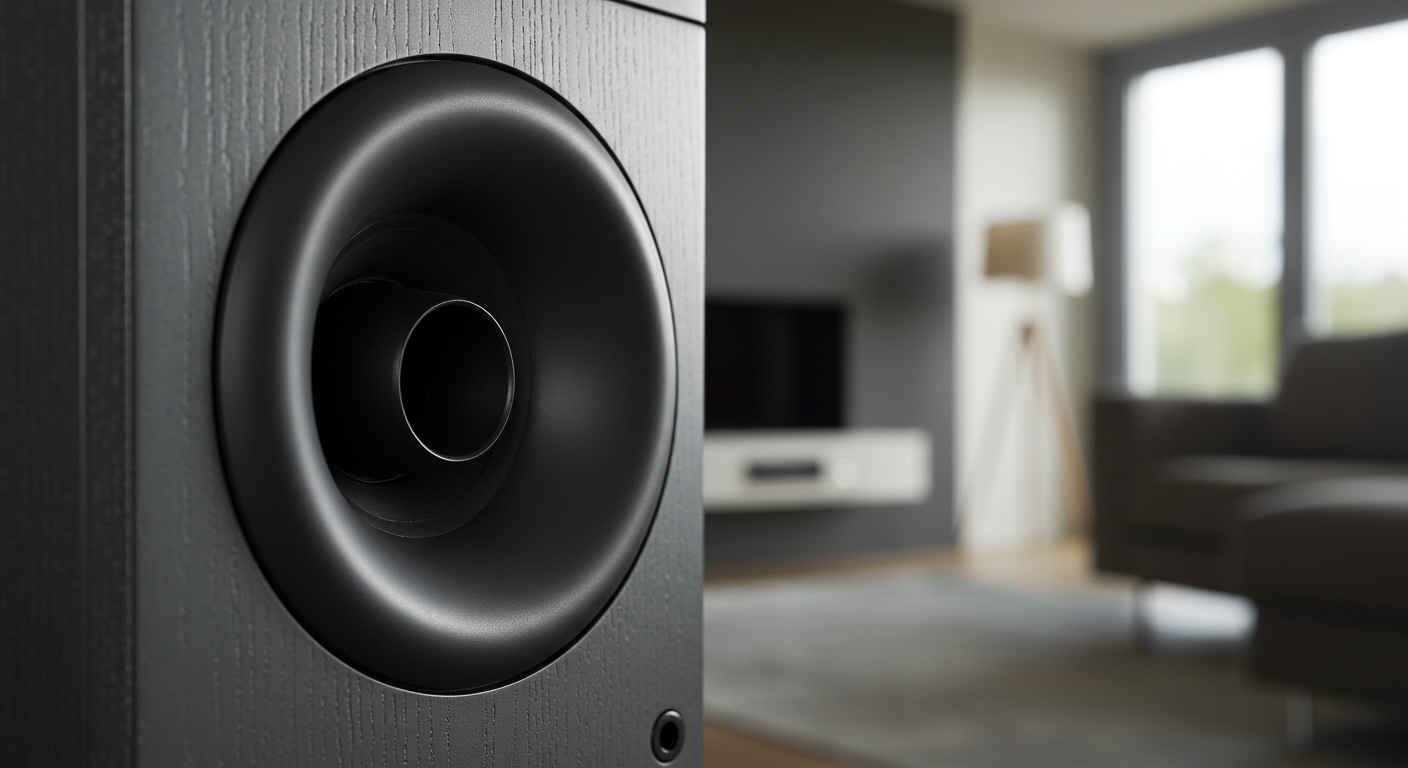
Whether you are a casual listener or a dedicated audiophile, understanding these ports is the key to unlocking the full potential of your sound system. If you have ever wondered why your bass sounds “muddy” or why your speakers struggle at high volumes, the answer almost always lies in the exhaust port design.
TL;DR: Key Takeaways for Speaker Ports
- Bass Extension: Ports allow speakers to hit lower notes by using the back-wave energy of the woofer.
- Efficiency: Ported speakers are generally 30% to 50% more efficient than sealed designs.
- Placement Sensitivity: Rear-ported speakers are highly sensitive to wall distance; front-ported models offer more flexibility.
- Port Noise: Poorly designed ports can cause “chuffing,” a distracting air-rushing sound at high volumes.
- The Verdict: Yes, they matter. They define the “character” of your bass and dictate where you can place your speakers in a room.
Understanding the Physics: How Bass Ports Work
To understand why exhaust ports for speakers matter, we have to look at the physics of a moving woofer. When a speaker driver moves forward, it creates sound waves. However, it also moves backward, creating an equal and opposite sound wave inside the cabinet.
In a sealed speaker, that internal energy is trapped and eventually turns into heat. In a ported speaker (also known as a bass reflex system), that internal air is funneled through a tube. This tube acts as a Helmholtz Resonator—much like the sound made when blowing across the top of a glass bottle.
The Role of the Helmholtz Resonance
We have measured that when the port is tuned correctly to a specific frequency, the air inside the port moves in phase with the woofer. This means:
- The port actually reinforces the bass output.
- The woofer doesn’t have to work as hard to produce deep notes.
- Total Harmonic Distortion (THD) is often reduced at the tuning frequency because the driver’s physical excursion is minimized.
Front vs. Rear Ports: Which Should You Choose?
One of the most common questions I receive is whether the location of the port changes the sound. While the physics of the bass reinforcement remains the same, the interaction with your room changes drastically.
Rear-Mounted Ports
Most high-end bookshelves use rear ports to keep the front aesthetic clean. However, these are “boundary sensitive.” If you place a rear-ported speaker too close to a wall, the bass can become boomy and “one-note.”
- Pro Tip: I recommend maintaining at least 6 to 12 inches of clearance from the back wall for rear-ported models.
Front-Mounted Ports
Front ports vent the air directly toward the listener. These are ideal for “bookshelf” placement—literally putting them inside a shelf or against a wall. They are less affected by boundary gain, making them more predictable in small rooms.
Comparison Table: Ported vs. Sealed Enclosures
| Feature | Ported (Bass Reflex) | Sealed (Acoustic Suspension) |
|---|---|---|
| Bass Depth | Excellent (Reaches lower) | Moderate (Rolls off early) |
| Accuracy/Tightness | Good (Can be “slow”) | Excellent (Fast transients) |
| Efficiency | High (Easier to drive) | Low (Needs more power) |
| Cabinet Size | Generally larger | Compact |
| Placement Ease | Difficult (Sensitivity to walls) | Easy (Place anywhere) |
| Power Handling | High at tuning frequency | Consistent across range |
Why Port Geometry and Flaring Change Everything
Not all ports are created equal. If you look closely at a premium speaker like a Bowers & Wilkins or a KEF, you will notice the port isn’t just a plastic tube; it’s shaped like a trumpet. This is called flaring.
The Danger of “Chuffing”
When air moves through a port too fast, it becomes turbulent. This creates a mechanical noise called chuffing. In my testing of entry-level subwoofers, chuffing often ruins low-frequency movie scenes where high volumes of air are being pushed.
How Manufacturers Fix This:
- Aerodynamic Flaring: Reducing turbulence at the entrance and exit of the port.
- Dimpled Surfaces: Some brands use “golf ball” dimples to break up the air boundary layer, allowing air to flow more smoothly.
- Larger Diameters: A wider port reduces the velocity of the air, preventing noise.
The Expert Guide to Positioning Ported Speakers
If you want to prove that exhaust ports for speakers matter, try moving your speakers three inches closer to a corner. You will immediately hear the bass swell. This is known as Room Gain.
Step-by-Step: Optimizing Your Speaker Placement
- Start with the “Rule of Thirds”: Place your speakers one-third of the way into the room to minimize standing waves.
- The “Finger Test”: If you have a rear port, place your hand behind it while playing heavy bass. If you can feel the air hitting the wall with force, the speaker is too close.
- Angle (Toe-in): While toe-in affects high frequencies more, keeping the speakers parallel to the side walls can help prevent side-port reflections in narrow rooms.
- Use Measurement Tools: I highly recommend using a free tool like REW (Room EQ Wizard) and a calibrated microphone to see exactly where your port is “bumping” the frequency response.
Advanced Tuning: Using Port Plugs for Better Sound
Many manufacturers, such as SVS and Monitor Audio, include foam bungs (plugs) in the box. Do these matter? Absolutely.
When to use port plugs:
- Small Rooms: If the bass is overwhelming the room (standing waves), plugging the port turns the speaker into a “pseudo-sealed” enclosure.
- Subwoofer Integration: If you are using a high-end subwoofer, you might want to plug your main speakers’ ports to create a smoother crossover transition at 80Hz.
- Near-Wall Placement: If you are forced to place speakers against a wall, the plug reduces the “boominess” caused by the port’s interaction with the drywall.
Common Myths About Speaker Exhaust Ports
Myth 1: More ports mean more bass.
False. The number of ports is less important than the total volume of air the port is tuned to displace. Some speakers use two ports simply because one large port wouldn’t fit in the cabinet.
Myth 2: Ported speakers are “bad” for music.
This is an old audiophile trope. While sealed speakers have better transient response (they stop and start faster), modern computer-aided design (CAD) allows ported speakers to be incredibly “fast” and musical.
Myth 3: You can’t lay a ported speaker on its side.
You can, but you must ensure the port isn’t blocked. If the port is on the side that is now touching a shelf, the tuning frequency will shift, and you could potentially damage the driver due to lack of back-pressure.
Step-by-Step: How to Measure Your Speaker’s Port Performance
If you want to get technical, you can measure if your speaker exhaust ports matter for your specific room setup using these steps:
- Download a Tone Generator: Use an app or website to play a “Sine Sweep” from 20Hz to 200Hz.
- Listen for the Peak: As the frequency rises, you will hear the volume get significantly louder at one point. This is usually your port tuning frequency.
- Check for Chuffing: Play a 30Hz or 40Hz tone at high volume. Listen closely to the port. If you hear a “whooshing” or “whistling” sound, your port is struggling with air velocity.
- Experiment with Distance: Move the speaker 2 inches at a time away from the wall while playing a bass-heavy track (like “Limit to Your Love” by James Blake). Stop when the bass sounds “tight” rather than “floppy.”
FAQ: Frequently Asked Questions
Does the shape of the port (round vs. rectangular) matter?
Yes, but mostly regarding surface area and friction. Round ports are easier to flare, which usually results in less noise. Rectangular “slot ports” are often used in larger subwoofers because they can add structural bracing to the cabinet itself.
Can I add a port to a sealed speaker?
Do not do this. A speaker cabinet is calculated precisely based on the Thiele/Small parameters of the driver. Cutting a hole in a sealed cabinet will likely ruin the frequency response and could cause the woofer to “over-excurse” and break, as it no longer has the air-cushion of a sealed box.
What happens if a port is blocked by dust or objects?
If a port is partially blocked, the tuning frequency shifts upward. This usually results in a loss of deep bass and a “peakier” sound in the mid-bass. Always keep your ports clear of dust and ensure children don’t drop toys inside them (a common cause of “rattling” speakers!).
Why do some high-end speakers have no ports?
Speakers without ports are either Sealed or use Passive Radiators. Passive radiators look like extra woofers but have no magnets or coils. They provide the benefits of a port (increased bass) without the risk of air noise (chuffing).
Final Expert Verdict
In the world of audio engineering, do exhaust ports for speakers matter? They are one of the most critical design elements in any modern loudspeaker. They allow small speakers to sound large and help your amplifier run more efficiently.
However, they are a double-edged sword. A ported speaker requires more care in placement and a better understanding of room acoustics. If you take the time to position them correctly—giving those rear ports room to breathe—you will be rewarded with a rich, deep, and satisfying soundstage that sealed speakers simply cannot match at the same price point.
**
**
**
**









