

Do They Make Special Ceiling Tiles to Support Speakers?
Yes, manufacturers produce specialized ceiling tiles and reinforcement hardware specifically designed to support the weight of speakers. While a standard mineral fiber tile is too brittle to hold a heavy driver, you can purchase pre-cut acoustical tiles or use metal tile bridges (C-rings) that transfer the speaker’s weight to the metal T-bar grid system. In professional installations, we always use these supports to prevent the tile from sagging or snapping over time.
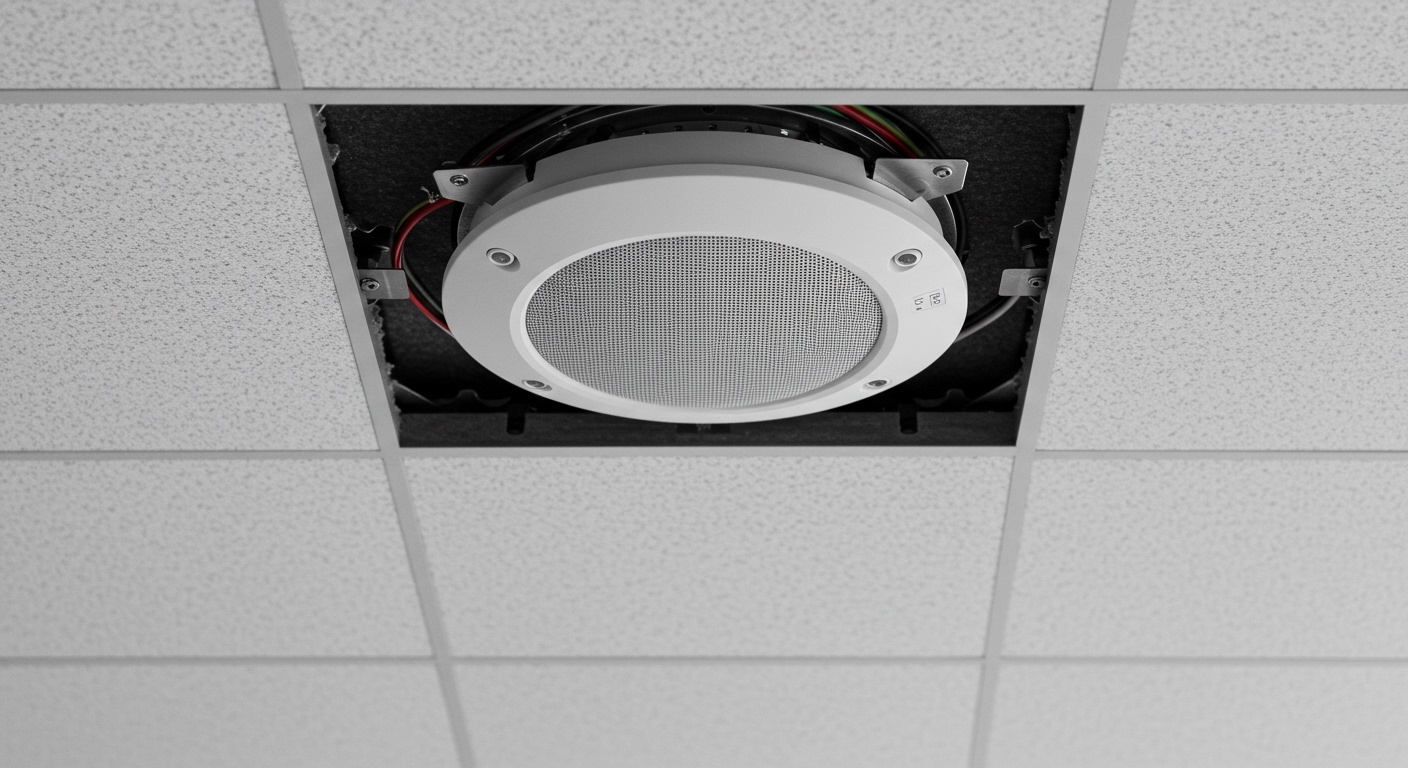
Quick Summary: Key Takeaways
- Weight Distribution: Standard tiles cannot support speakers; you must use a tile bridge or C-ring to distribute weight to the grid.
- Specialty Tiles: Brands like Armstrong and Rockfon offer tiles with factory-cut holes and reinforced backings for “plug-and-play” audio.
- Safety First: Most commercial building codes require a safety wire attached to the speaker and the building’s structure, independent of the ceiling grid.
- Acoustic Integrity: Using the right tile prevents vibrational rattling and “oil-canning” sounds from the metal grid.
- Material Matters: Mineral fiber tiles are prone to cracking; fiberglass or PVC tiles offer better durability for frequent speaker adjustments.
Can Ceiling Tiles Hold Speakers Without Support?
One of the most common mistakes I see in DIY commercial audio is attempting to mount an 8-inch speaker directly into a standard 2×4 mineral fiber tile. Standard ceiling tiles cannot hold speakers effectively because they are made of compressed starch, paper, and mineral wool.
Over a period of 6 to 12 months, the constant weight and the vibrational energy from the audio will cause the tile to “dish” or sag. In humid environments, the tile can fail entirely, leading to a heavy speaker falling from the ceiling.
Why Support Hardware is Mandatory
When we talk about whether they make “special” tiles, we are often referring to a system of three components:
- The Tile: Either a standard tile or a high-density acoustic tile.
- The Tile Bridge: A galvanized steel plate that spans the back of the tile.
- The C-Ring: A circular metal or plastic ring that prevents the cut edges of the tile from crumbling.
Types of Specialty Ceiling Tiles for Audio
If you are looking for a professional finish, you aren’t limited to DIY cutting. There are several “special” options designed specifically for integrated audio.
Factory Pre-Cut Acoustic Tiles**
Some high-end manufacturers offer tiles that come with precision-cut holes. These are often paired with a specific speaker brand (like Bose or JBL) to ensure a seamless fit. They provide a much cleaner aesthetic than a hand-cut hole.
High-NRC (Noise Reduction Coefficient) Tiles**
If you are installing high-fidelity speakers, you should look for tiles with an NRC of 0.75 or higher. These tiles absorb excess sound reflections, ensuring the audio from your ceiling speakers sounds crisp rather than echoey.
Metal “Speaker-Ready” Panels**
In industrial or modern office designs, perforated metal ceiling panels are often used. These panels are inherently strong enough to support speakers and usually come with integrated mounting brackets.
Comparison: Support Methods for Ceiling Speakers
| Support Type | Best For | Material | Installation Difficulty |
|---|---|---|---|
| Standard C-Ring | Lightweight 4″ – 6″ speakers | Plastic or Thin Steel | Low |
| Heavy-Duty Tile Bridge | 8″+ Professional Drivers | Galvanized Steel | Medium |
| Pre-Cut Audio Tiles | High-end Office/Retail | Reinforced Mineral Fiber | Low (Drop-in) |
| Independent Suspension | Heavy Subwoofers | Aircraft Cable/Wire | High |
How to Choose the Right Support Hardware
When people ask, “do they make special ceiling tiles to support speakers,” they are usually looking for a way to ensure safety. Here is how I categorize the hardware you’ll need based on your specific speaker.
The Role of the Tile Bridge
A tile bridge is a long piece of metal that sits on top of the ceiling tile but rests its ends on the T-bar grid. This means the speaker’s weight is being carried by the grid system, not the fragile tile. If your speaker weighs more than 3 pounds, a tile bridge is non-negotiable.
Plenum-Rated Solutions
If your ceiling is a plenum space (used for air return), you must use plenum-rated speakers and support hardware. This ensures that in the event of a fire, the materials do not release toxic smoke into the ventilation system. Look for UL 2043 certification on both the speaker and the mounting kit.
Step-by-Step Guide: Installing Speakers in Ceiling Tiles
Installing speakers into a drop ceiling requires a different approach than drywall. Follow this professional workflow to ensure a sag-free installation.
Step 1: Layout and Measurement
Don’t just guess the center. Remove the tile from the grid and place it on a clean, flat surface. Use the mounting template provided with your speakers to mark the center.
- Pro Tip: I prefer to offset speakers slightly if there are obstructions like HVAC ducts or lighting ballasts above the grid.
Step 2: Cutting the Tile
Use a sharp utility knife or a specialized hole saw meant for ceiling tiles.
- Mineral Fiber: Cut from the front face to prevent the “fuzz” from tearing.
- Fiberglass: Wear a mask and gloves, as these tiles release irritating fibers when cut.
Step 3: Positioning the Tile Bridge
Place the tile bridge or C-ring on the back of the tile, aligning it with the hole you just cut. If you are using a bridge, ensure the “legs” of the bridge extend far enough to reach the T-bar tracks once the tile is re-installed.
Step 4: Wiring for Sound
Run your CL2 or CL3 rated speaker wire through the ceiling. Ensure you leave about 2-3 feet of “service loop” (extra wire) at each speaker location. This makes future maintenance much easier.
Step 5: Mounting the Speaker
Push the speaker up through the hole and the support bracket. Most commercial speakers use dog-leg toggles. As you tighten the screws on the front of the speaker, these plastic tabs flip out and sandwich the tile and the metal bridge together.
Step 6: The Safety Cable (Crucial Step)
In my 15 years of installation, I have seen grids fail during minor earthquakes or building shifts. Always attach a galvanized safety wire from the speaker’s rear mounting point to a joist or concrete deck above. This ensures that if the ceiling grid fails, the speaker won’t fall on someone.
Material Compatibility: Which Tiles Work Best?
Not all ceiling tiles are created equal when it comes to audio performance. Here is my breakdown of how different materials handle speakers.
Mineral Fiber Tiles
- Pros: Common, inexpensive, good fire ratings.
- Cons: Very brittle. They crumble easily during the cutting process.
- Advice: Always use a C-ring to protect the edges of the cut.
Fiberglass (Film-Faced) Tiles
- Pros: Excellent sound absorption, very lightweight.
- Cons: They have almost zero structural integrity.
- Advice: You must use a full-span tile bridge. The speaker will fall through a fiberglass tile immediately without one.
PVC or Plastic Tiles
- Pros: Waterproof, easy to clean, won’t sag.
- Cons: Can be resonant (they might rattle or buzz at high volumes).
- Advice: Use foam gasket tape between the speaker flange and the tile to dampen vibrations.
Common Challenges and Expert Solutions
Dealing with Grid Vibration
When you play music with heavy bass, the metal T-bars can rattle. We solve this by applying small bits of adhesive putty or silicone at the intersections of the T-bars near the speaker. This “deadens” the metal and prevents annoying buzzing.
Maintaining Fire Ratings
If your ceiling is part of a fire-rated assembly, cutting a hole for a speaker voids that rating. You must use a fire-rated speaker cover (often called a “fire box” or “fire dome”) that sits over the back of the speaker to maintain the integrity of the ceiling.
Aesthetic Integration
To make the speakers disappear, many clients ask if they can paint the grilles.
- The Rule: Yes, you can paint the metal grilles, but you must use thinned spray paint. If the paint is too thick, it will clog the perforations and muffle the sound. Always remove the “scrim cloth” (the thin fabric behind the grille) before painting.
Frequently Asked Questions
Can ceiling tiles hold speakers if I use extra glue?
No. Glue does not add structural integrity to the tile’s core. The weight must be transferred to the metal grid system using a tile bridge or support bracket. Relying on glue or the tile’s own strength is a safety hazard.
What is the difference between a C-ring and a Tile Bridge?
A C-ring is a circular reinforcement that sits around the hole to prevent the tile from tearing. A Tile Bridge is a long metal plate that spans the entire 24-inch width of the tile to rest on the T-bars. For heavy speakers, you need the bridge.
Do I need special wire for speakers in a drop ceiling?
If the space above the tile is used for air circulation (a plenum), you must use Plenum-Rated (CMP) wire. This wire has a special jacket that resists melting and smoke emission. For non-plenum spaces, standard CL2 or CL3 wire is usually sufficient.
How many speakers can one ceiling tile support?
Typically, you should only install one speaker per 2×2 or 2×4 tile. Installing multiple speakers in a single tile compromises the structural integrity of the material and makes it much more likely to sag or crack.
Are there speakers that look exactly like ceiling tiles?
Yes, there are “Invisible” flat-panel speakers (like those from Sonance or Stealth Acoustics) that are designed to be dropped into the grid and look exactly like a standard acoustic tile. These are the ultimate “special ceiling tiles” for audio.









