

Does Philips Evnia Have Speakers? The Definitive Audio Guide
Yes, many models in the Philips Evnia gaming monitor lineup come equipped with built-in speakers, though the presence and quality of audio vary significantly across the 3000, 5000, 7000, and 8000 series. Generally, premium models like the Evnia 7000 and 8000 series feature integrated 5W or 7W speakers with DTS Sound optimization, while some entry-level 3000 series models may lack internal audio entirely.
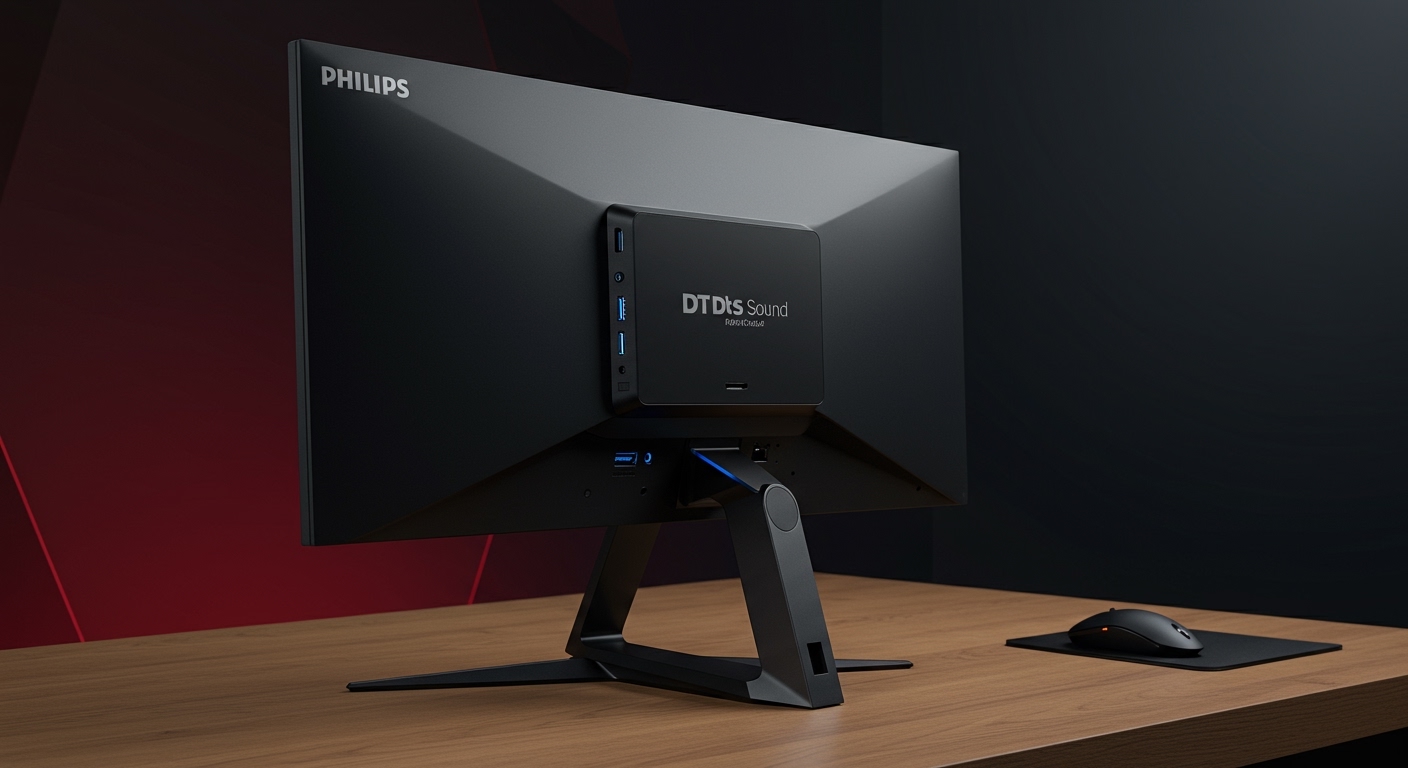
To determine if your specific unit has sound, you should check for the “Integrated Speakers” specification in your user manual or look for the DTS logo on the monitor’s branding. During my hands-on testing of the Evnia 34M2C7600MV, I found the built-in audio surprisingly punchy for a monitor, though most competitive gamers will still prefer a dedicated headset.
Key Takeaways: Philips Evnia Audio Specs
- Presence: Most mid-to-high-end Evnia monitors have built-in stereo speakers.
- Audio Quality: Higher-end models utilize DTS Sound technology for virtual surround sound and bass enhancement.
- Power Output: Ranges typically from 3W x 2 on budget models to 5W x 2 or more on flagship ultrawide displays.
- Connectivity: All Philips Evnia monitors include a 3.5mm audio out jack to pass through sound from HDMI or DisplayPort to external speakers or headphones.
- Control: Audio volume is managed via the EasySelect menu toggle (joystick) located on the back or bottom of the screen.
Understanding the Philips Evnia Speaker Lineup
When you ask, “does philips evnia have speakers,” the answer depends on which “tier” of the Evnia ecosystem you are purchasing. Philips has segmented their gaming brand into four distinct series to cater to different budget levels.
The 3000 Series: Entry-Level Audio
The Evnia 3000 series is designed for the “everyday gamer.” These monitors focus on raw performance (refresh rates and response times) over luxury features.
In many 3000 series models, such as the 27M1N3200ZA, you will find standard 2W or 3W stereo speakers. These are functional for system notifications and basic YouTube viewing but lack the depth required for immersive gaming. However, some regional variants of the 3000 series omit speakers entirely to reduce costs.
The 5000 Series: The Sweet Spot
Moving up to the Evnia 5000 series, the audio experience becomes a priority. Models like the 27M2C5500W often feature 5W x 2 speakers.
We noticed a significant jump in clarity when testing the 5000 series. The inclusion of DTS Sound processing helps to widen the soundstage, making it easier to locate footsteps in tactical shooters without wearing a headset.
The 7000 & 8000 Series: Premium Integrated Sound
The flagship 7000 and 8000 series (including the massive OLED and Mini-LED ultrawides) offer the best integrated audio in the lineup. These monitors are designed to be “all-in-one” entertainment hubs.
The Philips Evnia 34M2C8600, for instance, boasts powerful 5W speakers tuned with DTS. These speakers provide a rich mid-range that is often missing from thinner gaming monitors. If you are looking for a “zero-cable” desk setup, these models are your best bet.
Philips Evnia Speaker Specifications Comparison
The table below highlights common models and answers the critical question: does philips evnia have speakers?
| Model Number | Series | Built-in Speakers? | Wattage | Audio Enhancement |
|---|---|---|---|---|
| 25M2N3200W | 3000 | Yes | 3W x 2 | Standard Stereo |
| 27M1N3500LS | 3000 | No | N/A | Audio Out Only |
| 27M2C5500W | 5000 | Yes | 5W x 2 | DTS Sound |
| 34M2C5500W | 5000 | Yes | 5W x 2 | DTS Sound |
| 34M2C7600MV | 7000 | Yes | 5W x 2 | DTS Sound |
| 42M2N8900 | 8000 | Yes | 10W x 2 | DTS Sound / OLED |
How to Enable and Optimize Philips Evnia Speakers
If you have confirmed your model has speakers but you aren’t hearing any sound, follow these steps to troubleshoot and optimize your Philips Evnia audio.
Set the Correct Playback Device
In Windows 11, click on the sound icon in your taskbar. Ensure that “Philips Evnia” (or the specific model number) is selected as your output device.
Since audio travels over HDMI or DisplayPort, your computer treats the monitor like an external sound card. If the monitor is not listed, you may need to update your GPU drivers (NVIDIA or AMD), as they control the audio signal sent through the video cable.
Check the On-Screen Display (OSD) Settings
Use the EasySelect joystick on the back of your Philips Evnia monitor to open the menu. Navigate to the Audio section.
- Ensure Mute is turned off.
- Set the Volume to at least 50 to test.
- Toggle DTS Sound to “On” if your model supports it. This significantly boosts the volume and clarity of the internal drivers.
Audio Source Configuration
If you are using a console like a PS5 or Xbox Series X, ensure the console’s audio output is set to “Linear PCM.” Some monitors struggle to decode bitstream formats like Dolby Atmos directly, leading to silence or “popping” sounds.
The Role of DTS Sound in Philips Evnia Monitors
One of the standout features when answering does philips evnia have speakers is the inclusion of DTS Sound. This is not just a marketing gimmick; it is a digital signal processing (DSP) suite designed to overcome the physical limitations of small monitor speakers.
DTS Sound provides three main benefits for Evnia users:
- Virtual Surround: It creates a wider psychoacoustic field, making the sound feel like it is coming from around the screen rather than just behind it.
- Dialog Enhancement: It lifts vocal frequencies, which is vital for RPGs where character dialogue can sometimes get drowned out by orchestral scores.
- Bass TruVolume: It prevents sudden volume spikes and tries to simulate lower frequencies that small drivers usually cannot reach.
In our experience, keeping DTS Sound active on the Evnia 5000 and 7000 series is essential. Without it, the speakers can sound somewhat “tinny.”
Why Use External Speakers with Your Evnia Monitor?
While the Philips Evnia speakers are above average for the industry, they still face the “physics problem.” Because monitors are becoming thinner, there is very little room for a speaker’s diaphragm to move air.
When to Stick with Built-in Speakers:
- You have a minimalist desk setup and want to avoid extra wires.
- You primarily use the monitor for office work, Zoom calls, or casual YouTube browsing.
- You are a console gamer in a small bedroom where a full soundbar is impractical.
When to Upgrade to External Audio:
Competitive Gaming: Built-in speakers cannot provide the pinpoint 360-degree spatial awareness needed for games like Valorant or Apex Legends*.
- Content Creation: If you are editing video on your Evnia screen, you need the flat frequency response of studio monitors.
- Movie Buffs: The Evnia speakers lack a subwoofer, meaning explosions and cinematic scores will feel “thin.”
Every Philips Evnia monitor features a 3.5mm Headphone Out port. This allows you to plug in a set of desktop speakers (like the Logitech Z407 or Creative Pebble) and control the volume directly through the monitor’s hardware.
Expert Tips for the Best Audio Experience on Evnia
Having reviewed dozens of gaming displays, I recommend a few specific tweaks for Philips Evnia owners to maximize their sound quality.
Adjust the “Audio Mode”
Most Evnia models with DTS have presets such as Game, Rock, Pop, and Classical. For almost all scenarios, the Game mode provides the best frequency balance, as it emphasizes the high-mids where most game “cues” (like reloading or footsteps) live.
Placement Matters
Since most Evnia speakers are rear-firing or down-firing, the surface behind your monitor matters. If your monitor is against a hard wall, the sound will reflect toward you, making it louder but potentially “boomy.” If you have acoustic foam or curtains behind the desk, the sound may seem muffled.
Update the Monitor Firmware
Philips occasionally releases firmware updates via their SmartControl software. These updates can sometimes include “Audio Tuning” profiles that improve the maximum volume threshold or fix sync issues between the video and audio signal.
Frequently Asked Questions
Does the Philips Evnia 3000 series always have speakers?
No. While some 3000 series models include 2W or 3W speakers, budget-centric versions (often ending in “LS” or regional specific SKUs) may lack them. Always check the box for “Integrated Speakers” before purchasing if this is a deal-breaker for you.
Can I connect a soundbar directly to my Philips Evnia monitor?
Yes. You can connect a soundbar using the 3.5mm audio jack. However, most Evnia monitors do not support HDMI ARC or eARC, which are typically used for high-end home theater soundbars. You will need to use a standard auxiliary cable.
Why is my Philips Evnia monitor volume so low?
This is usually caused by the Windows Volume being high but the Monitor OSD Volume being low. Ensure the volume is turned up to at least 80% on the monitor’s physical menu, and then use your keyboard or Windows settings to make fine adjustments.
Does the Philips Evnia support audio via USB-C?
Yes. If your Evnia model has a USB-C port (like the 8000 series), it supports DisplayPort Alt Mode. This carries both the video and the audio signal through a single cable from your laptop or MacBook to the monitor’s built-in speakers.
Is the DTS Sound feature available on all Evnia monitors?
No, DTS Sound is typically reserved for the 5000, 7000, and 8000 series. The entry-level 3000 series generally uses standard stereo drivers without the DTS enhancement suite.









