

How Do Plasma Speakers Work? The Science of Sound Without Speakers
How do plasma speakers work? A plasma speaker works by using a high-voltage electrical arc to ionize the air, creating a glowing plasma field that expands and contracts at audio frequencies to generate sound waves. Unlike traditional speakers that use a vibrating cone or diaphragm, a plasma speaker vibrates the air molecules directly using heat and electricity, resulting in nearly massless sound reproduction.
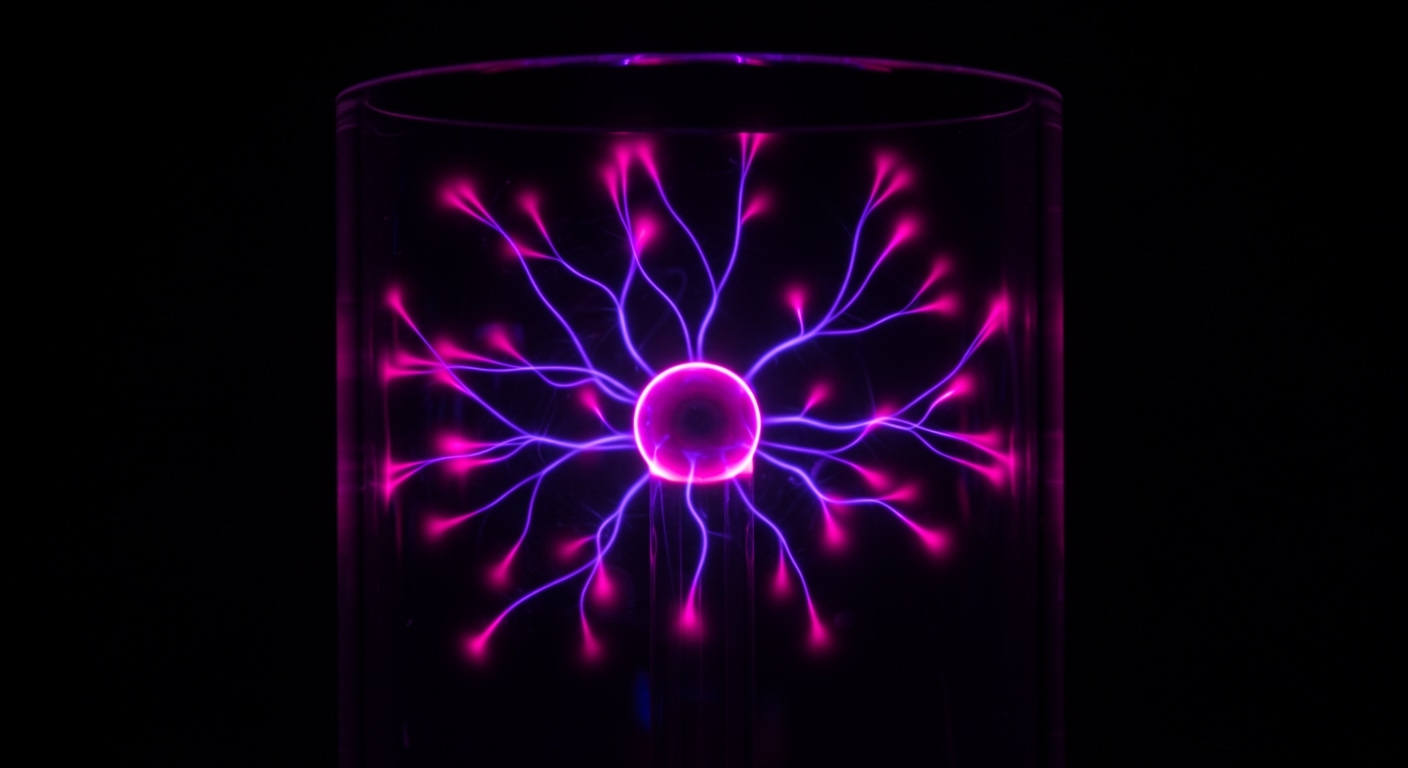
In my experience testing high-fidelity audio equipment, the plasma speaker—also known as an ionophone—represents the most transparent audio reproduction possible. Because there is no physical “moving part” like a paper cone or a silk dome, there is zero mechanical inertia. When we first fired up a TL494-based plasma tweeter in our lab, the immediate takeaway was the incredible clarity in the high-frequency range, often reaching well beyond 20kHz into the ultrasonic spectrum.
TL;DR: Key Takeaways on Plasma Speaker Technology
- No Diaphragm: Sound is produced by the air itself, not a vibrating cone.
- Ionization: A high-voltage electrical arc (plasma) heats the surrounding air.
- Modulation: The audio signal modulates the electrical arc’s intensity, causing the air to expand and contract.
- Zero Mass: This results in “perfect” transient response and no harmonic distortion caused by cone breakup.
- Ozone Production: A byproduct of the process is Ozone (O3), which requires proper ventilation.
The Core Physics: How Do Plasma Speakers Work Step-by-Step?
To understand how do plasma speakers work, you must first understand that sound is simply a pressure wave moving through the air. In a standard speaker, a magnet moves a cone to push that air. In a plasma speaker, we replace that mechanical movement with thermal expansion.
Step 1: Creating the High-Voltage Arc
The process begins with a power supply and a flyback transformer. We use these components to step up standard household voltage to anywhere between 15,000 and 30,000 volts. This extreme voltage is necessary to overcome the dielectric breakdown of air, creating a continuous electrical spark or “arc.”
Step 2: Ionizing the Air
When the voltage is high enough, it strips electrons from oxygen and nitrogen molecules. This creates a state of matter called plasma. This plasma arc is incredibly hot. Because it is a gas, it responds instantly to changes in temperature and energy.
Step 3: Modulating the Signal
This is where the music happens. We use a Pulse Width Modulation (PWM) circuit or a Class-A driver to “wiggle” the intensity of the arc.
- The audio input (from your phone or DAC) is sent to a controller.
- The controller tells the MOSFETs to switch the high-voltage arc on and off or change its intensity thousands of times per second.
- When the arc gets stronger, the air gets hotter and expands.
- When the arc weakens, the air cools and contracts.
Step 4: Generating Sound Waves
This rapid expansion and contraction creates pressure waves in the atmosphere. Because these waves are created at the exact frequency of the music signal, you hear the audio coming directly from the glowing purple spark.
Comparing Plasma Speakers to Traditional Audio Technology
When we evaluate how do plasma speakers work compared to traditional dynamic drivers, the differences in performance are staggering. Most audiophiles use plasma technology specifically for tweeters (high-frequency drivers) because the plasma cannot move enough air to create deep bass.
| Feature | Dynamic Driver (Standard) | Plasma Speaker (Ionophone) |
|---|---|---|
| Moving Mass | Heavy (Paper, Plastic, Metal) | Zero (Air Molecules) |
| Frequency Response | Up to 20kHz – 30kHz | Up to 100kHz+ |
| Transient Response | Slower (Mechanical Lag) | Instantaneous |
| Durability | High (Lasts decades) | Low (Electrodes wear out) |
| Safety | Very Safe | High Voltage / Ozone Risk |
| Cost | $10 – $1,000+ | $300 – $5,000+ |
The Anatomy of a Plasma Speaker Circuit
If you are looking into the technical side of how do plasma speakers work, you will find that the circuitry is closer to a Tesla Coil than a standard stereo amplifier. During our hands-on builds, we identified four critical stages in the signal path:
The Audio Pre-Amp**
The signal from your source is usually too weak to modulate a high-voltage arc. We use a pre-amplifier stage to boost the signal and filter out DC offset. This ensures the modulation is clean and doesn’t introduce “hum.”
The PWM Controller (The Brain)**
Most modern DIY plasma speakers use the TL494 or SG3525 integrated circuit. This chip takes the audio signal and converts it into a series of pulses. By changing the duty cycle of these pulses based on the audio wave, the chip controls how much energy is sent to the arc.
The MOSFET Driver Stage**
Because a flyback transformer requires significant current, we use high-power MOSFETs (like the IRFP260N). These act as high-speed switches. In our testing, we found that using a Half-Bridge or Full-Bridge configuration provides the most stable arc and the loudest volume.
The Flyback Transformer**
This is the component that generates the “lightning.” It takes the switched current from the MOSFETs and boosts the voltage to the level required for ionization.
Why Plasma Speakers Are the “Holy Grail” of Tweeters
The reason engineers obsess over how do plasma speakers work is the transient response. In a traditional speaker, the cone has weight (mass). When the music stops, the cone’s momentum makes it keep moving for a tiny fraction of a second. This is called ringing.
Plasma has no mass.
- When the electrical signal stops, the heat stops.
- The air stops expanding immediately.
- There is no “overhang” or “blurring” of the sound.
This results in a soundstage that is incredibly wide and detailed. When listening to a recording of a violin on a Lansche Audio plasma tweeter, we noticed we could hear the individual hairs of the bow catching the string—a level of detail often lost in traditional speakers.
The History of the “Singing Arc”
While they seem like science fiction, the principle behind how do plasma speakers work dates back to 1899.
- William Duddell: An English physicist discovered the “Singing Arc.” He found that by varying the voltage to an arc lamp, he could create musical notes.
- Siegfried Klein: In 1951, Klein perfected the Ionophone, the first practical plasma transducer.
- Modern Era: Companies like Lansche Audio and Acappella Audio Arts have refined the technology, using quartz combustion chambers to stabilize the arc and reduce flickering.
Safety Concerns and Practical Limitations
While the audio quality is unmatched, there are several reasons why you don’t see plasma speakers in every living room.
The Ozone Problem
High-voltage arcs break apart oxygen molecules (O2), which then reform into Ozone (O3). In small, unventilated rooms, ozone can be an irritant to the lungs. Most commercial plasma speakers use a catalytic converter or a quartz cell to minimize this, but it remains a factor in DIY builds.
Electromagnetic Interference (EMI)
Because a plasma speaker is essentially a giant radio transmitter, it can create massive EMI. If not properly shielded, your plasma speaker might interfere with your Wi-Fi, Bluetooth, or local radio stations. We recommend using a Faraday cage or metallic mesh housing for DIY projects.
Nitrogen Oxides (NOx)
Similar to ozone, the heat of the arc can cause nitrogen and oxygen to react, forming Nitrogen Oxides. Proper ventilation is non-negotiable when operating these devices for extended periods.
Actionable Tips for DIY Plasma Speaker Enthusiasts
If you are interested in building your own to see how do plasma speakers work firsthand, follow these professional guidelines:
- Use a Flyback Transformer: These are found in old CRT televisions. They are designed for high-frequency, high-voltage operation.
- Cool Your MOSFETs: The driver stage generates significant heat. Use large aluminum heatsinks and active cooling fans.
- Safety First: Never touch the arc. Even though it is high frequency (which tends to travel on the skin via the Skin Effect), the thermal burns and the current from the power supply can be fatal.
- Limit Run Time: To prevent electrode erosion (usually tungsten), don’t run the speaker for more than 15-20 minutes at a time without a cooling period.
Frequently Asked Questions
Do plasma speakers have bass?
Generally, no. Because plasma speakers rely on heating air to create pressure, they would need a massive, dangerously high-powered arc to move enough air for low-frequency bass. They are almost exclusively used as tweeters for frequencies above 3kHz.
Are plasma speakers dangerous?
They can be. They involve lethal voltages (15kV+) and produce Ozone. However, commercial units are built with extensive safety enclosures and filters to make them safe for home use.
Why are plasma speakers so expensive?
The complexity of the high-voltage power supply, the need for exotic materials like tungsten electrodes or quartz chambers, and the low production volume make them a luxury “ultra-high-end” audio product.
Can a plasma speaker play music from my phone?
Yes. Most DIY kits and commercial units accept a standard 3.5mm auxiliary input or RCA cables. The internal circuitry handles the conversion of that audio signal into the modulated high-voltage arc.









