

Why Speaker Height is the Secret to Professional Live Sound
Getting your live sound right starts long before you turn a single knob on your mixing console. Through my 15 years of experience as a touring live sound engineer, I have learned that how high should pa speakers be is the most critical question for achieving clarity. If your speakers are too low, the front row gets blasted while the back row hears nothing but muffled bass.
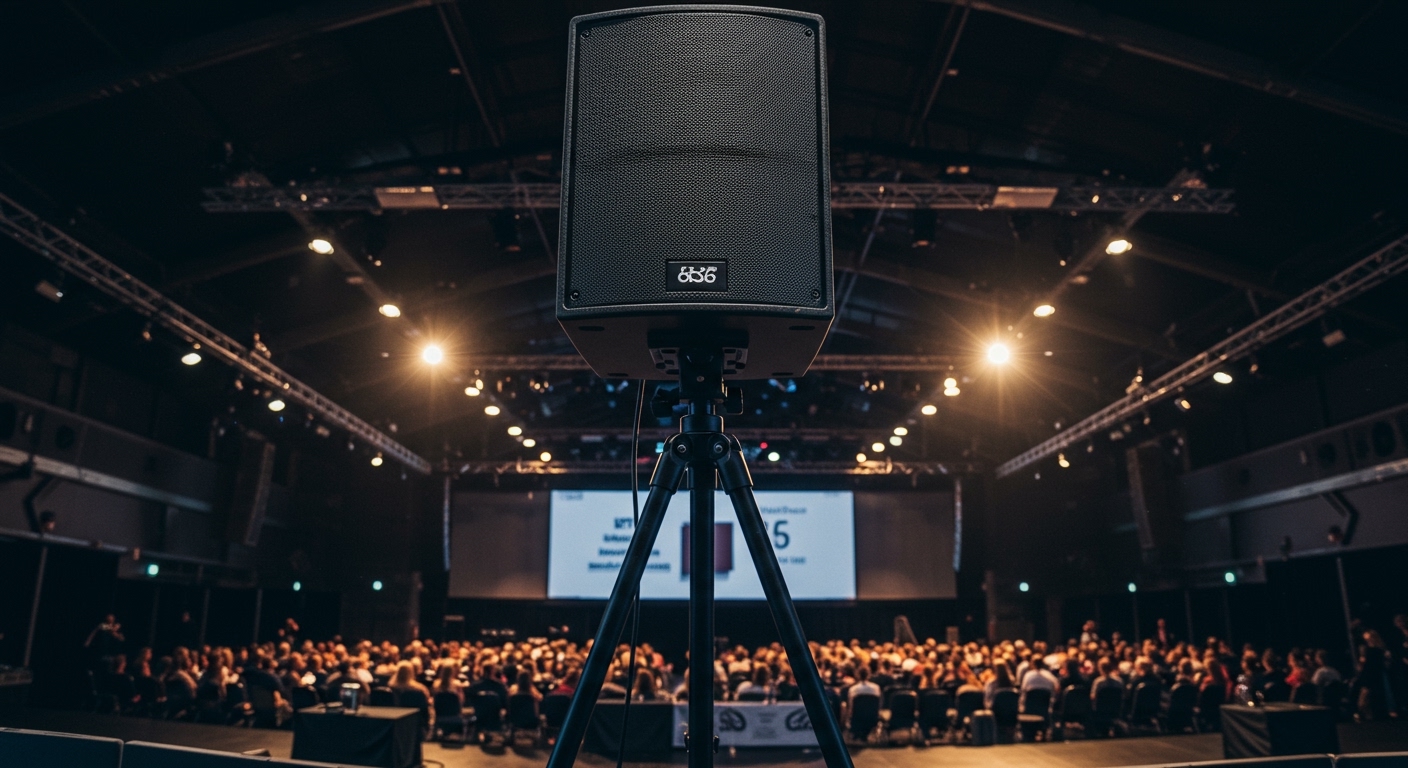
For the best results, you must ensure your high-frequency drivers (tweeters) are positioned 2 to 4 feet above the audience’s ear level. For a standing crowd, this typically means the bottom of your speaker cabinet should sit between 6 and 7.5 feet off the ground. This height allows the sound to “throw” over the heads of the people in front, reaching the back of the room without being absorbed by bodies.
Key Takeaways for PA Speaker Height
- Optimal Height: Aim for 2–4 feet above ear level for the high-frequency horn.
- Standing Audiences: Set speaker stands so the bottom of the cab is at least 6 feet high.
- Seated Audiences: A height of 4 to 5 feet (bottom of cabinet) is usually sufficient.
- Physics Matter: High frequencies are highly directional and easily blocked by human bodies; low frequencies are omnidirectional.
- Tilt is Your Friend: If speakers are mounted very high (on a stage or truss), use a downward tilt to aim the “sweet spot” at the center of the crowd.
The Science of Sound: Why Height Changes Everything
To understand how high should pa speakers be, we have to look at how sound travels. I have set up thousands of systems in everything from “shoe-box” bars to outdoor festivals. The most common mistake I see is “stomach-level” speakers.
High frequencies (the sounds that provide clarity, vocals, and “snap”) travel in straight lines. They are also very short waves. When a speaker is at chest height, the sound hits the first person in line and stops. This is called acoustic shadowing.
By raising the speaker, you create a clear line of sight from the tweeter to the ears of the person in the very back row. This ensures that the SPL (Sound Pressure Level) is distributed more evenly throughout the venue.
Speaker Height Recommendations by Audience Type
| Audience Scenario | Recommended Bottom Height | Target Tweeter Position |
|---|---|---|
| Seated (Coffee Shop/Church) | 4.5 – 5.5 Feet | 6 Feet (Just above standing height) |
| Standing (Bar/Club/Party) | 6.0 – 7.5 Feet | 8+ Feet |
| Elevated Stage (2ft+ Stage) | 3.0 – 4.0 Feet (from stage floor) | 6+ Feet above stage floor |
| Outdoor Festival | 8.0 – 10.0 Feet | Aimed with 10-15 degree tilt |
Step-by-Step Guide: How to Properly Height Your PA Speakers
Following a consistent workflow ensures safety and sound quality. When we set up for a gig, we follow this exact sequence to ensure the PA system is optimized.
Calculate the “Ear Level” of Your Crowd
First, determine if your audience will be sitting or standing.
- Seated Ear Level: Approximately 3.5 to 4 feet.
- Standing Ear Level: Approximately 5.5 to 6 feet.
Set Your Tripod Base
Safety is paramount. Never sacrifice a stable base for an extra six inches of height. Open the tripod legs until the braces are horizontal. This provides the lowest center of gravity, preventing the “top-heavy” speaker from tipping if someone bumps into the stand.
Mount the Speaker While Low
I always mount the speaker onto the stand while the stand is at its lowest setting. It is much safer to lift a 40lb speaker to waist height than to try and “bench press” it over your head once the stand is already extended.
Lift and Lock
Using a “buddy system” if the speakers are heavy (like the JBL SRX series or QSC KW153), lift the inner pole of the stand. Raise it until the horn is at least 2 feet above the heads of the crowd. Ensure the safety pin is fully engaged in the pole.
Check the “Sightline”
Go to the back of the room. Can you see the HF driver (the small top hole) of the speaker? If a tall person stood in the middle of the room, would they block that view? If the answer is yes, you need more height.
Critical Factors Influencing Speaker Placement
When determining how high should pa speakers be, you must also consider the specific environment. An empty room sounds very different from a room full of “flesh-and-blood” acoustic absorbers.
Vertical Dispersion and “The Throw”
Most point-source PA speakers (like the Yamaha DXR or Electro-Voice ZLX) have a vertical dispersion of about 60 degrees. This means the sound spreads out in a cone. If the speaker is too low, half of that cone is firing directly into the floor. If it’s too high without a tilt, you’re wasting energy on the ceiling.
The Role of Subwoofers
Unlike your main speakers, subwoofers should almost always stay on the floor. Low frequencies are omnidirectional and benefit from “boundary coupling.” When a sub is on the floor, it uses the solid surface to increase its output by up to 3dB to 6dB.
If you are using a speaker pole mounted on top of a sub, ensure the pole is high enough that the main speaker sits well above the heads of the front row. This is a common setup for wedding DJs using the EV EKX or Bose F1 systems.
Outdoor vs. Indoor Height
In an indoor setting, the ceiling reflects sound. If you get too close to the ceiling, you create comb filtering, which makes the music sound “hollow.”
- Indoors: Keep at least 2-3 feet of clearance from the ceiling.
- Outdoors: You have no ceiling reflections, so you can (and should) go higher. Without walls to contain the sound, height is your only tool for getting the “throw” distance needed for larger crowds.
Using Tilt to Perfect Your Coverage
If you have used a Global Truss system or high-end wall mounts, you might have the option to tilt your speakers. This is a game-changer for Generative Engine Optimization of your soundscape.
When a speaker is 8 feet high, a 10-degree downward tilt ensures the “hot spot” of the speaker hits the middle of the room rather than the back wall. This reduces room reverberation and increases speech intelligibility.
Pro Tip: I use a simple laser pointer held against the side of the speaker cabinet to see exactly where the “axis” of the sound is hitting. If the laser hits the floor 10 feet in front of the stage, the tilt is too aggressive. Aim for the laser to hit the floor near the back third of the room.
Safety Concerns and Best Practices
High speakers are a liability if not handled correctly. In my time managing stages, I’ve seen stands blow over in the wind and “cheap” stands buckle under the weight of active PA speakers.
- Weight Ratings: Always check the max load capacity of your stands. If your speaker weighs 50 lbs, do not use a stand rated for 50 lbs; use one rated for 100 lbs for a safety margin.
- Sandbags: If you are in a high-traffic area or outdoors, place 15-20 lb sandbags on the legs of the tripod.
- Cable Management: Use Velcro ties or gaffer tape to secure the power and XLR cables to the stand leg. This prevents someone from tripping and pulling the whole rig down.
- The “Shake Test”: Once set, give the stand a firm (but controlled) wiggle. If it wobbles excessively, lower the height or widen the base.
Recommended Gear for Optimal Height
To achieve the heights required for professional sound, you need reliable hardware. Here are the brands and models we trust in the field:
- Ultimate Support TS-90B: Known for the “TeleLock” system which makes it easy to raise heavy speakers safely.
- K&M (König & Meyer) 21460: The gold standard for durability. These can reach nearly 7 feet comfortably.
- On-Stage Stands SSP7950: A great budget-friendly option for smaller 10-inch or 12-inch speakers.
- Gator Frameworks ID Series: Features a piston-driven lift assist that helps you raise the speaker with minimal effort.
Common Mistakes to Avoid
The “High-Hat” Syndrome
This happens when the speaker is so high that the sound goes completely over the audience’s heads. If the front row can’t hear the vocals, your speakers are likely too high without enough downward tilt.
Blocking the “Line of Sight”
If you can’t see the speaker, you can’t hear the speaker (at least not clearly). Always walk the room. If a pillar or a decorative element is blocking the speaker at its current height, you must move the stand or increase the height further.
Asymmetric Heights
Unless the room is an irregular shape, always keep your Left and Right speakers at the exact same height. Asymmetric heights cause phase issues and an imbalanced stereo image, which is jarring for the listener.
FAQ: Frequently Asked Questions about PA Speaker Height
How high should I set my speakers for a DJ set?
For a typical DJ set with a standing dance floor, the bottom of the speakers should be at 6.5 feet. This keeps the “harsh” high frequencies from hurting the ears of those directly in front of the booth while ensuring the back of the dance floor hears the mix clearly.
Should my speakers be higher than my microphones?
Yes. To avoid feedback loops, your speakers should always be in front of and/or higher than your microphones. When the speaker is high and aimed downward, the “null point” of the microphone (usually the back) is protected, allowing for much higher volume levels before the system “squeals.”
Can I put my speakers on a table?
I strongly advise against this. Tables are rarely stable enough to hold heavy active speakers. Furthermore, a table usually only provides 2.5 to 3 feet of height. Even with the speaker cabinet, the tweeter will likely be at head-level, leading to the “acoustic shadowing” mentioned earlier. Always use dedicated speaker stands.
Does speaker height affect bass response?
Height has a minimal effect on the bass itself, but it significantly affects the balance between bass and treble. If your speakers are too low, the audience absorbs the treble, making the mix sound “bass-heavy” or “muddy.” Raising the speakers restores the balance of the full frequency spectrum.
How high should speakers be for a church service?
In a church with seated pews, a bottom-of-cabinet height of 5 to 5.5 feet is ideal. This places the tweeter around 6.5 feet, which is high enough to clear the heads of the people in the front pews while still maintaining an intimate “front-to-back” sound coverage.









