

The Direct Answer: How Much is DJ Speakers?
Professional DJ speakers typically cost between $300 and $1,200 per speaker for reliable mid-range equipment. If you are a beginner looking for entry-level powered speakers, you can expect to pay $150 to $400 per unit, while professional-grade touring systems and line arrays often exceed $2,500 per cabinet.
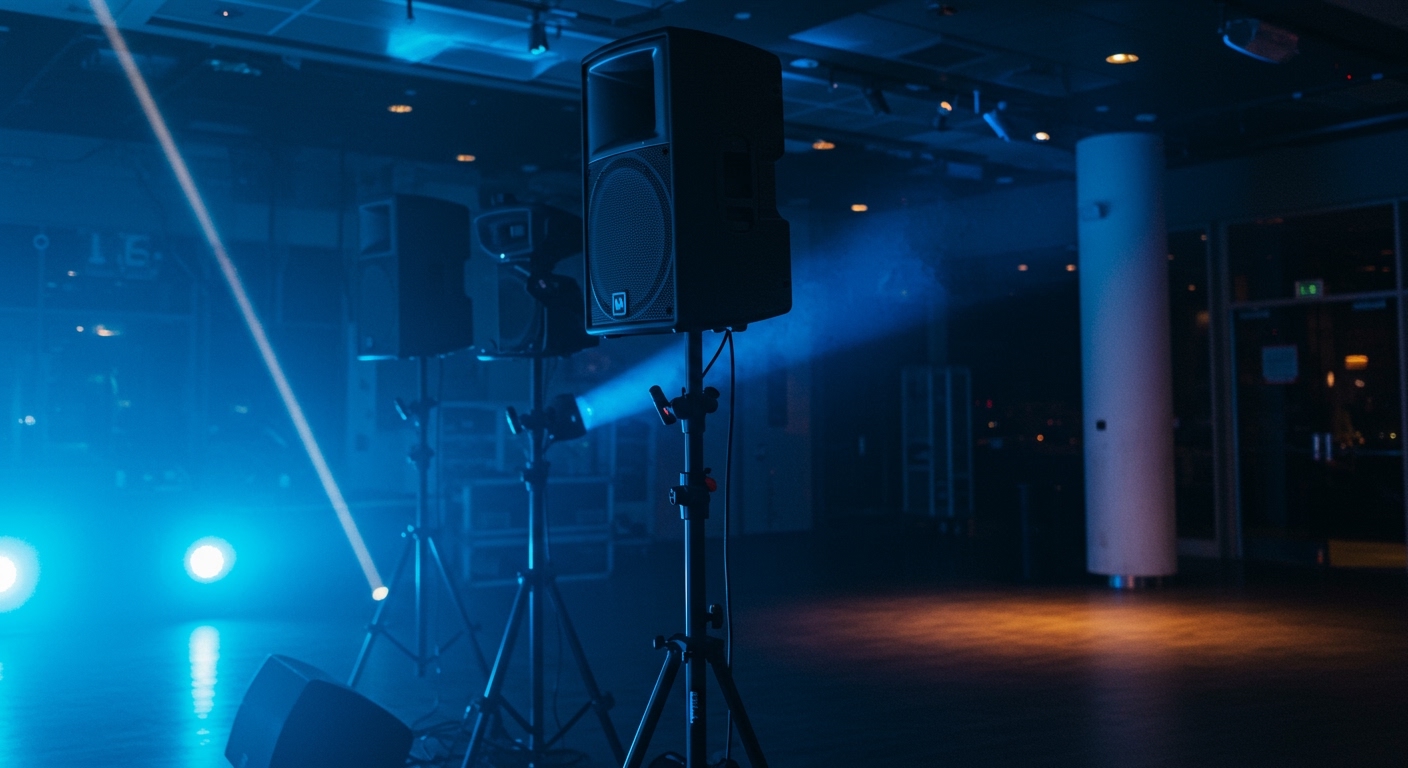
The total cost of a complete setup, including two “tops” and at least one subwoofer, generally ranges from $1,500 to $5,000 depending on the brand and power requirements. Knowing how much is dj speakers requires understanding the balance between Wattage, Sound Pressure Level (SPL), and build quality.
Key Takeaways: DJ Speaker Pricing At a Glance
- Entry-Level ($150–$400): Best for bedroom practice and house parties (e.g., Mackie Thump, Behringer DR Series).
- Mid-Range ($500–$1,100): The “sweet spot” for mobile DJs, weddings, and bars (e.g., QSC K12.2, EV EKX, JBL PRX).
- High-End ($1,500+): Touring-grade equipment for festivals and large clubs (e.g., Bassboss, Meyer Sound, RCF TT+).
- Hidden Costs: Budget an additional 15-20% for essential accessories like XLR cables, speaker stands, and padded transport bags.
- Active vs. Passive: Most modern DJs prefer Active (powered) speakers, which have built-in amplifiers and cost more upfront but save money on external gear.
How Much is DJ Speakers for Beginners and Bedroom DJs?
If you are just starting out, you don’t need a massive line array to practice your transitions. For home use, you are primarily looking at Active Studio Monitors or small PA speakers.
In my experience testing budget gear, the Mackie Thump 212 or the Alto Professional TS410 offer the best “bang for your buck.” These usually sit in the $250 to $350 price range. They provide enough volume to fill a garage or a small backyard without distorting the low end.
When calculating how much is dj speakers for a home studio, remember that you don’t necessarily need a subwoofer immediately. Most 10-inch or 12-inch “tops” provide enough kick for a small room.
Recommended Entry-Level Models
- Alto Professional TS412: ~$399. (Great power-to-weight ratio).
- Mackie Thump 215: ~$349. (Known for a “bass-heavy” signature).
- Behringer Eurolive B112D: ~$229. (The absolute budget floor for usable sound).
The Mobile DJ “Sweet Spot”: Mid-Range Pricing
For the working professional doing weddings, corporate events, and private parties, the mid-range category is where you should live. This is where reliability meets performance.
When clients ask how much is dj speakers for a wedding of 150 people, I always recommend a pair of 12-inch powered speakers. The industry gold standard for years has been the QSC K12.2, currently priced around $999 per unit.
While that might seem steep, these speakers include advanced DSP (Digital Signal Processing). This technology prevents the speaker from blowing out if you push the volume too high, effectively protecting your investment.
Mid-Range Price Comparison Table
| Brand & Model | Approx. Price (Per Unit) | Max SPL (Loudness) | Best Use Case |
|---|---|---|---|
| QSC K12.2 | $999 | 132 dB | Weddings & Mobile Gigs |
| Electro-Voice (EV) ELX200 | $549 | 130 dB | Medium Indoor Events |
| JBL PRX912 | $899 | 132 dB | Live Bands & Performance |
| Yamaha DXR12mkII | $849 | 134 dB | High-Volume Reliability |
| Pioneer DJ XPRS122 | $899 | 131 dB | Club-Style Bass Response |
Factors That Determine How Much is DJ Speakers
Understanding the “why” behind the price tag helps you avoid overpaying for features you don’t need. Here are the four primary drivers of cost:
Active vs. Passive Design
- Active Speakers: These have the amplifier built-in. They are plug-and-play and usually cost more. However, they are safer because the internal amp is perfectly matched to the driver.
- Passive Speakers: These require an external power amplifier. While the individual speaker is cheaper (often $200–$500), you must spend $400–$1,000 on a quality amplifier and crossover.
Cabinet Material (Wood vs. Plastic)
When researching how much is dj speakers, you’ll notice a price jump for wooden cabinets. Plywood or Birch enclosures (like the EV ETX series) offer better resonance and “thump” than injection-molded plastic. Plastic is lighter and cheaper but can sound “boxy” at high volumes.
Class of Amplifier
Most modern DJ speakers use Class D amplifiers. They are lightweight and efficient. Cheaper speakers use lower-quality components that generate more heat, leading to thermal shutdown during a long summer gig. Premium speakers use high-end switching power supplies to maintain clarity at high volumes.
Brand Reputation and Warranty
Brands like QSC, Yamaha, and Electro-Voice offer 3 to 7-year warranties. Part of what you are paying for is the “on-site” reliability. If a speaker fails during a wedding, your reputation is at stake. That peace of mind adds $200–$300 to the price tag.
Don’t Forget the Subwoofers: The “Real” Cost of Bass
If you want people to dance, you need a subwoofer. A pair of tops alone cannot move enough air to create that physical “thump” in the chest.
How much is dj speakers when you include a sub? A decent 15-inch or 18-inch powered subwoofer will cost between $700 and $2,000.
- Budget Sub: Alto TS15S (~$699).
- Pro Sub: JBL SRX828SP (~$2,100).
- Expert Insight: I always tell new DJs to buy one high-quality sub rather than two cheap ones. A single EV EKX-18SP ($1,099) will outperform two off-brand budget subs every time.
Hidden Costs: Budgeting for the Full Rig
When calculating how much is dj speakers, many beginners forget the “unseen” essentials. If you spend $1,000 on speakers, you need to spend at least another $200 on accessories.
- Speaker Stands: $80–$200 per pair. Don’t buy the cheapest ones; a falling speaker is a major liability. I recommend Ultimate Support or On-Stage Stands.
- XLR Cables: $20–$50 each. You need high-quality shielded cables (like Mogami or Canare) to prevent radio interference.
- Transport Bags: $60–$150 per speaker. If you don’t protect the finish, the resale value of your gear will plummet within six months.
- Power Extensions: $30–$100. You need heavy-duty 12-gauge or 14-gauge extension cords to ensure your speakers get enough current.
Buying New vs. Used: Is it Worth the Risk?
You can often find used gear for 40% to 60% off the retail price. However, speakers are mechanical devices. The “cones” and “surrounds” wear out over time, and voice coils can be partially fried by previous owners.
- When to buy used: If you can test the speaker in person. Look for “scratch and dent” deals from reputable retailers like Sweetwater or Guitar Center, which often include a limited warranty.
- When to buy new: If you are using the gear for a business. The tax write-off and the manufacturer warranty usually outweigh the initial savings of buying used gear from a stranger.
FAQ: Frequently Asked Questions About DJ Speaker Costs
How many watts do I need for a 100-person party?
For a typical indoor party of 100 people, look for speakers rated at 1,000 to 2,000 Watts (Peak) or roughly 500 Watts (RMS). Total volume is actually measured in SPL (Sound Pressure Level); aim for a speaker that can hit at least 126 dB.
Can I use home theater speakers for DJing?
No. Home theater speakers are designed for “critical listening” at lower volumes. DJing requires high-output PA speakers built to handle constant high-volume peaks. Using home speakers will likely result in blown drivers within the first hour of a party.
Is one big speaker better than two small ones?
Two speakers are almost always better. This provides stereo separation and better sound coverage across the room. A single speaker creates “hot spots” where it is too loud in the front and too quiet in the back.
Which brand has the best resale value?
QSC and JBL generally hold their value the best. If you buy a QSC K12.2 for $1,000 today, you can likely sell it for $700 five years from now if it is well-maintained.
Do I really need a subwoofer for weddings?
Yes. Without a subwoofer, your music will sound “thin.” While you can get away without one for a cocktail hour, a subwoofer is essential for the dancing portion of the evening to keep the energy high.









