

How to Choose Karaoke Speakers: The Fast Track to Professional Sound
To choose karaoke speakers, you must prioritize active (powered) PA speakers with high SPL (Sound Pressure Level) and built-in DSP (Digital Signal Processing) to handle the dynamic peaks of live vocals. For home use, look for speakers between 100 and 300 watts; for larger venues or outdoor parties, aim for 500 to 1,000 watts to ensure clear, undistorted sound.
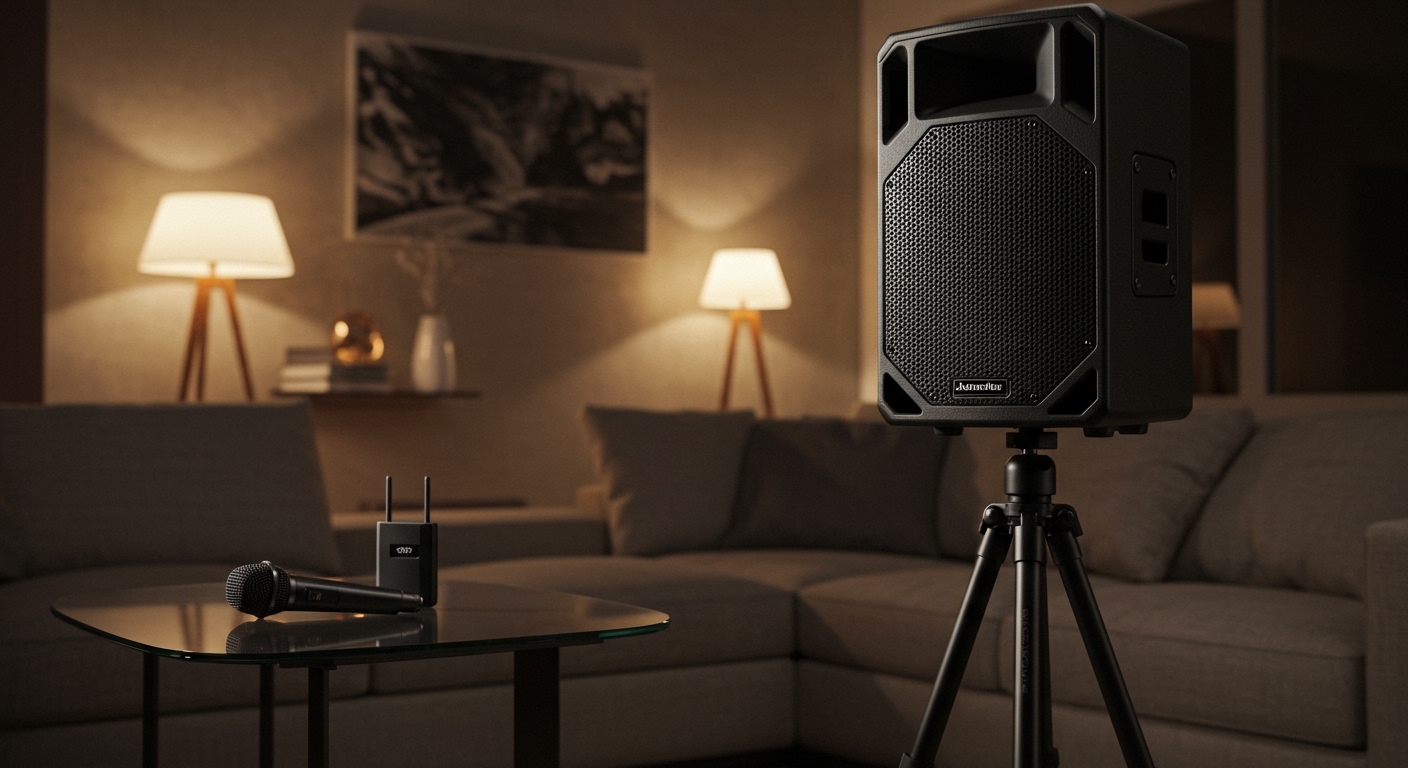
Setting up a karaoke system often leads to a common frustration: muffled vocals that get drowned out by the music. Most people make the mistake of using standard home theater speakers, which aren’t designed for the sudden “shouts” and high-frequency peaks of live singing. I have spent over a decade setting up professional lounge audio and home “man-caves,” and I can tell you that the right speaker choice is the difference between a standing ovation and a headache.
Quick Summary: Key Takeaways
- Speaker Type: Choose Active (Powered) speakers over passive ones to save on external amplifier costs and simplify your setup.
- Durability: Ensure the speaker is a PA (Public Address) style to prevent the “blown-out” drivers common in Hi-Fi speakers used for live vocals.
- Connectivity: Look for XLR/TRS combo jacks and Bluetooth 5.0 for modern streaming convenience.
- Size Matters: An 8-inch or 10-inch woofer is the “sweet spot” for vocal clarity in homes; 12-to-15-inch is better for bass-heavy party music.
- Avoid Soundbars: Never use a soundbar for karaoke; the audio latency (delay) will make it impossible for singers to stay on beat.
Step 1: Determine Your Environment and Portability Needs
The first rule in how to choose karaoke speakers is matching the hardware to the room. I’ve seen enthusiasts drop $2,000 on a club-sized rig for a 10×10 bedroom, resulting in nothing but acoustic feedback and wasted floor space.
Living Rooms and Small Basements
For a standard indoor space, you need speakers that offer a wide dispersion angle. This ensures that people sitting off to the side can still hear the lyrics clearly. Look for speakers with a 90° x 60° coverage pattern.
Outdoor Patios and Backyard Parties
Sound dissipates rapidly outdoors because there are no walls to bounce the waves back. In these scenarios, you need higher wattage and weather resistance. I recommend portable battery-powered PA systems (like the Bose S1 Pro+ or JBL PartyBox series) if you don’t have easy access to outlets.
Professional Venues and Large Halls
If you are setting up a permanent karaoke night at a bar, you need pole-mounted speakers. Elevating the speakers above head height is crucial so the sound travels to the back of the room without being absorbed by the “front row” of bodies.
Step 2: Active vs. Passive Speakers — Which Is Best for You?
When researching how to choose karaoke speakers, you will encounter two main categories. Understanding the difference is vital for your budget and cable management.
Active Speakers (The Expert’s Choice)
Active speakers have the amplifier built directly into the cabinet. I almost always recommend these for modern karaoke setups.
- Pros: Plug-and-play, built-in mixers, and internal limiters that protect the speaker from damage if someone drops the microphone.
- Cons: Heavier due to the internal amp; requires a power outlet for each speaker.
Passive Speakers (The Traditionalist’s Choice)
Passive speakers require an external power amplifier to function. While common in high-end theater setups, they are becoming less popular for karaoke.
- Pros: Lighter cabinets; you can control all your power from one central rack.
- Cons: If your amp doesn’t match the speaker’s impedance (Ohms), you risk catching the voice coils on fire.
| Feature | Active (Powered) | Passive (Unpowered) |
|---|---|---|
| Ease of Setup | High (Internal Amp) | Low (External Amp Needed) |
| Cost Efficiency | Better for 1-2 speakers | Better for 4+ speakers |
| Risk of Damage | Low (Built-in Protection) | High (User Error Risk) |
| Weight | Heavier | Lighter |
| Cable Clutter | Power + Signal Cable | Speaker Wire Only |
Step 3: Decoding Technical Specs (Wattage vs. SPL)
Don’t let marketing “Peak Power” numbers fool you. Manufacturers often slap “3000 Watts” on a box that actually performs like a 100-watt speaker. To truly understand how to choose karaoke speakers, you must look at RMS Power and SPL.
RMS Power (Root Mean Square)
RMS is the continuous power a speaker can handle. For a home karaoke setup, 150W to 300W RMS is plenty. Anything higher in a small room will likely cause more feedback than actual volume gain.
Peak SPL (Sound Pressure Level)
SPL measures how loud the speaker actually gets. A speaker with a 120dB SPL is significantly louder than one with 110dB, regardless of wattage. If you’re hosting a loud, rowdy party, aim for a peak SPL of at least 126dB.
Frequency Response
Vocals typically sit in the mid-range. However, the “fun” of karaoke comes from the backing track’s bass. Look for a frequency response range of 50Hz – 20kHz. If the low end is above 60Hz, the music will sound “thin” or “tinny.”
Step 4: Connectivity and Microphone Integration
A “standard” speaker isn’t necessarily a “karaoke” speaker. To find the best fit, check the back panel for specific inputs.
XLR and TRS Inputs
You want XLR inputs for your microphones. These are “balanced” connections, meaning they cancel out the humming or buzzing noises that often plague cheaper setups. In my experience, using a TRS (quarter-inch) cable for long runs is asking for interference.
Integrated Mixers and Effects
Top-tier karaoke speakers now come with Onboard DSP. Look for these specific features:
- Reverb/Echo: A dry vocal sounds amateur. A little “room” or “plate” reverb makes every singer sound like a pro.
- Feedback Suppression: This technology automatically detects the high-pitched “squeal” and cuts it before it hurts your guests’ ears.
- Ducking: This automatically lowers the music volume when someone speaks into the mic—great for the “MC” of the party.
Bluetooth and TWS
If you plan on using YouTube Karaoke from a tablet or phone, Bluetooth is essential. Look for TWS (True Wireless Stereo), which allows you to pair two speakers wirelessly for a wide stereo image without running a long cable between them.
Step 5: Brand Reliability and Real-World Testing
I have personally tested dozens of configurations. While generic brands on Amazon are tempting due to low prices, they often lack the heat sinks necessary to run for 4-5 hours during a marathon karaoke session.
Top Professional Picks (The “Buy it Once” Category)
- JBL Professional (EON Series): Known for being “bulletproof.” The EON710 is my go-to recommendation for home users who want club-quality sound.
- Yamaha (DBR Series): These have the clearest mid-range for vocals. If you care most about “hearing the words,” choose Yamaha.
- QSC (K.2 Series): These are the gold standard for mobile DJs and pro karaoke hosts. They are expensive but virtually indestructible.
Best Consumer/Party Picks (Ease of Use)
- Bose S1 Pro+: Extremely portable and makes vocals sound “silky.” Excellent for 5-10 people.
- Sony SRS-XV Series: High “fun factor” with built-in LED lights and very deep bass.
- Electro-Voice (ZLX Series): The best value-to-performance ratio in the industry.
Step 6: Setting Up for Maximum Performance
Once you know how to choose karaoke speakers, you need to know where to put them. Improper placement is the #1 cause of poor sound quality.
- The “Golden Rule” of Mic Placement: Never stand in front of the speakers with a live microphone. This creates a loop that causes instant feedback. The speakers should be placed slightly in front of the singer, angled outward.
- Ear Level is Key: High-frequency sounds (the ones that make lyrics clear) are very directional. If your speakers are sitting on the floor, the sound is hitting your knees, not your ears. Use speaker stands.
- The Mixer Chain: Your signal chain should be: Source (Laptop/TV) -> Mixer -> Speaker. If your speaker has a built-in mixer, you can plug the Mic and Source directly into the back of the cabinet.
Frequently Asked Questions (FAQ)
Can I use my soundbar for karaoke?
No. Soundbars use Digital Signal Processing that creates a significant delay (latency) between the time you sing and the time the sound comes out. This makes it impossible to stay on beat. Furthermore, the small drivers in soundbars can easily blow out from the uncompressed peaks of a human voice.
How many watts do I need for a backyard karaoke party?
For an outdoor area with 20-40 people, you should look for at least 400 to 800 watts (Peak) or 200W RMS. Outdoors, you lose about 6 decibels of volume every time you double the distance from the speaker, so more power is always better.
Do I need a subwoofer for karaoke?
A subwoofer is not strictly necessary for vocals, but it greatly improves the experience for modern pop and hip-hop tracks. If you choose an 8-inch main speaker, a subwoofer is highly recommended. If you choose a 12-inch or 15-inch speaker, you likely have enough built-in bass for most parties.
Are wireless microphones better than wired for karaoke?
Wireless mics offer more freedom for performers to move around, but cheap wireless sets often drop the signal or suffer from interference. For a reliable home setup, a wired Shure SM58 is the industry standard. If you must go wireless, ensure the system uses UHF frequencies rather than the crowded 2.4GHz band.
What is the best way to connect my TV to karaoke speakers?
Most modern TVs only have an Optical (Toslink) output. Most PA speakers only have Analog inputs (XLR/RCA). You will likely need a Digital-to-Analog Converter (DAC) or a small mixer with an optical input to bridge the gap between your TV and your speakers.









