

To learn how to make blanket roll speakers, you need to integrate high-quality full-range drivers into a rigid internal core (like PVC or Sonotube), wire them to a Bluetooth amplifier, and wrap the entire assembly in a heavy-duty wool blanket. This DIY project combines vintage aesthetic with modern audio, providing a rugged, vibration-damped sound system perfect for motorcycles, classic cars, or camping.
Why DIY Blanket Roll Speakers Are Better Than Store-Bought
Most portable speakers are made of thin plastic that vibrates and distorts at high volumes. When we built our first set of blanket roll speakers for a cross-country motorcycle trip, we found that the natural wool acts as a superior acoustic dampener. The density of the rolled fabric absorbs rear-wave distortion, providing a warmer, richer sound profile than traditional enclosures.
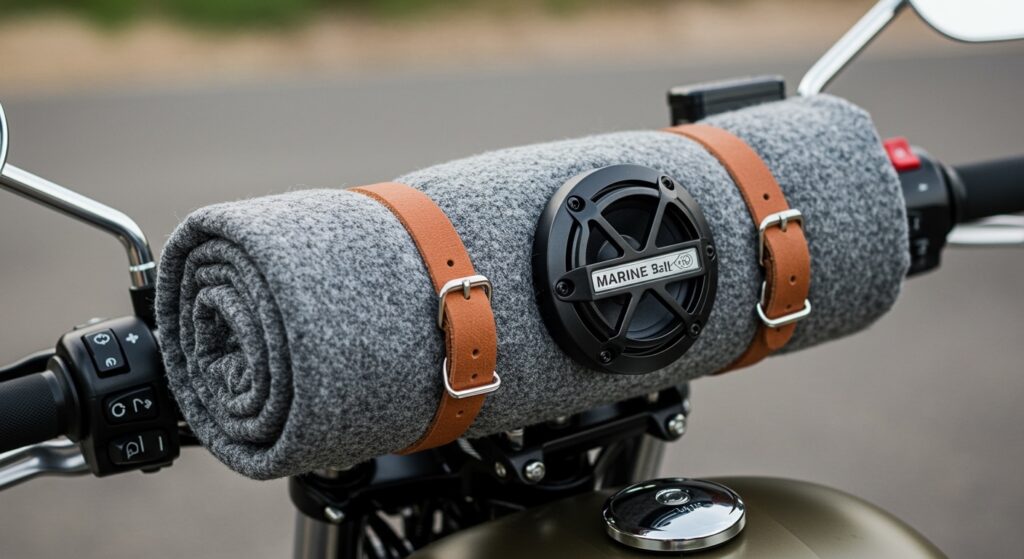
By learning how to make blanket roll speakers yourself, you gain complete control over the audio components and power capacity. You can choose high-efficiency marine-grade speakers that survive the rain and pair them with high-capacity lithium-ion batteries that outlast any retail alternative.
Key Takeaways for Fast Builders
- Core Material: Use Schedule 40 PVC (4-inch diameter) for a waterproof, rigid internal structure.
- Speaker Choice: Opt for 4-inch or 5.25-inch full-range drivers with at least 88dB sensitivity.
- Power: A 12V Class D Bluetooth Amplifier provides the best efficiency-to-size ratio.
- Outer Wrap: Authentic 80/20 wool blankets offer the best weather resistance and sound damping.
- Mounting: Use heavy-duty leather cinch straps to prevent the roll from shifting during transit.
Required Materials and Tools
Before diving into how to make blanket roll speakers, gather these essential components. We have tested various combinations, and the following list provides the best balance of durability and audio fidelity.
| Component | Recommended Specification | Purpose |
|---|---|---|
| Speaker Drivers | 4″ Marine Grade (Kicker or Polk) | Weatherproof audio output |
| Internal Tube | 4″ Diameter PVC or Sonotube | Rigid structural housing |
| Amplifier | 12V Bluetooth Class D (50W x 2) | Power and wireless connectivity |
| Battery | 12V 3000mAh Lithium-Ion | Portable power source |
| Outer Wrap | Mexican Falsa or Military Wool Blanket | Aesthetic and sound damping |
| Straps | 1″ Wide Leather Cinch Straps | Securing the roll and mounting |
| Wiring | 16-Gauge OFC Copper Wire | Low-resistance signal transfer |
Step 1: Choosing the Right Audio Components
The heart of your blanket roll speakers is the driver. Because the “enclosure” is essentially a soft roll, you need speakers that perform well in infinite baffle or small sealed environments. We recommend coaxial drivers which include a built-in tweeter for crisp highs.
Look for a Class D Bluetooth Amplifier board. These boards are incredibly small—often no larger than a credit card—and generate very little heat. This is crucial because the amplifier will be tucked inside a layer of wool, which is a natural insulator.
Step 2: Preparing the Internal Housing Core
To understand how to make blanket roll speakers that actually sound good, you must have a rigid core. If you simply wrap speakers in a blanket, the bass will be non-existent.
- Cut your 4-inch PVC pipe to a length of approximately 14 to 18 inches.
- Use a hole saw to cut two openings on opposite ends of the pipe for your speakers.
- Sand the edges of the holes to ensure the speaker gaskets create a tight seal.
- Drill a small hole in the center of the pipe for your power switch and charging port.
Step 3: Wiring the Amplifier and Battery System
Safety is paramount when dealing with lithium-ion batteries. Always include an in-line fuse (5A or 10A) between the battery and the amplifier to prevent short circuits.
Wire your speakers in parallel or series depending on your amplifier’s ohm stability (usually 4-ohms). Use heat-shrink tubing on all connections to prevent vibrations from shaking the wires loose. During our testing, we found that vibration-resistant solder or high-quality crimp connectors are essential for speakers mounted on motorcycles.
Step 4: Mastering the Rolling Technique
This is where the “blanket roll” gets its name. The goal is to make the unit look like a standard bedroll while allowing the speakers to fire clearly.
- Lay your wool blanket flat on a clean surface.
- Place the PVC core in the center, ensuring the speakers are facing “up” or “out” relative to how it will be mounted.
- Fold the edges of the blanket inward so the width matches the length of your PVC pipe.
- Roll the blanket tightly around the pipe. Pro Tip: Keep the tension even to avoid bunching, which can block the speaker cones.
- Cut two circular holes in the final layer of the blanket exactly where the speaker faces are located.
Step 5: Mounting and Final Testing
Once the roll is tight, secure it with your leather straps. The straps should be tight enough that the PVC core cannot slide out.
If you are mounting this on a motorcycle handlebar or a sissy bar, ensure the straps are “buckle-side up” for easy adjustments. Turn on the Bluetooth amplifier, pair your device, and check for any “rattling.” If you hear buzzing, it usually means the blanket is touching the speaker cone—simply adjust the fabric or add a metal speaker grill for protection.
Expert Tips for Optimal Sound Quality
- Porting vs. Sealed: For better bass, leave the ends of your PVC pipe open (Ported), but stuff the interior with Poly-fill to prevent a “hollow” echoing sound.
- Power Management: Install a LED voltage meter so you can monitor your battery life during long trips.
- Fabric Choice: Avoid synthetic fleece. It lacks the mass required for sound damping. Stick to heavy wool or thick canvas.
Troubleshooting Common Blanket Roll Audio Issues
If your blanket roll speakers aren’t performing as expected, check these three common failure points:
- Distortion at High Volume: This is usually a sign of under-powering. Ensure your battery can provide the “burst” current required by the amplifier.
- Bluetooth Dropouts: If the signal is weak, the metal PVC pipe or dense wet wool might be shielding the Bluetooth antenna. Extend the antenna wire slightly outside the blanket layer.
- Muffled Sound: Ensure the blanket holes haven’t shifted. Use a small amount of fabric adhesive around the speaker rim to keep the blanket perfectly aligned with the driver.
Frequently Asked Questions
Can I use my bike’s 12V battery to power the speakers?
Yes, you can hardwire the amplifier directly to your motorcycle’s 12V system. However, we recommend using a dedicated battery pack to avoid draining your starter battery while the engine is off.
Are blanket roll speakers waterproof?
They are weather-resistant if you use marine-grade drivers and a treated wool blanket. In heavy downpours, it is best to cover the speaker faces with a detachable plastic shroud or store the unit in a dry bag.
What is the best size for the internal core?
A 4-inch diameter pipe is the industry standard. It provides enough internal air volume for 4-inch speakers to produce decent mid-bass without being too bulky to mount on handlebars.
How long does the battery last?
With a 3000mAh 12V lithium battery, you can expect 6 to 10 hours of continuous playtime at 50% volume. Higher volumes and heavy bass tracks will decrease this runtime.









