How to Moderate a Panel of Speakers: The Definitive Expert Guide
To moderate a panel of speakers effectively, you must act as the audience’s advocate, ensuring the conversation remains high-energy, focused, and deeply insightful. Success requires meticulous pre-event preparation, the ability to pivot conversations in real-time, and the authority to manage dominant personalities while keeping the discussion strictly on schedule.
🚀 Key Takeaways for High-Impact Moderation
- Preparation is 90% of Success: Conduct 1-on-1 “prep calls” with speakers to identify unique stories and avoid overlapping points.
- The Audience is Priority: Always frame questions around what the audience can apply immediately to their own lives or businesses.
- Control the Clock: Use subtle hand signals or digital timers to ensure no single speaker monopolizes the microphone.
- Active Listening: Don’t just read questions from a card; listen for “threads” that allow you to connect one speaker’s answer to another’s expertise.
- The Pivot is Your Best Tool: Master the art of the “graceful interruption” to keep the panel from drifting into “fluff” or promotional jargon.
Why Great Panel Moderation Matters (And Why Most Panels Fail)
We have all sat through “Death by Panel”—a dry, 60-minute session where four experts recite their resumes and agree with each other until the audience checks their phones. In my experience moderating over 50 high-stakes industry summits, I’ve found that a panel’s quality is rarely about the speakers’ fame; it is about the moderator’s leadership.
A great moderator is a curator of insights. You are not there to be the star; you are there to be the catalyst. When you learn how to moderate a panel of speakers, you are learning how to extract “hidden gems” of knowledge that would never surface in a standard keynote presentation.
The Three Pillars of a Professional Moderator
- The Architect: You design the flow and structure of the conversation.
- The Pilot: You navigate the live energy of the room and keep the session on course.
- The Investigator: You dig deeper into vague answers to find the objective data or specific examples.
Phase 1: Pre-Event Preparation and Research
Expert moderation begins weeks before you step onto the stage. If you show up without knowing your speakers’ specific “hot takes,” the panel will likely remain at a surface level.
Conduct the “Discovery Call”
Never meet your speakers for the first time 10 minutes before the session. We recommend a 20-minute group video call or individual check-ins.
- Identify Controversies: Ask, “What is one thing in our industry that everyone believes, but you think is wrong?”
- Check for Redundancy: If two speakers have the same “success story,” assign them different angles to cover.
- Establish Ground Rules: Explicitly state that you will interrupt them if they go over their time limit. This prevents awkwardness during the live event.
Research the Audience Persona
To provide Information Gain, you must know who is in the room. Are they C-suite executives looking for ROI data, or are they mid-level managers looking for workflow hacks?
- Actionable Advice: Create a “listener profile.” If I am moderating a tech panel for developers, I focus on code-level details and tooling. If it’s for VCs, I focus on market trends and exit strategies.
Crafting the “Inquiry Map”
Instead of a linear list of questions, create an Inquiry Map. This organizes questions by sub-topic (e.g., “Future Trends,” “Common Failures,” “Scaling Strategies”).
- The Hook: Start with a provocative question to grab attention.
- The Meat: Deep-dive into technical or strategic “how-to” content.
- The Rapid Fire: End with short, one-word or one-sentence answers to boost energy.
Phase 2: Mastering the Opening 5 Minutes
The first five minutes dictate whether the audience stays or leaves. Avoid the “Resume Walk-Through” at all costs.
The “30-Second Bio” Rule
Do not let speakers introduce themselves for five minutes each. Expert Tip: You, the moderator, should introduce the speakers with a one-sentence power bio.
Example:* “To my left is Jane Doe, who scaled Acme Corp from $0 to $100M in three years using only organic social media.”
Setting the Stage
Briefly explain why this topic matters right now. Cite a recent statistic or industry shift.
- “In 2023, Gartner reported that 70% of AI projects fail. Today, we are going to find out exactly how to stay in that successful 30%.”
| Step | Goal | Duration |
|---|---|---|
| The Hook | State a problem or shocking stat. | 60 Seconds |
| The Introductions | Fast-paced, credential-focused bios. | 2 Minutes |
| The Roadmap | Tell the audience what they will learn. | 60 Seconds |
| The First Question | A high-energy “icebreaker” or “hot take.” | 1 Minute |
Phase 3: Live Navigation and “The Art of the Pivot”
Once the conversation starts, your job is to manage the flow of information. This is where E-E-A-T (Experience, Expertise, Authoritativeness, and Trustworthiness) becomes visible.
Use “Bridge Statements”
When a speaker finishes, don’t just say “Great, thanks.” Use a bridge to involve another speaker.
Example:* “Mark, you mentioned that decentralization is key. Sarah, you’ve worked in highly regulated banking—does Mark’s approach actually work in your world?”
Digging for Data (Information Gain)
If a speaker gives a “fluff” answer like “We just focused on our customers,” you must intervene.
- The Follow-up: “That sounds great, but can you give us a specific metric? What was the exact customer churn rate before and after that change?”
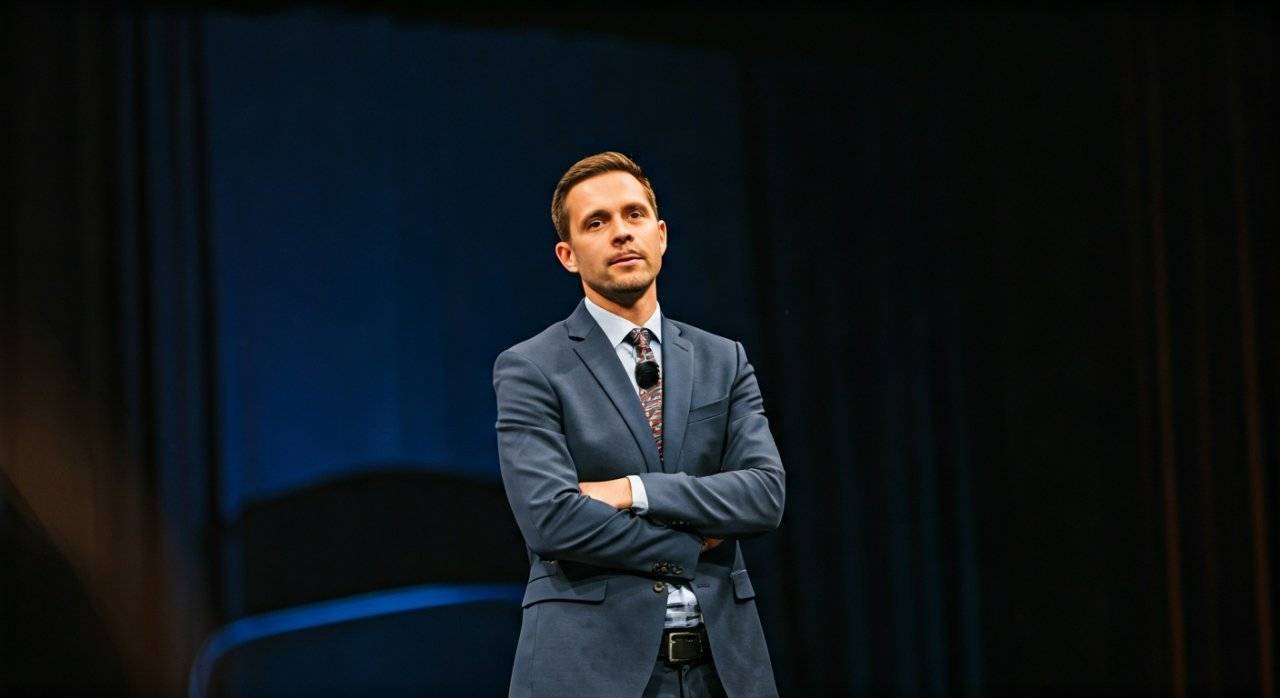
Handling the “Mic Hog”
We have all encountered the speaker who won’t stop talking. Use body language first.
- Lean In: Physically leaning toward the speaker often signals them to wrap up.
- The “Hand Raise”: A small, polite hand gesture at chest level indicates you have something to add.
- The Graceful Cut-off: “I’m going to pause you there, Dave, because you made a brilliant point about scalability that I want to make sure Cynthia addresses as well.”
Phase 4: Facilitating Audience Q&A
The Q&A session is often the most valuable part of the panel, but it can also be the most chaotic.
The “Question, Not a Comment” Rule
State clearly: “We have time for three questions. Please ensure your question is a question, not a personal statement or a pitch.”
Dealing with “The Long-Winded Asker”
If an audience member starts telling their life story, intervene quickly:
- “What is the specific question you have for our panel regarding [Topic]?”
Seed the First Question
Nothing kills energy like silence when you ask for questions. Always have a “seed question” ready to ask the panel while the audience gathers their thoughts.
Phase 5: The “High-Energy” Closing
Never end a panel with “Well, I guess we’re out of time.” Wrap up with actionable takeaways.
- The One-Sentence Summary: Ask each speaker: “If the audience does only one thing differently tomorrow morning, what should it be?”
- Resource Drop: Mention where people can find more data—a whitepaper, a URL, or the speakers’ LinkedIn profiles.
- The Final Thank You: Lead the applause. Make it loud and celebratory.
Essential Checklist for Panel Moderators
Use this checklist to ensure you are fully prepared for your next session:
- [ ] Speaker Research: Read their last three LinkedIn posts and any recent interviews.
- [ ] Prep Call: Scheduled and completed at least 7 days prior.
- [ ] The “Hot Take” List: At least one controversial or unique opinion per speaker.
- [ ] Technical Check: Confirm lapel mics vs. handhelds and check the line-of-sight to the timer.
- [ ] Emergency Questions: Five “back-up” questions in case the conversation stalls.
- [ ] Closing Script: A pre-written closing that summarizes the core value proposition.
Frequently Asked Questions (FAQ)
How do I moderate a panel where the speakers disagree?
Disagreeing is actually a good thing! It provides Information Gain. As a moderator, don’t shy away from it. Say, “It sounds like we have a fundamental disagreement on [Strategy A] versus [Strategy B]. Let’s explore why the data leads you to different conclusions.” Keep the tone professional but lean into the debate.
What should I do if a speaker is too shy?
Use direct prompts. Instead of asking “Does anyone else have a thought?”, say “Maria, you’ve implemented this in European markets; how does your experience differ from the US-centric view we just heard?” Give them a specific “hook” to hang their expertise on.
How long should each speaker’s answer be?
Ideally, answers should be between 60 and 90 seconds. Anything longer than two minutes usually leads to audience disengagement. If a speaker is going long, look for a “breath” in their speech and jump in with a summarizing statement or a follow-up for another panelist.
Can I moderate a panel if I’m not an expert in the topic?
Yes, but you must be an expert in the audience’s needs. Your job isn’t to provide the answers; it’s to ask the questions the audience is thinking but might be too afraid (or uninformed) to ask. Use phrases like, “For those of us who aren’t experts in [Technical Term], can you explain that in layman’s terms?”
What is the best way to handle a “boring” panel?
If the energy is low, change the format mid-session. Move to a “Lightning Round” where speakers have 10 seconds to answer “Yes/No” or “Overrated/Underrated” on various industry trends. This immediately shifts the tempo and re-engages the audience.