

How to Replace Awning Speakers: A Quick Expert Answer
To replace awning speakers on your RV, you must remove the exterior mounting screws or pop off the speaker grille, disconnect the two-wire harness (positive and negative), and swap in a marine-grade 5.25-inch or 6.5-inch speaker. Ensure you use butyl tape or marine-grade silicone sealant during re-installation to prevent water intrusion into the RV sidewall or awning arm. This DIY project typically takes 30 to 60 minutes and requires only basic hand tools like a screwdriver and wire strippers.
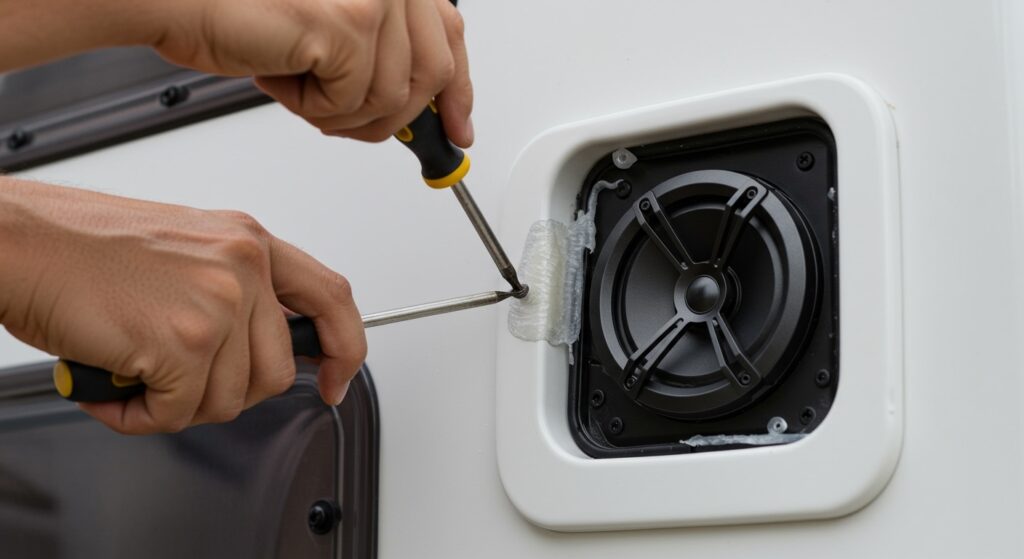
TL;DR: Key Takeaways for Replacing Awning Speakers
- Primary Tool: A #2 Phillips head screwdriver and a high-quality waterproof sealant.
- Speaker Type: Always use Marine-Grade speakers to resist UV rays and moisture.
- Wiring: Most RV awning speakers use a simple two-wire system; ensure polarity (positive to positive) is correct for the best bass response.
- Sealant is Critical: Failing to seal the wire entry point can lead to delamination of your RV’s fiberglass walls.
- Common Brands: Most factory systems use Solera, Lippert (LCI), or Furron components.
Signs Your RV Awning Speakers Need Replacement
In my years of servicing RVs and upgrading outdoor entertainment systems, I’ve found that awning speakers are the most vulnerable audio components on a rig. Because they are mounted on the awning heads or arms, they face extreme temperature swings, wind, and direct rain.
Common Failure Symptoms
- Cracking or Popping: Usually indicates a blown voice coil or a tear in the speaker cone caused by UV degradation.
- Muffled Audio: This often happens when water enters the speaker housing and settles on the driver, causing corrosion.
- Complete Silence: Often a result of wire fatigue at the awning hinge or a corroded connection terminal.
- Visual Sun Damage: If the plastic housing looks “chalky” or the mesh is brittle, the internal seals have likely failed.
Essential Tools and Materials for the Job
Before you begin learning how to replace awning speakers, gather these specific tools to ensure a professional-grade finish. Using the wrong sealant or improper wire connectors is the leading cause of “re-work” in these projects.
Required Tool Checklist
- Screwdriver Set: Specifically a #2 Phillips and sometimes a Square Drive (Robertson) for RV-specific screws.
- Wire Strippers/Crimpers: To ensure clean connections on the new speaker leads.
- Heat Shrink Butt Connectors: Avoid standard twist-on wire nuts; these will vibrate loose on the road.
- Non-Sag Sealant: I recommend Geocel Proflex RV or a high-quality marine silicone.
- Plastic Trim Tools: Helpful for popping off snap-on speaker grilles without scratching the awning finish.
- Multimeter: Useful to check for 12V power if your new speaker doesn’t immediately work.
Choosing the Right Replacement Speakers
Not all speakers are created equal. When you replace awning speakers, you must match the physical dimensions and the electrical impedance of your existing system.
Speaker Specification Comparison
| Feature | Standard Car Speaker | Marine-Grade Awning Speaker |
|---|---|---|
| Water Resistance | None to Low | High (IP65+ Rating) |
| UV Coating | No | Yes (Prevents yellowing) |
| Salt/Fog Protection | No | Yes (Stainless hardware) |
| Typical Size | 6.5″ | 5.25″ or Integrated Slim |
| Mounting Depth | Deep | Shallow (Fits in awning head) |
Expert Insight: I always recommend checking if your speakers are integrated. Some Solera awning arms have speakers built directly into the head assembly. In these cases, you may need to replace the entire plastic pod rather than just the driver.
Step 1: Removing the Old Awning Speaker
The first step in how to replace awning speakers is safe removal. Ensure your RV house battery disconnect is “OFF” or the stereo is powered down to prevent shorting the wires.
- Identify the Fasteners: Most speakers are held by 3 or 4 screws hidden behind a plastic trim ring.
- Remove the Grille: Use your plastic trim tool to gently pry the cover off. If it’s been in the sun for years, be careful—it may be brittle.
- Unscrew the Driver: Once the grille is off, remove the mounting screws. Hold the speaker firmly so it doesn’t fall and scratch your RV’s paint.
- Extract the Speaker: Pull the speaker forward to reveal the two wires (usually red/black or white/green).
Step 2: Preparing the Wiring
In my experience, the factory wiring is often the weakest link. When you replace awning speakers, take a moment to inspect the wires for “greening” (copper oxidation).
- Cut the Old Leads: Cut the wires as close to the old speaker terminals as possible to preserve length.
- Strip the Insulation: Remove about 1/4 inch of the jacket.
- Check for Corrosion: If the wire looks black or green inside, strip it back further until you see shiny copper.
- Test the Signal: If you have a helper, turn on the radio briefly to ensure sound is coming through the wires before you mount the new unit.
Step 3: Mounting and Connecting the New Speaker
Now comes the core of the how to replace awning speakers process.
- Match Polarity: Connect the positive (+) wire to the larger terminal on the speaker and the negative (-) to the smaller one.
- Crimp the Connections: Use heat-shrink butt connectors. Once crimped, use a heat gun to shrink the tubing around the wire. This creates a waterproof seal that prevents vibration from loosening the connection.
- Apply Butyl Tape: Before pushing the speaker into the mounting hole, apply a ring of butyl tape around the rear flange. This is your primary defense against water entering the awning arm.
- Secure the Screws: Hand-tighten the screws. Do not use a power drill on high torque, as you can easily crack the plastic housing or strip the fiberglass substrate.
Step 4: Waterproofing and Finishing
This is the step most DIYers skip, leading to rotted wall studs or electrical shorts.
- The “Bead” Method: Apply a thin, consistent bead of clear RV sealant around the top and sides of the speaker housing where it meets the awning arm.
- Leave a “Weep Hole”: Leave a small 1/4-inch gap at the very bottom of the seal. This allows any condensation that builds up inside the housing to drain out.
- Snap the Grille: Once the sealant is “tack-free,” snap the decorative grille back into place.
Advanced Troubleshooting: What if the New Speaker Doesn’t Work?
If you followed the steps on how to replace awning speakers but still have no sound, don’t panic. Check these three common fail points:
- Stereo “Zone” Settings: Many RV head units (like Jensen or iRV) have “Zone A/B/C” buttons. Ensure the “Outside” zone is activated.
- Frayed Hinge Wires: Check the point where the wires exit the RV wall and enter the awning arm. Constant opening and closing can snap these wires inside the protective sleeve.
- Faded Balance/Fade: Ensure the radio’s balance hasn’t been shifted entirely to the interior speakers.
Expert Tips for Enhancing Your Outdoor Audio
Since you are already going through the effort to replace awning speakers, consider these upgrades to improve your “campsite vibe”:
- Add an Amplifier: Most RV head units only put out 6-10 watts per channel. A small micro-amp can make your outdoor speakers sound significantly fuller at lower volumes.
- Baffle Boxes: If your speakers are mounted in a hollow awning head, adding a bit of poly-fill behind the speaker can reduce “tinny” vibrations and improve mid-range response.
- LED Integration: Some modern replacement speakers from brands like Kicker or Rockford Fosgate include built-in RGB LED rings. This is a great time to tap into your awning’s 12V light circuit for custom illumination.
Frequently Asked Questions (FAQ)
Can I use regular car speakers to replace my awning speakers?
While they will fit and play music, regular car speakers will fail within a few months. They lack the UV protection and waterproof cones necessary to survive outdoor exposure. Always use marine-rated components for RV exteriors.
What size are most RV awning speakers?
The most common sizes are 5.25 inches and 6.5 inches. However, some slim-line awning brands use proprietary 3-inch drivers. We recommend measuring the diameter of your current speaker before purchasing a replacement.
How do I know which wire is positive and which is negative?
In many RVs, the wire with a colored stripe is usually the positive (+). If both wires look the same, use a 9V battery touch-test on the old speaker: if the cone moves “out,” the wire on the positive battery terminal is your positive lead.
Do I need to remove the entire awning to replace the speakers?
No. Most speakers are accessible from the front or side of the awning arm or head assembly while the awning is partially extended. You should never have to remove the fabric or the main mounting rail to replace awning speakers.
Final Thought: Learning how to replace awning speakers is one of the most rewarding “quick fixes” for an RVer. It eliminates the annoyance of distorted audio and protects your rig from water damage. By using marine-grade components and proper sealant, you’ll ensure your outdoor soundtracks stay crystal clear for many seasons to come.
**
**
**
**









