Understanding Why You Should Stuff Your Speakers
To learn how to stuff speakers, you must fill the internal cabinet with specialized damping materials like poly-fill, fiberglass, or natural wool to absorb unwanted sound reflections and improve bass response. By adding these materials, you effectively slow down the speed of sound within the enclosure, making the speaker “think” it is in a much larger box than it actually is.
This process is one of the most cost-effective DIY upgrades for any audiophile. I have spent years restoring vintage Klipsch and Advent speakers, and I can confirm that proper internal damping is often the difference between a “boxy,” muddy sound and a tight, authoritative low-end.
TL;DR: Key Takeaways for Speaker Stuffing
- The Goal: Eliminate internal standing waves and increase effective cabinet volume by up to 20-25%.
- Best Materials: Poly-fill is the easiest for beginners; Rockwool or Fiberglass offers superior acoustic absorption but requires safety gear.
- Optimal Density: Aim for 0.5 to 1.5 pounds of material per cubic foot of internal volume.
- Critical Rule: Never block the back of the driver or the internal opening of a bass reflex port.
- The Result: Smoother midrange, less “boominess,” and a deeper bass extension.
The Science of Acoustic Damping: Why It Works
Before you start grabbing handfuls of polyester batting, it is important to understand the physics of what is happening inside your enclosure. When a speaker driver moves, it creates sound waves that travel backward into the box.
Without stuffing, these waves bounce off the hard internal walls and reflect back toward the cone. This creates standing waves and phase interference, which colors the sound and makes it lose clarity.
Isothermal vs. Adiabatic Processes
In a standard, empty speaker box, the compression of air is adiabatic, meaning heat stays within the system. When you learn how to stuff speakers correctly, you transition the system toward an isothermal process.
The fibers in the stuffing absorb the heat generated by the air compression. Because the air stays cooler, the speed of sound slows down. This slower speed allows the pressure waves to behave as if they have more physical space to travel, effectively increasing your box volume (Vb) without changing its physical dimensions.
Improving the “Q” Factor
In speaker design, the Qtc (Total Quality Factor of the system) determines how the bass behaves at its resonant frequency. If your box is too small, the Qtc is high, leading to a “hump” in the bass that sounds bloated. Proper stuffing lowers the Qtc, flattening that peak for a more natural, “audiophile” sound.
Choosing the Right Materials for How to Stuff Speakers
Not all stuffing is created equal. I have experimented with everything from high-end sheep’s wool to recycled denim insulation. Here is a breakdown of the most common materials used in the industry.
| Material | Best For | Pros | Cons |
|---|---|---|---|
| Poly-fill | General DIY, Subwoofers | Cheap, easy to find, non-toxic | Less effective at low frequencies |
| Fiberglass | High-performance hi-fi | Excellent absorption | Irritant to skin/lungs |
| Rockwool | Large floorstanding speakers | Heavy damping, fire-resistant | Very dusty, heavy |
| Acoustic Foam | Ported enclosures | Controls reflections without blocking airflow | Expensive, doesn’t increase volume much |
| Bonded Cotton | Eco-friendly builds | Great absorption, safe to handle | Can be difficult to “fluff” |
Polyester Fiberfill (Poly-fill)
This is the “gold standard” for most hobbyists. It is the same material found in bed pillows. It is lightweight, stays in place well, and is incredibly easy to manipulate. I recommend Fairfield Poly-Fil for most sealed subwoofer applications.
Mineral Wool and Rockwool
If you are building high-end monitors, Rockwool is superior for absorbing lower-midrange frequencies. It is much denser than polyester. When we used Rockwool Safe ‘n’ Sound in a recent 3-way build, the clarity in the male vocal range improved significantly.
Natural Wool
Wool is a premium material used by brands like Bowers & Wilkins. It has a unique fiber structure that provides exceptional damping. However, it is expensive and can attract moths if not treated with borax.
Calculating the Amount of Stuffing Needed
A common mistake is thinking “more is always better.” If you over-stuff the box, you will actually decrease the effective volume because the material itself begins to take up more physical space than the air it is “slowing down.”
The Rule of Thumb
Based on industry standards and Thiele/Small parameter testing, use the following guidelines for how to stuff speakers:
- Light Stuffing: 0.5 lbs per cubic foot. This is ideal for most ported (vented) enclosures.
- Standard Stuffing: 1.0 lb per cubic foot. This is the “sweet spot” for sealed enclosures.
- Heavy Stuffing: 1.5 lbs per cubic foot. Use this if your cabinet is significantly undersized for the driver.
Pro Tip: To calculate your speaker’s internal volume, multiply the internal Height x Width x Depth (in inches) and divide by 1,728.
Step-by-Step Guide: How to Stuff Speakers for Better Bass
Follow these steps to ensure you get the maximum performance benefit without damaging your drivers.
Step 1: Access the Internal Cabinet
Most modern speakers are accessed by removing the woofer.
- Place the speaker on its back on a soft towel.
- Carefully unscrew the mounting screws.
- Use a plastic pry tool if the driver is stuck to the gasket.
- Warning: Do not drop the driver; the weight of the magnet can easily tear the cone or surround.
Step 2: Prepare the Wiring
Before adding material, ensure your internal wiring is secure. I always recommend wrapping internal wires in a thin layer of foam tape. This prevents the wires from “clattering” against the cabinet walls or the stuffing itself, which can cause annoying mechanical noise.
Step 3: Apply the Stuffing Material
There are two primary methods for how to stuff speakers:
- Loose Fill Method: This involves teasing the poly-fill apart until it is fluffy and light. Place it loosely inside the box. Do not pack it tight like a snowball; keep it airy.
- Lining the Walls: If you are using fiberglass or acoustic foam, use a spray adhesive (like 3M 77) to attach the material directly to the internal walls. This is often better for ported speakers to ensure no material gets sucked into the port.
Step 4: Protect the Driver and Port
Ensure there is a “clear zone” around the back of the woofer. The magnet and voice coil need a small amount of breathing room to dissipate heat.
- If you have a ported speaker, keep the stuffing away from the internal port opening.
- I use a small piece of chicken wire or plastic mesh to hold stuffing back from the port if the cabinet is cramped.
Step 5: Seal and Test
Reattach the woofer, ensuring the gasket creates an airtight seal. Play a track with a repetitive bass line—I often use “Flight of the Cosmic Hippo” by Béla Fleck—and listen for “tightness.” If the bass sounds “choked,” you have used too much stuffing. If it still sounds “boomy,” you may need to add more.
Ported vs. Sealed Enclosures: Different Approaches
The strategy for how to stuff speakers changes drastically depending on the cabinet design.
Sealed Enclosures (Acoustic Suspension)
Sealed boxes benefit the most from heavy stuffing. Since there is no port, you don’t have to worry about material blowing out. You can fill the entire cavity (loosely) to maximize the “virtual volume” increase. This will lower the system Q and provide the smoothest bass roll-off.
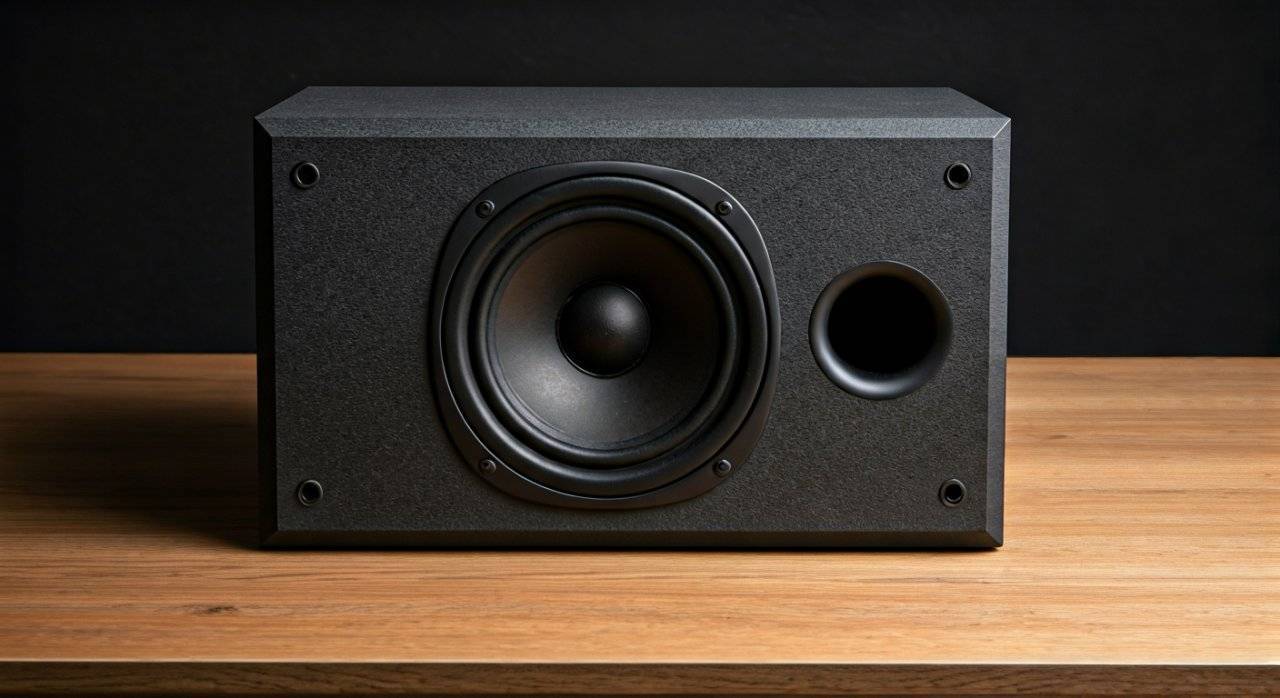
Ported Enclosures (Bass Reflex)
In a ported box, the air inside is moving rapidly through the vent. If you fill the middle of the box with loose poly-fill, you will disrupt the “tuning” of the port.
- Best Practice: Only line the internal walls with 1-2 inches of damping material.
- Keep the path between the back of the woofer and the port clear.
- Over-stuffing a ported box usually results in a loss of efficiency and “huffing” noises.
Expert Tips for Advanced Results
If you want to take your speaker stuffing to a professional level, consider these “insider” techniques I’ve used in custom studio monitor builds:
- Vary the Density: Place denser materials (like Rockwool) against the back wall to kill primary reflections, and lighter poly-fill in the center of the box.
- The “Click” Test: Knock on the outside of the speaker cabinet. A hollow, “ringy” sound indicates a need for more damping or internal bracing. A solid “thud” means you are on the right track.
- Measurement Software: Use a UMIK-1 microphone and Room EQ Wizard (REW) software. By measuring the impedance curve, you can see exactly how the resonant frequency (Fs) shifts as you add more stuffing.
Common Pitfalls to Avoid
When learning how to stuff speakers, beginners often make these three critical errors:
- Using Rigid Foam: Never use closed-cell packing foam (like Styrofoam). It does not absorb sound; it actually takes up volume and makes the box “smaller,” ruining your bass.
- Blocking Airflow: In speakers with “vented pole pieces” (a hole in the center of the magnet), ensure stuffing is at least 2 inches away. Blocking this hole can cause the woofer to overheat and fail.
- Ignoring Safety: If using fiberglass, always wear a mask and gloves. Inhaling glass microfibers is a serious health risk and can also damage your speaker’s moving parts if they settle into the voice coil gap.
Frequently Asked Questions
Can I use old clothes or towels to stuff my speakers?
While you can, it is not recommended. Old clothes are too dense and don’t have the same “loft” as acoustic poly-fill. They will take up too much physical volume and usually result in a dead, muddy sound rather than an improved one.
Does stuffing a speaker make it louder?
No. In fact, stuffing slightly reduces the overall efficiency (Sensitivity) of the speaker. However, it makes the sound cleaner and the bass deeper, which most listeners perceive as a massive improvement in quality.
How much poly-fill do I need for a 12-inch subwoofer?
For a typical 1.5 to 2.0 cubic foot subwoofer box, you should start with about 1.5 to 2 pounds of poly-fill. This provides a significant reduction in standing waves and helps the sub play lower frequencies more accurately.
Can I over-stuff a speaker?
Yes. Over-stuffing turns the material into a solid mass that takes up space. This raises the resonant frequency, makes the bass sound “thin,” and can actually cause the speaker to sound worse than if it had no stuffing at all.