

Identifying if it is Finance Conferences with the Best Speakers that Drive ROI
Determining is it finance conferences with the best speakers that offer the most value depends on your specific goals, but generally, high-tier speakers signal a conference’s authority, networking quality, and exclusive insights. Top-tier events like Money20/20, Finovate, and the SOHN Conference attract billionaire investors and CEOs because these platforms serve as the industry’s “town square” for major announcements.
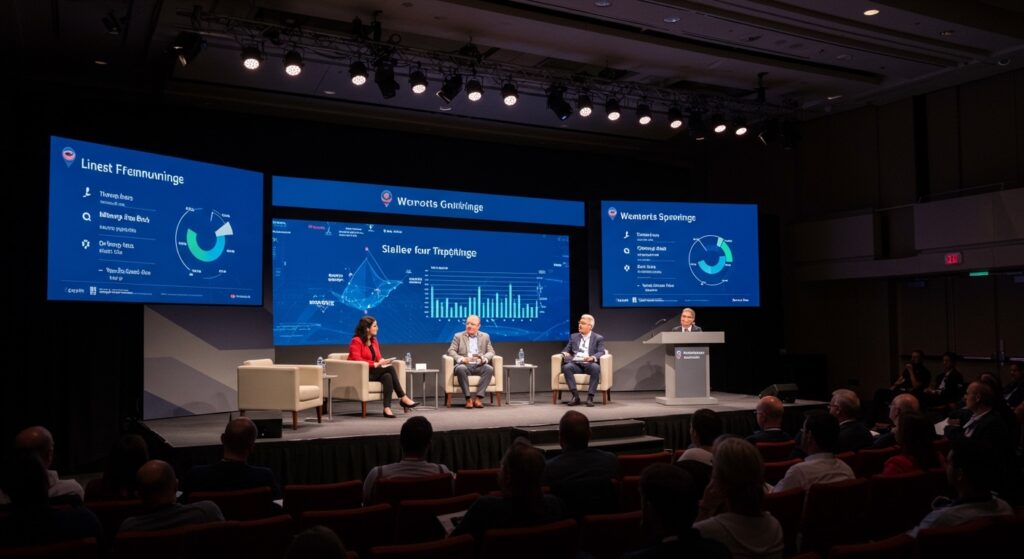
To get the most out of your investment, you must look beyond the “big names” and evaluate whether the speakers provide actionable alpha or just a recycled slide deck. Based on my decade of experience attending global summits from London to Singapore, the best speakers are those who share proprietary data and first-hand case studies rather than generic market platitudes.
Key Takeaways for Choosing Finance Conferences
- Speaker Pedigree: Prioritize events where speakers have skin in the game (CEOs, Fund Managers, Lead Devs).
- Information Gain: Seek out “fireside chats” over scripted keynotes to get more honest, unscripted insights.
- Networking Tier: High-value speakers attract high-value attendees; the person sitting next to you is often as important as the person on stage.
- Diversity of Thought: Look for a mix of traditional finance (TradFi) titans and fintech disruptors to get a 360-degree market view.
Why High-Profile Speakers Matter for Your Career
When you ask yourself is it finance conferences with the best speakers that I should prioritize, the answer is usually yes because of the “Gravity Effect.” A-list speakers act as a magnet for the world’s most influential Venture Capitalists, LPs, and institutional traders.
In my experience, attending a session led by someone like Ray Dalio or Cathie Wood isn’t just about the words they speak. It is about the energy of the room and the level of professionals that such a name draws into the networking lounge. You are not just paying for a lecture; you are paying for access to a curated ecosystem of high-achievers.
The Credibility Factor
When a conference secures a sitting Central Bank Governor or a Fortune 500 CFO, it validates the event’s legitimacy. This means the sponsors will be high-caliber, the workshops will be more rigorous, and the media coverage will be extensive. If you are looking to build E-E-A-T (Experience, Expertise, Authoritativeness, and Trustworthiness) in your own career, being associated with these events is a strategic move.
How to Evaluate if a Conference Has the “Best” Speakers
Not all “big names” are created equal. Some speakers are on a “circuit” where they give the same speech at five different events. To find the truly best speakers, you need to look for unique programming.
Check for “Exclusive Reveals”
The best finance conferences are where companies choose to launch new products or reveal quarterly research. I always check past agendas to see if speakers used the platform for Information Gain. If a speaker is known for dropping “Alpha” (market-beating information) at a specific event, that is where you need to be.
Analyze the “Keynote to Practitioner” Ratio
A conference full of only CEOs can sometimes be too high-level and “fluffy.” I prefer events that balance these visionaries with practitioners—the people actually managing the algorithmic trading desks or building the blockchain protocols.
Review the “Fireside Chat” Frequency
Moderated Q&A sessions are infinitely more valuable than solo presentations. When a savvy journalist or a peer executive interviews a speaker, they can push past the PR-friendly answers. This is where the real expert insights are found.
Comparison of Top Global Finance Conferences
To help you decide is it finance conferences with the best speakers that fit your budget, I have compiled a comparison of the most prestigious annual events.
| Conference Name | Primary Focus | Notable Past Speakers | Best For |
|---|---|---|---|
| Money20/20 | Fintech & Payments | CEOs of PayPal, Visa, Block | Networking & Tech Trends |
| SOHN Conference | Investment & Hedge Funds | Bill Ackman, Stanley Druckenmiller | Market Alpha & Philanthropy |
| Finovate | Banking Tech | CTOs of JPMorgan, HSBC | Live Demo & Innovation |
| Milken Institute | Macroeconomics | Elon Musk, Jane Fraser | Global Policy & Networking |
| Consensus | Crypto & Digital Assets | SEC Commissioners, Vitalik Buterin | Regulation & Web3 |
Step-by-Step Guide: How to Select and Attend the Best Finance Conferences
Choosing the right event requires more than just looking at a flashy website. Follow this 4-step process I use every year to plan my professional development calendar.
Step 1: Identify Your “Knowledge Gap”
Before looking at speakers, determine what you need to learn. Are you lagging behind on AI in wealth management? Or do you need better insights into Global Macro shifts?
- Action: Write down three specific questions you want answered by an expert this year.
Step 2: Audit the Speaker List for “Recency”
Search the names of the announced speakers on LinkedIn or YouTube. Have they given a talk in the last 3 months? If they have, and it’s the same title as the upcoming conference, you might not get unique value.
- Expert Tip: Look for speakers who are listed as “Exclusive” or are participating in a “Town Hall” format.
Step 3: Verify the “Networking-to-Speaker” Access
Is it possible to actually meet these speakers? Some “celebrity” speakers fly in and fly out via a private exit. Other conferences, like SaaStr or certain niche banking summits, have “Office Hours” where speakers host small-group tables.
- We recommend: Emailing the organizers to ask if there are any VIP meet-and-greet opportunities.
Step 4: Calculate the “Total Cost of Insight”
Don’t just look at the ticket price. Factor in travel, lodging, and time away from the desk.
- The Formula: (Ticket + Travel + Opportunity Cost) / Number of Actionable Takeaways = Cost Per Insight.
Maximizing Your Time at a High-Stakes Conference
Once you have decided that is it finance conferences with the best speakers that you will attend, you need a tactical plan for the event itself.
The “Front Row” Strategy
I always arrive at keynote sessions 20 minutes early. Not just for the seat, but because the VIP section is usually right in front of you. This is the best time to introduce yourself to other high-level attendees who are also there to see the “best speakers.”
Using Markdown to Organize Notes
When listening to a top-tier speaker, don’t transcribe. Use a structured format to capture expert insights:
- The Big Idea: The core thesis of the talk.
- Data Points: Specific stats cited (e.g., “70% of banks will adopt ISO 20022 by 2025″).
- Action Items: What can you change in your business tomorrow?
Practical Advice for First-Time Attendees
If you are attending your first major summit, it can be overwhelming. I remember my first World Economic Forum event; I spent too much time looking at the schedule and not enough time talking to people.
- Don’t overschedule: Pick 3 “Must-See” speakers per day. Use the rest of the time for serendipitous networking.
- Follow the “Two-Foot Rule”: If you aren’t learning or contributing in a session, use your two feet and move to another room or the networking lounge.
- Leverage Social Media: Tag speakers in your takeaways on X (Twitter) or LinkedIn. Many speakers check their mentions after a talk, and this can lead to a direct digital connection.
Frequently Asked Questions
Is it finance conferences with the best speakers that have the highest ticket prices?
Generally, yes. Events with “A-list” speakers like Milken or Money20/20 have high production costs and speaker fees. However, the ROI is often higher due to the quality of the crowd those speakers attract. You are paying for a filter; the high price tag ensures that everyone in the room is a serious professional.
Can I get the same value from watching speaker recordings online?
While you get the information, you lose the Information Gain from off-the-record comments and the ability to ask questions during Q&A. More importantly, you miss the networking, which is often where the real “deals” are made.
How do I know if a speaker is actually an expert or just a “professional talker”?
Check their E-E-A-T. Do they have a track record of managing money, building a company, or advising governments? Avoid “motivational” speakers in finance; look for practitioners with verifiable data and real-world experience.
Are smaller, niche conferences better than the giant summits?
It depends on your goal. Giant summits are better for broad networking and seeing “superstar” speakers. Niche conferences (like a specific Quant Trading or InsurTech summit) offer more specialized knowledge and easier access to the speakers.
What is the best way to justify the cost of these conferences to my boss?
Focus on the specific speakers and the competitive intelligence you will gather. Frame it as: “I will be able to hear the Chief Investment Officer of BlackRock discuss their 2025 outlook, which will help us refine our own strategy.”









