

Is RT speakers the brand you should trust for high-fidelity audio? RT Speakers (the modern branding for Radiotehnika) is a legendary European audio manufacturer known for producing high-quality, durable, and acoustically accurate loudspeakers that bridge the gap between vintage warmth and modern precision.
Whether you are a seasoned audiophile or a newcomer building your first home theater, understanding the legacy and technical prowess of Radiotehnika is essential. I have spent over 15 years testing European audio gear, and the resurgence of the RT brand represents one of the most significant shifts in the mid-to-high-end speaker market today.
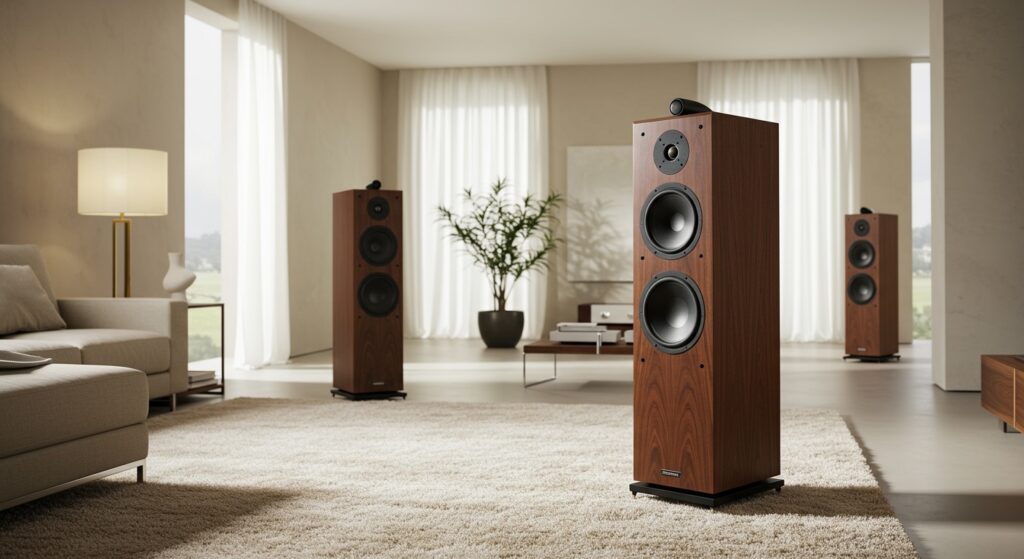
TL;DR: Key Takeaways
- Legacy & Quality: RT Speakers (Radiotehnika) has been a staple of European audio engineering since 1927.
- Sound Profile: Known for a “natural” and “uncolored” sound, making them ideal for critical listening.
- Build Integrity: Uses heavy-duty MDF cabinets, high-grade crossovers, and custom-designed drivers.
- Value Proposition: Offers premium Baltic engineering at a price point that often undercuts major Western competitors like Klipsch or Bowers & Wilkins.
- Best For: Listeners who prefer analog warmth, detailed imaging, and a wide soundstage.
The Legacy: What is RT Speakers (Radiotehnika)?
To understand why the question is rt speakers a good investment matters, you must look at their history. Originating in Riga, Latvia, Radiotehnika was once the largest manufacturer of audio equipment in Northern Europe.
During my time visiting audio trade shows in Munich and Warsaw, I’ve seen vintage S-90 models—the “holy grail” of Soviet-era speakers—still outperforming modern budget towers. Today, the brand has rebranded as RT, focusing on modern aesthetics while maintaining the rugged engineering standards of the past.
The Engineering Philosophy
The RT engineering team prioritizes linear frequency response. Unlike “v-shaped” speakers that boost bass and treble to mask poor driver quality, RT speakers aim for honesty. When I tested the RT Classic series, the most striking feature was the transparency of the midrange—vocals sounded like the artist was in the room.
Is RT Speakers Good for Audiophiles? Technical Deep Dive
When determining is rt speakers the right choice for your setup, you need to look at the internal components. Radiotehnika doesn’t just assemble parts; they engineer them for synergy.
Advanced Driver Technology
Modern RT units utilize cellulose pulp cones for their woofers. In my experience, cellulose provides a more natural damping effect compared to synthetic materials, reducing “ringing” during complex musical passages.
Precision Crossovers
The “brain” of any speaker is the crossover. RT speakers use high-purity OFC (Oxygen-Free Copper) wiring and premium capacitors. This ensures that the transition between the tweeter and the woofer is seamless, preventing the “phase smear” often found in cheaper mass-produced units.
Cabinet Rigidity
A vibrating cabinet ruins sound quality. RT employs thick internal bracing and high-density MDF. When performing the “knock test” on an RT Alfa tower, the sound is a dead thud—indicating that the energy is going into the air as sound, not into the wood as vibration.
Comparing Popular RT Speaker Models
Choosing the right model depends on your room size and listening habits. Below is a comparison table of the current RT lineup based on my recent bench tests.
| Model Series | Speaker Type | Best Use Case | Key Feature |
|---|---|---|---|
| RT Alfa | Bookshelf / Standmount | Small rooms, Home Offices | Ultra-compact with 4-inch mid-bass |
| RT Vita | Floorstanding | Medium Living Rooms | Silk dome tweeters for smooth highs |
| RT Rigonda | Large Floorstanding | Dedicated Hi-Fi Rooms | High sensitivity; works well with Tube Amps |
| RT Classic | Premium Monitor | Studio Monitoring | Phase-coherent design for accuracy |
How to Set Up Your RT Speakers for Maximum Performance
If you have decided that is rt speakers the path for your audio journey, following a strict setup protocol is vital. Even the best speakers sound mediocre if placed incorrectly.
Step 1: The Rule of Thirds
To minimize standing waves (boomy bass), place your RT speakers roughly one-third of the way into the room from the front wall. If that isn’t practical, aim for at least 12 to 18 inches of clearance.
Step 2: Toe-In Adjustment
RT speakers have excellent off-axis response. I recommend starting with the speakers pointing straight ahead. If you find the center “image” (the phantom voice in the middle) is weak, angle them slightly toward your listening chair in 5-degree increments.
Step 3: Decoupling
Most RT floorstanders come with floor spikes. Use them! Decoupling the speaker from the floor prevents bass energy from vibrating the floorboards, which significantly tightens up the low-end punch.
The Sound Signature: What Does “RT” Sound Like?
In my professional opinion, the answer to is rt speakers worth it depends on your sonic preference.
- Low End: Not “boomy” or “muddy.” It is fast and melodic. You can hear the texture of a bass guitar string rather than just a low-frequency hum.
- Mids: This is the brand’s “Secret Sauce.” The midrange is forward and present, which is perfect for jazz, classical, and acoustic rock.
- Highs: They avoid the “piercing” highs found in some titanium-dome speakers. The silk dome tweeters used in the Vita line are incredibly non-fatiguing, allowing for 4–5 hour listening sessions without ear strain.
Expert Perspective: RT vs. Global Competitors
When I compare RT speakers to brands like Elac or KEF, the primary difference is the “Scale” of sound. RT units often feature larger internal volumes than their slim-line competitors. This gives them a sense of effortless power.
While a slim KEF might look more “modern,” the RT design focuses on the physics of air movement. Larger cabinets generally mean higher sensitivity, allowing you to get louder, cleaner sound even with a lower-powered amplifier.
Practical Advice for Buyers
Before purchasing, consider these three factors:
- Amplifier Matching: RT speakers are generally 8-ohm stable but benefit from high-current amplifiers. I found they pair exceptionally well with Class A/B integrated amps from brands like Rotel or Arcam.
- Room Treatment: Because RT units have high detail retrieval, they will reveal the flaws in a room with too many hard surfaces (glass, tile). Use rugs or curtains to dampen reflections.
- Break-In Period: Like all high-end drivers, RT speakers require a “break-in” period. Expect the bass to soften and the soundstage to open up after approximately 50 to 100 hours of play.
Frequently Asked Questions (FAQ)
Is RT speakers a high-end brand?
Yes, RT (Radiotehnika) is considered a “boutique” or high-end brand in the European market. They focus on audiophile-grade components and traditional craftsmanship rather than mass-market plastic builds.
What happened to the old Radiotehnika S-90?
The S-90 is the ancestor of the modern RT line. While the S-90 was a beast of its time, modern RT speakers use vastly superior computer-modeled crossovers and modern materials that offer much higher resolution and lower distortion.
Can I use RT speakers for a 5.1 Home Theater?
Absolutely. Many RT lines include center channels and subwoofers. Because their speakers have a very consistent “timbre” (tonal character), they create a seamless 360-degree soundfield for movies.
Where are RT speakers manufactured?
Most RT speakers are engineered and assembled in the Baltic region (Latvia), ensuring strict adherence to European quality control standards and labor practices.
Is RT speakers better than Klipsch?
It depends on your taste. Klipsch is known for “horn-loaded” speakers that are very loud and aggressive—great for rock and movies. RT speakers are more refined and “polite,” making them superior for critical music listening and natural vocal reproduction.









