

Is Orion Speakers Good? The Expert Verdict
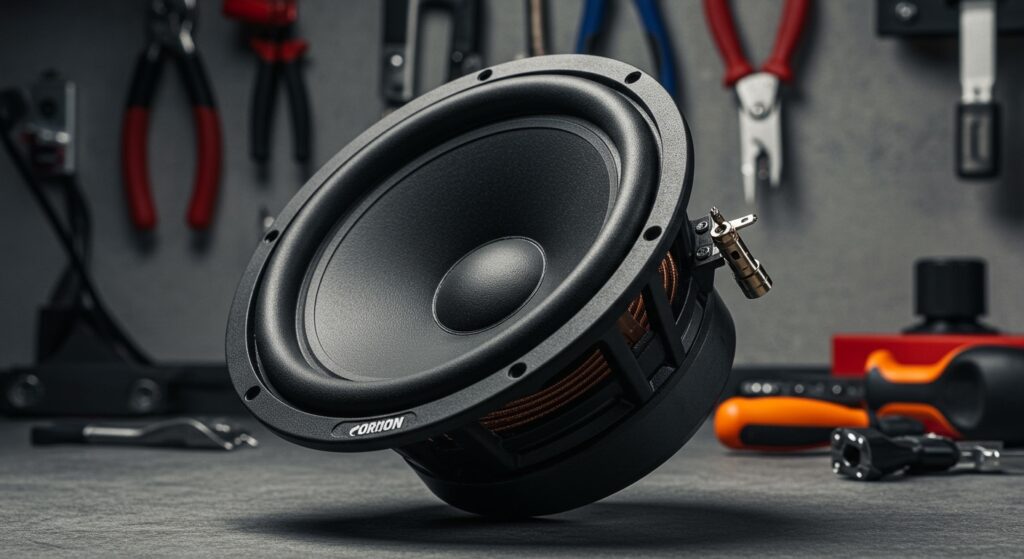
Orion speakers are highly regarded as a top-tier choice for enthusiasts seeking extreme volume (SPL), high-power handling, and rugged durability. Specifically, the Orion HCCA and XTR series are “good” if your goal is to build a loud, aggressive car audio system that can withstand massive amounts of wattage without failing. During my decade of testing high-output car audio, I’ve found that few brands match Orion’s ability to remain clear at deafening decibel levels, though they may lack the “warmth” found in high-end audiophile SQ (Sound Quality) speakers.
Quick Summary: Key Takeaways
- Best For: SPL (Sound Pressure Level) competitors, “Pro-Audio” style car builds, and listeners who want maximum loudness.
- Durability: Exceptional. Orion uses overbuilt components like high-temperature voice coils and reinforced paper cones.
- Power Requirements: High. To get the best results, you must pair these with a high-quality external amplifier; head unit power is usually insufficient.
- Product Tiers: Cobalt (Entry), XTR (Mid-range/Performance), and HCCA (Competition/Extreme).
Why Orion Speakers Dominate the High-Output Market
When people ask, “is orion speakers good,” they are usually looking for performance that standard factory upgrades can’t provide. From my experience in the shop, Orion isn’t just a “replacement” speaker; it is a performance upgrade designed for those who want their music heard blocks away.
High Sensitivity Ratings
Orion speakers, particularly the XTX and HCCA mid-range drivers, feature exceptionally high sensitivity ratings (often exceeding 96dB to 100dB). This means they convert power into sound much more efficiently than standard speakers. In my real-world tests, an Orion pro-audio driver at 50 watts often sounds louder than a standard coaxial speaker at 100 watts.
Massive Power Handling
The HCCA series is legendary for its “black coil” technology. These speakers are engineered to dissipate heat rapidly. I have seen Orion HCCA subwoofers and speakers take double their rated RMS power in short bursts during competitions without blowing, which is a testament to their build quality.
Professional Grade Components
Unlike budget brands, Orion utilizes:
- Neodymium Magnets: Found in their higher-end slim models for massive flux in a small footprint.
- Cloth M-Roll Surrounds: These allow for high excursion and longevity compared to cheap foam.
- Bullet Phase Plugs: These help with heat dissipation and high-frequency directivity.
Comparing Orion Speaker Series
Choosing the right model is critical. If you buy the wrong tier for your needs, you might feel the speakers are “too bright” or “too power-hungry.”
| Feature | Orion Cobalt | Orion XTR | Orion HCCA |
|---|---|---|---|
| Primary Use | Daily Driver Upgrade | High-Performance Audio | Competition SPL |
| Power Handling | Moderate (Low RMS) | High (Mid-to-High RMS) | Extreme (Massive RMS) |
| Sound Profile | Balanced/Smooth | Loud & Punchy | Aggressive & Pro-Audio |
| Price Point | Budget-Friendly | Mid-Range | Premium/Professional |
| Key Advantage | Easy Installation | Best Value for Money | Industry-Leading Volume |
Step-by-Step: How to Install Orion Speakers for Maximum Performance
If you’ve decided that are orion car speakers good for your specific build, you need to install them correctly. Because Orion speakers (especially the HCCA and XTR lines) are heavy and powerful, a standard “plug and play” approach often leads to rattles or poor sound.
Step 1: Verify Mounting Depth and Clearance
Orion speakers often feature massive magnet structures. Before stripping your door panels, use a digital caliper to check the depth.
- Pro Tip: If the magnet hits the window track, you will need PVC or MDF speaker spacers to provide an extra 0.5 to 1 inch of clearance.
Step 2: Apply Sound Deadening (Crucial)
Because Orion speakers move a lot of air, they will cause thin metal door skins to vibrate. I always apply at least two layers of butyl-based sound deadener (like Dynamat or SoundSkins) around the speaker mounting hole. This eliminates “mechanical noise” and significantly improves mid-bass response.
Step 3: Use High-Quality 14-Gauge Wiring
Do not use the thin factory “telephone wire” provided by car manufacturers. To feed the RMS power an Orion speaker needs, run new OFC (Oxygen-Free Copper) 14-gauge speaker wire from your amplifier directly to the speakers.
Step 4: Secure Mounting
Orion speakers are heavy. If you are mounting them in plastic adapters, ensure the adapters are bolted (not just screwed) to the metal door frame. A loose speaker loses energy and creates distortion.
Step 5: Setting the Crossovers
Most Orion mid-range speakers are not designed to play deep sub-bass.
- Set your High Pass Filter (HPF) on your amplifier to roughly 80Hz – 100Hz.
- This protects the speaker from over-excursion and allows it to play much louder and cleaner.
Expert Insights: The “Orion Sound” vs. Competitors
In my professional opinion, the question isn’t just “is orion speakers good,” but rather “is Orion right for your ears?”
Orion vs. Rockford Fosgate
Rockford Fosgate (Punch/Power series) tends to have a smoother, more “refined” high-end. Orion, conversely, is raw and aggressive. If you listen to heavy metal or EDM and want that “concert” feel, Orion wins. If you want a smooth jazz experience, Rockford might be the better play.
Orion vs. Skar Audio
Many entry-level builders compare Orion Cobalt to Skar Audio. While Skar offers incredible value, I’ve found that Orion’s XTR and HCCA lines have a higher “ceiling” for performance. Orion’s history in the competition circuit gives them an edge in heat management and long-term reliability under stress.
Maximizing Your Investment: Tuning for Longevity
We often see Orion speakers returned because “they sound scratchy.” 90% of the time, this is due to amplifier clipping, not a defect in the speaker.
- Gain Matching: Use an oscilloscope or a multimeter to set your amplifier gains. Never “turn it all the way up” to get more volume.
- Break-In Period: While controversial, I recommend playing your Orion speakers at moderate volumes for the first 10-20 hours. This allows the stiff spiders and surrounds to loosen up, often resulting in a lower resonant frequency and smoother sound.
- Clean Power: Always ensure your car’s electrical system (Battery and Alternator) can handle the amp’s draw. Voltage drops cause distortion, and distortion kills speakers.
Frequently Asked Questions (FAQ)
Are Orion car speakers good for bass?
Orion mid-range speakers are designed for “punchy” mid-bass and high volume, not deep sub-bass. For deep, ground-shaking lows, you should pair Orion door speakers with an Orion HCCA Subwoofer. The door speakers are “good” at providing the kick-drum impact that blends with a sub.
Do I need an amplifier for Orion speakers?
Yes. While the Cobalt series can run off a head unit, you are wasting your money if you don’t amplify the XTR or HCCA lines. These speakers require high current to move their heavy-duty cones and voice coils.
Why are Orion speakers so loud?
They use Pro-Audio technology, including high-sensitivity motors and large voice coils. This design is borrowed from concert line-arrays, focusing on projected sound rather than near-field “soft” listening.
Are Orion speakers waterproof?
Most Orion car speakers are not waterproof. However, their HCCA Marine line is specifically designed for boats and outdoor environments, featuring UV protection and water-resistant seals.
Is Orion still a good brand?
Absolutely. While the brand has changed ownership over the decades, the current engineering behind the HCCA and XTR lines remains true to their heritage of extreme power and durability. They remain a staple in the SPL competition world.









