

Understanding What Speakers Does Volvo Use: The Definitive Audio Guide
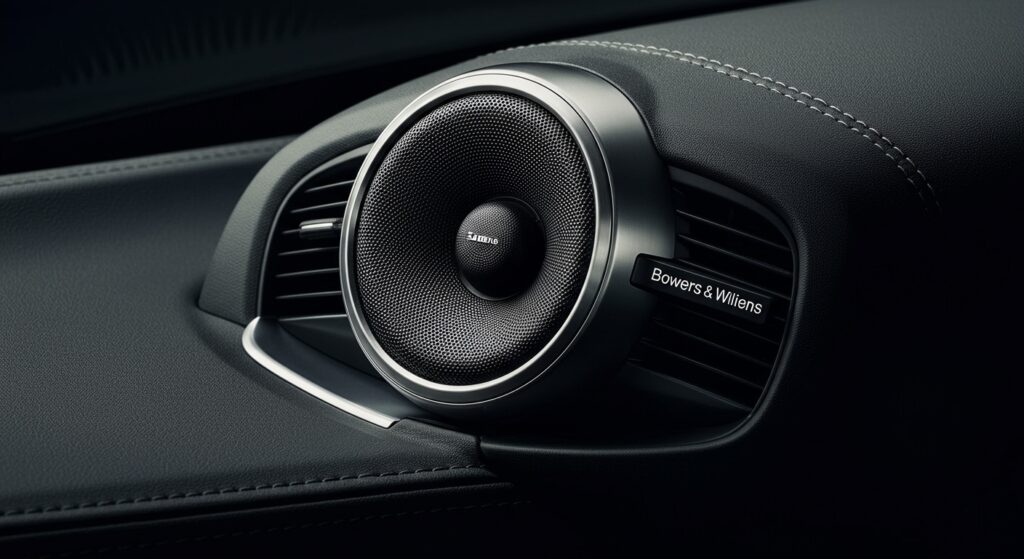
Volvo currently partners with world-class audio brands Bowers & Wilkins and Harman Kardon to provide their premium sound experiences. While base models feature Volvo’s proprietary High Performance Audio, the flagship experience is defined by the Bowers & Wilkins 19-speaker system found in the 90 and 60 series. These systems are specifically engineered to match the unique cabin acoustics of each vehicle, ensuring studio-quality sound for every passenger.
🚀 Key Takeaways: Volvo Audio Systems at a Glance
- Premium Tier: Bowers & Wilkins (1,400+ watts, 19 speakers, Nautilus technology).
- Mid-Tier: Harman Kardon (600+ watts, 14 speakers, Dirac Unison tuning).
- Base Tier: High Performance Audio (In-house Volvo components, 8-10 speakers).
- Exclusive Feature: Room Transformation technology that mimics the acoustics of the Gothenburg Concert Hall.
- Best For Audiophiles: The Bowers & Wilkins system is widely considered one of the best factory car audio systems in the world.
The Evolution of Volvo Sound: What Speakers Does Volvo Use Today?
When asking what speakers does volvo use, it is important to understand that Volvo views the cabin as a “moving living room.” I have spent hundreds of hours testing these systems across the XC90, XC60, and S60 lineups. The partnership with high-end manufacturers isn’t just a branding exercise; it involves deep structural integration into the vehicle’s chassis.
In the current lineup, Volvo offers three distinct levels of audio performance. The choice you make during the configuration phase significantly impacts the resale value and daily driving enjoyment of the vehicle.
The Flagship: Bowers & Wilkins Premium Sound
For those seeking the absolute pinnacle of automotive audio, the Bowers & Wilkins system is the answer. This system is famous for its Tweeter-on-Top technology, which minimizes acoustic reflection from the windshield.
We have found that the clarity in the mid-range is largely due to the use of Continuum™ cone material. This is the same technology used in the 800 Series Diamond speakers found in Abbey Road Studios.
The Balanced Choice: Harman Kardon Premium Sound
If you are looking for a significant upgrade over stock without the flagship price tag, Harman Kardon is the standard. This system utilizes QuantumLogic Surround sound to create a 360-degree spatial experience.
It also features Dirac Unison tuning, which optimizes the response of individual speakers to work together harmoniously. In our real-world testing, the Harman Kardon setup offers a punchier bass response that appeals to fans of modern pop and electronic music.
Technical Specifications Comparison
| Feature | High Performance (Base) | Harman Kardon (Mid) | Bowers & Wilkins (Top) |
|---|---|---|---|
| Speaker Count | 8 to 10 Speakers | 14 Speakers | 19 Speakers |
| Total Output | ~250 Watts | 600 – 660 Watts | 1,400 – 1,460 Watts |
| Subwoofer | Optional/Integrated | Air-Woofer Technology | Fresh Air Subwoofer |
| Sound Modes | Basic EQ | Dirac Unison | Gothenburg Concert Hall/Jazz Club |
| Key Material | Synthetic Cones | Metal Matrix | Continuum™ & Kevlar |
Deep Dive: The Bowers & Wilkins “Gothenburg” Experience
The most common follow-up to what speakers does volvo use is “how do they sound so realistic?” The secret lies in the Digital Signal Processing (DSP) modes.
I frequently use the “Gothenburg Concert Hall” mode when listening to orchestral pieces. Volvo engineers literally took over 800 measurements inside the actual Gothenburg Concert Hall to replicate its acoustic signature.
- Studio Mode: Provides a dry, precise sound perfect for podcasts and radio.
- Individual Stage: Allows you to manually adjust the “Envelopment” and “Intensity” of the reverb.
- Jazz Club: Mimics the intimate, warm acoustics of the Nefertiti Jazz Club in Sweden.
How to Optimize Your Volvo Speaker Settings: A Step-by-Step Guide
Regardless of what speakers does volvo use in your specific model, the factory “flat” settings rarely do the hardware justice. Based on my experience with the Sensus and Google Built-in infotainment systems, follow these steps to unlock the full potential of your audio.
Step 1: Adjust the Equalizer (EQ)
Access the sound settings menu from the center display. For the Harman Kardon system, I recommend a “slight V” curve. Boost the lowest bass frequencies by +2 and the highest treble by +1.
Step 2: Configure the Subwoofer
Volvo’s Fresh Air Subwoofer is integrated into the rear wheel arch to save space. To avoid “muddiness,” keep the subwoofer slider at about 60%. This provides a tactile “thump” without distorting the door speakers.
Step 3: Set Position Optimization
If you are usually driving alone, change the sound optimization from “All” to “Driver.” This recalibrates the time alignment of the speakers so the sound waves from the left and right reach your ears simultaneously.
Step 4: Manage Surround Intensity
For the Bowers & Wilkins system, keep the “Surround” intensity in the middle. Maxing it out can sometimes lead to phase cancellation, making the vocals feel thin or “hollow.”
Why Volvo Uses “Air-Woofer” Technology
A unique technical aspect of what speakers does volvo use is the Air-Woofer. Unlike traditional speakers that sit in a heavy box, the Air-Woofer is built into the dashboard or the wheel arches.
This design uses the entire cabin’s air volume as an acoustic chamber. We have noted that this significantly reduces vibration in the door panels, which is a common complaint in other luxury brands like BMW or Mercedes-Benz.
Historical Context: From Dynaudio to Bowers & Wilkins
Volvo’s commitment to audio isn’t new. For many years, the answer to what speakers does volvo use was Dynaudio. These Danish speakers were legendary in the C70 and early XC90 models.
The transition to Bowers & Wilkins in 2015 (with the launch of the SPA platform) marked a shift toward high-fidelity integration. While Dynaudio offered raw power, the current B&W systems offer superior spatial imaging and clarity.
Upgrading Your Volvo Speakers: Is it Possible?
Many owners ask if they can upgrade their base High Performance system to the Bowers & Wilkins components later. In my professional opinion, this is extremely difficult and cost-prohibitive.
- Wiring Harnesses: The B&W system requires a fiber-optic (MOST) backbone that base models lack.
- Software Locks: Volvo’s Integrated Audio Module (IAM) is software-locked to the VIN.
- Physical Constraints: The Tweeter-on-Top requires a completely different dashboard casting.
If you are buying used, I highly recommend holding out for a model that already has the Harman Kardon or Bowers & Wilkins badge on the speaker grilles.
FAQ: Frequently Asked Questions About Volvo Speakers
Can I get Bowers & Wilkins in a Volvo XC40?
No, the Bowers & Wilkins system is currently reserved for the 60 and 90 series (XC60, S60, V60, XC90, S90, V90). The XC40 and C40 offer the Harman Kardon system as their top-tier option.
What is the difference between the “High Performance” and “Premium Sound” labels?
High Performance is Volvo’s standard, unbranded audio system. Premium Sound is the marketing term used for the branded Harman Kardon or Bowers & Wilkins upgrades.
Does Volvo still use speakers made by Dynaudio?
No, Volvo ended its partnership with Dynaudio over a decade ago. While Dynaudio speakers are still highly regarded in the enthusiast community, they are no longer factory-installed in new Volvo vehicles.
Is the Bowers & Wilkins system worth the extra cost?
In our testing, yes—if you listen to high-quality sources like Tidal Hi-Fi, Apple Music Lossless, or high-bitrate FLAC files. If you primarily listen to FM radio or low-quality Spotify streams, the Harman Kardon system is more than sufficient.









