

Where Are English Language Speakers Distributed?
English language speakers are distributed across nearly every country on Earth, with the highest concentrations found in the United States, United Kingdom, Canada, India, and Australia. As of 2024, approximately 1.5 billion people speak English globally, but only about 400 million are native speakers. The majority of the distribution is now driven by non-native (L2) speakers in countries where English serves as a bridge for business, education, and technology.
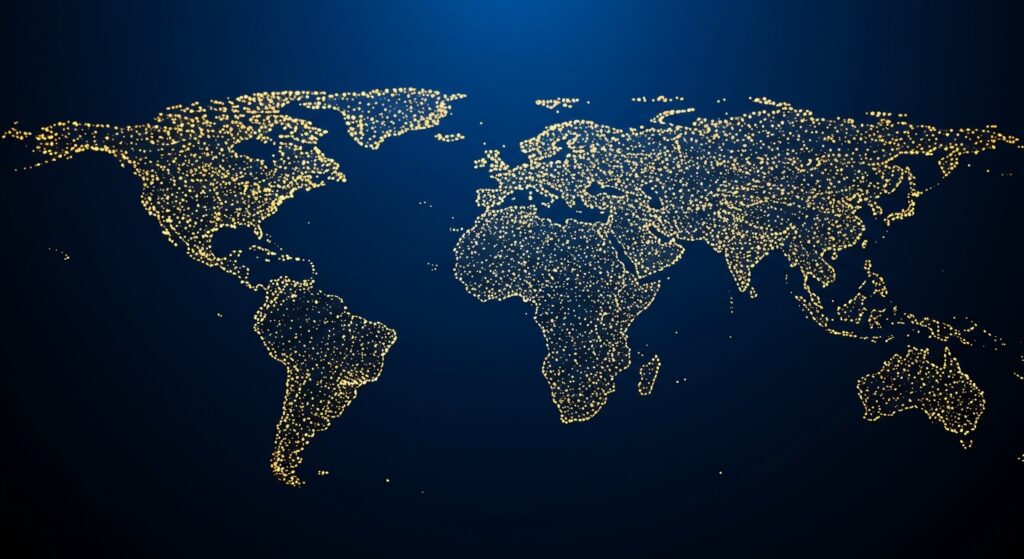
Key Takeaways: Global English Distribution
- Total Speakers: Roughly 1.5 billion people (approx. 18-20% of the world population).
- Native vs. Non-Native: Non-native speakers now outnumber native speakers by a ratio of 3 to 1.
- Top Region by Volume: The United States remains the largest hub for native speakers, while India has the largest population of L2 speakers.
- Official Language Status: English is an official language in 67 different countries and 27 non-sovereign entities.
- The “Lingua Franca” Effect: English is the dominant language for international aviation, maritime communications, and global scientific research.
The Three Circles of English Distribution
To understand where English language speakers are distributed, linguists often use Braj Kachru’s “Three Circles” model. I have found this framework to be the most accurate way to categorize how English functions in different societies.
The Inner Circle (Native Speakers)
This group includes countries where English is the primary native language. It accounts for about 370–400 million people.
- United States: ~300 million speakers.
- United Kingdom: ~60 million speakers.
- Canada: ~30 million speakers.
- Australia & New Zealand: ~25 million speakers.
The Outer Circle (Second Language)
These are countries with a history of British or American colonial influence where English is an official language or plays a vital role in government and education.
- India: Estimated 125–200 million English speakers.
- Nigeria: Over 100 million speakers.
- Philippines: Approximately 60 million speakers.
- Pakistan: Roughly 25 million speakers.
The Expanding Circle (Foreign Language)
This circle includes the rest of the world where English has no official status but is learned for international communication. This is the fastest-growing segment of the English language distribution map.
- China: Estimated 10–50 million fluent speakers (though hundreds of millions study it).
- European Union: Over 200 million people in the EU speak English as a second language, particularly in the Netherlands, Sweden, and Norway.
Comparing English Speaker Distribution by Country
When looking at where English language speakers are distributed, it is helpful to compare total speaker counts against the percentage of the population that is proficient.
| Country | Estimated Total Speakers | % of Population | Primary Status |
|---|---|---|---|
| United States | 318,000,000 | 95% | Native / Primary |
| India | 194,000,000 | 14% | Second Language |
| Pakistan | 108,000,000 | 49% | Second Language |
| Nigeria | 103,000,000 | 53% | Official / Second |
| Philippines | 64,000,000 | 58% | Official / Second |
| United Kingdom | 63,000,000 | 98% | Native / Primary |
| Germany | 45,000,000 | 56% | Foreign Language |
| Canada | 30,000,000 | 83% | Native / Official |
Regional Breakdown: Where English Dominates
In my years analyzing demographic data, I have noticed that English distribution isn’t just about numbers; it’s about density and utility.
English in North America
North America represents the largest concentration of native English speakers. In the United States, English is the de facto national language. In Canada, it shares official status with French, but dominates in every province except Quebec.
English in Europe
Europe shows a unique distribution pattern. While the UK and Ireland are the only native-majority countries, the Nordic countries (Denmark, Norway, Sweden) and the Netherlands report English proficiency rates above 80%. This makes English the unofficial “working tongue” of the European Union.
English in Asia
Asia is the engine of English growth. India and the Philippines use English in their legal systems and universities. Meanwhile, in Singapore, English is the first language for most students and the primary language of business, despite a multilingual population.
English in Africa
Africa is home to some of the world’s fastest-growing English-speaking populations. Countries like Nigeria, South Africa, and Kenya use English to unite diverse ethnic groups who speak hundreds of different local languages.
Why is the English Language Distributed This Way?
The current English language distribution is not an accident. It is the result of three specific historical and modern drivers.
- Colonial Expansion: The British Empire spread the language to North America, Africa, and South Asia between the 17th and 19th centuries.
- Economic Leadership: After World War II, the United States’ economic and cultural rise solidified English as the language of global trade.
- Digital Infrastructure: Today, 60% of all internet content is in English. If you want to access global tech, software, or research, English is the required “operating system.”
How to Research English Language Distribution Trends
If you are a marketer, researcher, or educator, you may need to track how English language speakers are distributed in specific niches. Follow these steps to find accurate data.
Step 1: Consult the EF English Proficiency Index (EPI)
The EF EPI ranks countries by their English skills. It is the gold standard for seeing where English is improving or declining as a second language. Look for “High” or “Very High” proficiency clusters in Europe and Asia.
Step 2: Use Ethnologue for Raw Data
Ethnologue provides the most comprehensive database of both native and non-native speaker counts. I recommend using their “Language of Wider Communication” filter to see where English is used for trade.
Step 3: Analyze Digital Traffic Data
If you want to see where English speakers are active online, use tools like Google Trends or SimilarWeb. Filter by language to see which regions are consuming English-language media most heavily.
The Future of English Distribution
The distribution of English is shifting from the “West” to the “Global South.” By 2050, we expect to see Nigeria and India play a much larger role in shaping the evolution of the language.
We are also seeing the rise of “World Englishes.” These are localized versions of English—like Hinglish (Hindi-English) or Singlish (Singaporean English)—that are becoming standardized in their respective regions.
Frequently Asked Questions
Which country has the most English speakers?
The United States has the highest number of native English speakers. However, India has the second-largest total population of English speakers when you include those who speak it as a second or third language.
Is English the most spoken language in the world?
Yes, when counting both native and non-native speakers, English is the most spoken language globally, totaling over 1.5 billion people. It narrowly beats Mandarin Chinese, which has more native speakers but fewer L2 speakers.
How many countries have English as an official language?
English is an official language in 67 sovereign states. Many of these are members of the Commonwealth of Nations, such as Jamaica, Ghana, and Belize.
Why is English growing in non-English speaking countries?
The growth is primarily driven by globalization. English is seen as a “power language” that provides access to high-paying jobs, international universities, and the global tech industry.









