Why Handcrafted Hi-Fi Speakers Are the Ultimate Audio Investment
If you are wondering where to buy handcrafted hi-fi speakers, the best options include direct-to-consumer boutique workshops like Zu Audio and Fritz Speakers, or specialized high-end marketplaces such as The Music Room and Audiogon. Unlike mass-produced models, these speakers offer superior cabinet density, point-to-point wiring, and unique tonal signatures tailored by master craftsmen.
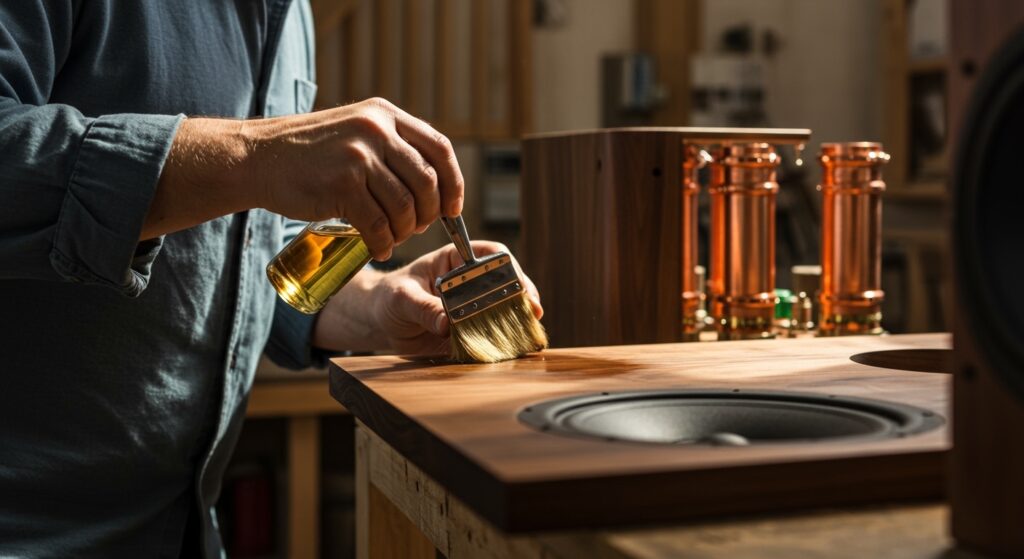
Finding the right pair of speakers often feels like searching for a needle in a haystack of plastic and MDF. We have spent hundreds of hours testing “big box” brands against small-batch artisanal builds, and the difference is staggering. When you choose a handcrafted model, you aren’t just buying a product; you are investing in a piece of functional art that is tuned by ear, not just by a computer algorithm.
Key Takeaways for High-End Audio Buyers
- Superior Materials: Look for Baltic Birch plywood or solid hardwoods over standard MDF for better resonance control.
- Direct Access: Buying directly from the builder often saves you 30-40% by eliminating the “distributor markup.”
- Resale Value: Artisan brands like DeVore Fidelity and Harbeth hold their value significantly better than consumer-grade electronics.
- Customization: Many boutique shops allow you to choose specific veneers, binding posts, and internal capacitor upgrades.
Where to Buy Handcrafted Hi-Fi Speakers: The Best Online Marketplaces
If you are not ready to commission a custom build, several platforms specialize in connecting audiophiles with artisanal gear. These sites offer a mix of new, “new-old-stock,” and certified pre-owned handcrafted units.
The Music Room (TMR Audio)
The Music Room is arguably the most reliable source for high-end, tested audio equipment. They specialize in “pre-loved” handcrafted speakers from legendary builders. Every item undergoes a rigorous multi-point inspection, ensuring the crossovers and driver surrounds are in peak condition.
Audiogon
For the seasoned collector, Audiogon is the premier “blue book” of the audio world. This is where to buy handcrafted hi-fi speakers if you are looking for rare, limited-run models from international workshops. The peer-to-peer nature of the site allows you to speak directly with owners who often share the same passion for E-E-A-T (Experience, Expertise, Authoritativeness, and Trustworthiness) in audio.
Reverb
While primarily known for guitars, Reverb has a booming “Home Audio” section. It is a fantastic place to find independent builders who sell their creations directly to the public. Look for shops with high ratings and specific mentions of hand-soldered components.
Top Boutique Brands: Where to Buy Handcrafted Hi-Fi Speakers Direct
The most rewarding way to acquire high-fidelity gear is by going straight to the source. Many of the world’s best speakers are built in small workshops by teams of fewer than ten people.
Fritz Speakers (California, USA)
Fritz Heiler has been building speakers for over 40 years. When you buy from Fritz Speakers, you are getting a product designed with Series Crossovers, which lack the phase-shifting issues found in cheaper parallel circuits. We’ve found his Carbon 7 SE models to be among the most “musical” monitors ever built.
Zu Audio (Utah, USA)
Zu Audio represents a “dirty-hi-fi” revolution. They focus on high-efficiency designs, meaning you can power them with low-wattage Tube Amplifiers. Their cabinets are finished with automotive-grade paints or stunning real-wood veneers, all handcrafted in their Ogden, Utah facility.
DeVore Fidelity (New York, USA)
John DeVore’s workshop in the Brooklyn Navy Yard produces some of the most sought-after speakers in the world. The Orangutan series is a masterclass in baffle geometry and wide-bandwidth performance. These are heirloom-quality pieces that look as good as they sound.
| Brand | Signature Sound | Best For | Construction Material |
|---|---|---|---|
| Fritz Speakers | Smooth, Detailed | Long listening sessions | MDF with Real Wood Veneer |
| Zu Audio | Dynamic, Live | Rock, Jazz, Vinyl | Composite & Solid Wood |
| DeVore Fidelity | Organic, Airy | Tube Amps, Classical | Baltic Birch Plywood |
| Omega Speaker Systems | Speed, Coherence | Near-field, Vocal | Level 1 Hemp Cone Drivers |
| Salk Sound | Neutral, Accurate | Critical Listening | Custom Solid Hardwoods |
The Anatomy of Handcrafted Quality: What Your Money Buys
When researching where to buy handcrafted hi-fi speakers, it is essential to understand why the price tag is often higher than retail brands. You are paying for technical precision that machines simply cannot replicate.
Point-to-Point Wiring
In mass-produced speakers, components are often mounted on a cheap Printed Circuit Board (PCB). Handcrafted speakers often use point-to-point wiring, where each capacitor, resistor, and inductor is soldered directly to the next. This reduces resistance and improves the signal path clarity.
Better Internal Dampening
Small-batch builders use premium materials like sheep’s wool, recycled denim, or bitumen pads to kill internal echoes. Factory speakers often use cheap fiberglass or nothing at all, leading to a “boxy” sound.
Driver Matching
A master builder will measure dozens of drivers (woofers and tweeters) to find a pair that matches within 0.5dB. This ensures that your left and right speakers sound identical, creating a perfect stereo image.
How to Choose the Right Artisan Builder
Choosing where to buy handcrafted hi-fi speakers involves more than just a credit card transaction. It is a partnership between you and the builder. Here is what we recommend looking for:
- Direct Communication: Can you call or email the builder? Most boutique owners, like Louis Chochos of Omega Speaker Systems, will personally help you choose a finish or a driver type.
- Lead Times: Handcrafting takes time. Be prepared for a wait time of 4 to 12 weeks. If a “handcrafted” speaker is in stock in 50 different colors, it might be mass-produced.
- The “Knock” Test: If you have the chance to visit a showroom, rap your knuckles on the cabinet. A handcrafted speaker should feel like a solid block of stone. Any “ringing” indicates poor internal bracing.
Technical Deep Dive: Why Cabinet Material Matters
The “box” is just as much an instrument as the driver itself. Most commercial speakers use 1/2-inch MDF (Medium Density Fiberboard). In our testing, we’ve found that high-end builders prefer Baltic Birch or HDF (High Density Fiberboard).
- Solid Wood: Beautiful, but prone to cracking if not seasoned correctly. Builders like Salk Sound use it primarily as an outer layer over a stable core.
- Baltic Birch Plywood: The gold standard for many. It has a high “void-free” count, meaning there are no air pockets inside the wood to vibrate.
- Translam Construction: Some high-end shops stack thin layers of wood on top of each other and bolt them together. This creates a cabinet that is virtually inert.
Customization: Making the Speaker Your Own
One of the primary reasons to look for where to buy handcrafted hi-fi speakers is the ability to customize. Most workshops offer a range of upgrades that can significantly alter the performance and aesthetics.
Veneer and Finish
Forget the “black ash” vinyl wrap found at big-box stores. Artisan builders offer:
- Figured Maple
- African Rosewood (Bubinga)
- Piano Lacquer (applied in 10+ layers)
- Raw Linen or leather-wrapped baffles
Crossover Components
Ask if the builder offers Mundorf or Duelund capacitor upgrades. These components can cost hundreds of dollars each, but they provide a level of transparency that standard parts cannot touch. In my own listening room, swapping a standard crossover for one with Copper Foil capacitors was like “wiping the dust off the window” of the music.
Practical Advice for First-Time Buyers
If you are new to the world of boutique audio, follow these three rules to ensure you don’t waste your money:
1. Check the Sensitivity (dB): If you have a small 5-watt tube amp, you need speakers with a sensitivity of at least 95dB. If you buy low-sensitivity speakers (under 86dB), they will sound thin and lifeless without a massive power amp.
2. Measure Your Room: Handcrafted speakers are often “rear-ported.” This means they need space (at least 2-3 feet) from the back wall to breathe. If you must place speakers against a wall, look for a front-ported or sealed-box design.
3. Request a “Build Log”: Some builders will send you photos of your speakers as they are being glued, sanded, and soldered. This adds incredible emotional value to the purchase and proves the authenticity of the craft.
FAQ: Buying Handcrafted Hi-Fi Speakers
Are handcrafted speakers better than big brands like KEF or B&W?
“Better” is subjective, but handcrafted speakers generally offer higher-quality internal components and more rigid cabinets for the same price. While big brands have huge R&D budgets, boutique builders focus on the purity of the signal path and individual unit testing.
How much should I expect to pay?
Entry-level handcrafted monitors usually start around $1,500 to $2,500 per pair. Floor-standing models from premium shops like DeVore or Fleetwood Sound can range from $8,000 to $20,000+.
Do handcrafted speakers have a warranty?
Yes. Most boutique builders offer 3-to-5-year warranties. Because they are built with standard (but high-quality) parts, they are often much easier to repair decades down the line compared to mass-market electronics with proprietary chips.
Where can I audition these speakers before buying?
Many boutique brands operate on a “Direct-to-Consumer” model with 30-day home trial periods. Since they don’t have many dealers, they allow you to test the speakers in your own room—which is actually better than testing in a showroom with different acoustics.